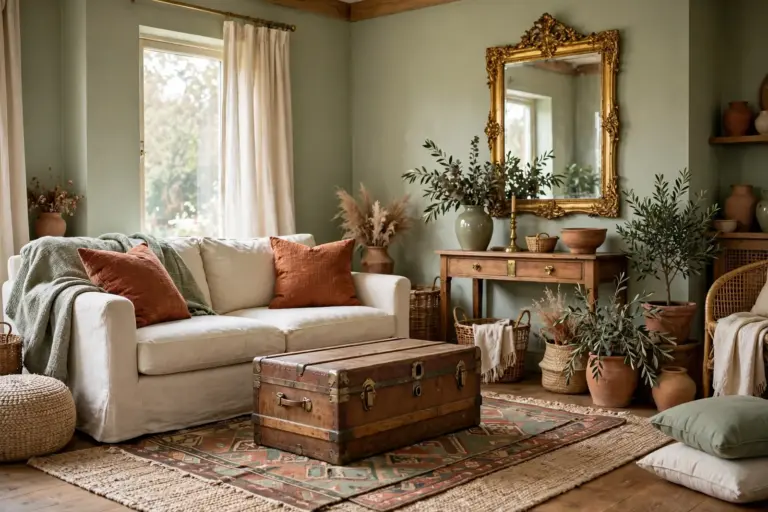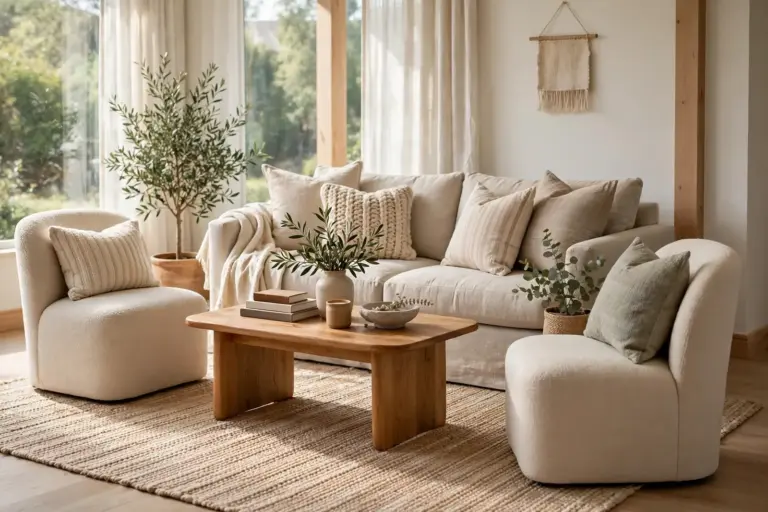
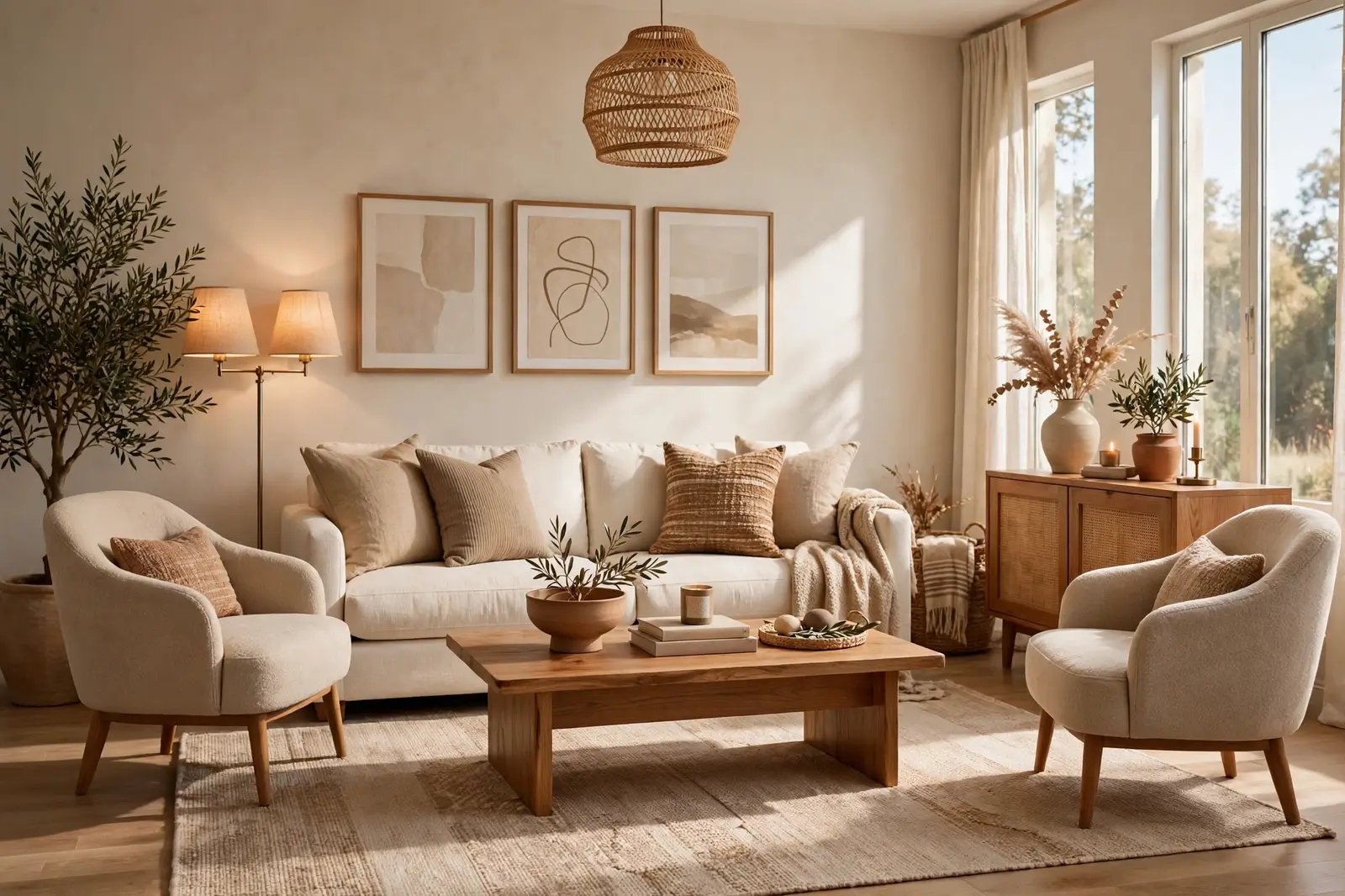
Interior Design Living Room Rules That Actually Work

A beautiful interior design living room does not happen by filling every corner with expensive furniture or following every decorating trend. The best rooms follow a few practical design rules that make the space comfortable, balanced, and easy to enjoy.
Whether you own your home or rent a small apartment, you can create a professionally styled living area without spending a fortune. The secret is knowing what to prioritize, how to arrange furniture, and where small changes make the biggest difference.
These simple rules will help you make smarter decorating decisions, avoid common mistakes, and create a living room that looks polished while working for everyday life.
Start With Comfort Before Choosing a Decorating Style
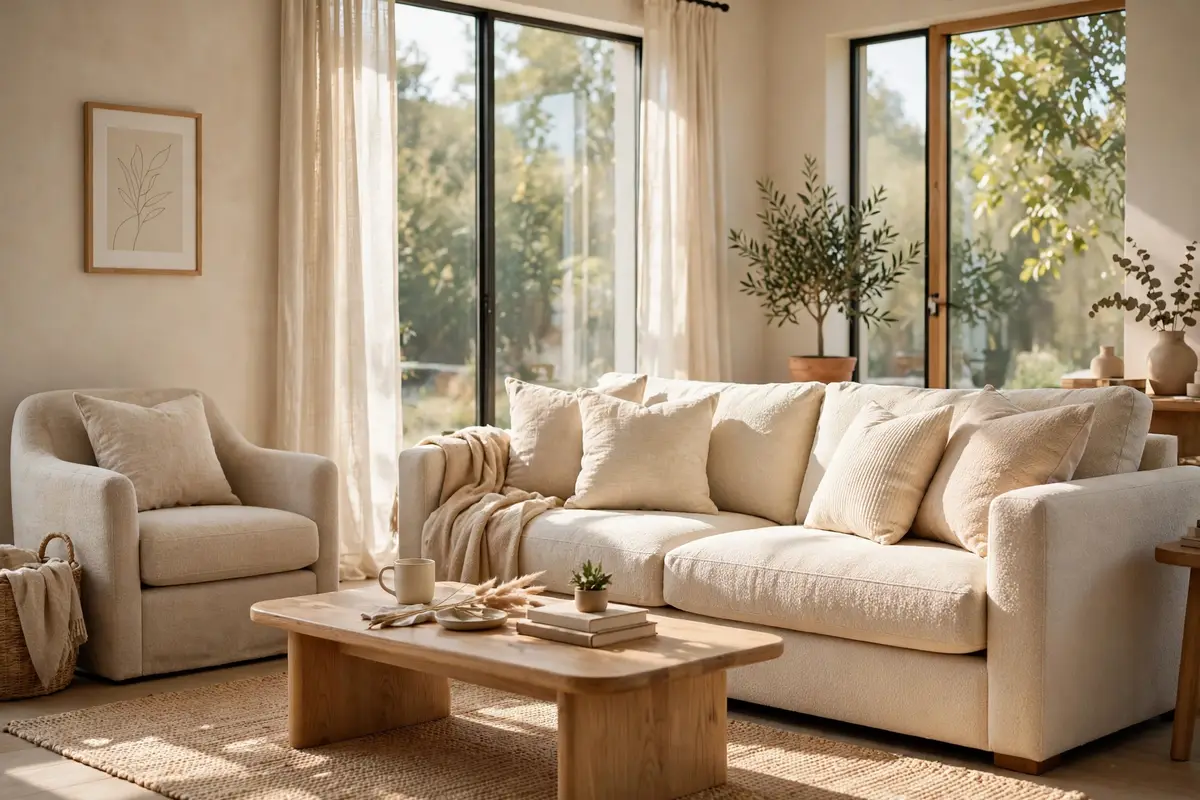
A living room should feel good before it looks impressive. You might love a particular sofa design, but if it is uncomfortable to sit on, it will quickly become one of your least favorite purchases.
Start by thinking about how you actually use the space. Do you watch television every evening, entertain friends, read, or spend time with children and pets? Your furniture choices should support those activities.
Look for these practical features when choosing your main seating:
- Supportive cushions: Choose cushions that feel comfortable without sinking too deeply.
- Durable upholstery: Performance fabric, tightly woven polyester, and washable covers are useful for busy households.
- Easy-clean surfaces: Select materials that can handle everyday spills and regular cleaning.
- Comfortable depth: Make sure the seat allows you to relax without struggling to sit upright.
- Suitable size: Check the sofa dimensions against your available floor space.
You do not need a luxury sofa to create a comfortable room. A reasonably priced sofa with good support and a washable cover can be a much better investment than an expensive design that looks beautiful but feels awkward.
What to do next: Visit a furniture showroom if possible, sit on several sofas, and measure your favorite option before ordering. Comfort should be your first decorating decision.
Plan Enough Seating for Everyday Life
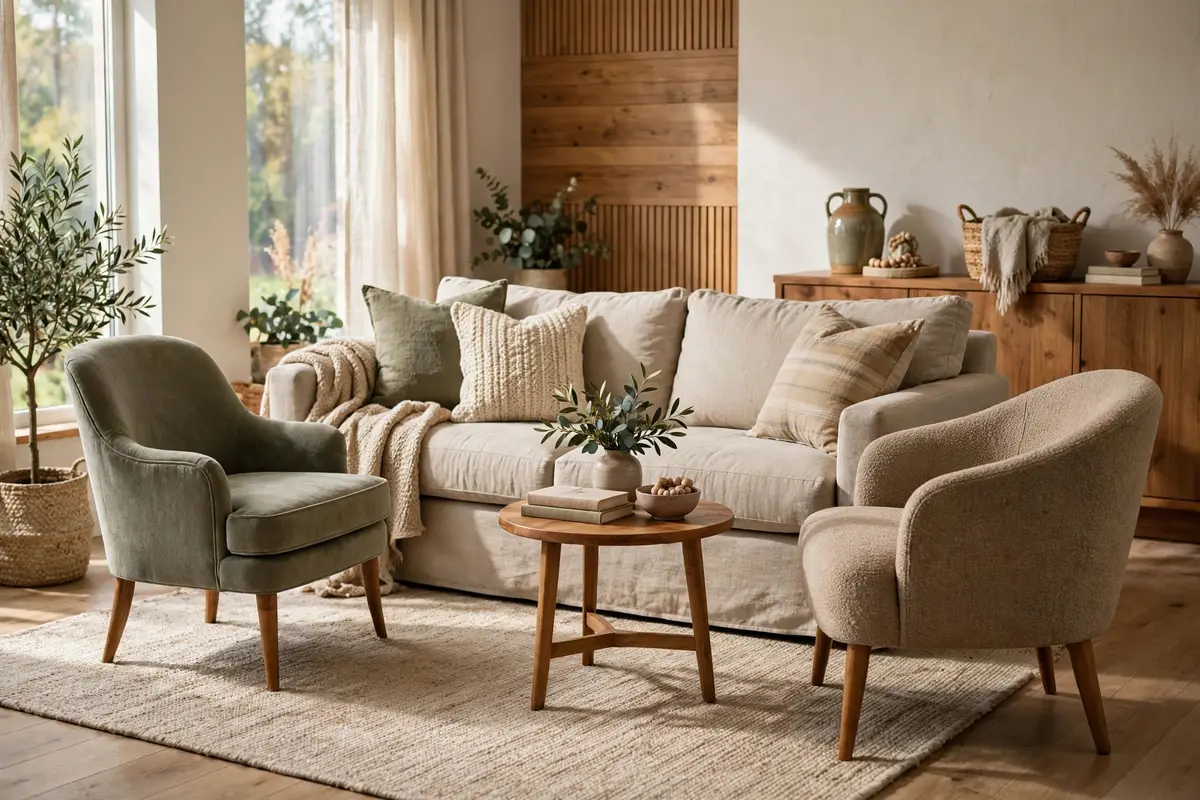
A sofa alone does not always provide enough seating. If you regularly welcome friends or have family members sharing the room, additional chairs make the space more useful.
The goal is to create a conversation area where people can sit comfortably without feeling crowded.
Follow these steps when planning your seating:
- Start with the sofa: Choose a size that fits the room without blocking doors or windows.
- Add one or two accent chairs: Full-size chairs provide more comfortable seating than small decorative pieces.
- Angle the chairs slightly: Position them toward the sofa to encourage conversation.
- Include a side table: Give people somewhere convenient to place drinks, books, or phones.
- Keep flexible seating available: Small stools or poufs can provide extra places to sit when guests arrive.
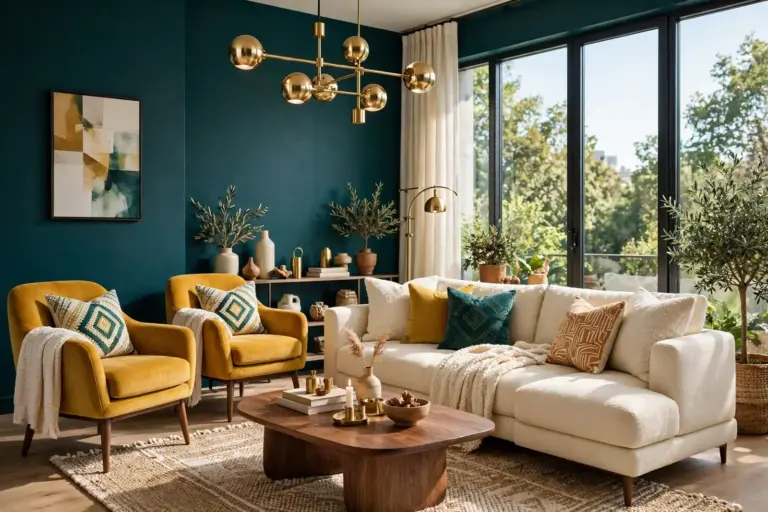
Mixing furniture styles can make the arrangement feel more natural. For example, pair a simple cream sofa with a caramel leather chair or a muted green upholstered seat.
You do not have to purchase everything from one collection. Different materials, shapes, and colors add personality while keeping the room interesting.
Quick Tip: Look for secondhand accent chairs and update them with affordable upholstery or removable covers. This is often cheaper than purchasing an entire matching seating set.
What to do next: Count how many people usually use your living room and plan how many comfortable seats you need for your typical household, with one or two additional options for visitors.
Choose a Focal Point Before Arranging Furniture
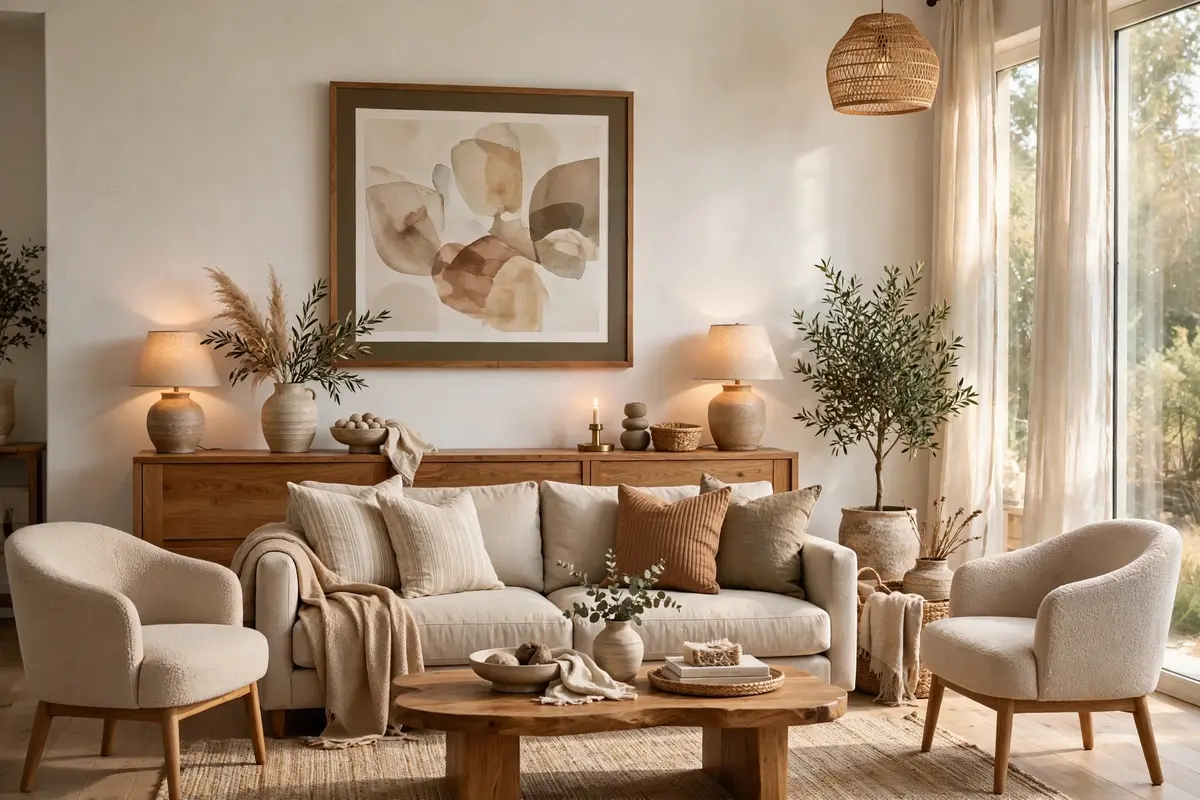
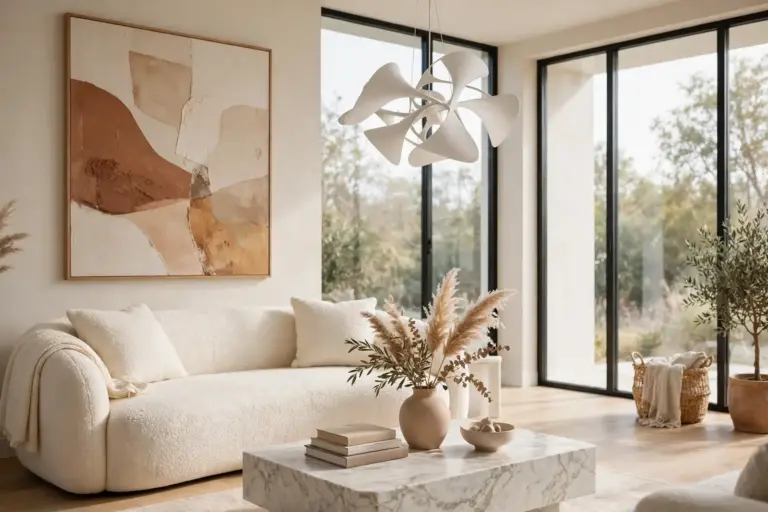
Every well-designed living room benefits from one clear focal point. It gives the eye somewhere to land and helps the rest of the furniture feel intentionally arranged.
Your focal point does not need to be an architectural feature. It could be a fireplace, large artwork, an attractive mirror, or even a television wall designed with simple shelving.
Common Mistake: Decorating every wall with equally large artwork, mirrors, and shelves.
This creates visual competition. Instead of enjoying one beautiful feature, the eye moves around the room without finding a clear center.
The Fix: Choose one main feature and arrange your largest furniture pieces around it.
Use these guidelines:
- Position the sofa so it faces or visually connects with the focal point.
- Hang artwork at a comfortable viewing height.
- Aim to place the center of a main artwork around 60 inches from the floor.
- Use a mirror to reflect natural light, especially in smaller rooms.
- Keep surrounding decorations simple enough to let the main feature stand out.
If your living room does not have a fireplace or architectural detail, create your own focal wall with one oversized artwork or a collection of carefully arranged frames.
For renters, removable picture-hanging strips and lightweight decorative mirrors are useful alternatives to permanent wall changes.
What to do next: Stand at the entrance of your living room and identify the first feature you want visitors to notice. Use that feature to guide your furniture placement and wall decorations.
Apply the 2:3 Rule to Balance Furniture Sizes
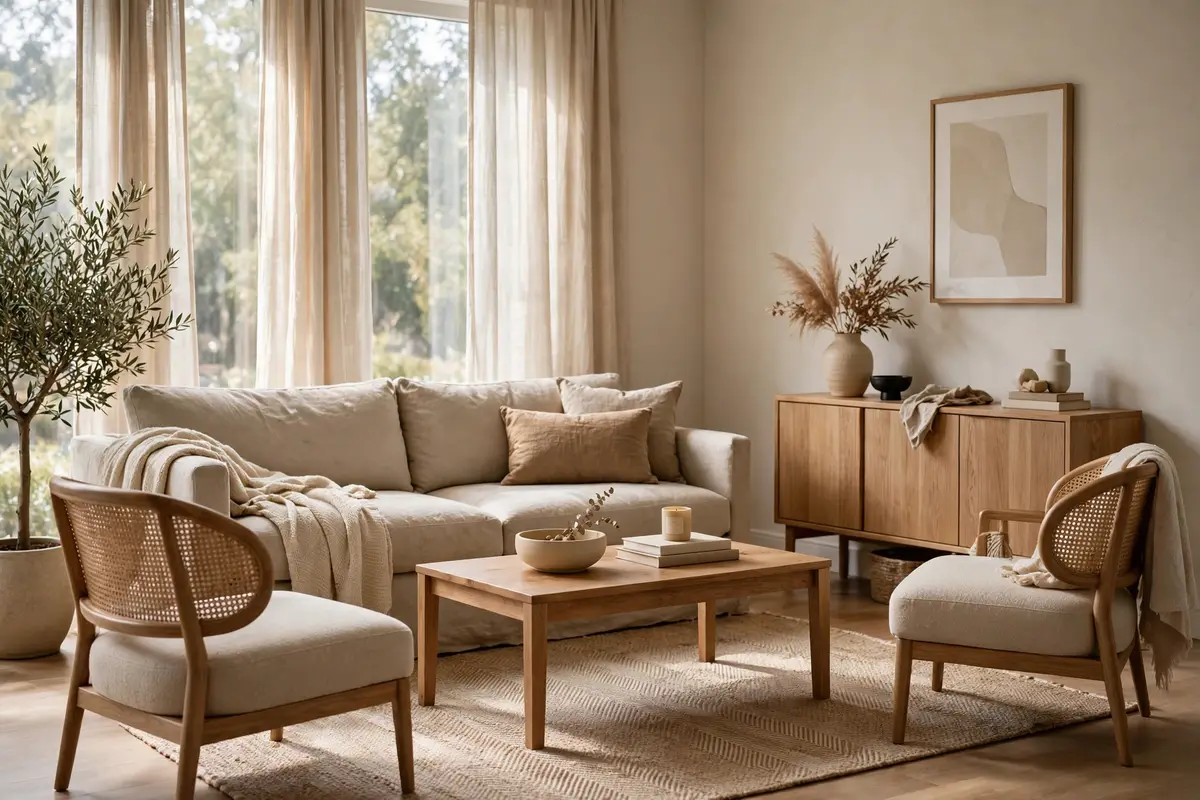
Furniture can look beautiful individually but still feel wrong when placed together. The problem is often proportion.
A useful decorating guideline is the 2:3 rule. It helps you compare the sizes of furniture pieces so that one item does not overpower everything around it.
The basic idea is to let the largest piece establish the scale, with smaller pieces measuring roughly two-thirds of its size where appropriate.
For example:
- Start with your largest furniture item, usually the sofa.
- Choose a coffee table that looks appropriately sized beside it.
- Keep side tables visually lighter than the main seating.
- Select artwork that relates to the width of the furniture underneath it.
- Avoid combining several oversized pieces in a small room.
Think about the room itself, too. A large living room can handle a substantial sectional, while a compact apartment may look better with a smaller sofa and two lightweight chairs.
Before: A tiny coffee table in front of a large sectional, leaving the seating area looking disconnected.
After: A properly proportioned coffee table that gives everyone convenient access without overwhelming the floor space.
You do not need exact mathematical measurements for every item. Use the rule as a visual guide, then check how everything looks together.
What to do next: Measure your sofa, coffee table, and main storage furniture. Compare their dimensions and replace only the pieces that feel noticeably too small or too large.
Pull Furniture Away From the Walls
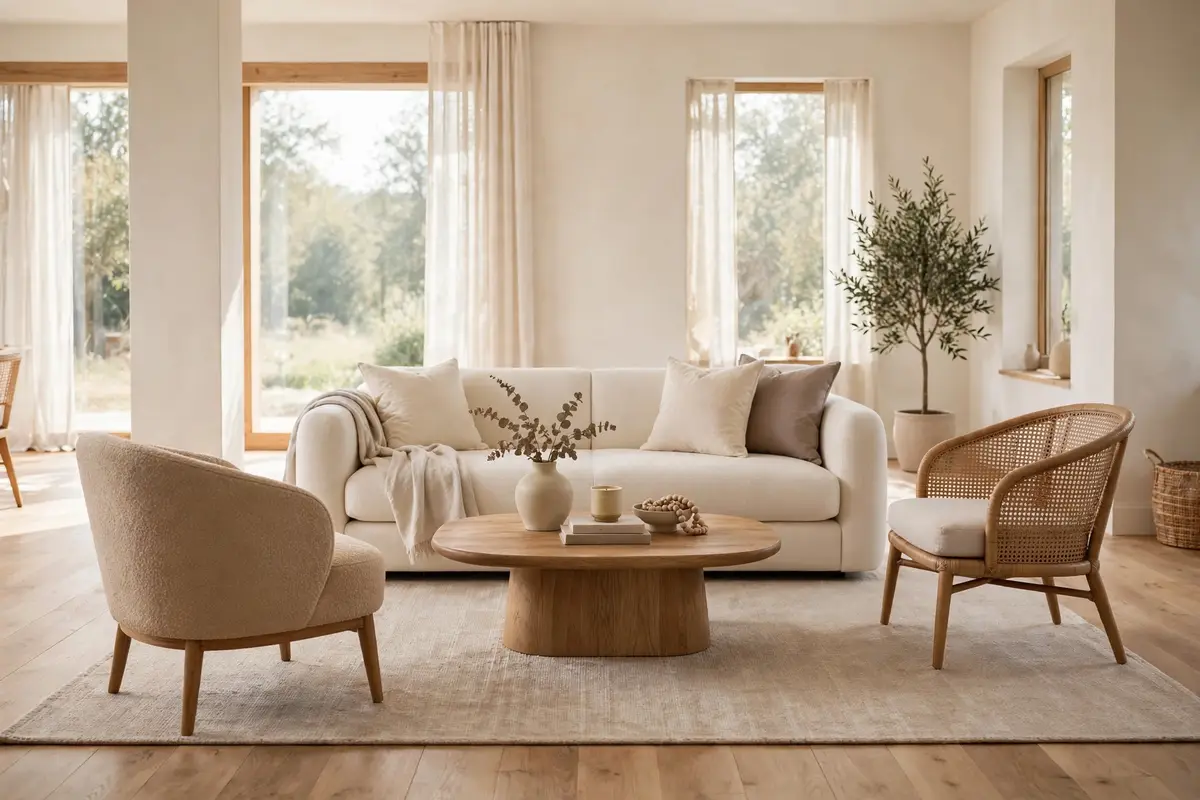
Pushing every piece of furniture against the walls may seem like the easiest way to create more space. However, this arrangement can make a living room feel empty in the middle and disconnected.
Even a small adjustment can make the layout look more intentional.
Try these furniture placement guidelines:
- Float the sofa slightly away from the wall when space allows.
- Leave approximately 36 to 42 inches behind it if that area serves as a main walkway.
- Keep around 30 to 36 inches for important walking paths.
- Allow roughly 18 inches between the sofa and coffee table.
- Avoid placing chairs where they block doors, windows, or natural movement.
Not every room has enough space for floating furniture. In a narrow apartment, keeping the sofa against one wall may be the most practical choice.
The important thing is to avoid treating every wall as the only possible furniture placement option.
For additional layout inspiration, explore these modern living room ideas to see how furniture arrangements, simple colors, and thoughtful spacing can work together.
What to do next: Move your sofa a few inches away from the wall if possible. Walk through the room from the entrance to the main seating area and adjust furniture until movement feels natural.
Use an Area Rug to Connect the Seating Area
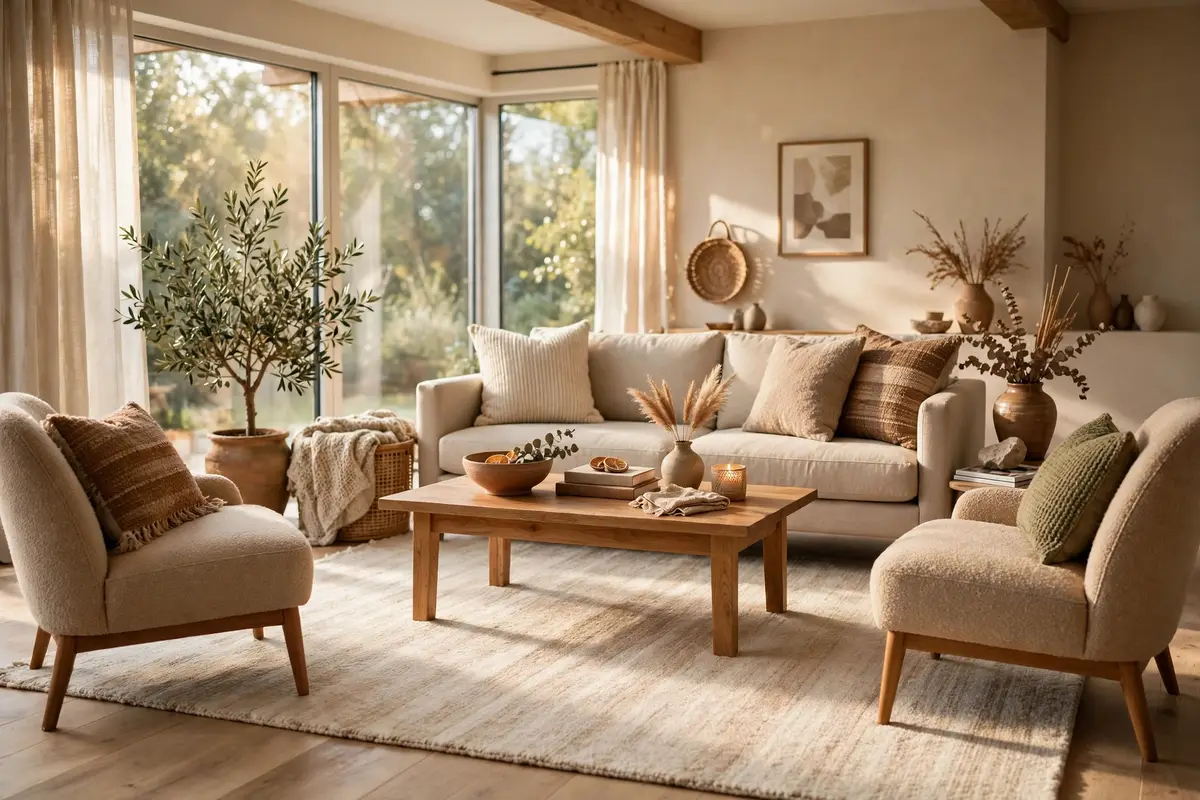
An area rug does more than make a living room feel softer. It visually connects the furniture and helps define where the main seating area begins and ends.
One common decorating problem is choosing a rug that is too small. A tiny rug floating beneath the coffee table can make even expensive furniture look disconnected.
For a more balanced arrangement:
- Measure the seating area before shopping.
- Consider an 8-by-10-foot or 9-by-12-foot rug for a larger conversation area.
- Position the front legs of the sofa and accent chairs on the rug.
- Aim for approximately 6 to 8 inches of rug extending beyond each side of the sofa.
- Choose a texture and color that complement the flooring and upholstery.
Smaller rooms may need a different size, so do not force a large rug into a space where it interrupts doorways or walking paths.
Budget-friendly options include flatweave rugs, washable designs, and secondhand natural-fiber rugs in good condition.
If you already own a rug that is slightly too small, placing it beneath a larger neutral rug can sometimes create a layered look.
Quick Tip: Use painter’s tape to mark the proposed rug dimensions on your floor before purchasing. This simple trick helps you see whether the size works with your furniture.
What to do next: Measure your seating arrangement and mark the rug outline on the floor. Choose a size that connects the main furniture pieces without blocking everyday movement.
Layer Lighting Instead of Relying on One Ceiling Light
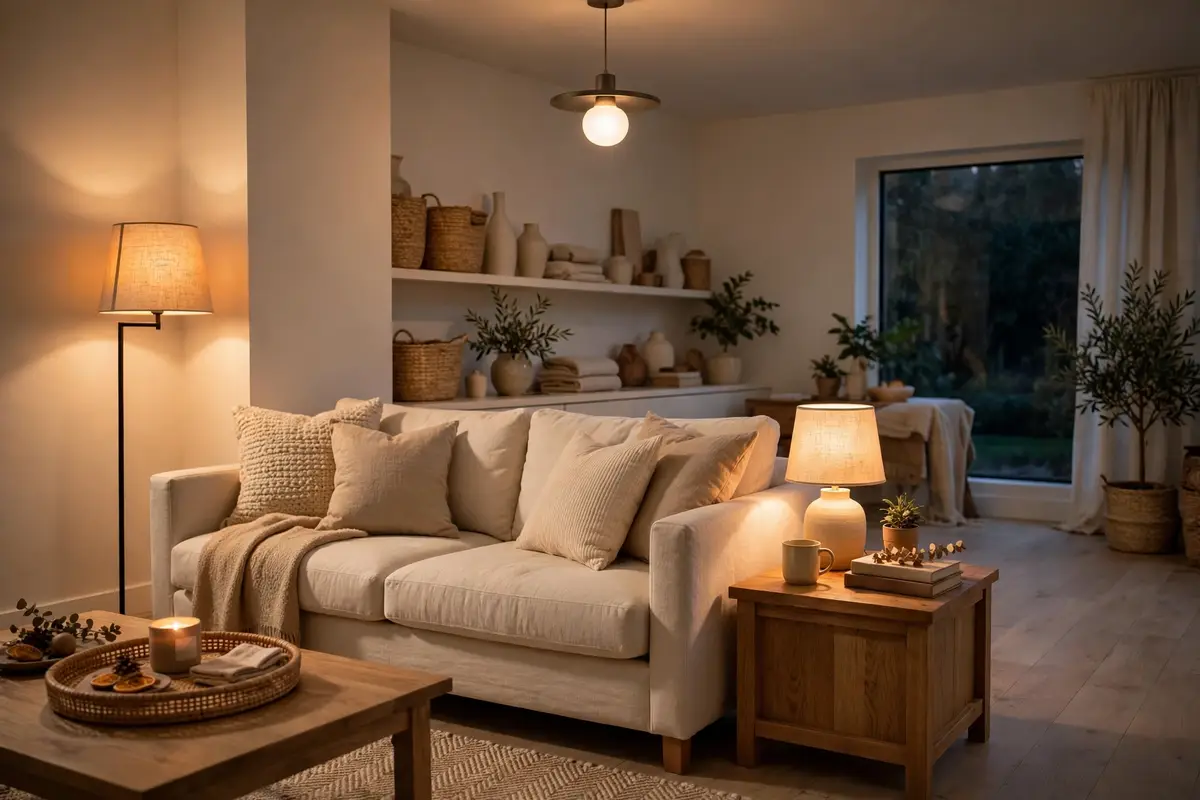
Good lighting changes how a living room looks and feels. A single overhead fixture may provide enough general brightness, but it rarely creates the comfortable atmosphere people want in the evening.
The solution is to combine several light sources that serve different purposes.
What You Need:
- One ceiling fixture for general illumination.
- A table lamp for reading or relaxing.
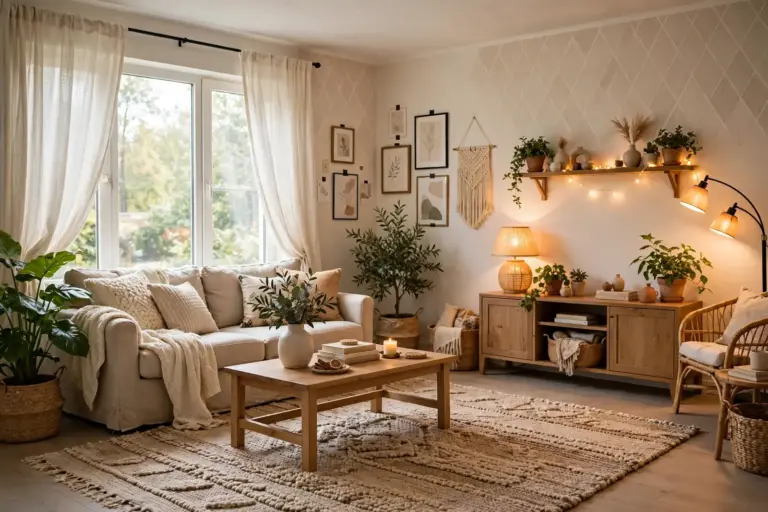
- A floor lamp to brighten darker corners.
- Warm-toned bulbs for a softer evening atmosphere.
- Optional dimmable lighting for greater flexibility.
You do not need to buy every item at once. Start with the existing ceiling light and add one affordable lamp near the sofa.
Think about how natural light changes throughout the day, too. Rooms with limited daylight may benefit from lighter lampshades and strategically placed mirrors.
For a more finished look, coordinate lighting finishes with other details in the room, such as cabinet handles, picture frames, or side-table hardware.
Renters can use plug-in sconces and floor lamps instead of installing permanent electrical fixtures.
What to do next: Identify the darkest part of your living room and add a lamp there. Test the lighting in the evening and adjust its position until the whole seating area feels comfortable.
Choose Paint, Curtains, and Textures That Work Together
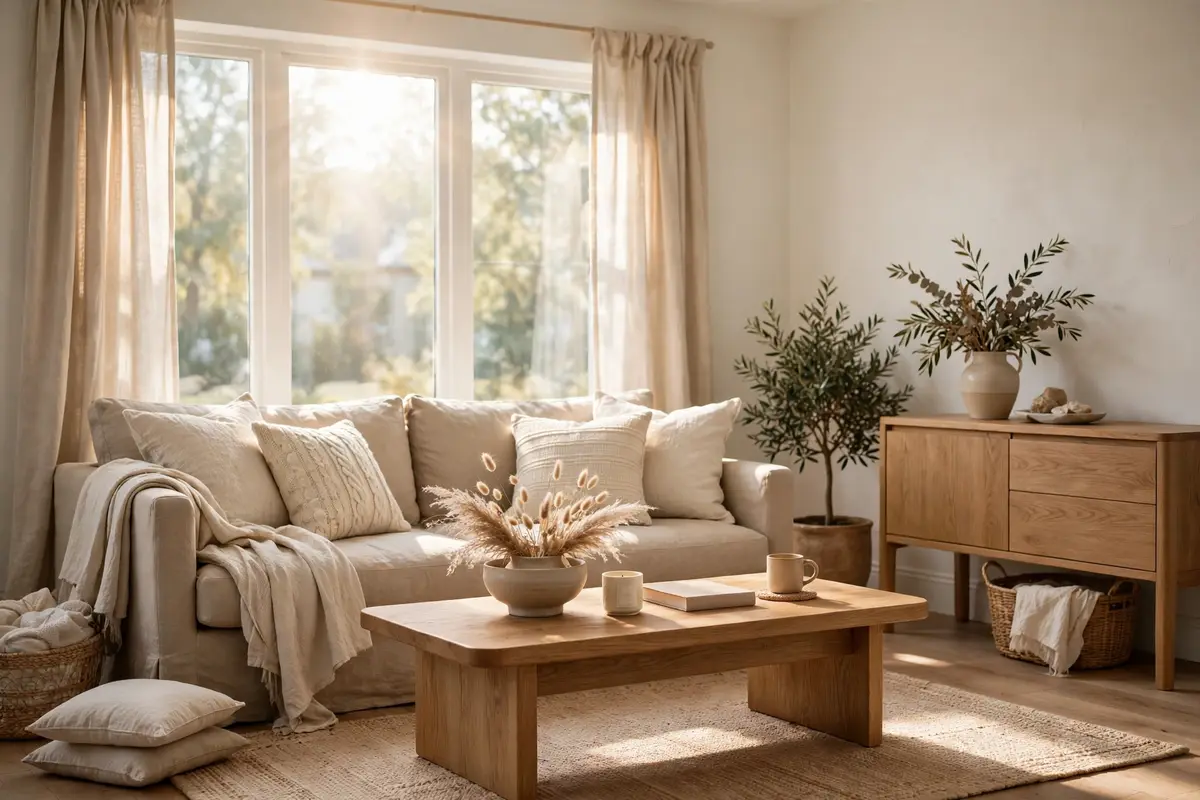
Color and texture influence the overall mood of your living room. A carefully chosen palette can make the space feel connected, even when your furniture comes from different places.
Start with the permanent features, such as flooring, existing furniture, and natural light. Then select wall colors and fabrics that work with them.
Follow this simple approach:
- Choose one main neutral color for larger surfaces.
- Add one or two supporting colors through cushions, artwork, or accessories.
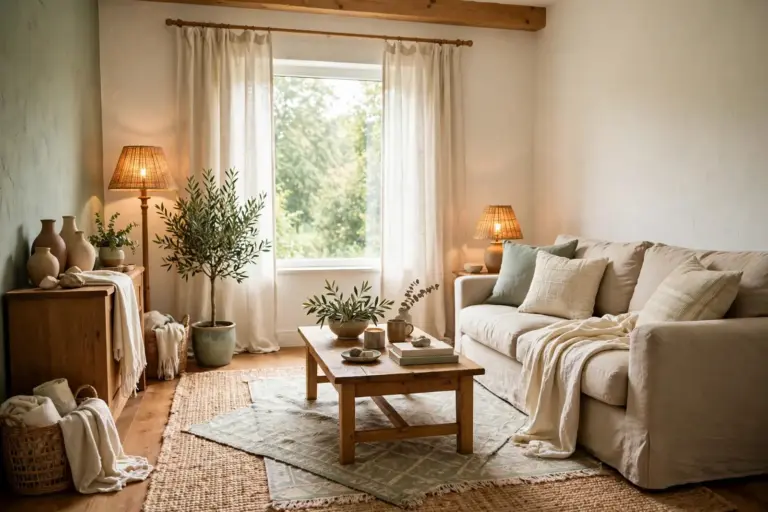
- Introduce natural materials such as wood, linen, cotton, and woven baskets.
- Mix smooth and textured surfaces to avoid a flat appearance.
- Repeat selected colors in different parts of the room for a connected look.
Before painting, check which direction your windows face. North-facing rooms often receive cooler natural light, while south-facing rooms usually receive warmer, stronger daylight. This can affect how paint colors appear.
Always test paint samples on your actual walls and observe them in morning, afternoon, and evening light.
Curtains also make a significant difference. Choose fabrics and lengths that suit the window size, privacy needs, and overall decorating style. These practical curtains living room ideas can help you make a more confident choice.
For renters, use tension rods where suitable and select removable fabric accessories rather than making permanent changes.
What to do next: Collect paint, fabric, and flooring samples. Place them together in your living room and compare how they look under natural and artificial lighting before purchasing larger quantities.
Add Storage and Flexible Seating Without Creating Clutter
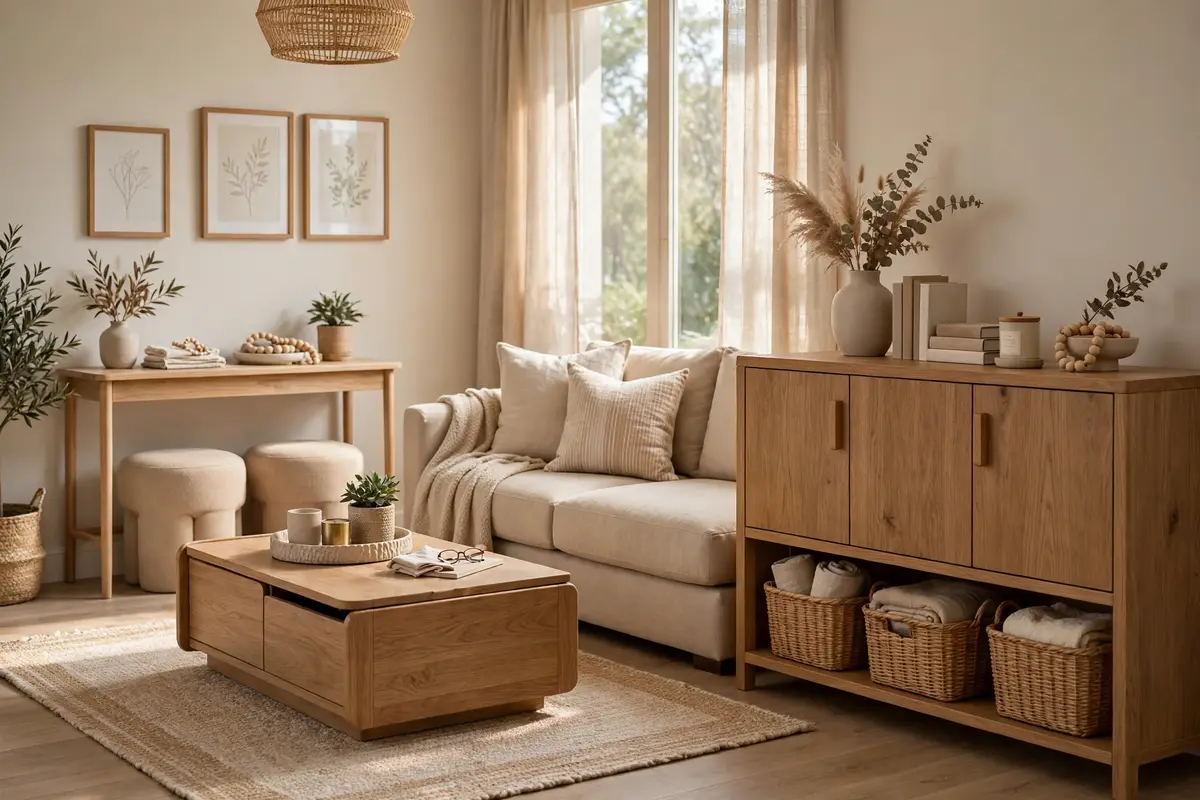
A beautiful living room still needs somewhere to keep everyday belongings. Remote controls, books, blankets, toys, and charging cables can quickly take over the space if storage is overlooked.
The answer is to choose furniture that works harder without making the room feel crowded.
Try these ideas:
- Use a coffee table with hidden storage.
- Add baskets beneath an open console.
- Choose a storage ottoman that doubles as extra seating.
- Keep small stools under a console table until guests arrive.
- Use a slim sideboard for items that do not need to remain visible.
- Add a few decorative boxes to organize small accessories.
Common Mistake: Buying attractive storage furniture without checking whether it fits the room.
Large cabinets and bulky shelving can make a compact living area feel cramped.
The Fix: Measure the available wall space and choose pieces with enough storage but a visually light appearance. Open legs, simple fronts, and lighter finishes can help larger furniture feel less imposing.
Technology deserves practical attention, too. Hide unnecessary cables, keep charging points accessible, and position the television where it can be viewed comfortably. There is no need for complicated equipment that makes everyday use frustrating.
What to do next: Identify the five items that create the most clutter in your living room. Give each one a permanent storage location before purchasing additional organizers.
Add Personality While Keeping the Room Balanced
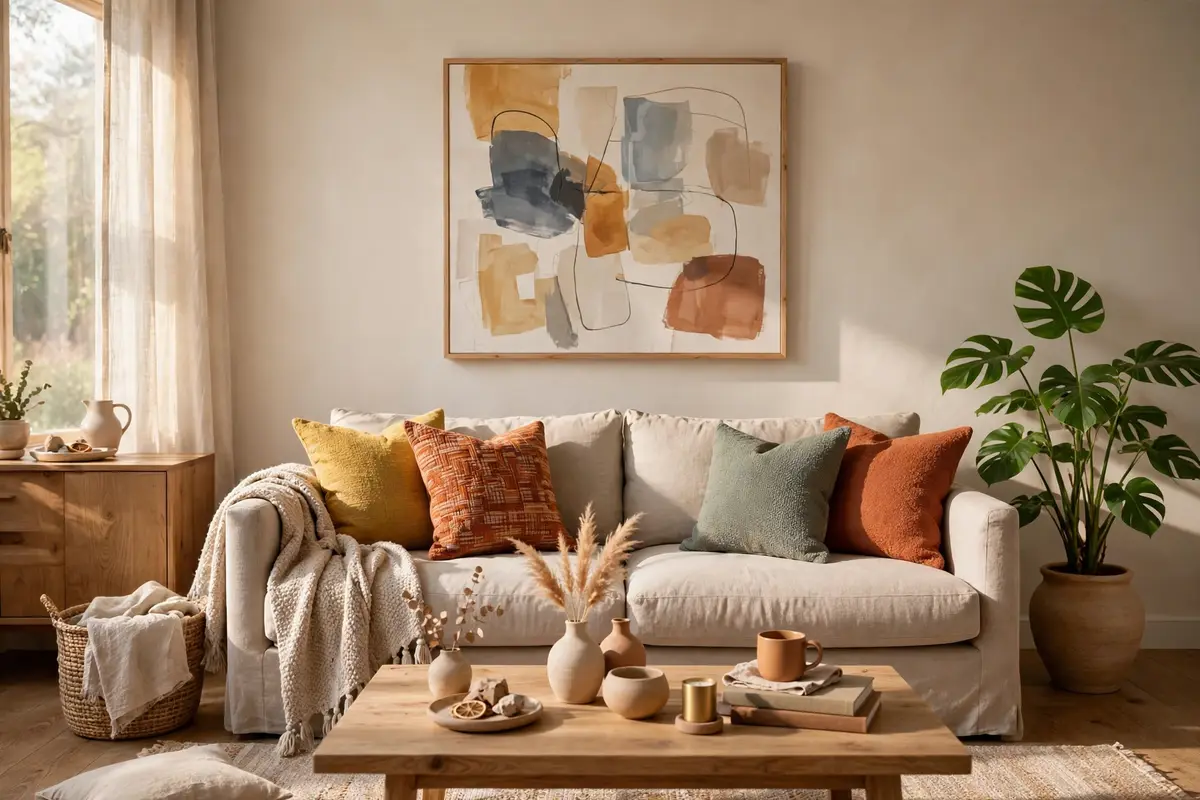
A professionally styled living room should still reflect the people who live there. Perfectly matching furniture and accessories can make a room feel impersonal if everything looks like it came from the same showroom.
The best approach is to introduce personality through a few meaningful details.
Do This:
- Display artwork that reflects your interests.
- Add a favorite collection in a small, organized arrangement.
- Use cushions to introduce colors you genuinely enjoy.
- Include plants to bring natural texture into the room.
- Mix old and new furniture for a more personal appearance.
- Leave some empty surfaces so important pieces have room to stand out.
Avoid This:
- Filling every shelf with small decorations.
- Buying accessories simply because they are trending.
- Mixing too many competing colors and patterns.
- Covering every available surface with decorative objects.
- Choosing delicate materials that cannot handle your household’s everyday needs.
You can create a polished appearance with affordable accessories. A secondhand vase, inexpensive framed print, or simple indoor plant can add more character than a collection of expensive decorations.
The key is editing. Remove anything that does not serve a practical purpose or contribute to the room’s appearance.
What to do next: Choose three to five personal items you love and give them intentional places in the room. Remove unnecessary decorations and step back to check whether the space feels more balanced.
Conclusion
Creating a beautiful interior design living room does not require expensive furniture, professional installation, or a complete makeover. It starts with comfortable seating, thoughtful proportions, clear walkways, balanced lighting, and practical storage.
Take one step at a time. Measure your furniture, identify your focal point, improve your lighting, and introduce textures that make the room feel welcoming. Small changes can create a noticeable difference when they follow a clear plan.
Save this guide on Pinterest so you can return to these decorating rules whenever you need inspiration. Try the ideas that suit your home, make the space your own, and share this guide with someone planning a living room makeover.