

How to Choose Curtains for Living Room Windows Right

Choosing the right curtains can completely change how your living room looks and feels. The best curtains living room windows need should balance privacy, natural light, comfort, and personal style without stretching your decorating budget.
For first-time decorators, selecting the right length, fabric, color, and hanging style can feel confusing. There are so many options, and even beautiful curtains can look awkward if they are measured incorrectly or hung too low.
The good news is that you do not need expensive custom window treatments to create a polished result. With a few simple measurements and thoughtful choices, you can find curtains that make your living room feel brighter, cozier, and more finished.
Decide What You Need Your Curtains to Do

Before choosing colors or shopping for pretty fabrics, think about what you want your window treatments to accomplish. Some living rooms need extra privacy from nearby houses, while others receive strong afternoon sunlight that makes watching television uncomfortable.
Start by considering these everyday needs:
- Privacy: Choose thicker fabrics if your windows face a busy street or neighboring homes.
- Natural light: Sheer or lightweight curtains work well if you enjoy bright rooms but want to soften direct sunlight.
- Temperature control: Lined curtains can help reduce drafts during colder months and limit unwanted heat from sunny windows.
- Comfort: Consider whether your windows make the seating area too bright, warm, or uncomfortable.
- Daily use: Curtains beside a frequently used patio door should open and close easily.
A good starting point is to observe your windows at different times of day. Notice where sunlight enters, which areas need privacy, and whether you regularly open the curtains. These details will help you choose practical window treatments instead of buying something based only on appearance.
Measure Your Windows Before Buying Curtains
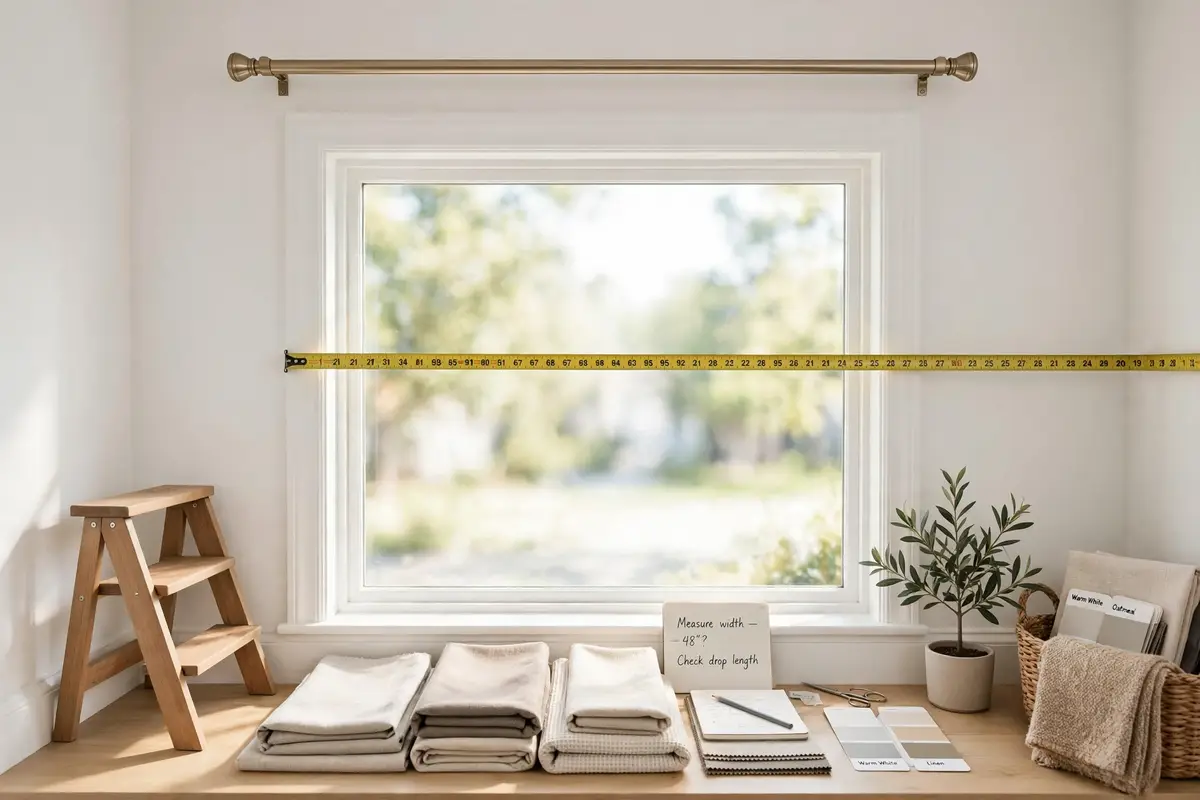
Accurate measurements are one of the most important parts of choosing curtains. Even expensive fabric can look disappointing if the panels are too narrow or too short.
Follow these simple measuring steps:
- Measure the window width: Measure from one outside edge of the window frame to the other.
- Choose your rod width: Plan for the curtain rod to extend approximately 6 to 10 inches beyond each side of the frame.
- Measure the rod: Use the full rod width, including the extra space on both sides, when calculating curtain fullness.
- Measure the height: Measure from the planned rod position down to the floor or your preferred curtain endpoint.
- Check both sides: Measure the left and right sides separately, especially if your floors are uneven.
For relaxed folds, aim for a combined curtain panel width around 1.5 to 2 times the rod width. For example, a 100-inch rod generally needs approximately 150 to 200 inches of combined fabric width.
Write down every measurement before shopping. Check the manufacturer’s finished panel dimensions rather than assuming two packages will automatically provide enough fullness.
Choose the Right Curtain Length for Your Living Room

Quick Tip: Floor-length curtains are usually the safest choice for living rooms because they create a taller, more finished appearance.
The three most useful length options are:
- Floor-length: The fabric ends just above the floor or lightly touches it. This is the most versatile choice for most living rooms.
- Puddle-length: Extra fabric rests on the floor, creating a softer, more dramatic appearance. It works best in formal spaces where curtains do not need frequent movement.
- Apron-length: The panels stop a few inches below the window sill. This is useful when a sofa or furniture sits directly beneath the window.
Avoid curtains that stop awkwardly halfway between the sill and floor. They can make the room feel visually unfinished. Measure from the actual rod position, not the top of the window frame, and check the panel’s finished length before ordering.
Pick a Fabric That Matches Your Lifestyle
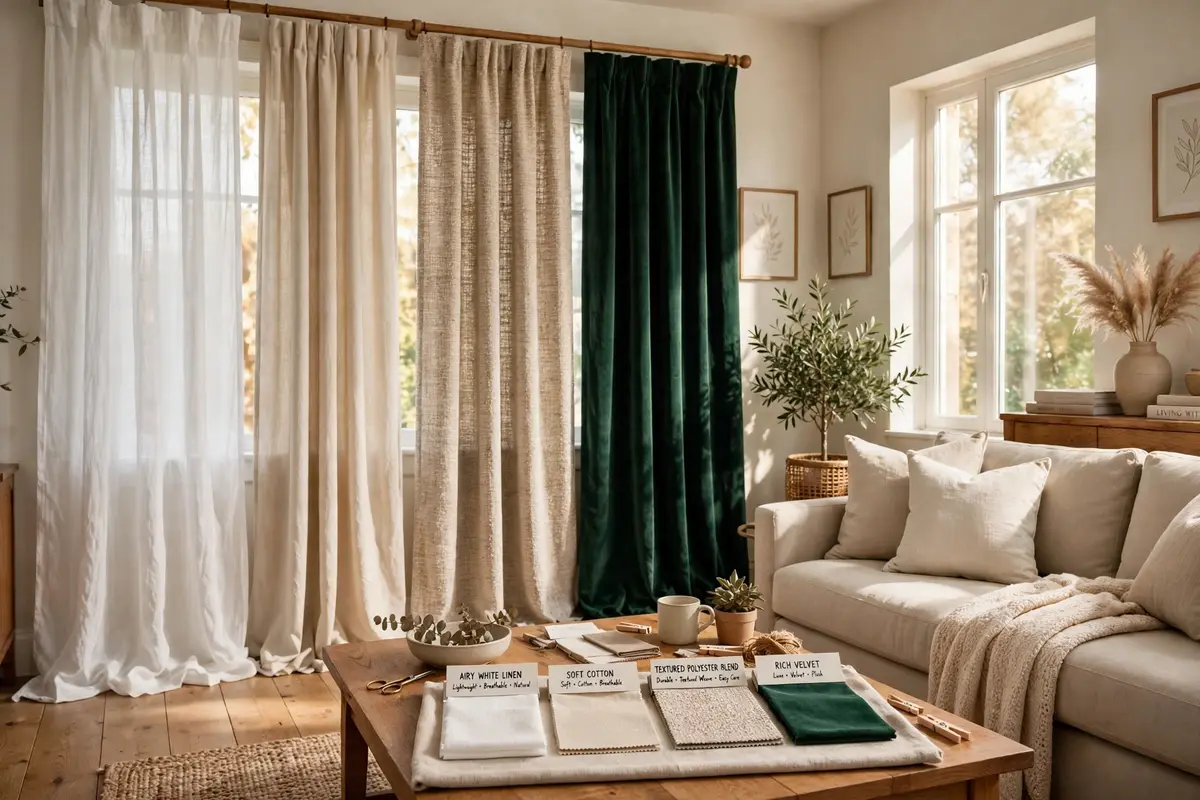
Common Mistake: Choosing curtain fabric only because it looks attractive in a store or online photograph.
Different fabrics behave differently once they are hanging in your home.
The Fix: Match the material to your room’s lighting, comfort needs, and cleaning routine.
- Linen: Offers a relaxed, airy appearance with natural texture. It is lovely for casual and modern living rooms.
- Cotton: Provides a simple, versatile finish that works with traditional, farmhouse, and contemporary interiors.
- Velvet: Adds richness, softness, and a cozy feeling. It is especially suitable for formal living rooms or colder spaces.
- Polyester blends: Often provide an affordable, durable option that is easy to maintain and available in many colors.
- Sheer fabric: Allows plenty of daylight while softening harsh sunlight and reducing direct visibility.
For busy households, washable or easy-care materials can save time and money. If your windows receive intense sunlight, consider lined panels to help protect the fabric and improve light control. Always check washing instructions before purchasing.
Select Colors and Patterns That Work With Your Decor

What You Need:
- A color already present in your living room.
- A small collection of fabric or curtain samples.
- Your existing wall and furniture colors.
- Natural and artificial lighting to test the samples.
- A clear idea of the mood you want.
Neutral shades such as ivory, beige, warm white, taupe, and light gray are easy to coordinate with different decorating styles. They also work well if you expect to change your furniture or accessories later.
If your room already has neutral furniture, consider introducing muted green, dusty blue, terracotta, or deeper brown curtains for more personality.
Patterns can also add interest, but keep the overall look balanced. If your sofa has bold patterns, choose simpler window treatments. If the furniture is plain, subtle stripes, botanical prints, or understated geometric designs can bring character to the space.
Before purchasing, hold a sample near your walls and sofa in daylight and evening lighting. This small step helps you avoid colors that look completely different once installed.
Decide Whether You Need Sheer, Blackout, or Thermal Curtains

Before: A living room receives harsh sunlight throughout the afternoon. The television screen becomes difficult to see, and the furniture feels exposed to neighboring houses.
After: Lightweight sheers soften the incoming daylight, while heavier lined curtains provide additional privacy and light control whenever needed.
Consider these options:
- Sheer curtains: Best for bright spaces where you want filtered daylight and a softer window appearance.
- Light-filtering curtains: Reduce glare while allowing some natural light into the room.
- Blackout curtains: Block most incoming light and work well in media rooms or spaces where strong sunlight is a problem.
- Thermal-lined curtains: Add an insulating layer that can help reduce heat transfer and make drafty windows more comfortable.
- Layered curtains: Combine sheers with heavier drapes so you can adjust privacy and brightness throughout the day.
Some thermal curtain products advertise substantial reductions in heat loss, sometimes around 25 percent under particular conditions. Actual results depend on the window, installation, fabric, and surrounding insulation.
If you want flexibility without purchasing expensive custom treatments, start with an affordable sheer panel and add heavier curtains later.
Choose a Curtain Heading That Is Easy to Use
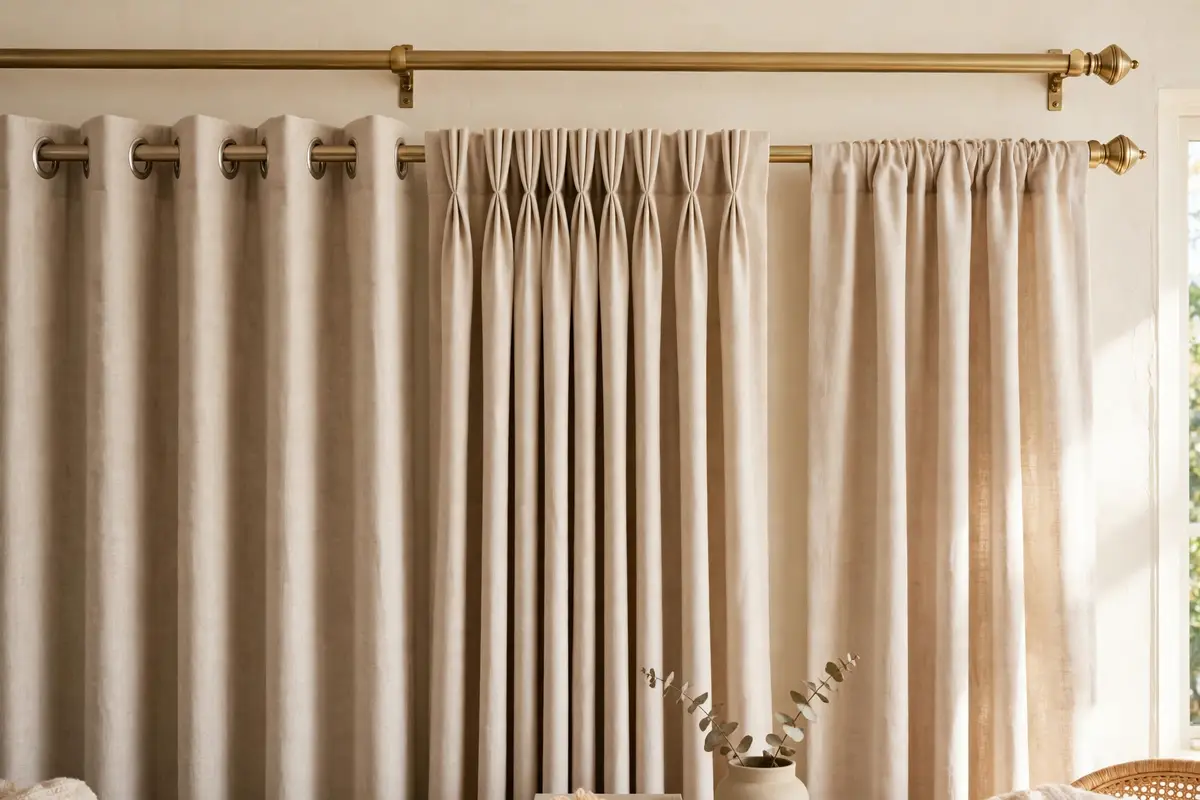
The heading is the part of the curtain that attaches to the rod. It affects both the appearance and how easily the panels move.
Do This:
- Choose grommet curtains if you want a clean, modern look and panels that slide easily along the rod.
- Choose pinch pleats for a more traditional, tailored appearance with structured folds.
- Choose rod pocket curtains for a simple, decorative finish, especially when the panels will remain mostly stationary.
- Use sturdy rings or clips if you want an affordable way to hang basic curtain panels.
- Check the heading dimensions to make sure they fit your curtain rod.
Avoid This:
- Choosing decorative headings that make everyday opening difficult.
- Buying panels without checking rod compatibility.
- Using lightweight hardware for heavy velvet curtains.
- Ignoring the extra fabric needed for attractive folds.
For frequently used living room windows, prioritize easy movement. A beautiful curtain is much more useful if you can open and close it without struggling every morning.
Hang Your Curtain Rod Higher and Wider
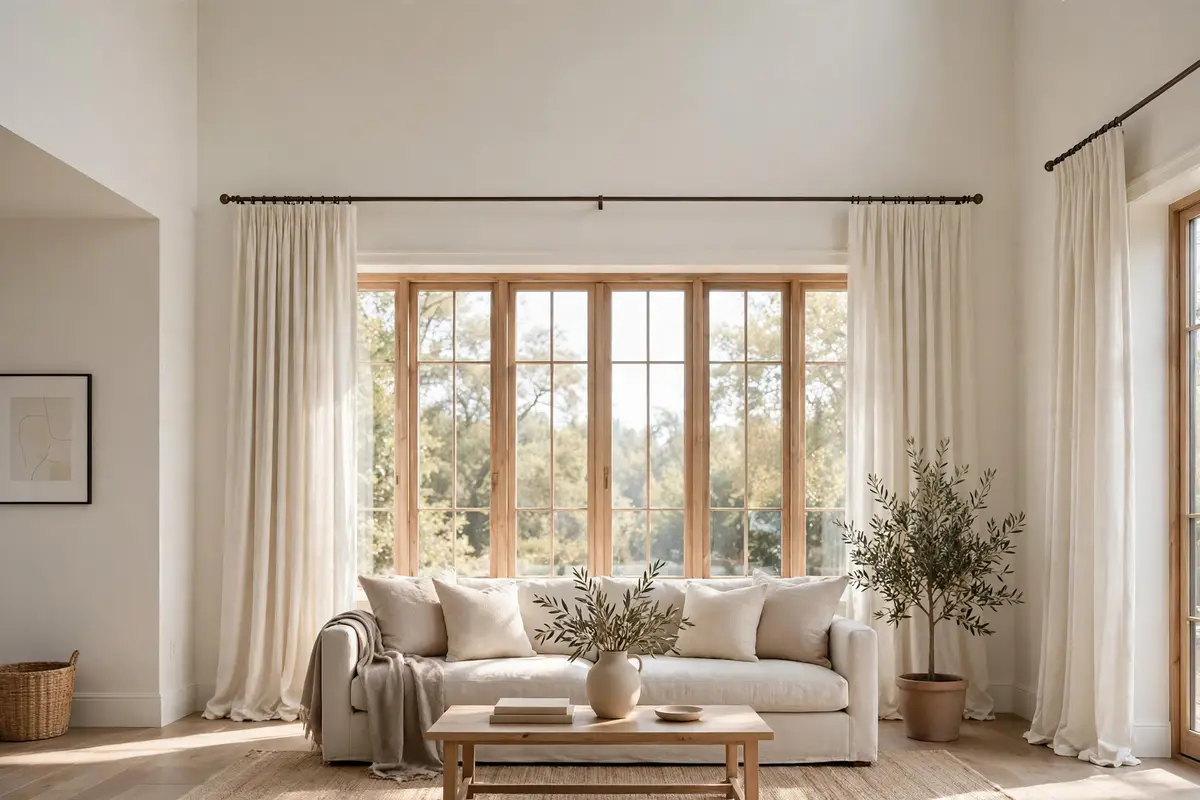
Quick Facts:
- Mount the rod approximately 4 to 6 inches above the window frame as a starting point.
- Extend the rod approximately 6 to 10 inches beyond each side of the frame.
- Use a longer extension if your wall space allows it.
- Check that the curtains can stack beside the window without covering too much glass.
- Use suitable wall anchors or hardware for the weight of your curtains.
Hanging curtains higher makes the ceiling appear taller, while extending the rod allows more daylight to enter when the panels are open. This is especially helpful in small apartments and living rooms with narrow windows. Before drilling, check for pipes, wiring, and suitable fixing points. If you rent, removable hardware may be a better solution. Measure twice and mark the rod position with a pencil before installation.
Create a Custom Look Without Spending Too Much
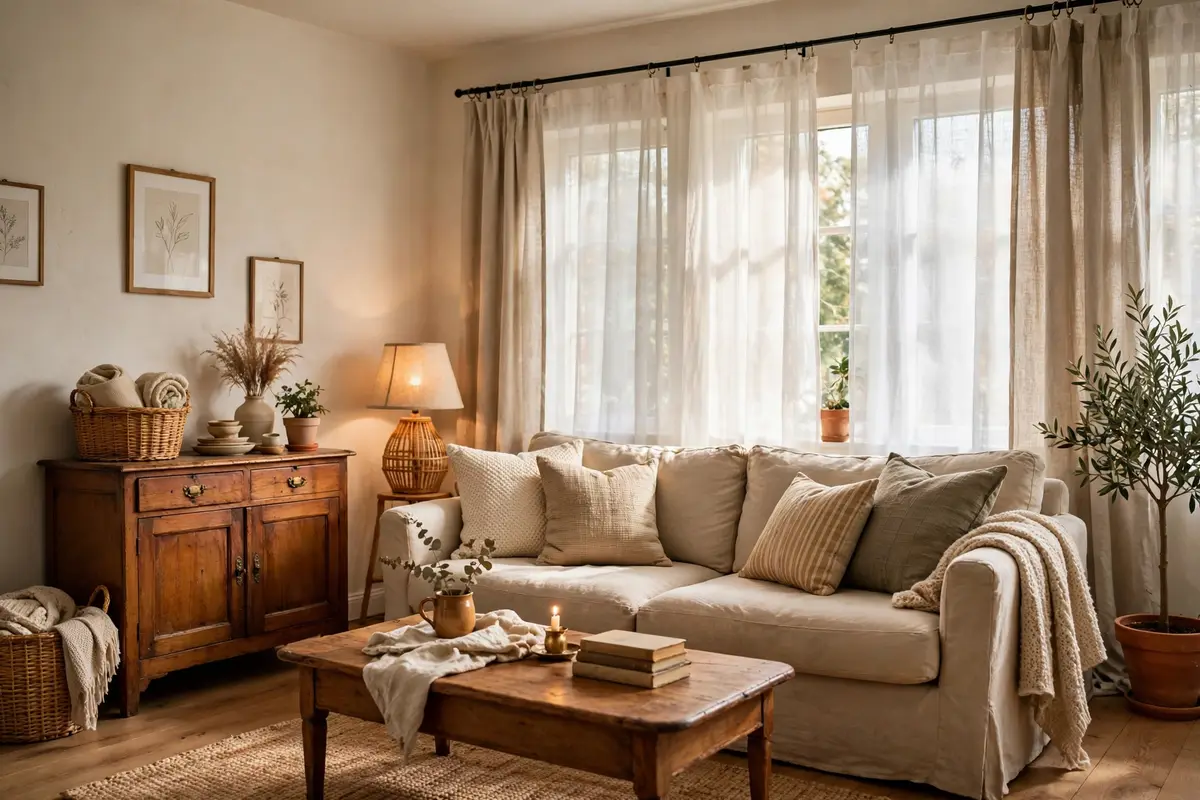
A designer-looking window does not require expensive custom-made curtains. Small details can make affordable panels look considerably more polished.
Start with ready-made panels in a simple neutral color. Choose fabric with enough width for attractive folds, and hang the rod higher than the window frame. These two choices can make basic curtains look more expensive.
Other affordable ideas include:
- Use curtain clips: Simple metal rings and clips can give inexpensive panels a neat, tailored appearance.
- Add lining: A separate lining can improve privacy, reduce light, and give lightweight fabric a fuller appearance.
- Layer affordable fabrics: Pair basic white sheers with thicker ready-made panels.
- Choose simple hardware: Black, brass, or brushed nickel rods can make budget curtains feel more intentional.
- Hem instead of replacing: Use iron-on hemming tape to adjust curtains that are slightly too long.
- Shop seasonal sales: Look for matching pairs during home furnishing sales rather than buying one panel at a time.
Renters can also consider tension rods for suitable windows, no-drill brackets, or removable curtain hardware designed for the specific wall surface and curtain weight. Always check the manufacturer’s weight limits and rental agreement before installing anything.
Avoid Common Curtain Measuring and Styling Mistakes
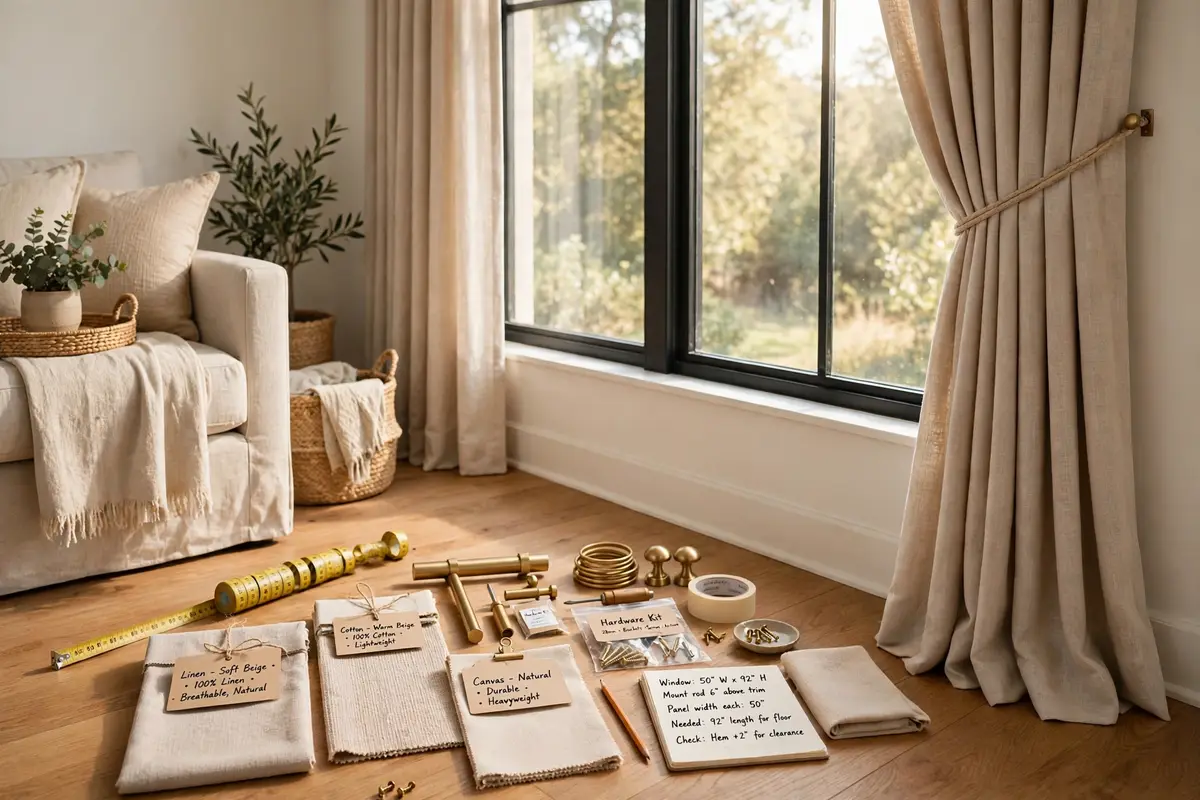
Even simple window treatments can look wrong if a few small details are overlooked.
Follow these final steps before completing your purchase:
- Check the total width: Make sure the combined panels provide enough fabric for relaxed folds instead of looking stretched flat.
- Measure from the rod: Curtain length should be calculated from where the rod or track will sit.
- Account for hardware: Rings, clips, and heading styles can change the final hanging height.
- Measure both windows: Do not assume every window in your living room has identical dimensions.
- Check furniture placement: If a sofa sits directly beneath the window, apron-length curtains may be more practical than full-length panels.
- Consider curtain clearance: Make sure panels can move freely around furniture, radiators, and doors.
- Order carefully: Read the package dimensions and check whether the listed width applies to one panel or the entire pair.
Before buying, compare your measurements with the product specifications one final time. If you are unsure about length, use paper or fabric samples to mark the proposed endpoint on your wall. This simple check can prevent costly returns and help you choose a style that looks right from the beginning.
Conclusion
Choosing the right curtains living room windows need is easier when you start with measurements, lighting, privacy, and everyday comfort. Then consider fabric, color, length, and heading styles to create a look that suits your home and budget.
You do not need expensive custom treatments to achieve beautiful results. Start with one window, measure carefully, and choose practical materials that complement your existing furniture.
Save this guide on Pinterest so you can revisit the ideas while decorating. Try these steps in your own living room, and share the guide with someone who is choosing new curtains for their home.