Apartment Living Room Ideas With Renter-Safe Style

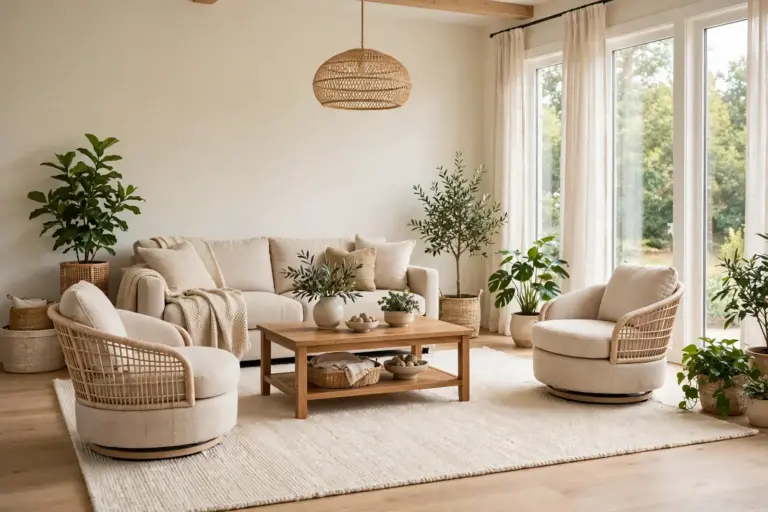
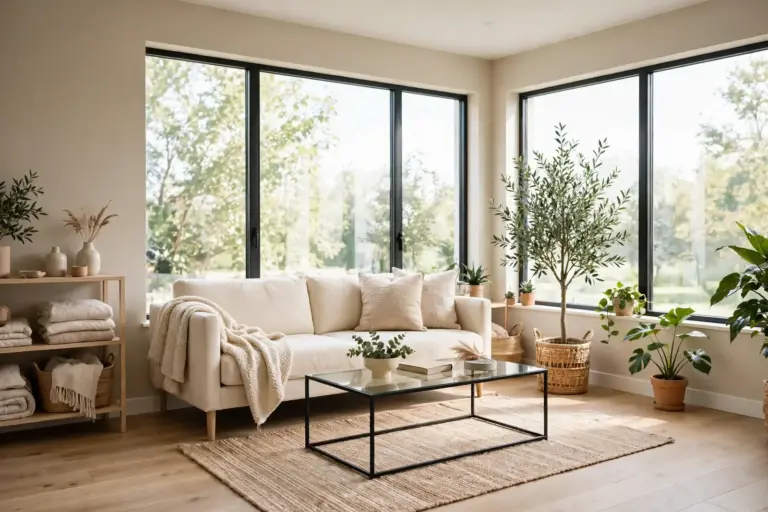
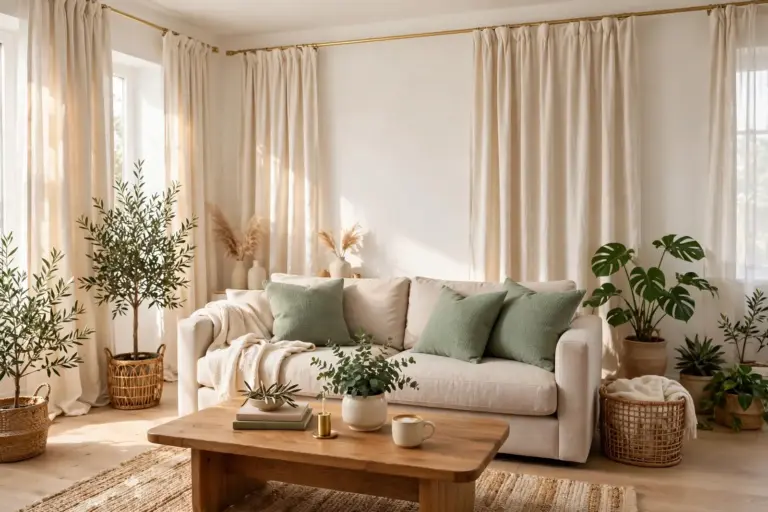
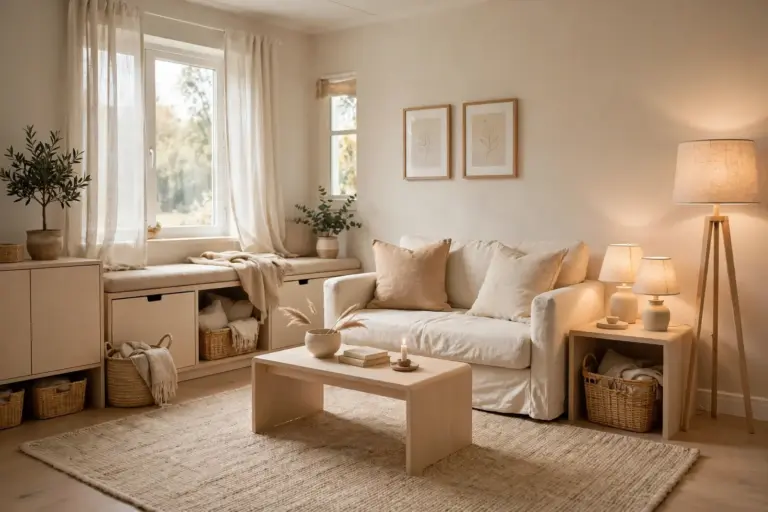
An apartment living room should feel bright, comfortable, and personal, even when the walls cannot be painted and the furniture must fit a compact floor plan. With renter-safe decor, smart layouts, and a few affordable updates, a rental space can look polished without risking the deposit. The best apartment living room ideas work around landlord rules instead of fighting them. They use removable hooks, tension rods, washable textiles, and furniture that can move easily to the next home. Start with the layout, add light and texture, and choose pieces that serve more than one purpose. Small changes can make a rental feel like a real home.
Start With a Better Furniture Layout Before Buying Anything
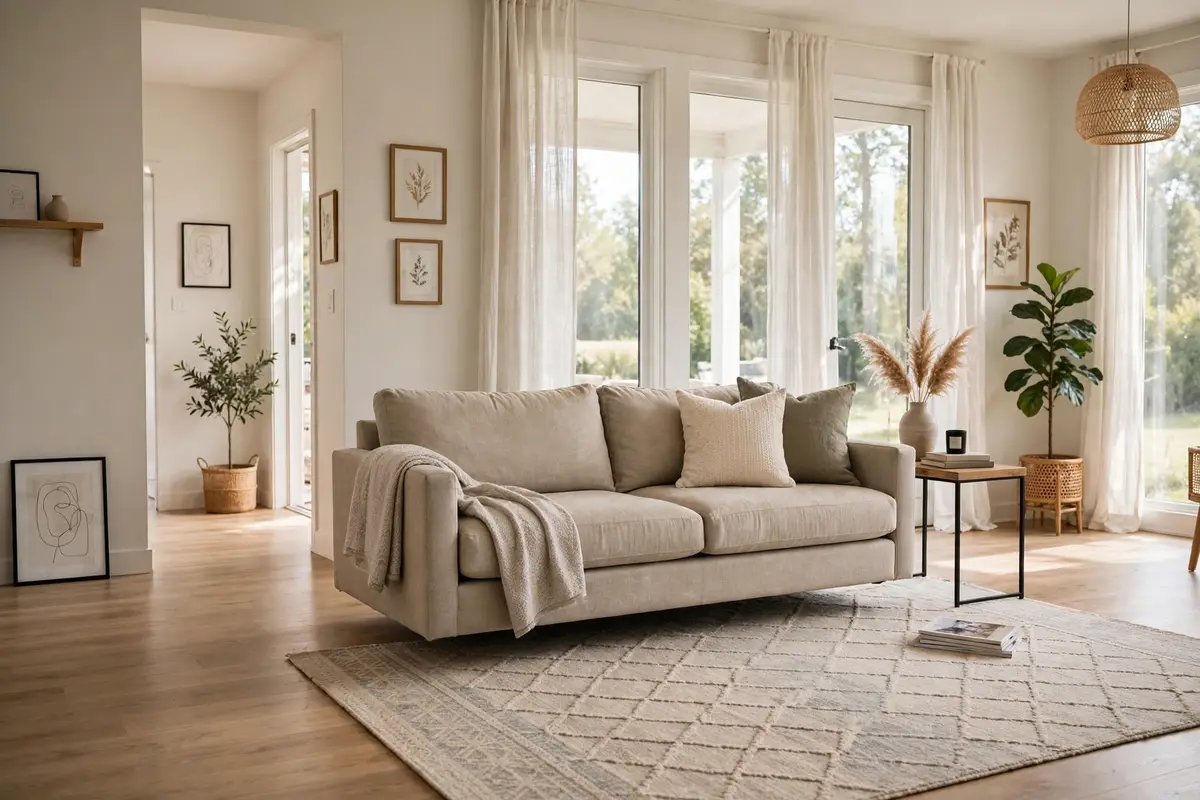
Before buying new furniture or decorative pieces, look at how the room is arranged. A better layout can make a small apartment feel larger without spending any money.
- Float the sofa slightly. Move the sofa a few inches away from the wall to create depth. A slim console or floating shelf behind it can hold a lamp, books, or everyday essentials.
- Keep walkways open. Leave at least 30 inches for the main walking route. Avoid placing chairs or tables where they block the path between the door and the seating area.
- Face the longest wall. Position the sofa so it faces the longest practical wall. This gives the room a clear focal point and makes the seating arrangement feel more intentional.
- Use the rug to define the zone. Place the front legs of the sofa and chairs on one large rug. This connects the furniture and makes the seating area feel like a single, organized space.
- Try a corner arrangement. In a very small room, an L-shaped layout can use two walls efficiently while leaving the centre of the room open.
- Measure before moving. Sketch a simple floor plan and mark the position of each large item. Measuring first prevents the frustration of moving heavy furniture twice.
A thoughtful layout is the foundation of every other decorating decision. Once the furniture sits in the right place, lighting, colour, and accessories become much easier to arrange.
Use Renter-Safe Wall Decor That Leaves No Marks
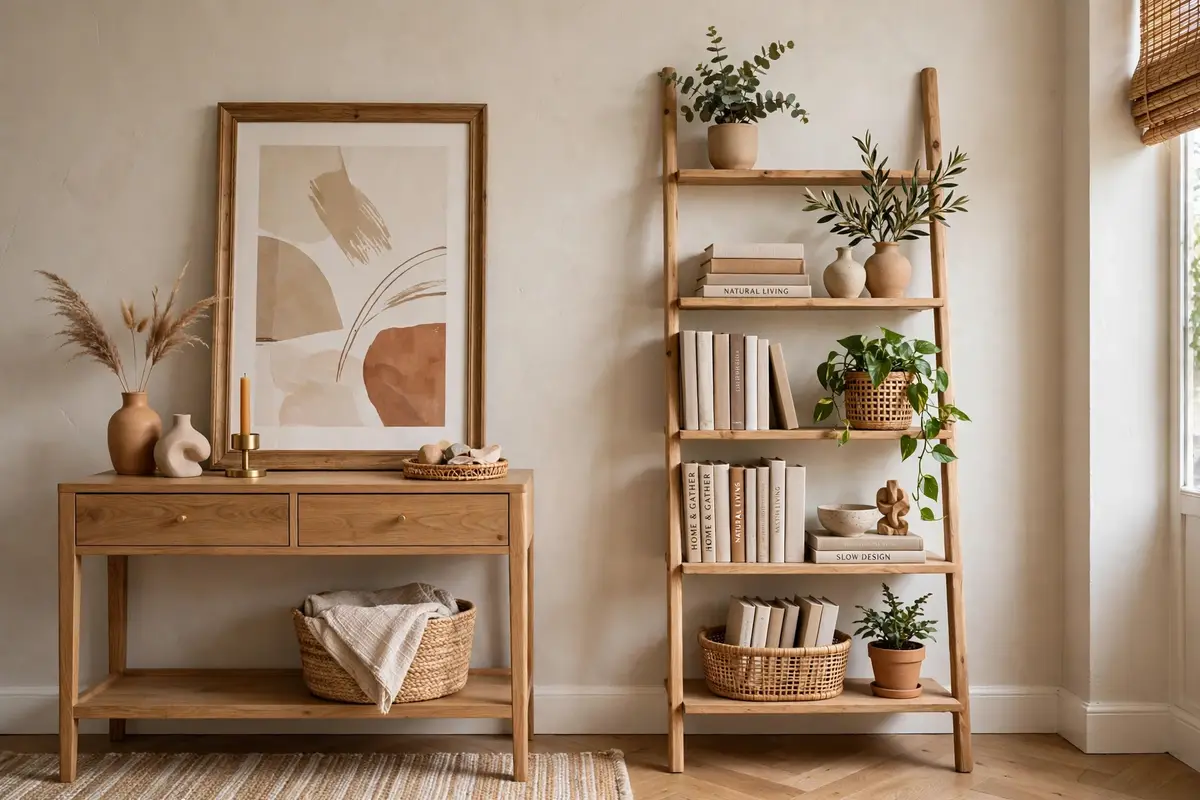
Rental walls often come with strict rules about nails and screws, but that does not mean the walls have to stay bare. Removable decor can add personality without damaging paint or plaster.
- Adhesive hooks for lightweight art. Use removable adhesive hooks for framed prints, small mirrors, and lightweight wall hangings. Check the weight limit on the packaging and follow the removal instructions carefully.
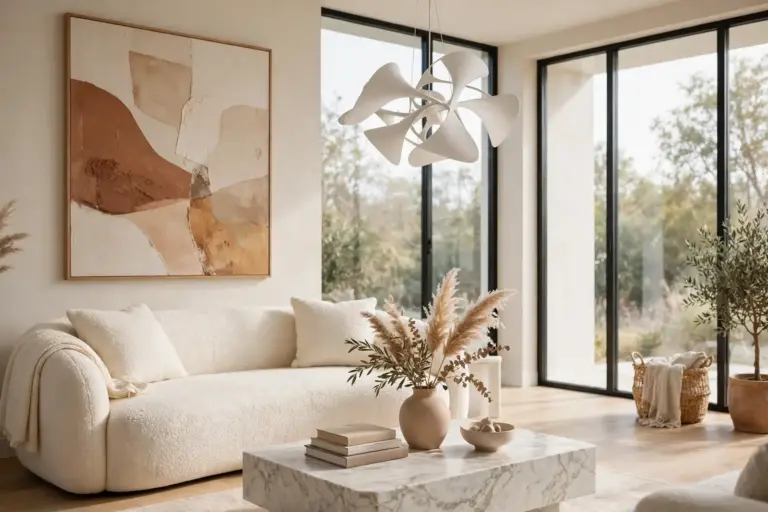
- Lean large frames. Place a large framed print or mirror on the floor and lean it against the wall. This creates a stylish focal point without any holes.
- Peel-and-stick wallpaper. Apply removable wallpaper to one accent wall or inside a bookshelf. It peels away cleanly when the tenancy ends.
- Washi tape frames. Use colourful washi tape to create simple frames around small prints or photos. It removes easily and adds a playful touch.
- Tension rods for fabric. Hang a lightweight tapestry or fabric panel from a tension rod. This adds colour and texture without drilling.
- Command strips for shelves. Small floating shelves can be mounted with heavy-duty adhesive strips if the product supports the weight and the wall surface is suitable.
Before using any adhesive product, test it on a hidden spot and check the landlord’s rules. Some surfaces, such as textured walls or fresh paint, may not hold adhesive strips well.
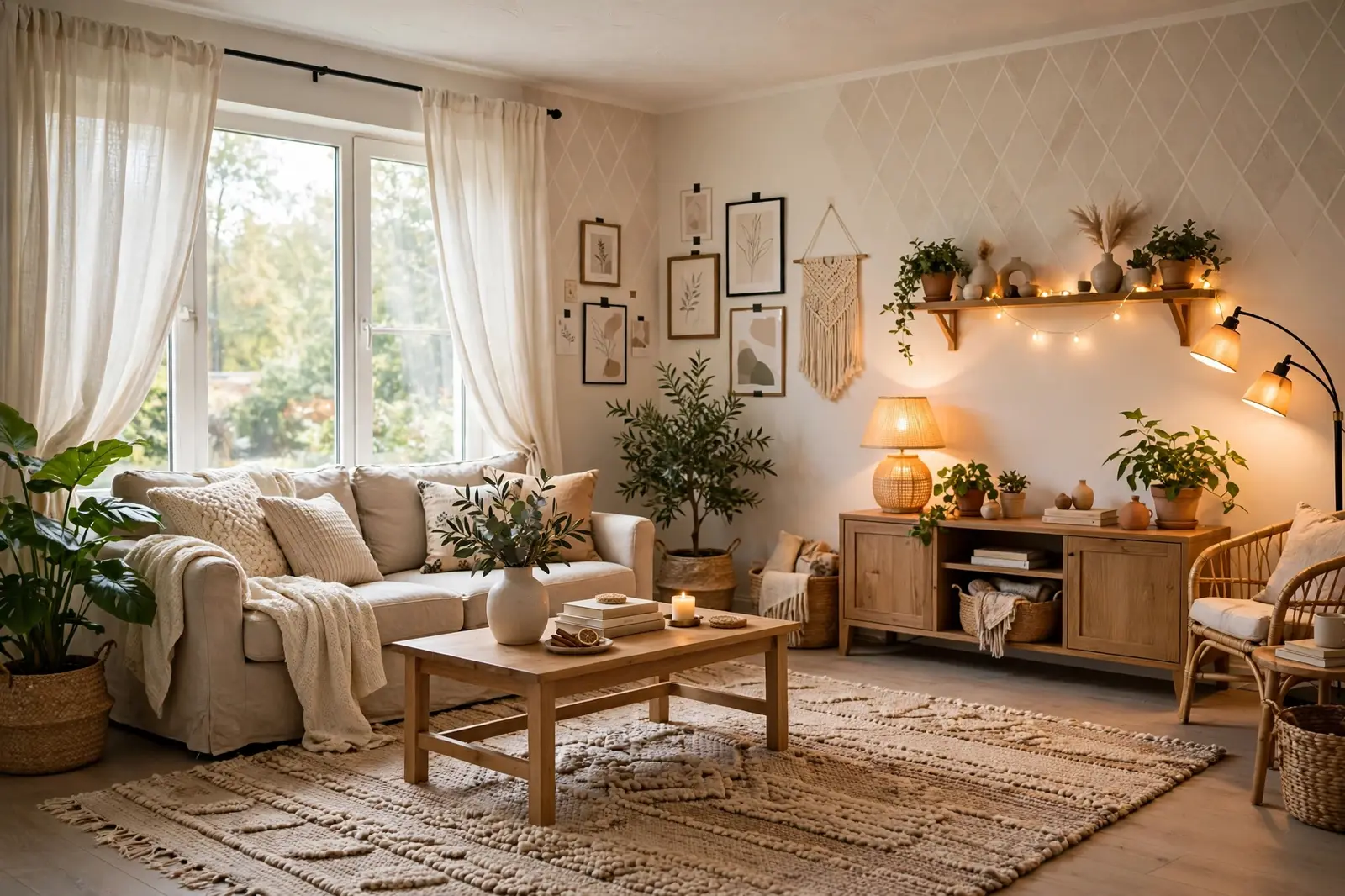
A boho living room look works well in rentals because woven wall hangings, macrame, and lightweight textiles can be hung from removable hooks without damaging the walls.
Layer Lighting to Make a Small Room Feel Larger
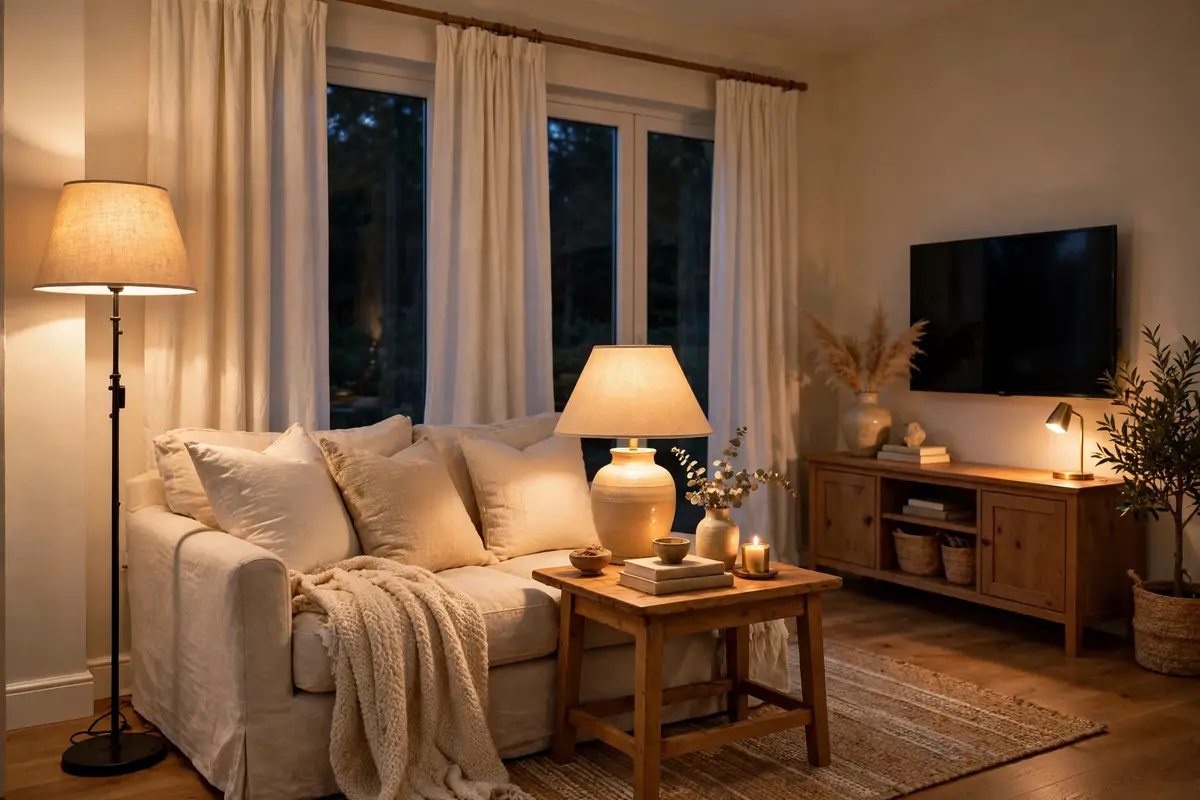
Good lighting can change how large a room appears. Dark corners and a single harsh ceiling light make a compact apartment feel smaller and less welcoming.
- Use three light sources. Combine a floor lamp, a table lamp, and the ceiling light. Each source brightens a different part of the room and creates a softer overall glow.
- Choose warm bulbs. Warm white bulbs around 2700K create a cozy atmosphere. Avoid cool, blue-toned lighting that can make a small room feel clinical.
- Place lamps near seating. Position a floor lamp beside the sofa and a table lamp on a side table. This makes reading and relaxing more comfortable after dark.
- Add a mirror opposite the window. A large mirror reflects daylight deeper into the room and makes the space appear brighter during the day.
- Use battery-powered lights. Battery-operated candles, fairy lights, and LED strips can add warmth to shelves and dark corners without extra wiring.
- Keep curtains light. Sheer or light-coloured curtains let daylight through while maintaining privacy. Heavy, dark curtains can make a small room feel closed in.
Layered lighting makes the room feel taller, brighter, and more inviting. It is also one of the cheapest ways to improve a rental without any permanent changes.
Choose a Large Rug to Anchor the Seating Area
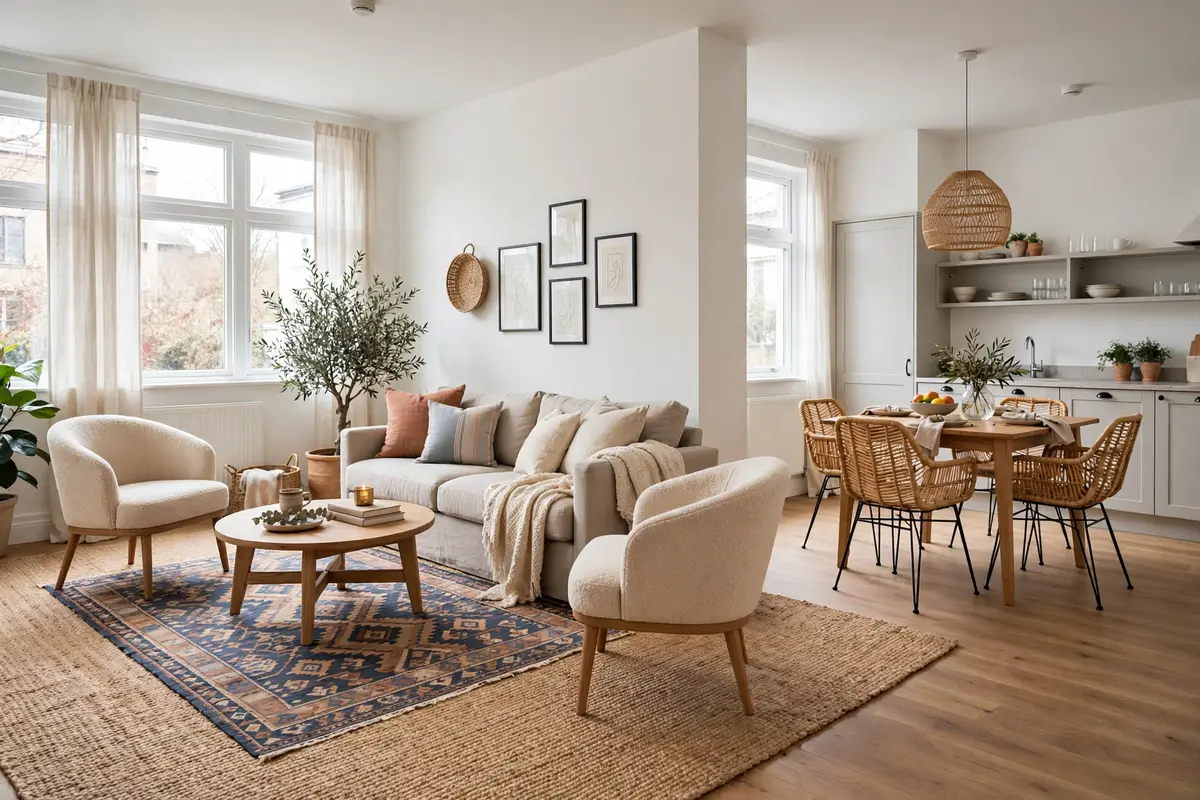
A rug that is too small can make the furniture look disconnected and the room feel cramped. A larger rug pulls the seating together and defines the living area.
- Size it generously. For a room around 10×12 feet, an 8×10-foot rug is a good starting point. The front legs of the sofa and chairs should sit on the rug.
- Layer for texture. Place a smaller patterned rug over a larger jute base rug. This adds colour and pattern without overwhelming the room.
- Leave the dining area bare. In an open-plan apartment, keep the dining zone on the bare floor. This creates a visual break between the two areas.
- Choose washable materials. A washable rug or a durable low-pile rug is easier to clean in a rental. It also protects the floor underneath from scratches and stains.
- Use a rug pad. A thin rug pad prevents slipping and adds a little extra cushioning. It also protects both the rug and the floor.
- Match the colour palette. Choose a rug in a neutral tone with a subtle pattern. This keeps the room feeling calm while allowing cushions and throws to add colour.
A well-chosen rug makes the seating area feel complete. It also protects the landlord’s flooring, which helps when the deposit is returned.
Hang Curtains Higher and Wider for Taller Windows
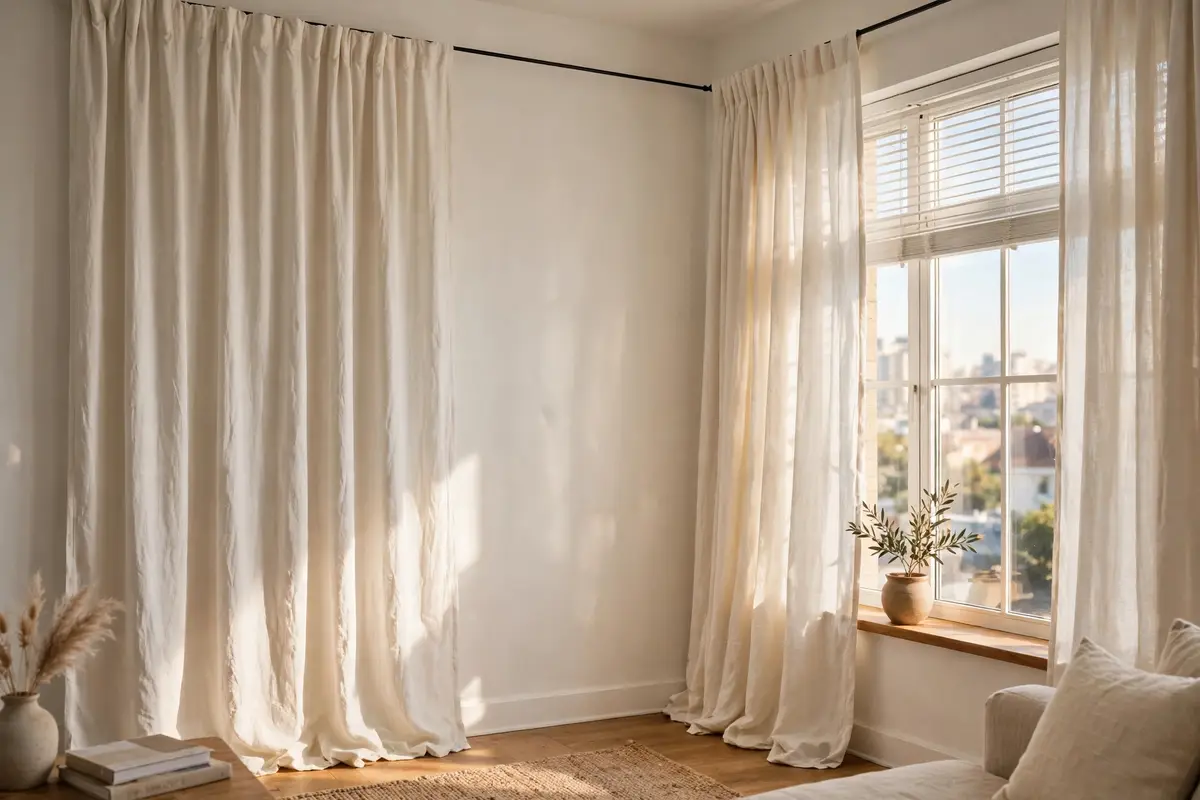
Curtains hung too low can make windows look short and the ceiling feel lower. Hanging them higher and wider creates the illusion of taller windows and a more spacious room.
- Mount the rod near the ceiling. Position the curtain rod 2 to 4 inches below the ceiling. This draws the eye upward and makes the room feel taller.
- Extend the rod wider. Make the rod 6 to 12 inches wider on each side of the window. When the curtains are open, they sit outside the glass and let in more light.
- Use a tension rod. A tension rod fits inside the window frame without drilling. It works well for lightweight sheer panels or cafe curtains.
- Choose floor-length panels. Hang curtains that reach the floor for a polished look. If the rod is near the ceiling, measure from the rod to the floor.
- Pick light fabrics. Sheer white or light linen panels allow daylight through while keeping the room private. Avoid heavy, dark fabrics that block light.
- Layer sheer and solid panels. Use sheer panels during the day and heavier panels at night. This gives flexibility without changing the rod.
Higher, wider curtains are a simple renter-safe update. They make the windows look larger and the whole room feel more open.
Add Colour and Texture With Cushions, Throws and Plants
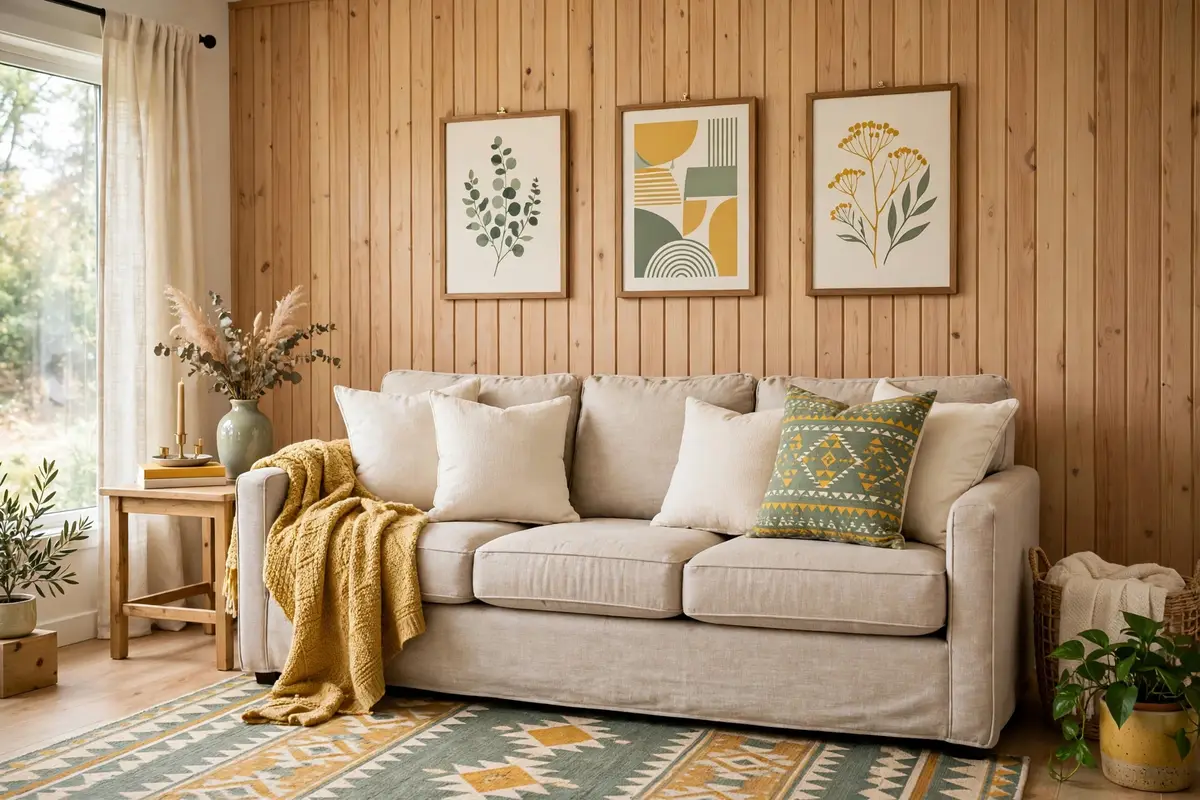
Neutral furniture can look plain without colour and texture. Cushions, throws, and plants are affordable ways to add personality without permanent changes.
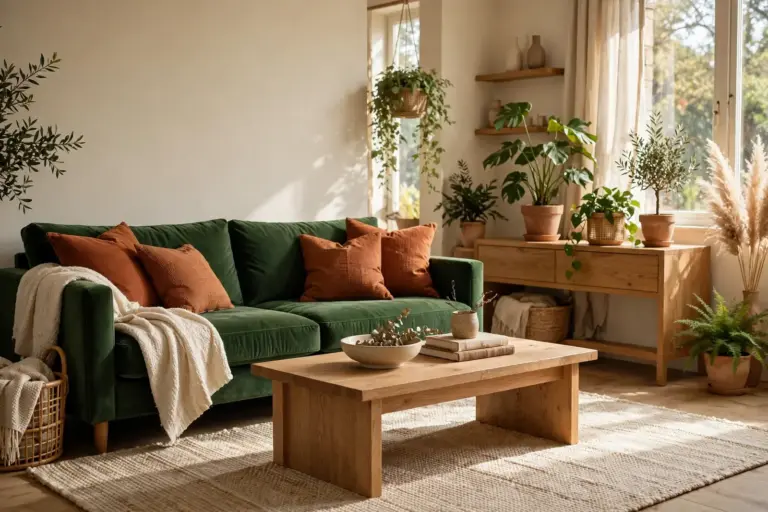
- Start with two accent colours. Choose two colours that work with the existing furniture, such as terracotta and sage green. Repeat them through cushions, throws, and small accessories.
- Mix textures. Combine smooth cotton, chunky knits, woven baskets, and soft velvet. Different textures make the room feel layered and interesting.
- Use washable covers. Removable cushion covers are easy to wash and change. They also protect the sofa from everyday wear.
- Add plants for life. Pothos, snake plants, and small potted herbs bring natural colour and freshness. Choose low-maintenance varieties that suit the available light.
- Group accessories in threes. Arrange three items of different heights on a side table or shelf. This creates a balanced display without looking cluttered.
- Keep it seasonal. Swap cushion covers and throws when the seasons change. This refreshes the room without buying new furniture.
Small living room decor ideas work just as well in apartments because the same principles apply — smart layouts, light colours, and practical storage make any compact room feel larger and more comfortable.
Pick a Coffee Table That Does More Than Hold Cups
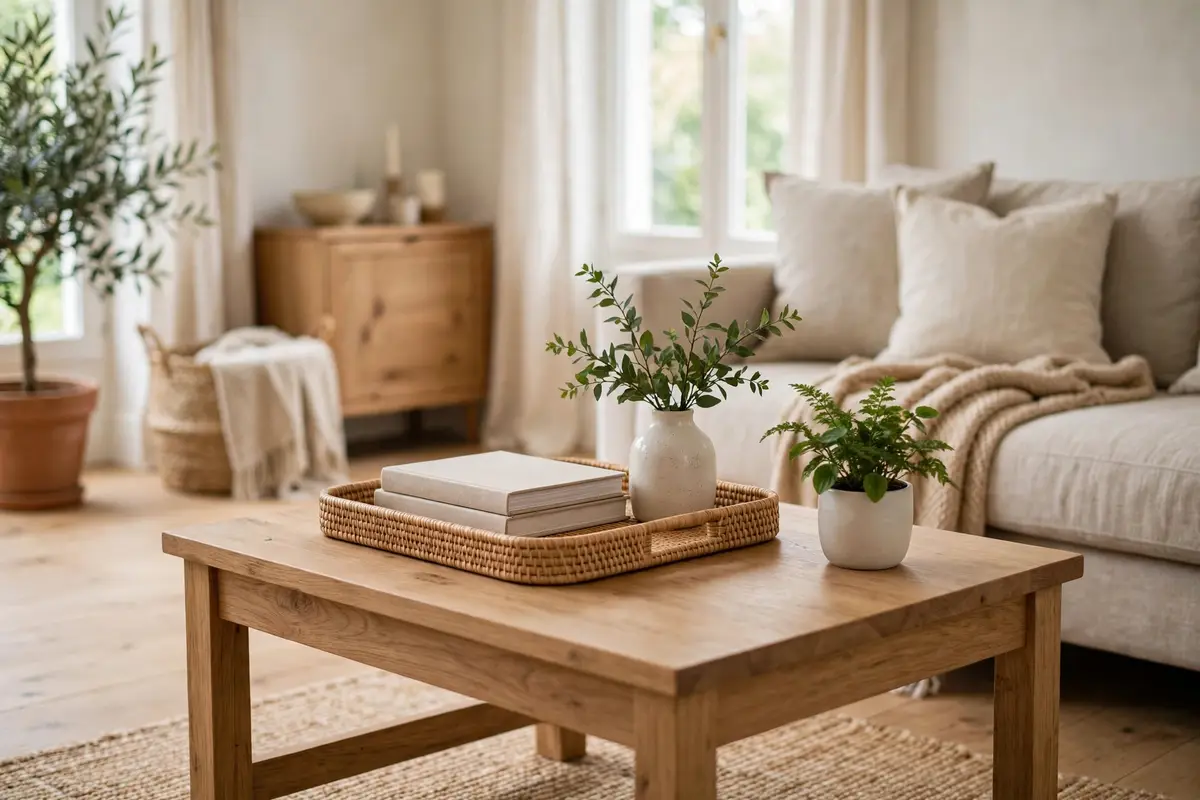
A coffee table is one of the most used pieces of furniture in a living room, so it should work harder than just holding drinks. In a small apartment, a multifunctional table can save space and add storage.
- Choose a lift-top table. A lift-top coffee table raises to desk height for working or dining. It also hides storage underneath for blankets, books, or laptops.
- Look for built-in storage. Tables with drawers, shelves, or baskets underneath keep everyday items out of sight.
- Pick the right shape. A round or oval table works well in tight spaces because it has no sharp corners and is easier to walk around.
- Use a tray for organization. Place a small tray on the table to group remotes, candles, and coasters. This keeps the surface tidy.
- Consider a nesting set. Two small tables that tuck together can be separated when guests visit and stored away when not needed.
- Match the scale. The table should be about two-thirds the length of the sofa and sit 14 to 18 inches away from it.
A practical coffee table makes the seating area more comfortable and helps keep a small apartment organized.
Choose Multifunctional Furniture That Saves Space
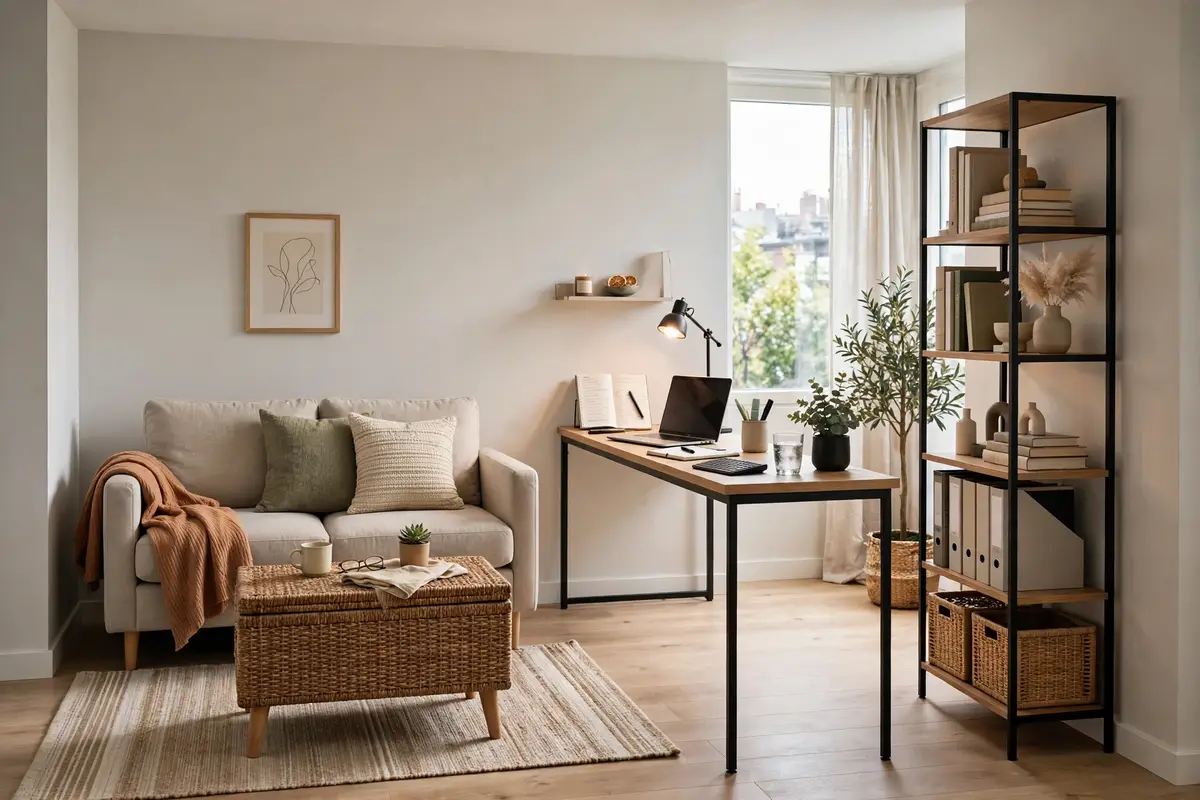
In a compact apartment, every piece of furniture should earn its place. Multifunctional pieces provide extra seating, storage, or workspace without taking up additional floor space.
- Storage ottomans. Use an ottoman instead of a traditional coffee table. It provides extra seating, hides blankets and toys, and can serve as a footrest.
- Sofa beds. A sofa bed gives guests a comfortable place to sleep without needing a separate guest room.
- Fold-down desks. A wall-mounted desk folds away when not in use, freeing up floor space during the day.
- Nesting tables. Small tables that stack together can be pulled out when needed and stored neatly afterward.
- Benches with storage. A bench near the door or under a window can hold shoes, books, or seasonal items.
- Drop-leaf tables. A table with folding sides works as a small desk most days and expands for dining when guests arrive.
Before buying, measure the space and check that each piece fits through the apartment door and hallway. Furniture that cannot be moved easily becomes a problem when the tenancy ends.
Multifunctional furniture makes a small apartment feel larger because fewer pieces are needed to do the same jobs.
Create Zones in an Open-Plan Apartment
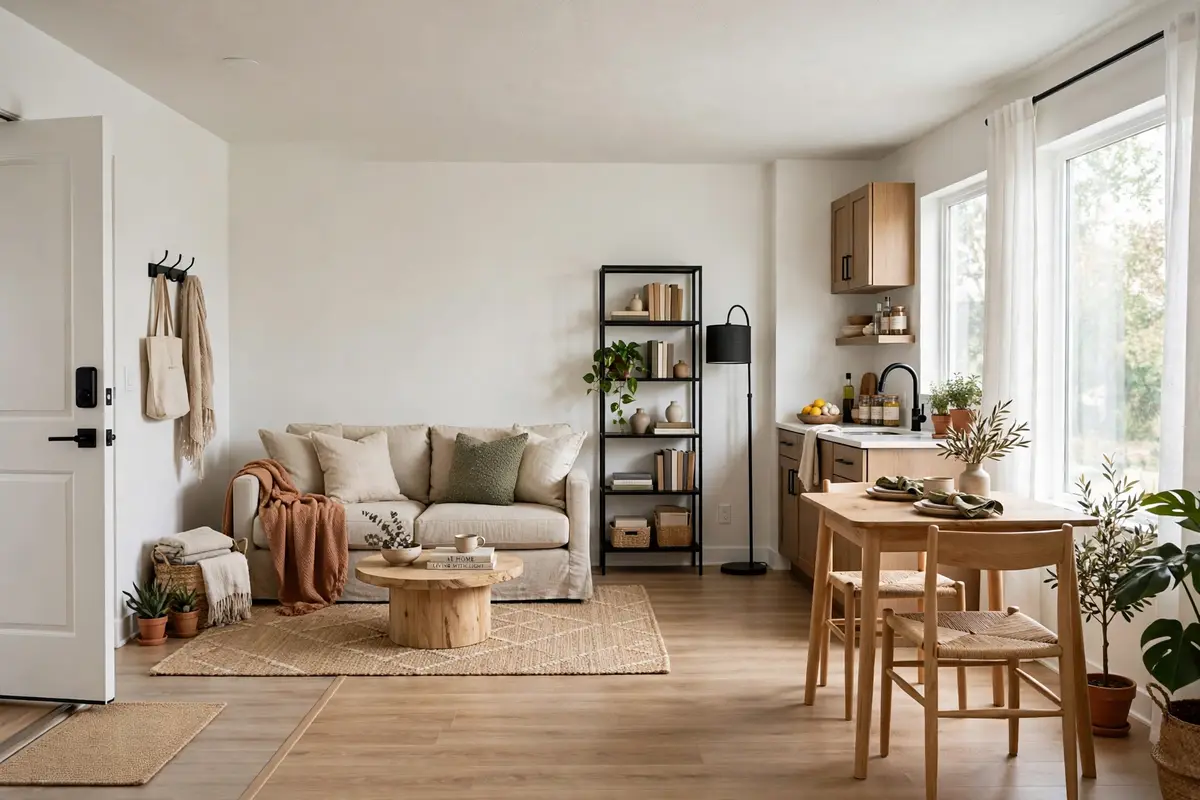
Open-plan apartments combine the living, dining, and sometimes kitchen areas into one large space. Without clear zones, the room can feel messy and undefined.
- Use rugs to define areas. Place one rug under the seating area and leave the dining area on the bare floor. This creates a visual boundary without walls.
- Add a low bookcase. A low, open bookcase can act as a room divider while keeping light flowing through the space.
- Position furniture back to back. Place the sofa with its back to the dining area. This creates a natural separation between the two zones.
- Use lighting to mark zones. Hang a pendant light over the dining table and use floor lamps in the seating area. Different lighting helps each zone feel distinct.
- Keep walkways clear. Leave at least 30 inches for the main path between zones. Avoid placing furniture where it blocks movement.
- Repeat colours across zones. Use the same accent colours in both areas to keep the whole space feeling connected.
Clear zones make an open-plan apartment feel organized and purposeful. Each area has its own function while the overall space still feels open and connected.
Protect Your Deposit With Small Everyday Habits
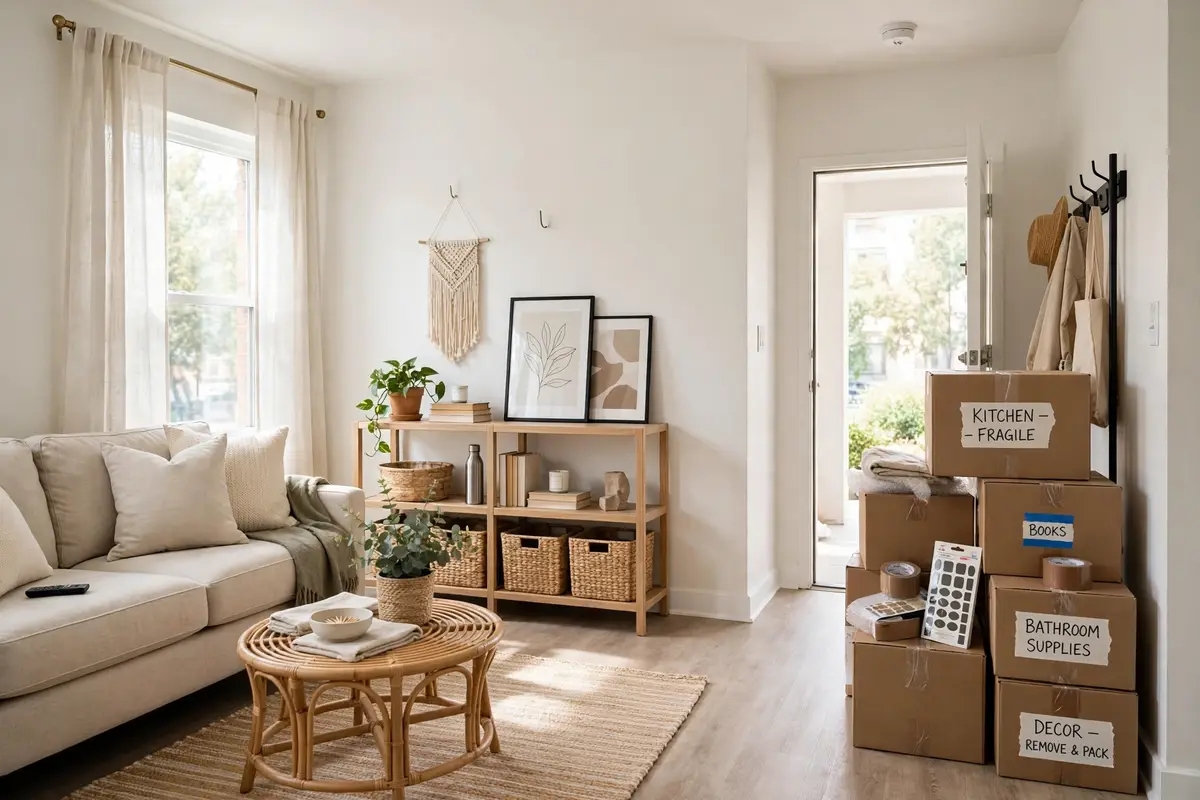
A rental deposit is a significant amount of money, so protecting it is worth a little extra care. Small habits can prevent the most common causes of deposit deductions.
- Use felt pads. Stick felt pads under furniture legs to prevent scratches on wooden or laminate floors.
- Choose washable textiles. Washable cushion covers, throws, and rugs are easier to clean after spills and everyday wear.
- Clean spills quickly. Wipe up spills immediately to prevent stains on carpets, rugs, and upholstery.
- Use coasters and placemats. Protect wooden tables and surfaces from water rings and heat marks.
- Avoid adhesive damage. Remove adhesive hooks and strips slowly, following the manufacturer’s instructions. Test new products on a hidden spot first.
- Keep a cleaning kit handy. Store basic cleaning supplies in one place so small messes can be handled quickly.
- Document the condition. Take photos of the apartment when moving in and when moving out. This provides evidence if there is a dispute about damage.
- Check the lease. Read the tenancy agreement before making any changes. Some landlords allow small nails or picture hooks, while others do not.
Protecting the deposit is mostly about consistency. A few simple habits can save hundreds of dollars when the tenancy ends.
Conclusion
An apartment living room can feel bright, personal, and comfortable without breaking landlord rules or risking the deposit. Renter-safe decor, smart layouts, layered lighting, and multifunctional furniture make even a compact rental feel like a real home. Start with the layout, add light and texture, and choose pieces that work hard for the space. Save these ideas on Pinterest so they are easy to revisit, try the updates that suit your apartment and budget, and share this guide with anyone renting a small space. A few thoughtful, reversible changes can transform a plain rental into a warm, welcoming home.