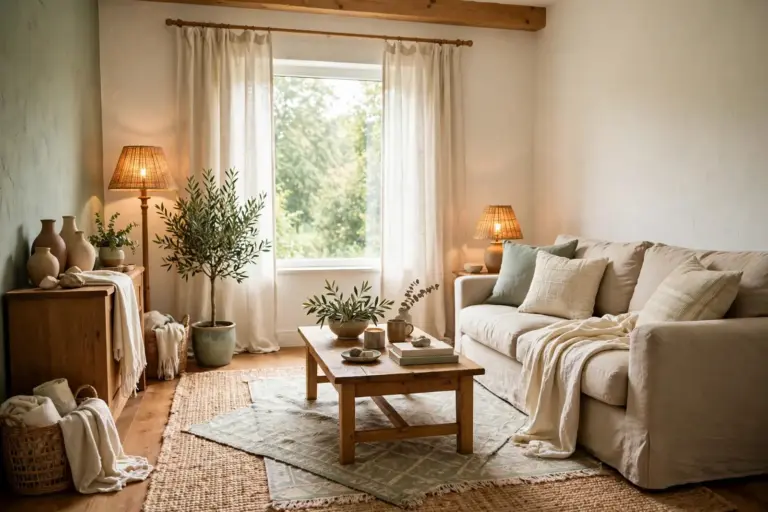
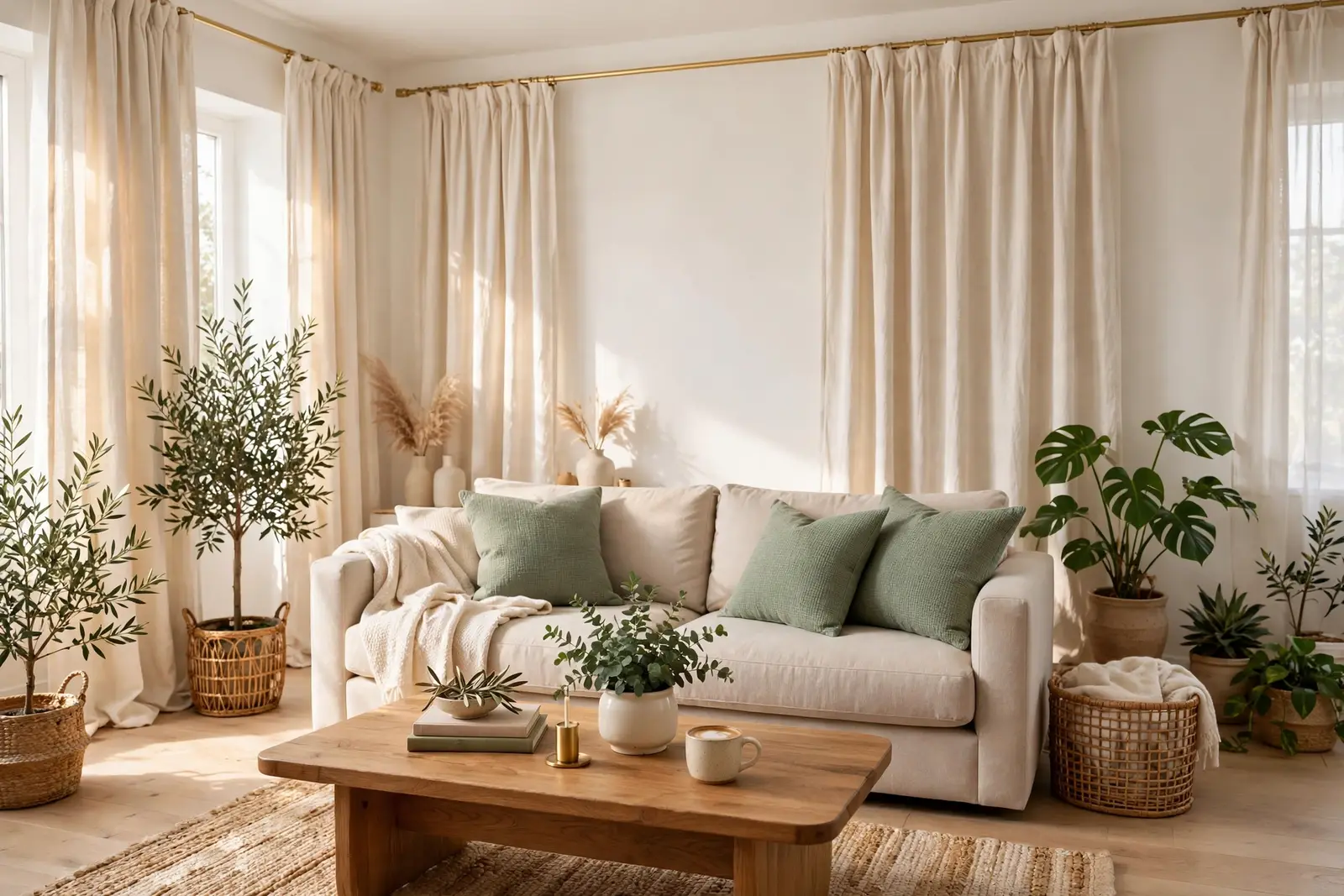
Elevate Your Space Fast With 25 Living Room Curtains

The right living room curtains can change how your whole room feels in one weekend, no renovation needed. If your windows look bare, your light feels harsh, or your sofa setup never quite looks finished, the fix is often right above the window, not in a new piece of furniture.
This guide gives you 25 simple, Pinterest-ready ideas you can actually use at home, whether you rent or own. You will find soft sheers, rich velvet, smart blackout options, easy renter fixes, and small styling tricks that make a room feel taller, brighter, and more put together. Pick one idea, try it this week, and watch your living room start to feel like the cozy, polished space you keep saving.
1. Classic White Sheers
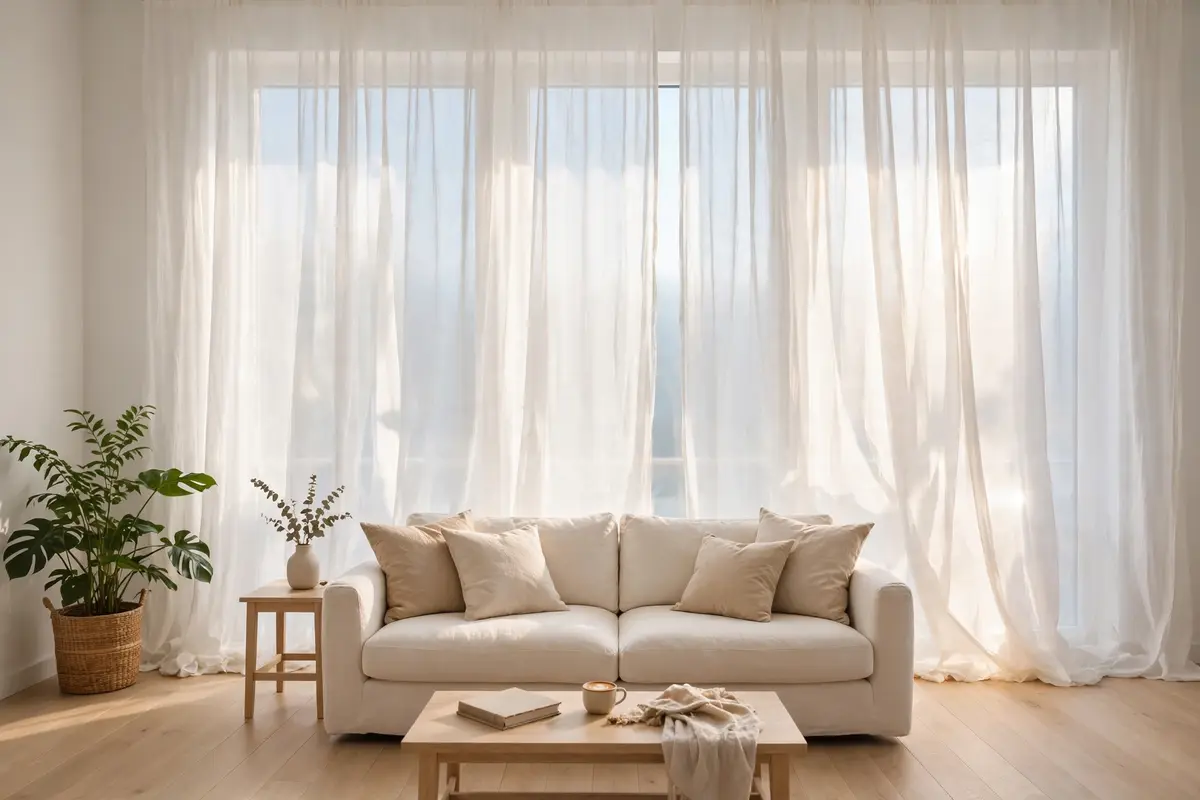
White sheers are the fastest way to make a room feel lighter without losing privacy. They soften harsh sun, blur the view just enough, and let your room glow during the day. They work in almost every style, from modern to farmhouse, and they never fight with your sofa or rug.
Hang them high and wide so the window looks larger than it really is. Choose a lightweight voile or polyester sheer that falls straight, and use two panels per window for a fuller look. In my experience, white sheers also make small rooms feel less crowded because they keep the wall color visible through the fabric.
2. Relaxed Linen Panels
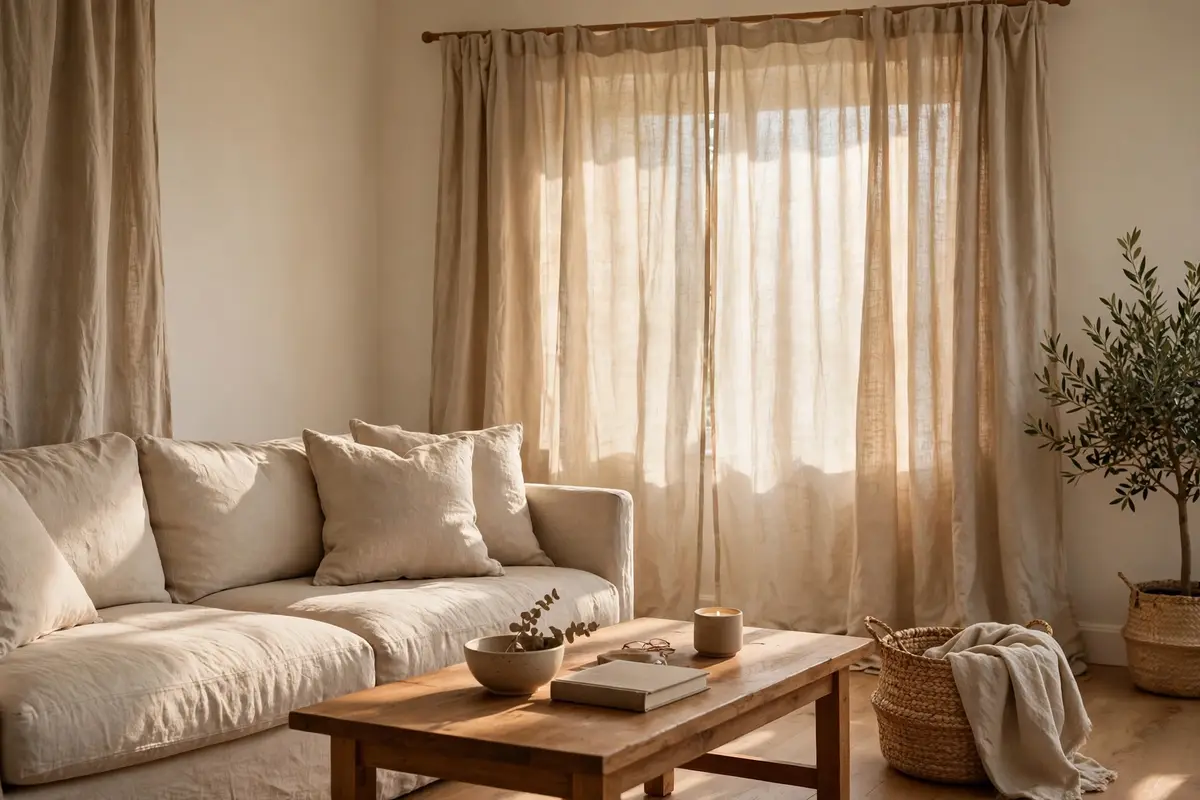
- Linen brings a soft, lived-in texture that makes a room feel warm and relaxed at once.
- Choose a natural, stone, or oatmeal shade to keep the palette calm and easy to match.
- Let the panels fall with a slight break at the floor for a casual, not stiff, finish.
- Pair linen with wood, rattan, and cotton throws for a layered, natural look.
- Wash or steam them once, then hang while slightly damp to relax the wrinkles.
Linen works best when you stop trying to make it look perfect. Its small wrinkles are part of the charm, and they help a plain room feel more human and inviting. Keep the rest of the room simple so the texture can stand out.
3. Ceiling Height Rods
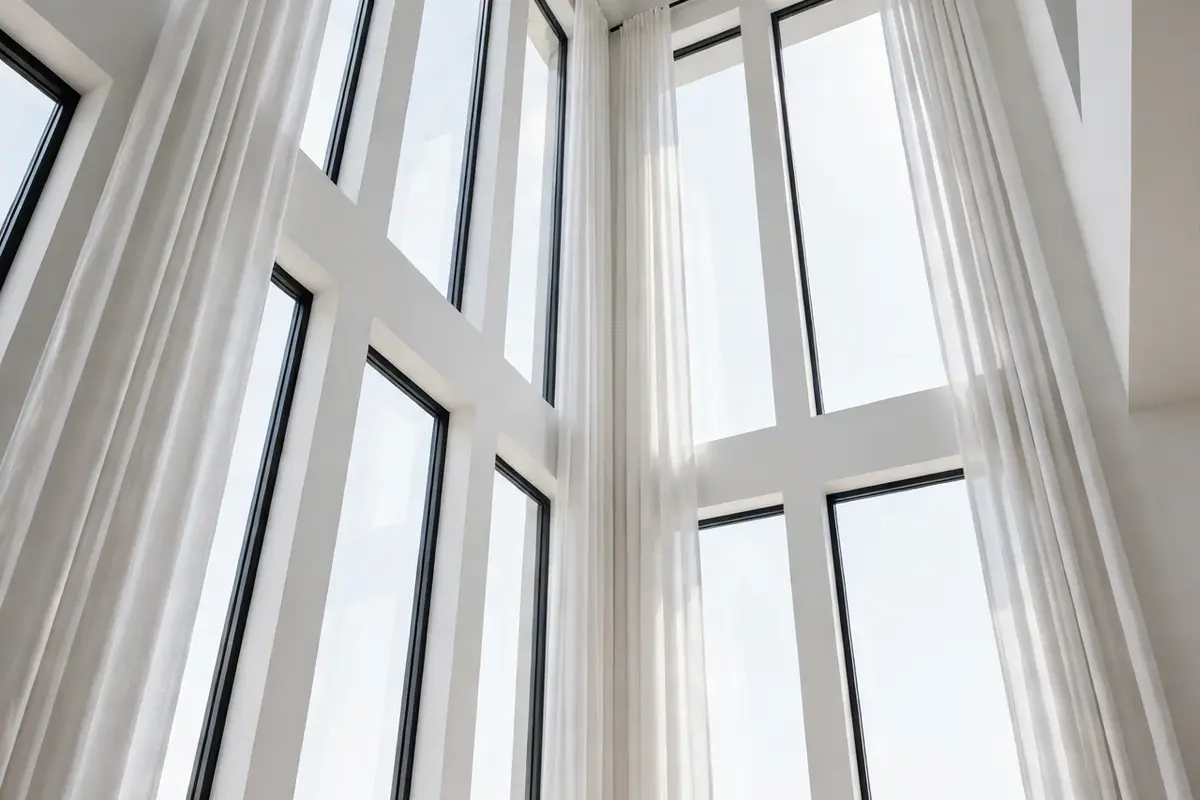
Quick Tip: Mount the rod 4 to 6 inches below the ceiling, or right at the ceiling line if your room allows it. Extend it 6 to 10 inches past each side of the window so the panels stack on the wall, not over the glass. This one change makes the window look taller and the room feel more open.
High rods pull the eye upward and create the feeling of a taller ceiling, even in a standard room. The trick works best with floor-length panels in a solid color, because a busy pattern can break the long vertical line. Keep the rod slim and simple so the height, not the hardware, gets the attention.
4. Layered Sheer Blackout
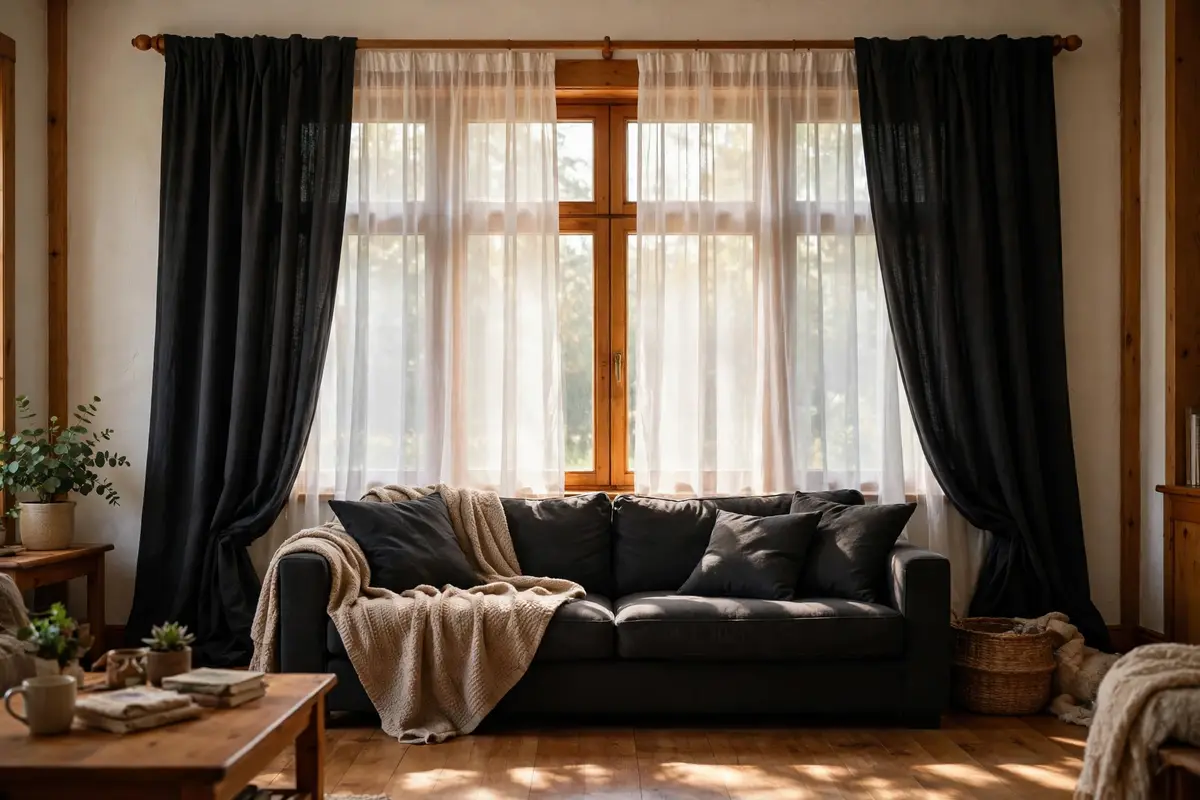
BEFORE: The room felt either too bright or too dark. Sheers alone let in glare during the afternoon, and thick drapes alone made the room feel closed off during the day.
AFTER: With both layers, you get soft light in the morning and full darkness for movies or naps. The sheer stays closed for privacy while the heavier panel frames the window like a finished border.
This pairing gives you control without a second window treatment. Use a double rod so each layer moves on its own track, and keep the sheer in white or ivory so it stays light. It is a smart fix for west-facing rooms that get strong sun in the late afternoon.
5. Bold Pattern Statement
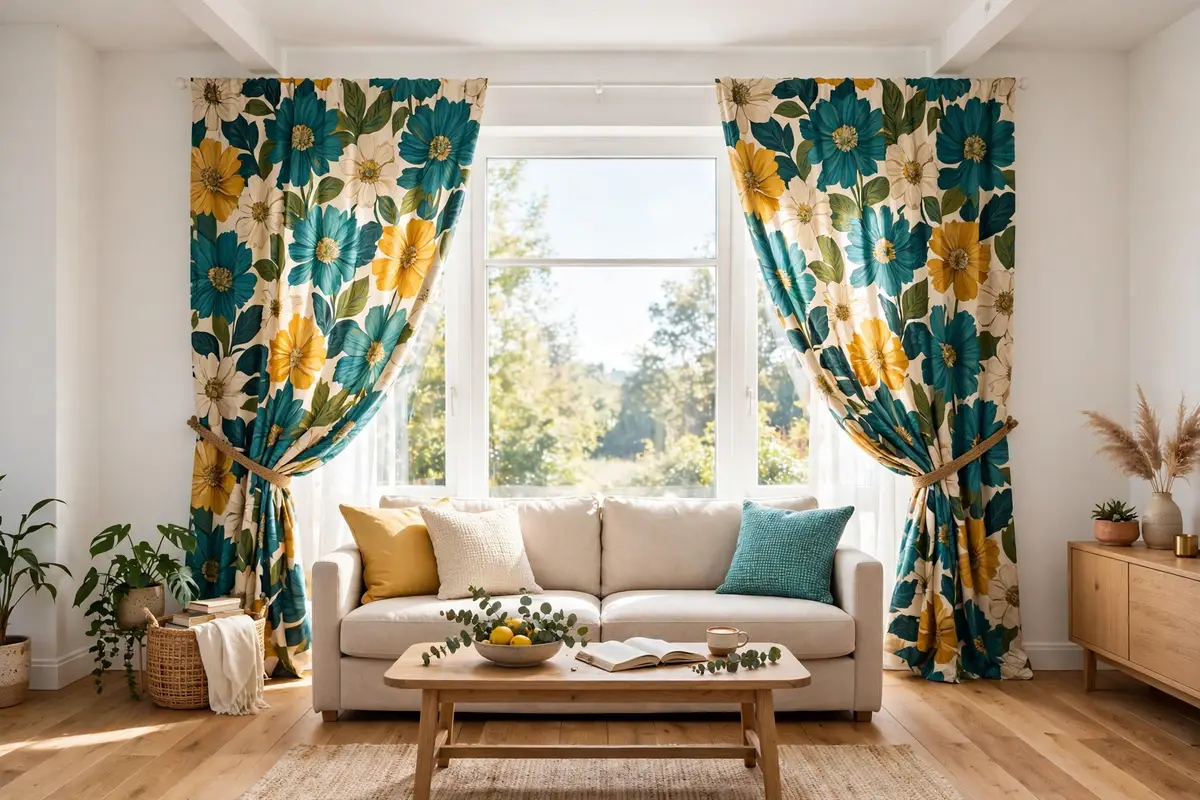
- Pick one pattern you love and keep the rest of the room plain.
- Match one color from the curtain to a cushion or throw for a pulled-together look.
- Hang the panels high and let them reach the floor so the pattern reads as a feature, not a scrap of fabric.
- Use two or three panels per side if the pattern is large, so it does not get lost in the folds.
A strong pattern can carry the whole room, so you do not need a lot of other decor to make it feel styled. If you are nervous about color, start with a pattern that has a white or cream base. It will feel bold on the window but calm in the room.
6. Velvet Luxe Drapes
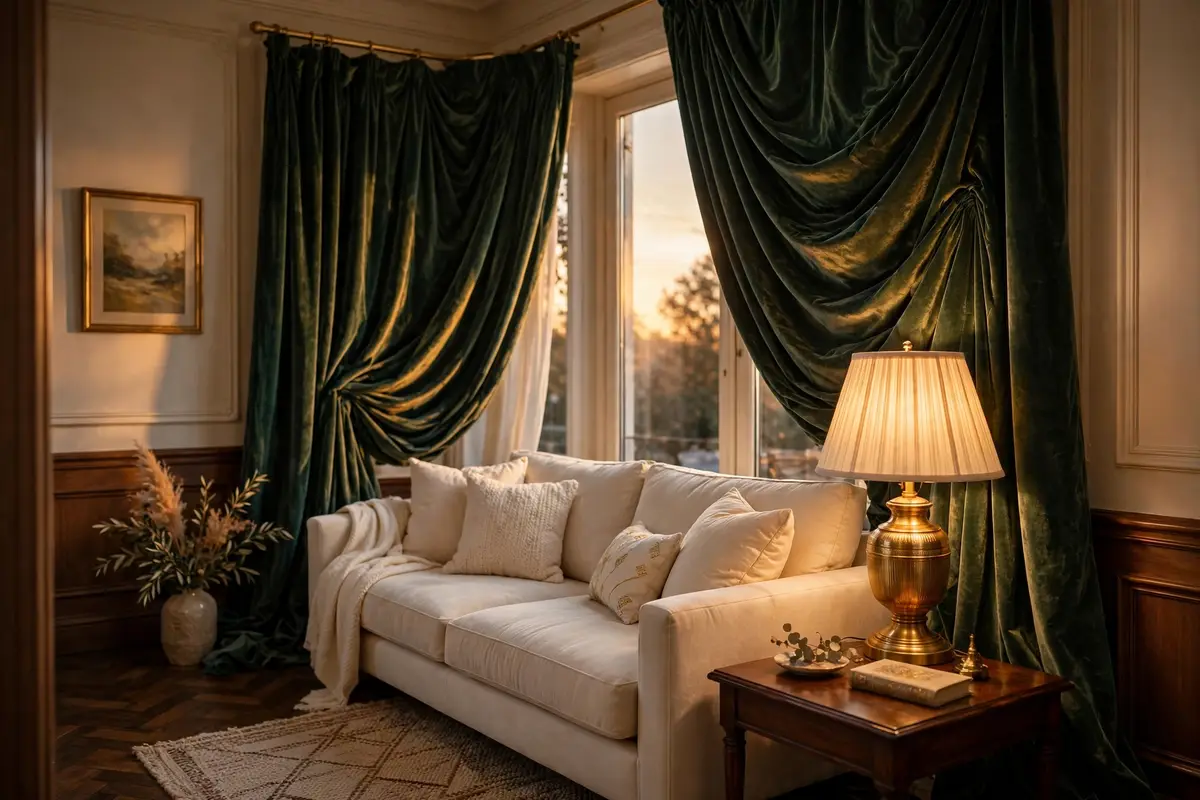
- Velvet vs. Cotton: Velvet feels heavier, richer, and more formal, while cotton feels lighter and more casual.
- Light Control: Velvet blocks more light and adds warmth, while cotton lets more light through and suits bright rooms.
- Care: Velvet needs gentle steaming and less washing, while cotton is easier to wash and iron at home.
- Mood: Velvet creates a cozy, evening feel, while cotton keeps the room fresh and daytime-ready.
Velvet works best in rooms where you want warmth and a little drama without adding furniture. Choose a deep shade like emerald, navy, or rust, and keep the walls light so the color does not overwhelm the space. A simple gold or black rod adds just enough shine.
7. Soft Neutral Minimal
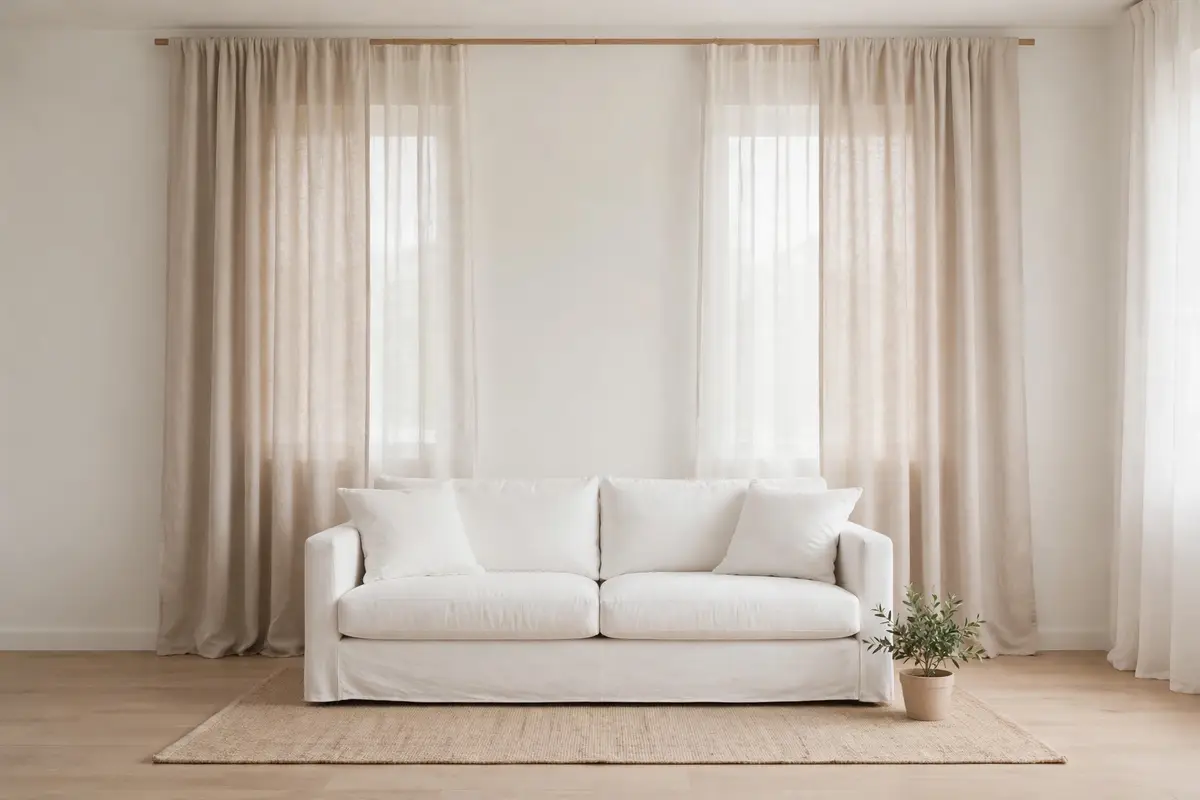
DO:
- Choose one warm neutral like greige, taupe, or warm white.
- Match the curtain shade closely to the wall for a calm, seamless look.
- Use a slim rod in matte black or brushed nickel.
- Keep the panels floor-length and free of heavy patterns.
DON’T:
- Don’t mix three different neutrals that clash in undertone.
- Don’t choose shiny fabric if you want a soft, matte finish.
- Don’t hang panels that stop at the sill in a minimal room.
- Don’t add heavy tiebacks that break the clean line.
Neutral panels create a quiet backdrop that lets your sofa, art, and rug do the talking. They are a good choice if you change cushions or throws often, because they work with almost any accent color. The key is undertone: warm walls need warm neutrals, and cool walls need cool ones.
8. Blackout TV Glare
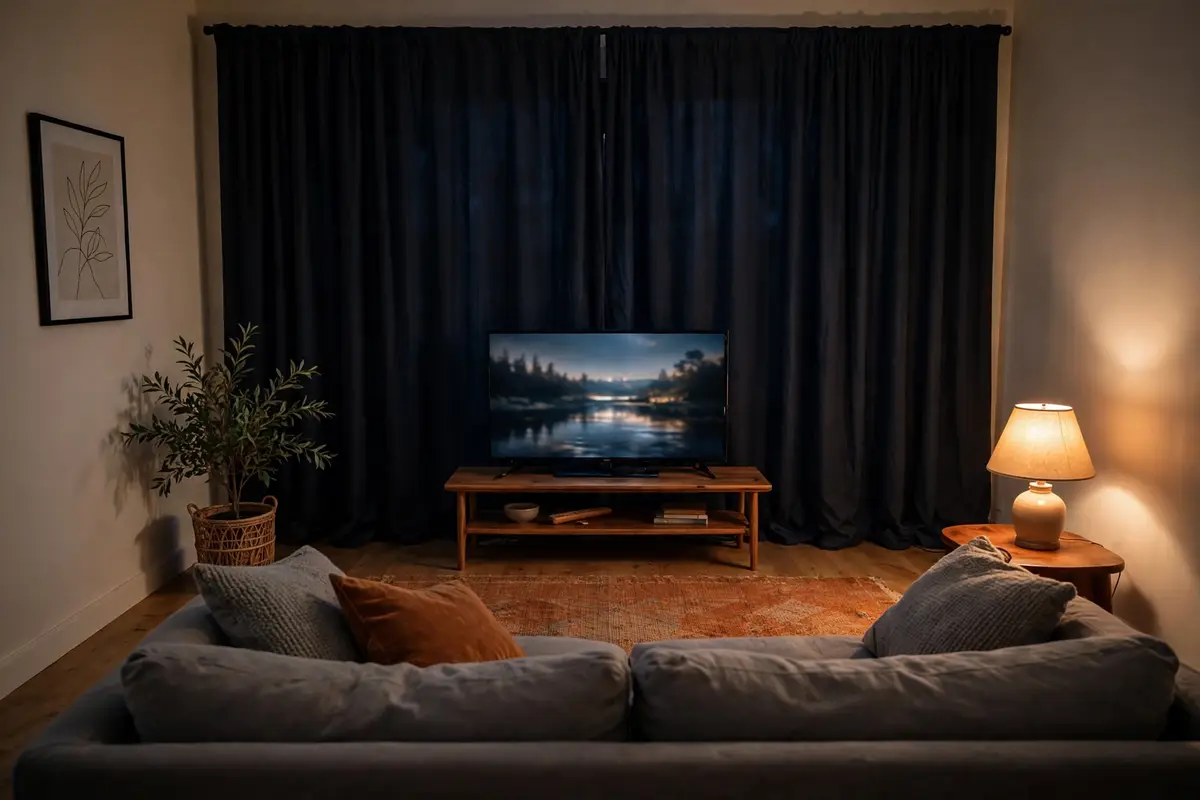
- Cost: Budget-friendly ready-made blackout panels, mid-range for lined custom sizes
- Time: 30 to 45 minutes to hang with a standard rod
- Skill Level: Beginner friendly, no sewing needed
- Best For: West-facing windows, movie nights, and afternoon naps
Blackout panels stop glare on the TV and keep the room cooler on hot days, which makes a real difference if your sofa faces the window. Choose a lined panel in a color that matches your room, not a plain white liner that shows from outside. Hang them wide enough to cover the whole frame so light does not leak in at the edges.
9. Pinch Pleat Elegance
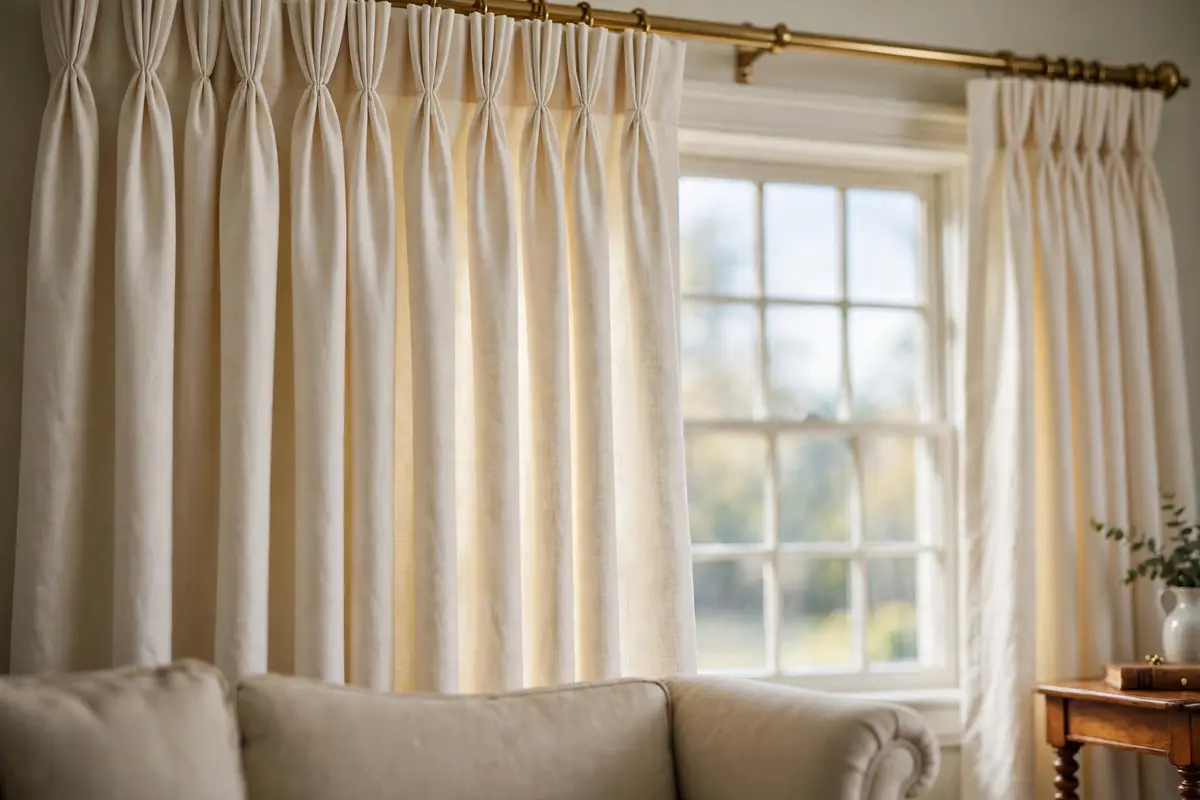
Pinch pleats give a room a tailored, finished look that flat panels cannot match. The small, even folds at the top create a sense of order, and they help the fabric hang in clean lines all the way to the floor. This style suits classic, transitional, and even modern rooms when the fabric is plain.
Choose a medium-weight fabric so the pleats hold their shape without looking stiff. Hang the rod with rings or hooks made for pinch pleats, and space the pleats evenly before you push the panels to the sides. I’ve noticed that pinch pleats also make cheaper fabric look more expensive, because the structure does the styling work for you.
10. Curtains With Blinds
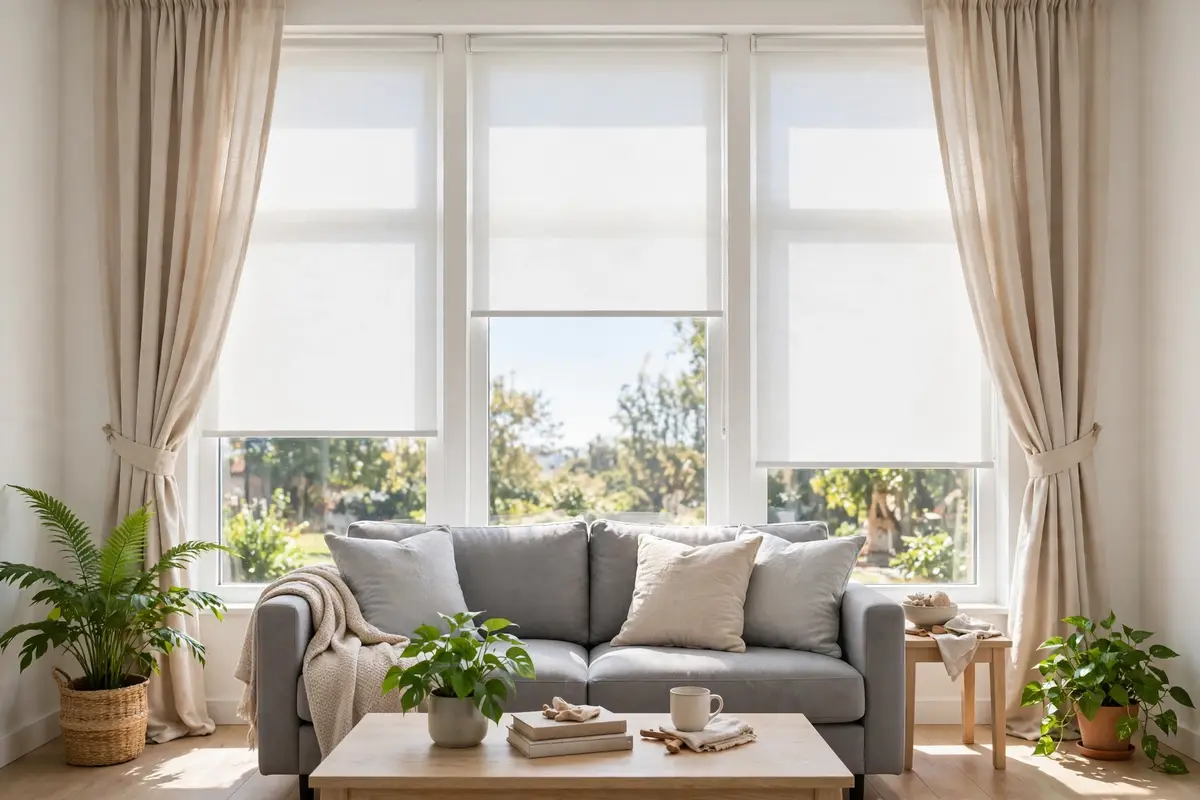
Blinds handle the light, and curtains handle the style, which is why this pair works so well together. The blind gives you privacy and glare control in seconds, while the panels soften the hard edges of the window and add color and texture. It is a practical setup for living rooms that get sun at different times of day.
Mount the blind inside the frame and hang the panels outside it, high and wide. Keep the blind in a plain white or light grey so it does not compete with your fabric. If you want more ideas for pairing fabrics and window styles, explore these curtains living room options for inspiration.
11. Decorative Trim Edge
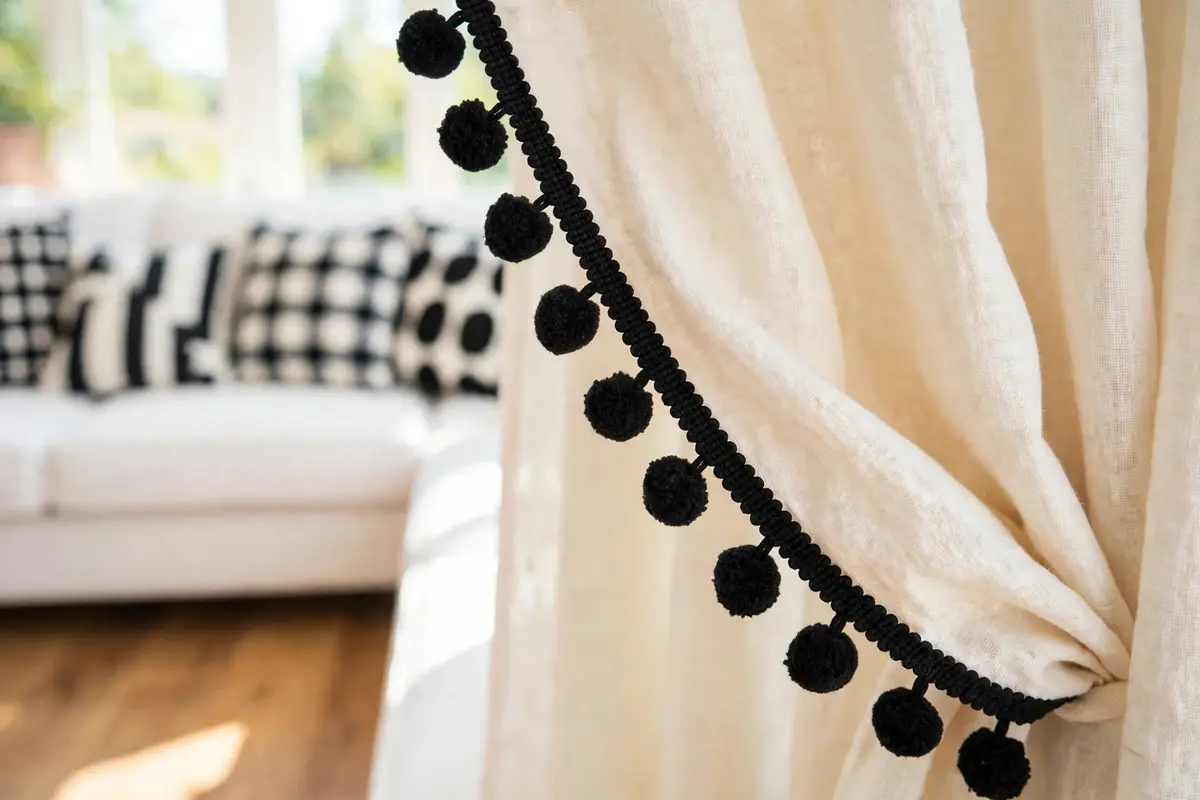
- Choose a trim that matches one accent color already in your room.
- Keep the trim on the leading edge only, so it frames the window without feeling busy.
- Pick a small pom-pom or tassel in a lightweight fabric that does not pull the panel down.
- Pair trimmed panels with plain cushions to let the detail stand out.
- Use the same trim on two panels for a balanced, intentional look.
Trim is a small detail with a big visual return. It turns a plain panel into a custom-looking piece and draws the eye to the window in a good way. Keep the rest of the styling simple, so the trim reads as a thoughtful touch, not as clutter.
12. Tieback Swoop Style
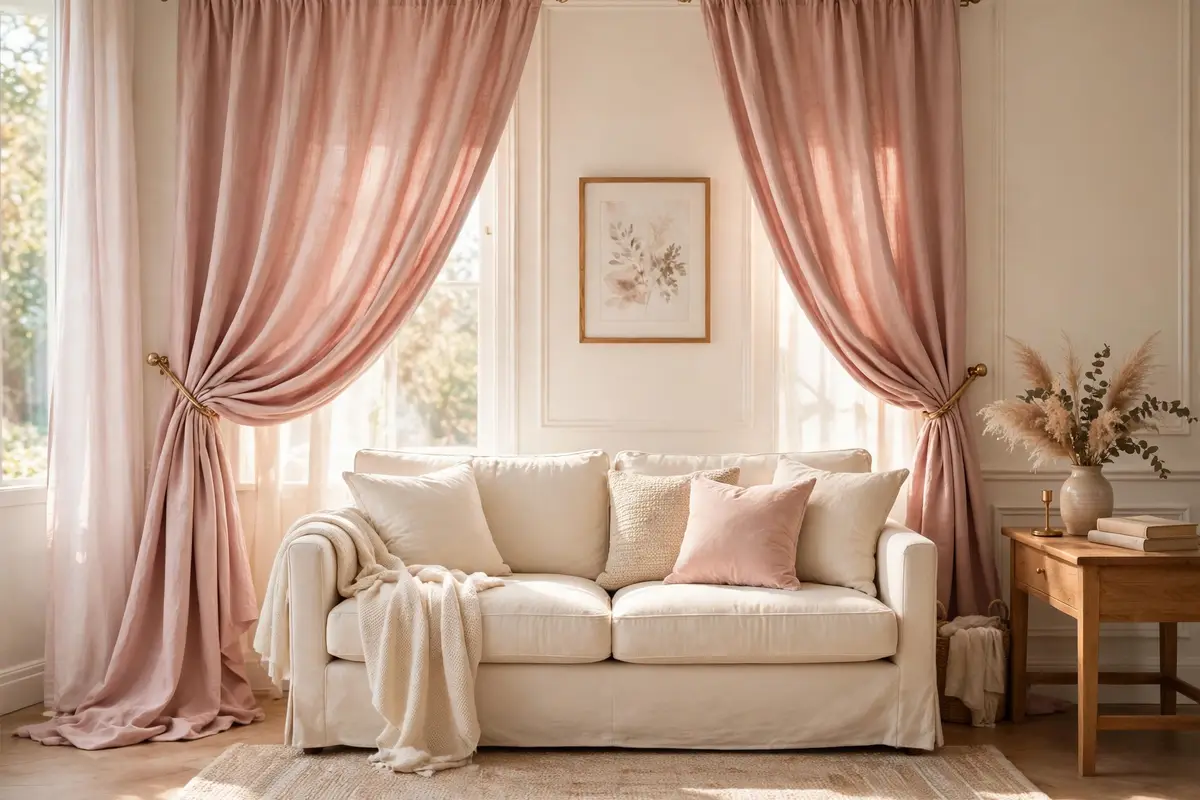
Quick Tip: Place tiebacks at about one-third of the height from the floor, not at the middle. Pull the fabric gently to the side and let it fall in a soft curve. A tieback that is too high makes the window look short, and one placed too low makes the swoop look heavy.
A tieback swoop opens the window and lets in more light while keeping the fabric visible as a frame. It works best with medium-weight fabric that holds a curve without collapsing. Use a simple metal or fabric tieback in a color that matches your rod for a clean, finished look.
13. Wall Matching Panels
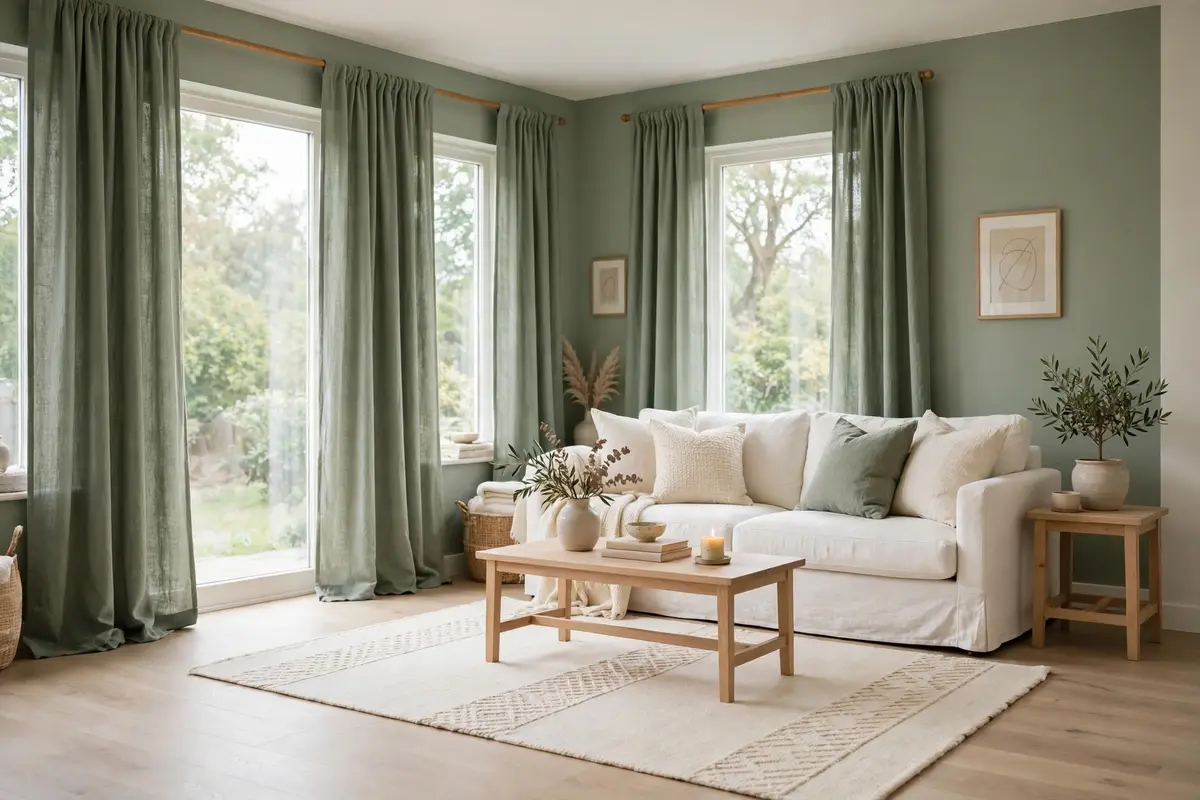
BEFORE: The window looked like a dark hole in the wall. The white frame stood out, the room felt choppy, and the sofa area never felt connected to the window wall.
AFTER: When the panels matched the wall color, the window blended in and the whole wall felt like one calm surface. The room looked larger, and the sofa and window finally felt like part of the same space.
Matching the wall color is one of the easiest ways to make a small living room feel bigger. Choose the same shade or one tone lighter than the wall, and use a matte fabric so the color reads the same in daylight. Keep the rod in a close finish so it does not break the blend.
14. Double Panel Fullness
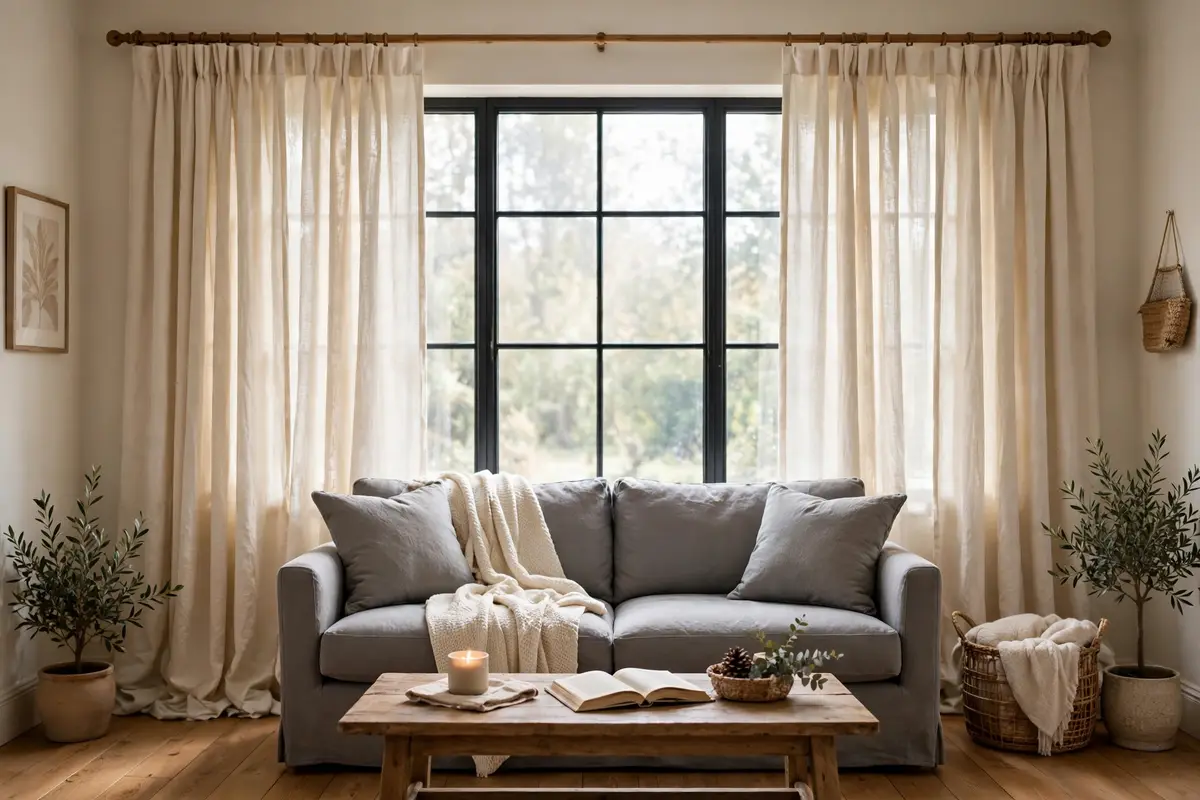
- Measure the window width and multiply it by 2 to 2.5 for full coverage.
- Divide that total width across four panels, two per side, for a balanced look.
- Hang the rod wider than the window so the stacked panels sit on the wall.
- Fluff the folds evenly from top to bottom so no flat gaps show.
- Let the panels touch the floor so the fullness reads as intentional, not messy.
Two panels often look thin once they are pulled open, especially on a wide window. Four panels give you soft, even folds and make the window feel dressed, even when the curtains are open. This trick works with almost any fabric, but it shines with linen and cotton.
15. Puddle Break Length
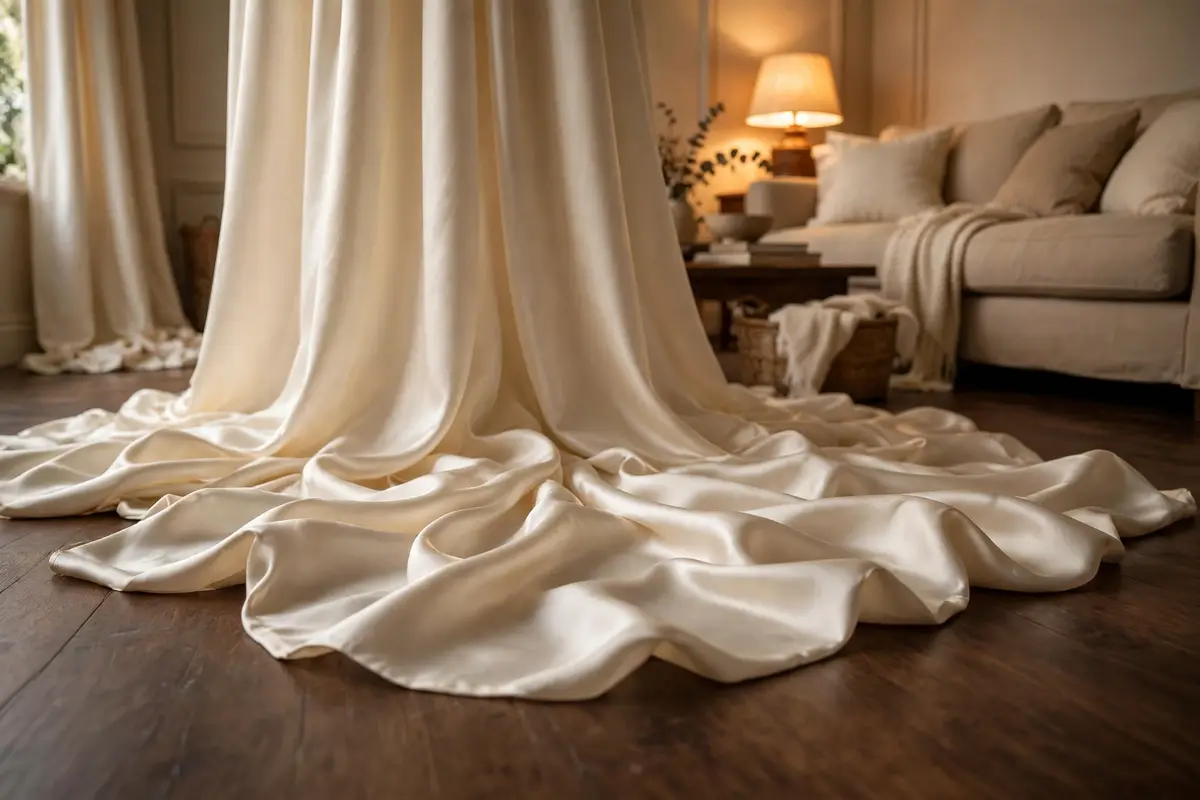
- Silk-Like Fabric vs. Linen: Silk-like fabric pools in soft, smooth folds, while linen pools with more texture and structure.
- Formal vs. Casual: A longer puddle feels formal and romantic, while a slight break feels relaxed and easy to live with.
- Care: Puddled panels need more floor cleaning and can collect dust, while a slight break stays cleaner.
- Best Rooms: Puddles suit large, formal living rooms, while a small break suits busy family rooms.
A puddle, where the fabric gathers 2 to 4 inches on the floor, adds a soft, high-end touch that a hem just above the floor cannot match. It works best when the floor is clean and the room is not a high-traffic path, because the fabric will move when people walk past. If you have pets or small kids, try a 1-inch break instead.
16. Floor Kiss Length
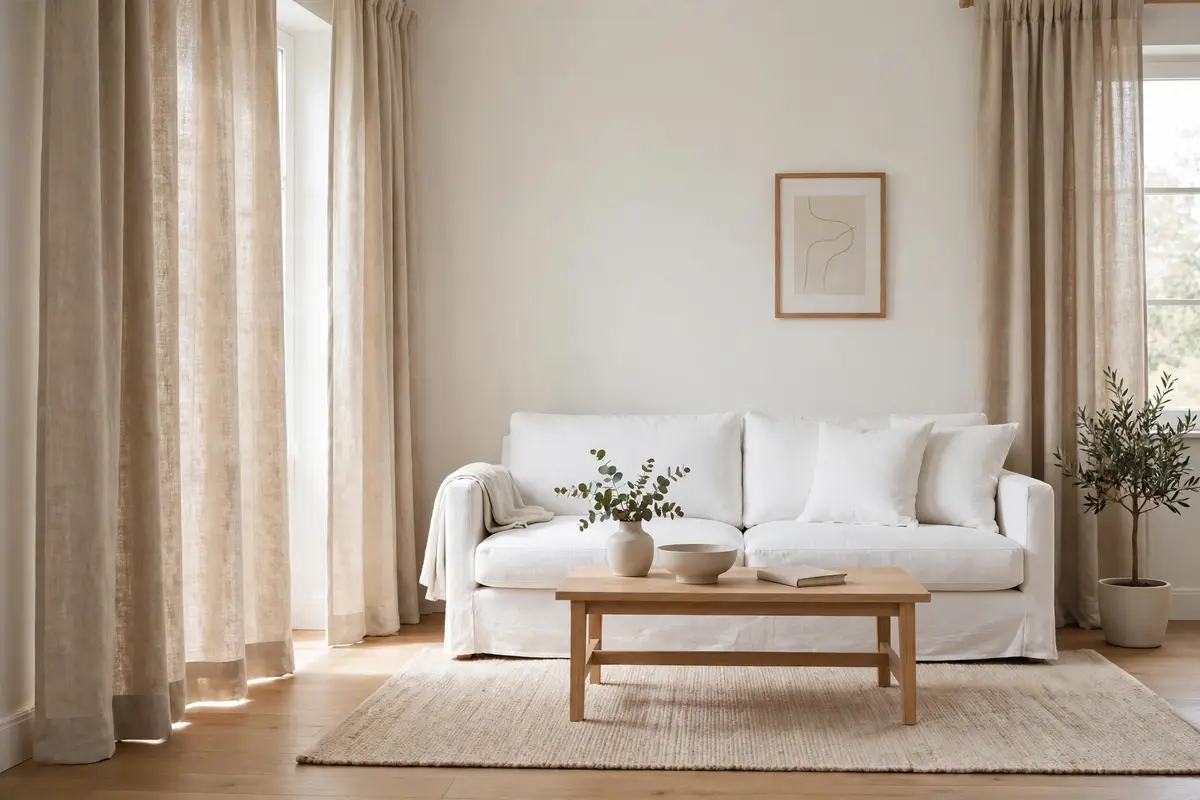
DO:
- Measure from the rod to the floor with a tape, not by eye.
- Choose a hem that just grazes the floor for a clean, tailored look.
- Iron or steam the hem before hanging so it falls straight.
- Use a level to check the rod so both sides sit at the same height.
DON’T:
- Don’t let the panels hang 2 inches above the floor, or the window will look unfinished.
- Don’t guess the length from the packet size alone.
- Don’t use a heavy fabric that pulls the hem down unevenly.
- Don’t forget to account for the ring or hook drop.
Floor-kiss length is the safest choice if you want a neat, modern finish without the upkeep of a puddle. The hem should just touch the floor, not float and not pool. In my experience, this length also makes the room easier to vacuum and keeps the fabric cleaner over time.
17. Brass Rod Warmth
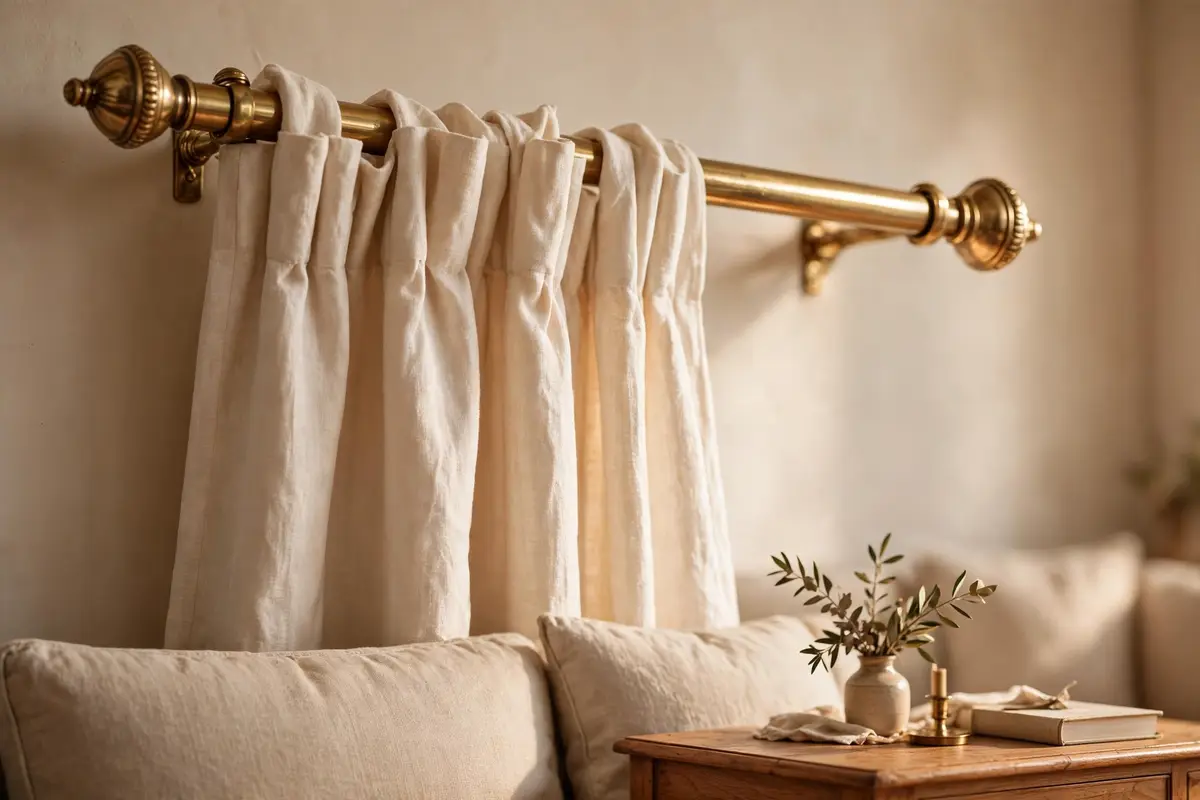
- Cost: Affordable for slim brass-finish rods, higher for solid brass
- Time: 20 to 30 minutes to install with a drill and level
- Skill Level: Beginner friendly with basic tools
- Best For: Warm neutrals, classic rooms, and gold or brass accents
Brass adds warmth that black or silver rods do not, and it pairs well with cream, beige, sage, and navy fabrics. Choose a warm brass, not a shiny yellow gold, for a modern look. Keep the finials simple, a small ball or flat cap, so the rod adds warmth without stealing focus from the panels.
18. Grommet Easy Glide
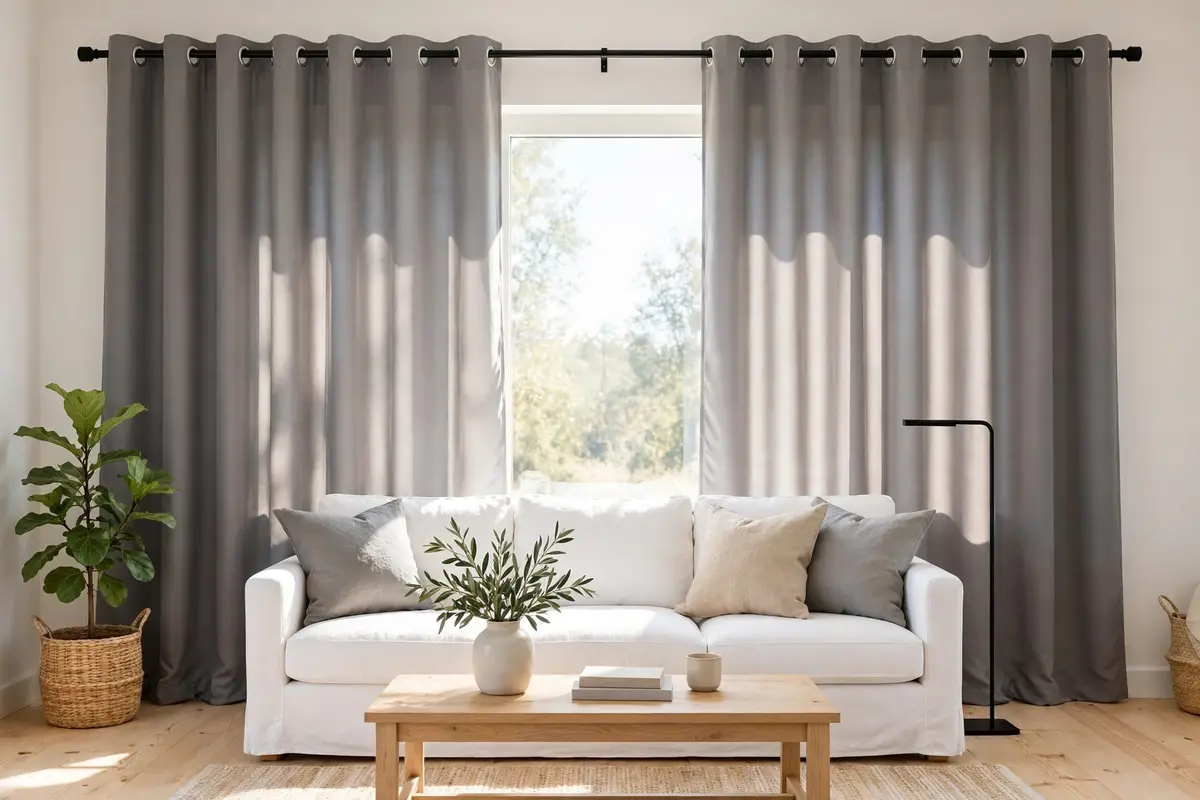
Grommets make curtains easy to open and close, which matters if you adjust them every day. The metal rings slide smoothly along the rod, and they create wide, even folds that look neat without much fuss. They suit modern and casual rooms, and they work best with medium-weight fabric.
Choose a rod that is slightly thicker than the grommet opening so the rings do not wobble. Hang the rod high, and let the panels fall straight to the floor. I’ve tried grommets in a busy family room, and they held up well because there are no hooks to bend or lose.
19. Organic Print Panels
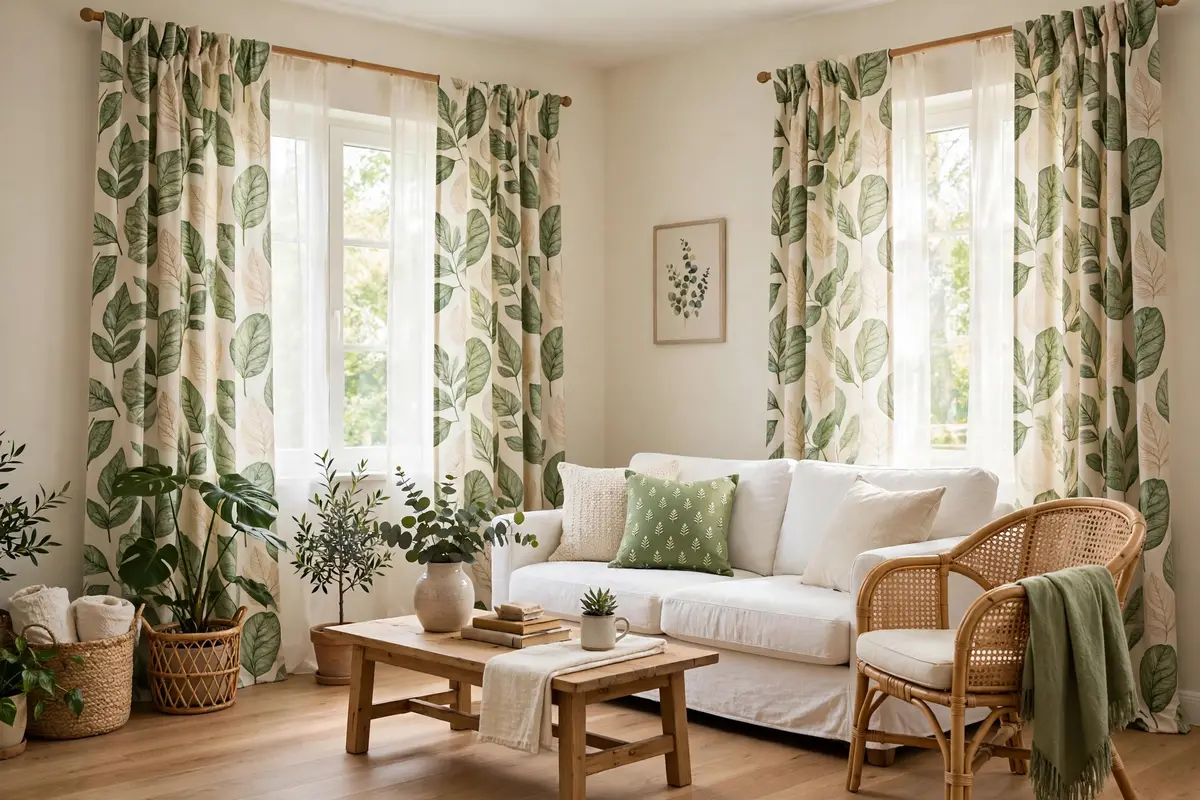
Quick Tip: Pick a print with a white or cream base and one or two greens from your plants or cushions. Keep the sofa plain and the rug simple so the print does not compete with other patterns. If the print feels strong, use it on one window only and keep the other windows in a solid shade.
An organic print adds life to a plain room without the need for a lot of color. Leaves, branches, and soft botanical shapes feel calm and natural, and they work well with wood, rattan, and linen. It is a good way to bring the outdoors in when you do not have a large plant collection. For more ideas on pulling the whole look together, see this guide to living room aesthetic for simple styling steps.
20. Tension Rod Rental
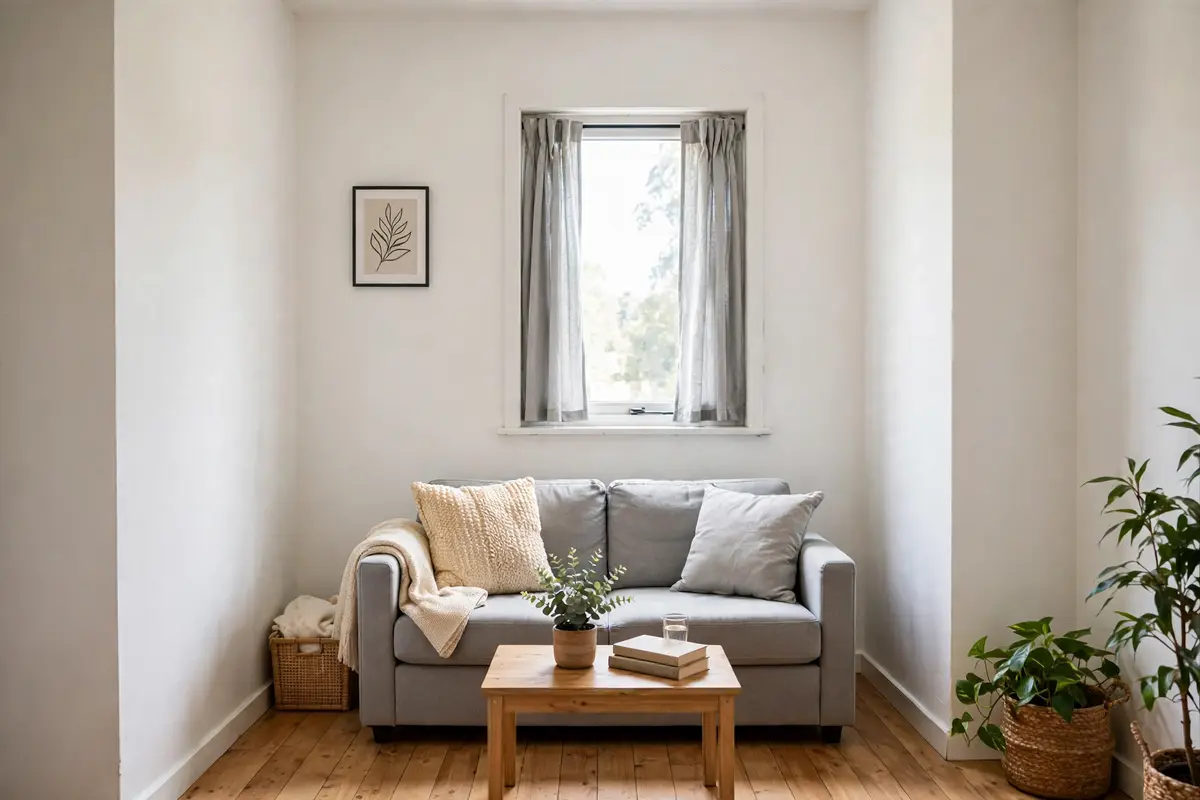
BEFORE: The rental window had no rod, no holes, and no privacy. The room felt exposed at night, and the landlord did not allow drilling into the frame.
AFTER: A tension rod fitted inside the frame in minutes, with no tools and no damage. The light grey panel gave privacy, softened the light, and came down easily when it was time to move.
Tension rods are a renter’s best friend because they use pressure, not screws, to stay in place. Measure the inside width of the frame and choose a rod that fits snugly, then use a light fabric so it does not pull the rod down. You can also use a tension rod for a sheer layer behind a heavier panel.
21. Fireplace Frame Symmetry
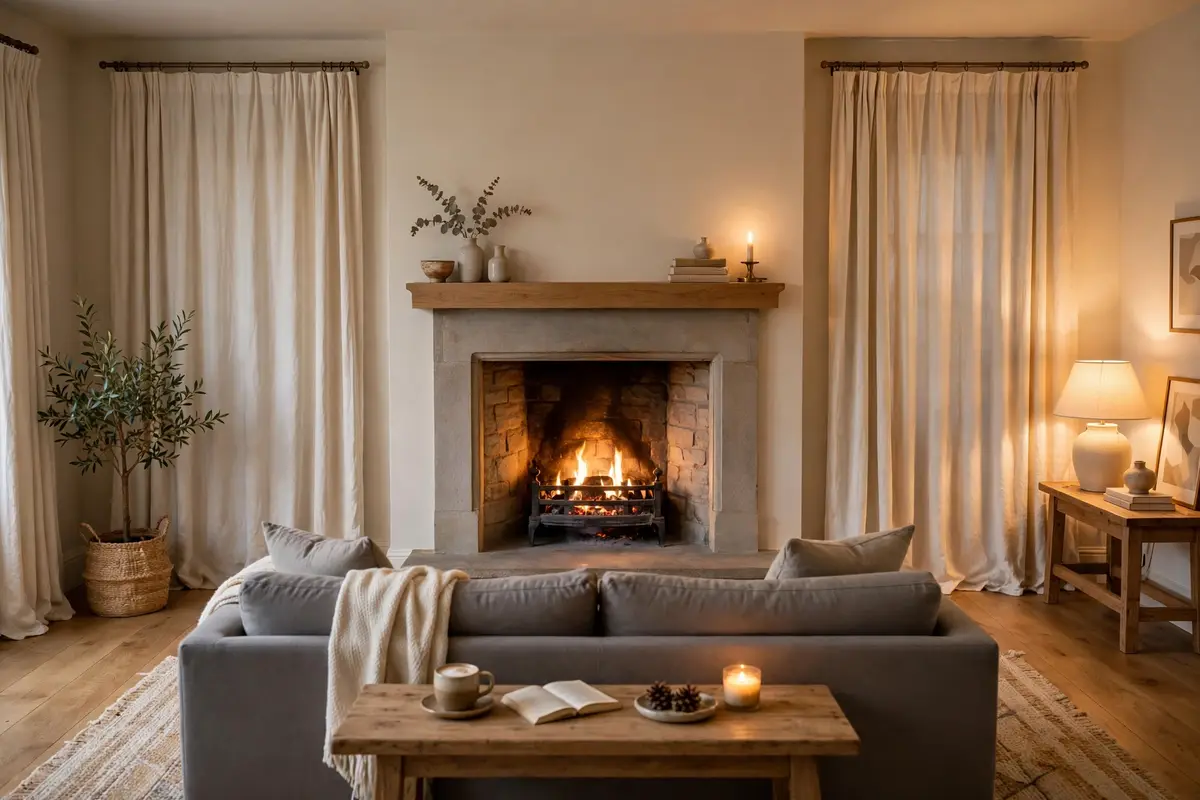
- Place a panel on each side of the fireplace, at the same height and width.
- Use the same fabric, same length, and same fullness on both sides.
- Keep the fireplace mantel decor simple and centered so it does not fight the symmetry.
- Align the sofa or rug with the center of the fireplace for a balanced layout.
Symmetry around a fireplace makes a room feel calm and intentional, even if the rest of the furniture is casual. The curtains act like a frame, and they draw the eye to the fireplace as the natural focal point. Keep the fabric plain so the balance, not the pattern, creates the effect.
22. Roman Shade Streamline
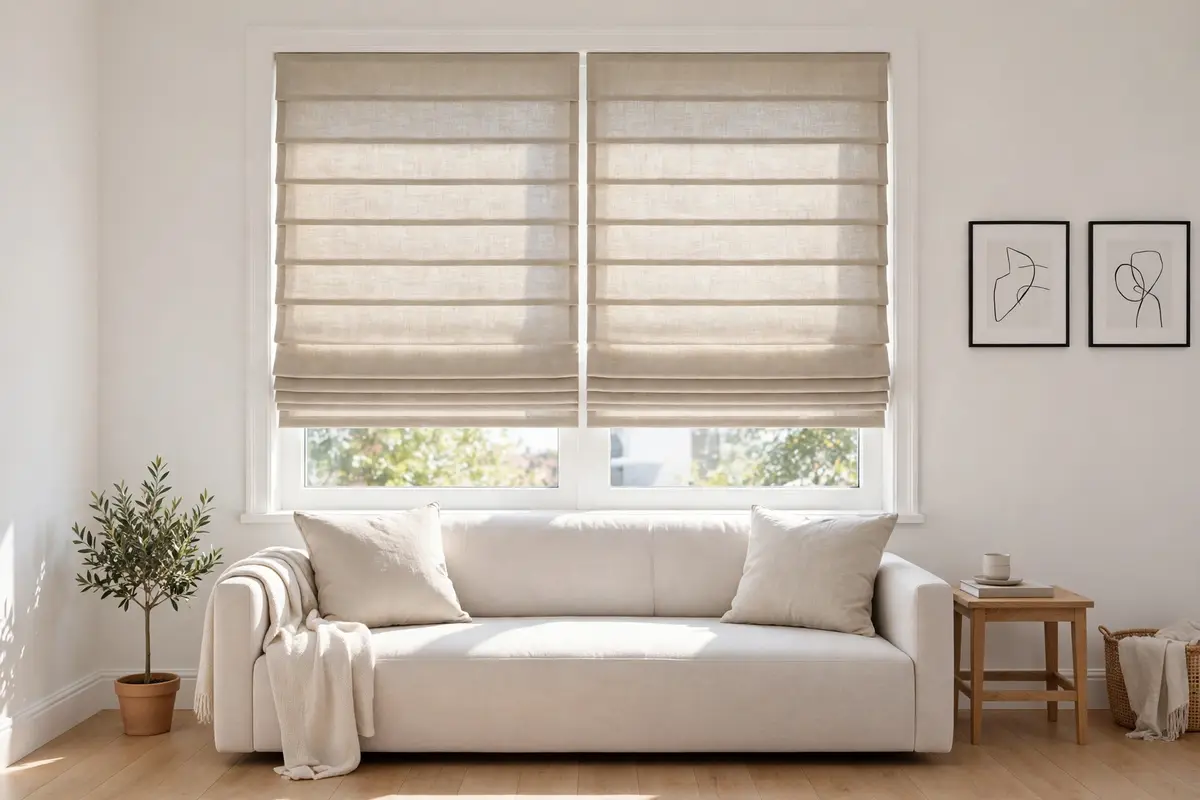
- Roman Shade vs. Curtains: Roman shades sit inside the frame and look clean and tailored, while curtains add softness and height.
- Light Control: Roman shades lift in neat folds for full light, while curtains stack to the sides and leave the glass clear.
- Space: Roman shades suit small rooms with little wall space, while curtains suit wide walls and tall windows.
- Style: Roman shades feel modern and minimal, while curtains feel softer and more traditional.
Roman shades are a good choice when you want a clean window without fabric pooling on the floor. They work well in small living rooms, bay windows, and rooms where a sofa sits close to the window. Add a slim side panel if you want the softness of a curtain without the bulk of a full drape.
23. Colour Block Panels
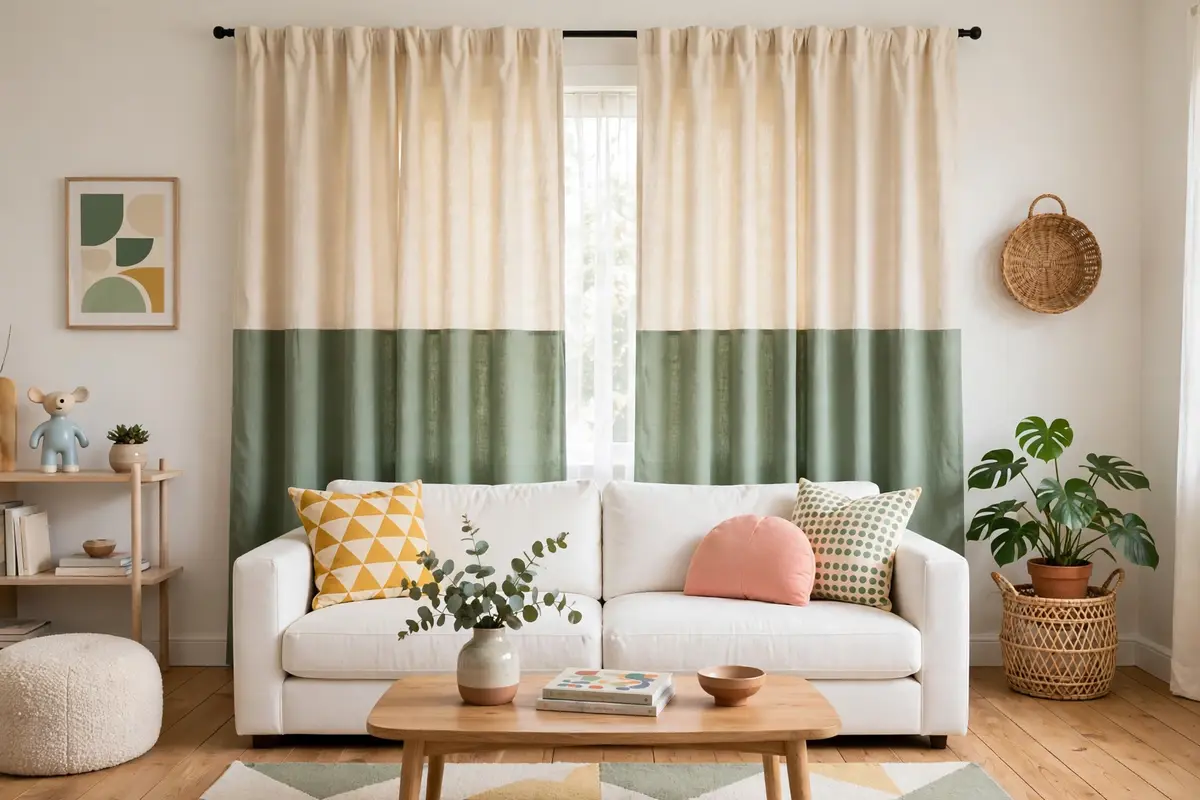
DO:
- Choose two colors that already appear in your room.
- Keep the block line straight and at the same height on both panels.
- Use the darker color at the bottom to ground the look.
- Pair colour block panels with solid cushions and a plain rug.
DON’T:
- Don’t mix three strong colors in one panel.
- Don’t use a busy pattern with a colour block, or the look gets confusing.
- Don’t hang colour block panels too short, or the block line will look misplaced.
- Don’t pair them with a busy wallpaper that competes for attention.
Colour block panels add a modern twist without the need for a pattern, and they let you use two colors in one window treatment. The straight line creates a clear visual break, which can make a low ceiling feel a little taller. Keep the rest of the room simple so the block stays the star.
24. Velvet Wall Feature
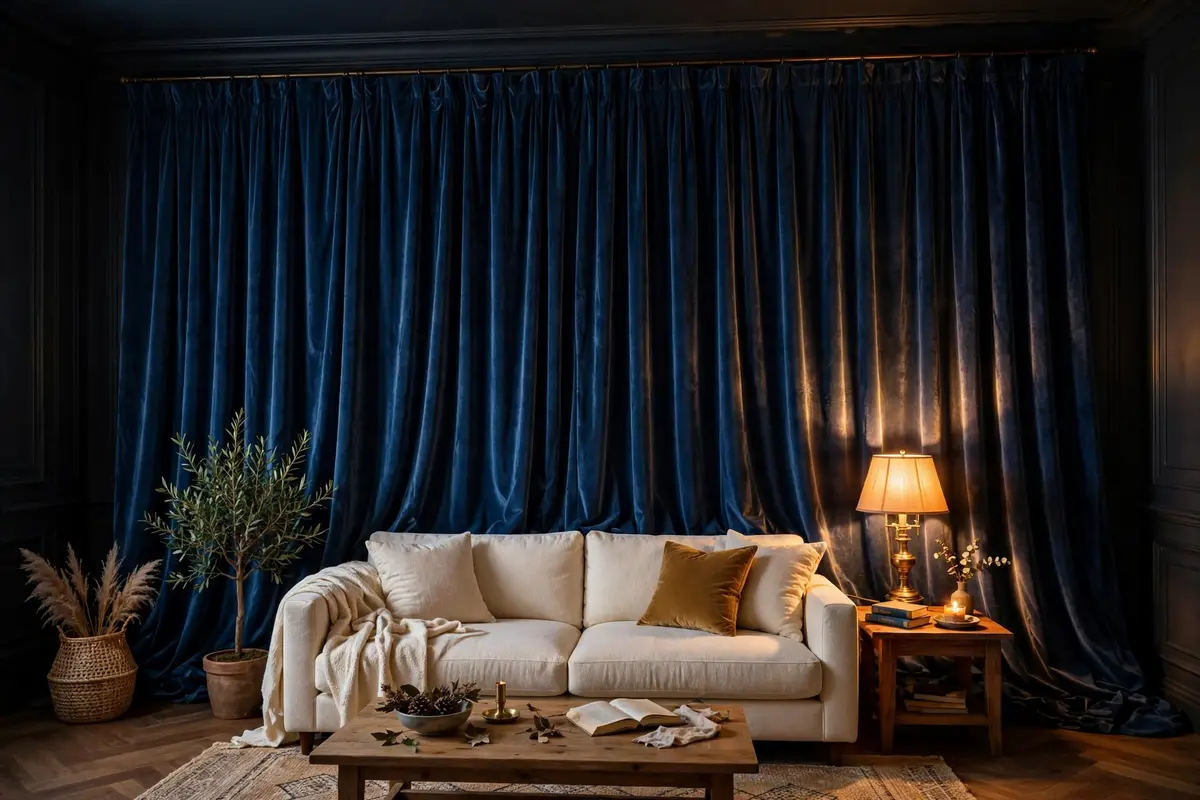
- Cost: Higher than standard panels because of the extra fabric and wide rod
- Time: 1 to 2 hours to hang, depending on wall width
- Skill Level: Intermediate, best with two people
- Best For: Large blank walls, media rooms, and cozy evening spaces
A full wall of velvet turns a plain wall into a soft, textured feature that also helps with sound and warmth. It works best on a wall without a window, or on a wide window wall where the panels can cover the whole surface. Choose a deep, rich color and keep the furniture in light neutrals so the wall does not make the room feel dark.
25. Geometric Double Panels
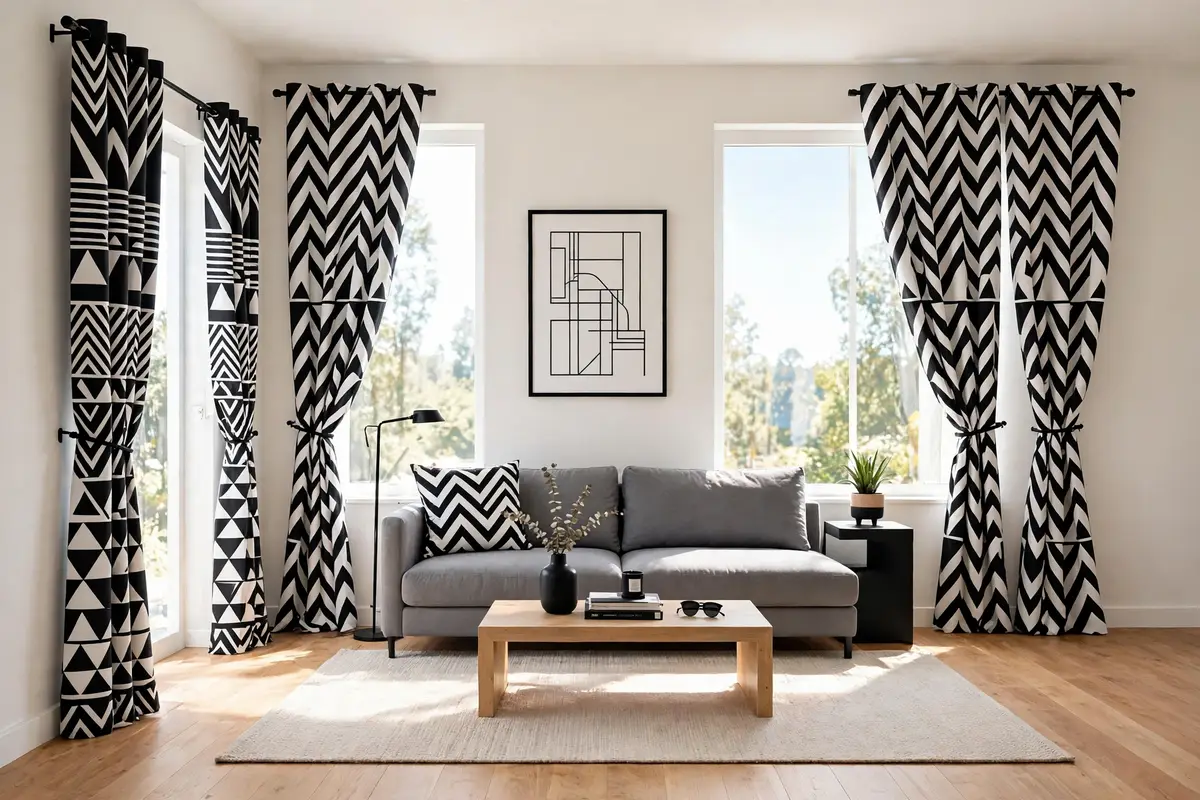
Geometric patterns add structure and a modern edge that soft florals do not. A clean black and white or navy and cream pattern can sharpen a plain room, and it pairs well with solid furniture and simple decor. The double panels give the pattern room to repeat, so it reads clearly even when the curtains are open.
Keep the pattern scale medium, not too small and not too large. Small patterns can look busy from a distance, and very large shapes can get lost in the folds. Hang the panels high and wide so the pattern frames the window like a piece of art.
Conclusion
Small changes can make a big difference, and the right living room curtains are one of the easiest wins in home decor. Whether you choose soft sheers, rich velvet, a smart blackout pair, or a simple renter-friendly fix, each idea in this guide can help your room feel brighter, taller, and more welcoming. Start with the one that fits your light, your budget, and your style. Save this guide on Pinterest, try one idea this week, and share your result with a friend who is styling their own space. Your living room is ready for its fresh, cozy update, and the next step is yours.