Farmhouse Living Room Ideas With Simple, Cozy Character

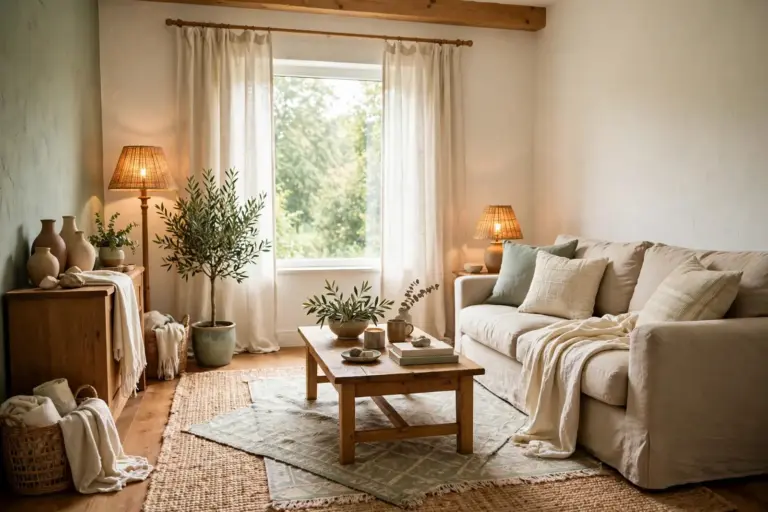
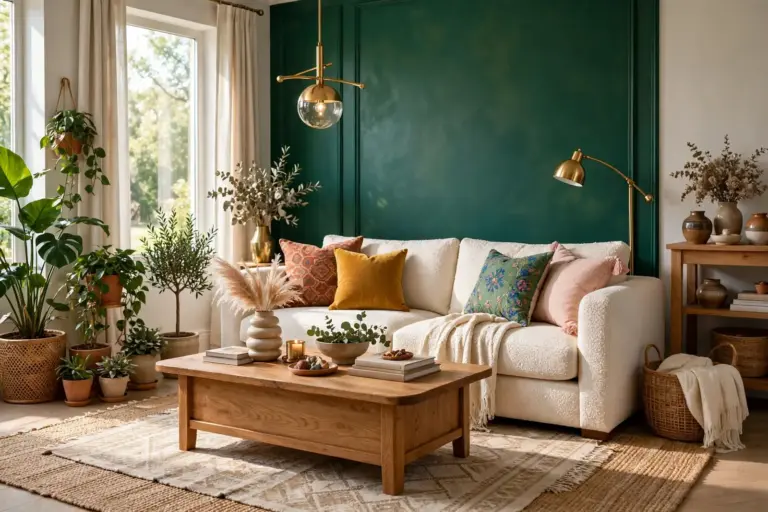
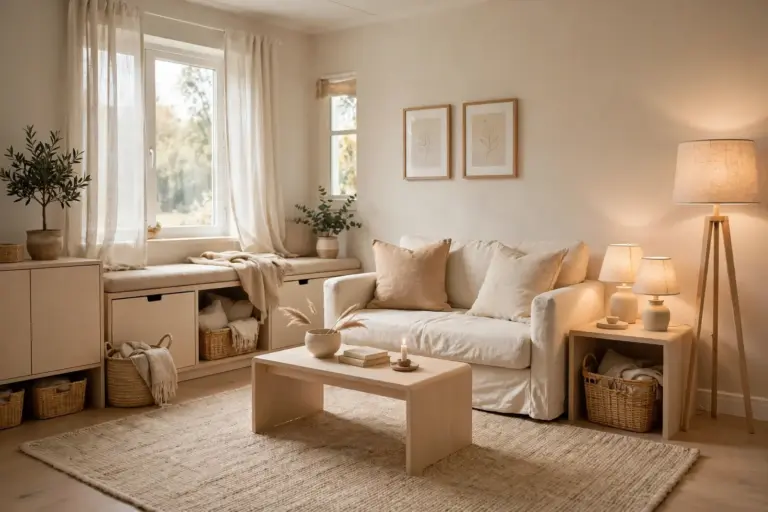
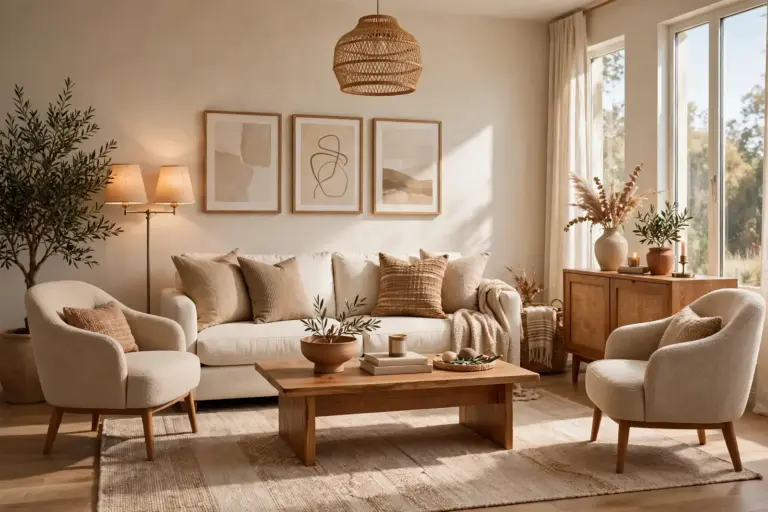
A farmhouse living room feels warm, relaxed, and welcoming without needing expensive furniture or a complete renovation. The style works because it mixes simple shapes, natural materials, and comfortable seating that invites people to stay a while. Slipcovered sofas, wooden tables, woven rugs, and soft lighting create a room that looks collected rather than decorated all at once. The best part is that many farmhouse updates are affordable — thrifted finds, washable fabrics, and a few thoughtful swaps can transform a plain room. Whether you live in a small apartment or a family home, these ideas help you create a cozy space with character.
What Makes Farmhouse Style Feel Warm and Collected
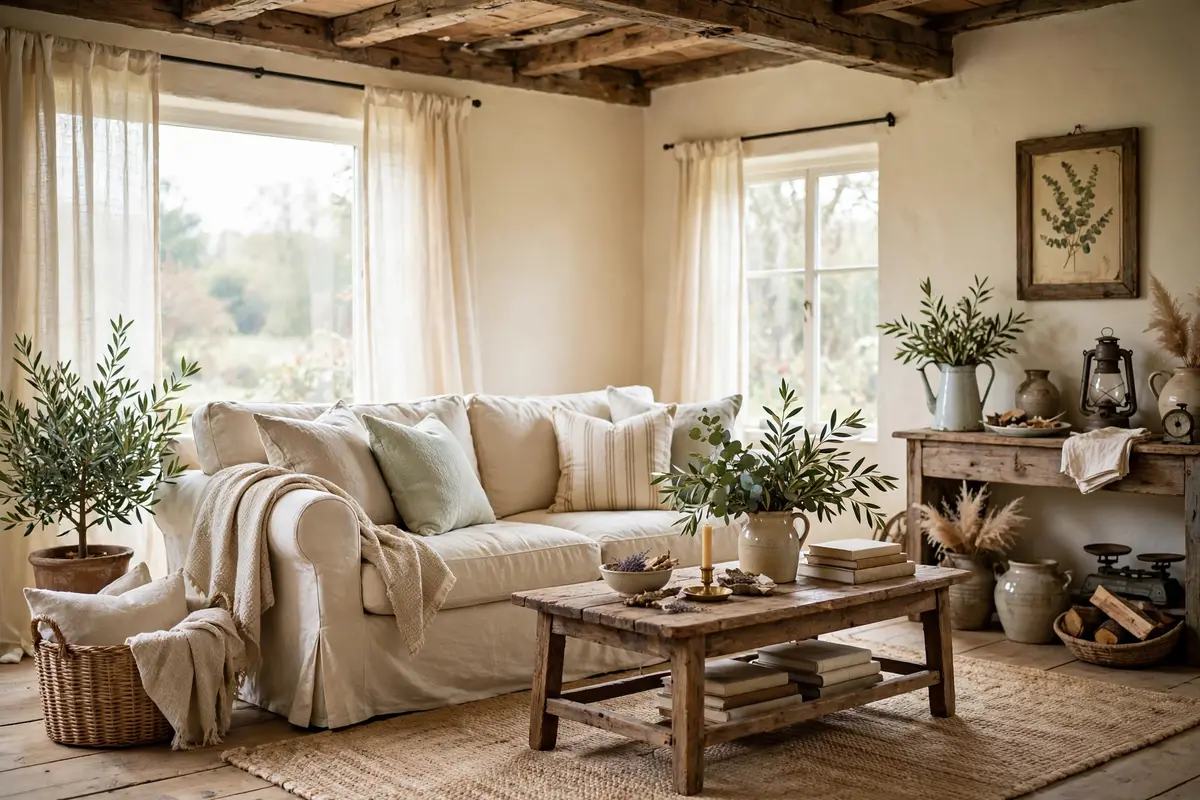
Farmhouse style is not about filling a room with matching sets. It is about combining practical pieces, natural textures, and a few vintage touches so the room feels lived in and personal.
- Simple shapes create calm. Straightforward furniture with clean lines keeps the room feeling open. A plain slipcovered sofa, a wooden coffee table, and a simple bookshelf work better than fussy, ornate pieces.
- Natural materials add warmth. Wood, linen, cotton, jute, and stone bring texture without bright colours. These materials age gracefully and look better with everyday use.
- Neutral colours keep it soft. Cream, warm white, soft grey, and pale sage create a gentle backdrop. Small touches of muted green, dusty blue, or warm brown add interest without overwhelming the room.
- Vintage pieces add character. An old wooden crate, a thrifted mirror, or a secondhand side table can give the room a story. Mixing one or two older pieces with newer furniture makes the space feel collected.
- Comfort comes first. Deep seats, soft cushions, and washable fabrics make the room practical for families, pets, and everyday living.
The overall effect is a room that feels welcoming rather than formal. It should look like a place where people actually relax, read, and spend time together.
Start With a Comfortable Slipcovered Sofa
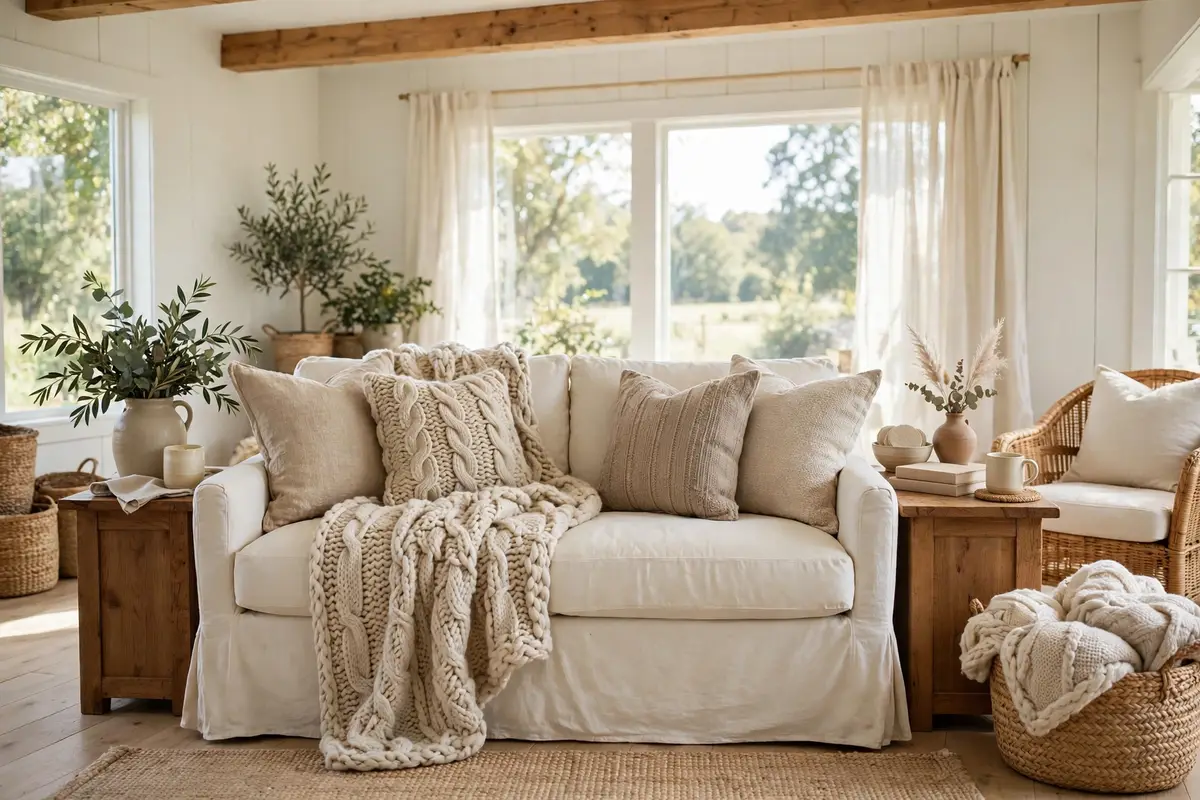
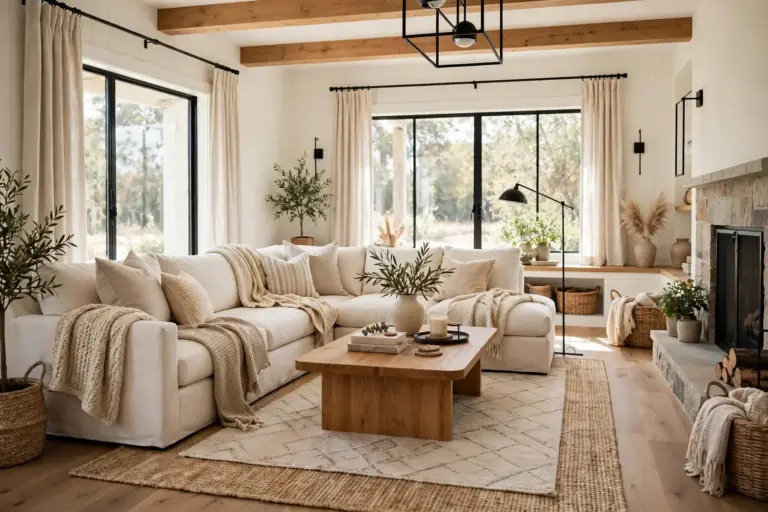
The sofa is usually the largest piece of furniture in the living room, so it sets the tone for the whole space. A slipcovered sofa is one of the best farmhouse choices because it is comfortable, practical, and easy to keep clean.
- Choose a relaxed fit. A loose linen or cotton slipcover looks softer than a tight, tailored cover. It also hides everyday wear and can be removed for washing.
- Pick a neutral colour. Cream, oatmeal, or light grey works with almost any accent colour. Neutral upholstery makes it easy to change cushions and throws with the seasons.
- Check the seat depth. A seat depth of 22 to 24 inches is comfortable for most people. Deeper seats work well for lounging but can feel too large in a small room.
- Look for sturdy legs. Wooden turned legs or simple tapered legs suit the farmhouse look. Avoid shiny metal legs that can make the sofa feel too modern.
- Add washable cushions. Removable cushion covers in cotton or linen are easy to clean after spills, pets, or everyday use.
- Keep the shape simple. A straight back, rolled arms, or a slightly curved frame all work well. Avoid overly decorative details that compete with the rest of the room.
A good slipcovered sofa becomes the foundation of the room. Once it is in place, the coffee table, rug, and lighting can be chosen to match its relaxed character.
Layer Throws, Pillows and Simple Curtains
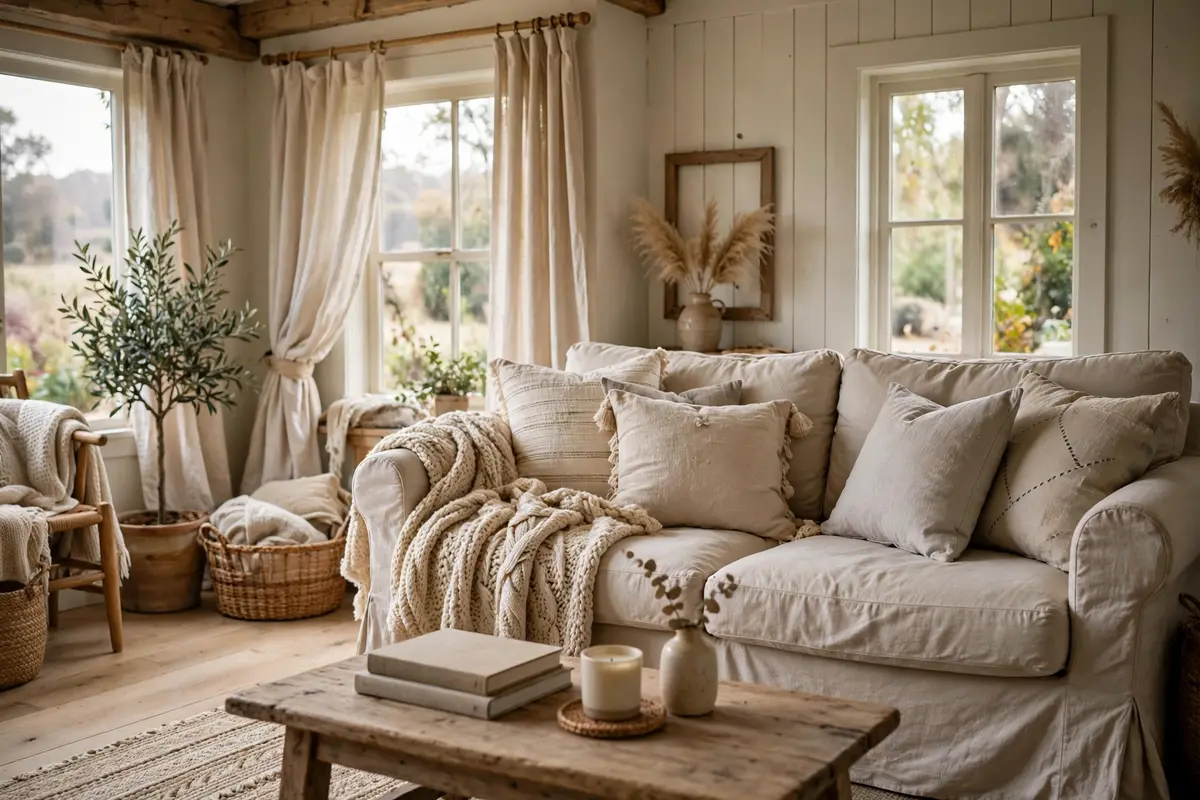
Textiles are the easiest way to add warmth and colour to a farmhouse living room. They are affordable, easy to change, and make the seating area feel inviting.
- Start with two or three throws. A chunky knit throw in cream, a woven blanket in muted sage, and a soft cotton throw in dusty blue can layer beautifully on a neutral sofa.
- Mix pillow patterns carefully. Combine one solid colour, one simple stripe or gingham, and one small floral or ticking stripe. Keeping the colours in the same muted family prevents the mix from looking busy.
- Choose natural fabrics. Linen, cotton, and wool feel better than shiny synthetic materials. They also age well and look more relaxed after washing.
- Hang simple curtains. Plain linen or cotton panels in cream or soft white let light through while adding softness to the windows. Avoid heavy, patterned curtains that can make the room feel dark.
- Use a basket for extra throws. A woven basket beside the sofa keeps extra blankets tidy and within reach. It also adds another natural texture to the room.
- Change textiles seasonally. Swap heavier knits for lighter cotton in summer. Small seasonal changes keep the room feeling fresh without buying new furniture.
A boho living room can share the same layered textiles, but farmhouse style keeps the palette calmer and the patterns simpler for a cleaner, more classic look.
Choose a Natural Rug That Grounds the Room
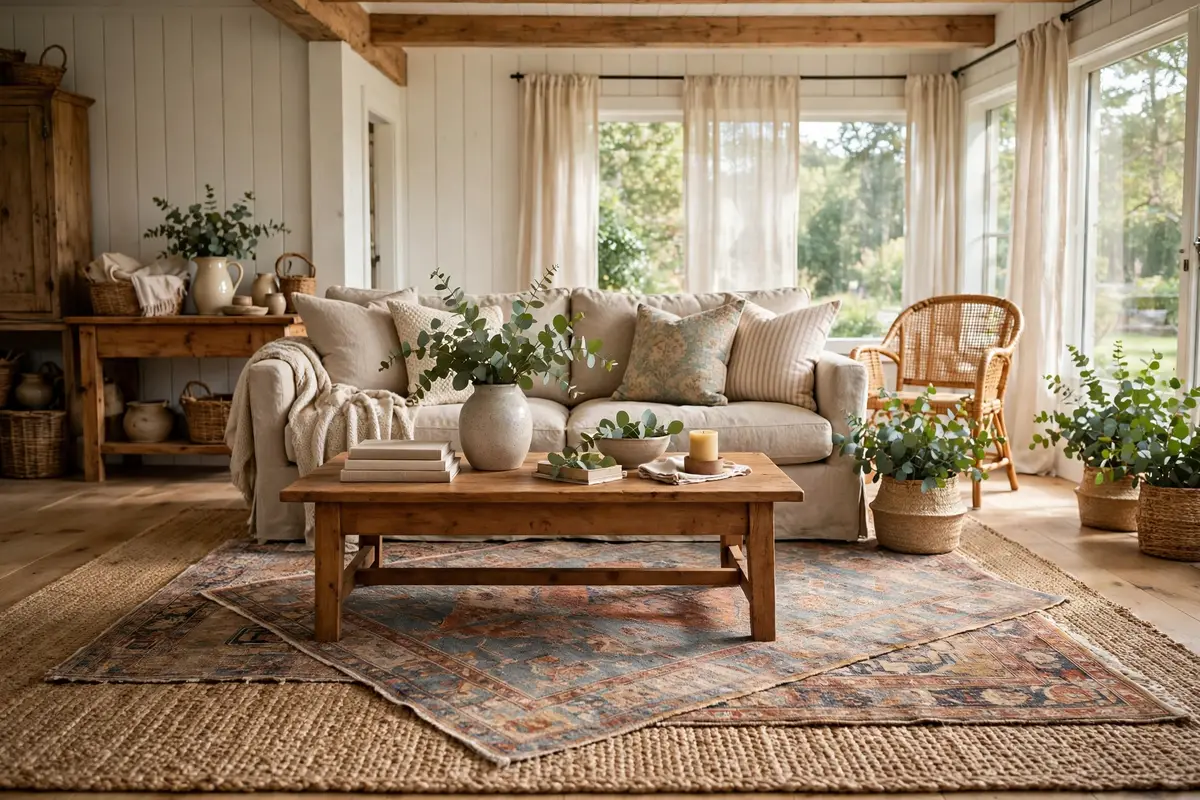
A rug defines the seating area and adds texture underfoot. In a farmhouse living room, natural fibres work best because they complement wood furniture and neutral upholstery.
- Size it generously. For a room around 10×12 feet, an 8×10-foot rug is a good starting point. The front legs of the sofa and chairs should sit on the rug.
- Start with a jute base. A plain jute rug adds warmth and texture without a strong pattern. It works as a neutral foundation for the rest of the room.
- Layer a vintage rug on top. Place a smaller, faded patterned rug over the jute base. The layered look adds colour and character while keeping the overall palette soft.
- Leave a border of floor. Allow 6 to 12 inches of bare wooden floor between the rug edges and the walls. This keeps the room feeling balanced.
- Choose a low pile. A low-pile rug is easier to clean and does not overwhelm the furniture. It also works well under a coffee table with legs.
- Consider washable options. In homes with children or pets, a washable rug or a durable indoor-outdoor rug can handle spills and everyday mess.
A well-chosen rug makes the seating area feel complete. It also protects wooden floors and adds warmth during colder months.
Add Warm Wood With a Coffee Table or Side Table
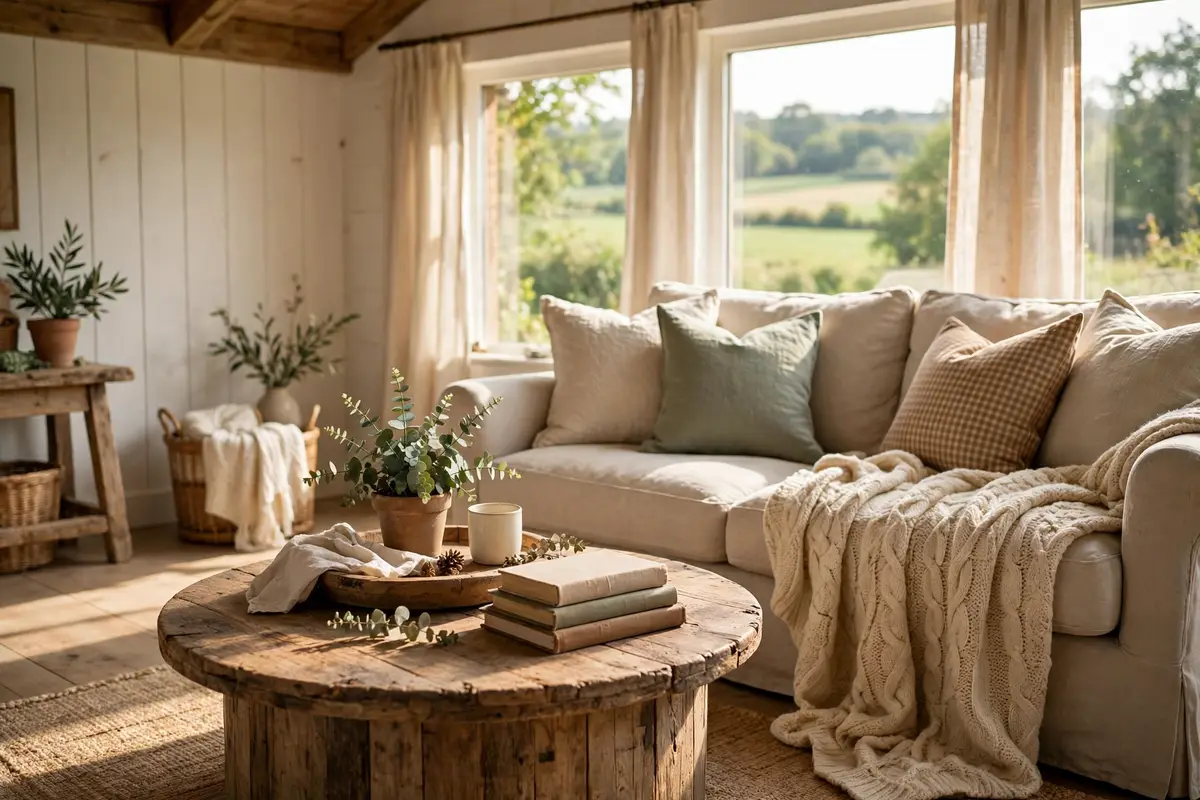
Wood is one of the defining materials of farmhouse style. A reclaimed wood coffee table or a simple wooden side table adds warmth and character that painted furniture cannot match.
- Look for reclaimed wood. Tables made from old barn wood or salvaged planks have natural marks and colour variations that make each piece unique.
- Choose simple shapes. A rectangular coffee table with straight legs or a round side table with a lower shelf both suit the style. Avoid overly ornate carvings.
- Mix wood tones carefully. Warm medium browns work well together. Avoid combining very dark stain with very pale wood in the same small area.
- Add a woven tray. A tray on the coffee table groups candles, books, and small decorative items. It also protects the wood surface.
- Use the lower shelf. A coffee table with a lower shelf provides space for books, baskets, or folded throws.
- Check the height. The coffee table should be about the same height as the sofa seat, or 1 to 2 inches lower. This keeps it comfortable to reach from the sofa.
- Try a thrifted side table. A secondhand wooden side table can be sanded and waxed for a fresh look. It is often cheaper than buying new and adds authentic character.
Warm wood furniture grounds the room and balances the soft textiles. One or two wooden pieces are enough — too much wood can make the room feel heavy.
Use Shiplap or a Simple Accent Wall
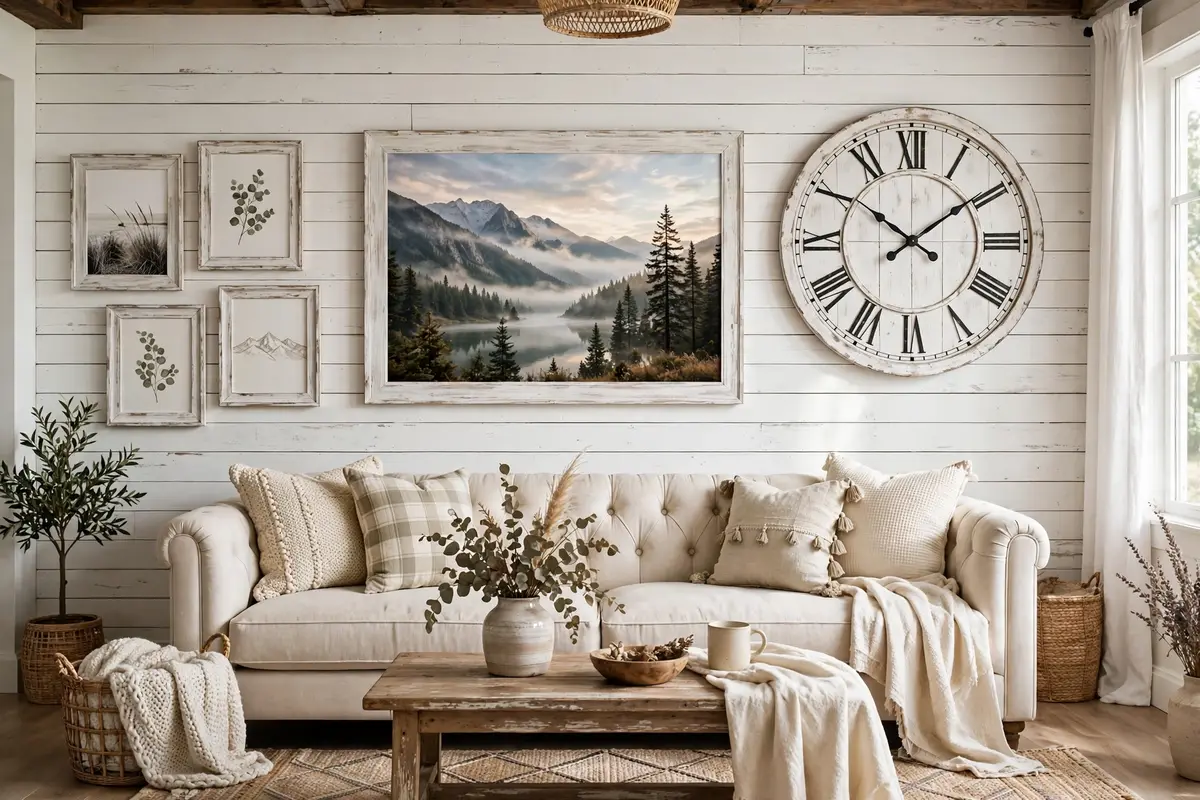
An accent wall can give a farmhouse living room a clear focal point without overwhelming the space. Shiplap is the classic choice, but there are simpler options too.
- Shiplap on one wall. Install horizontal shiplap boards on the wall behind the sofa or fireplace. Paint them white or soft cream for a clean, classic look.
- Try a beadboard panel. Beadboard is a simpler alternative that adds texture without the strong lines of shiplap. It works well in smaller rooms.
- Use removable wallpaper. A subtle ticking stripe or small floral print can create an accent wall in a rental. Peel-and-stick wallpaper removes cleanly when the tenancy ends.
- Paint one wall a soft colour. A pale sage or dusty blue accent wall adds gentle colour without making the room feel dark.
- Keep the rest simple. When one wall has texture or colour, keep the other walls plain. This prevents the room from feeling busy.
- Add simple decor. Hang one large landscape print, a round mirror, or an oversized clock on the accent wall. Avoid filling it with many small frames.
An accent wall works best when it highlights something the room already has, such as a fireplace, a large window, or the main seating area.
Make the Fireplace the Heart of the Room
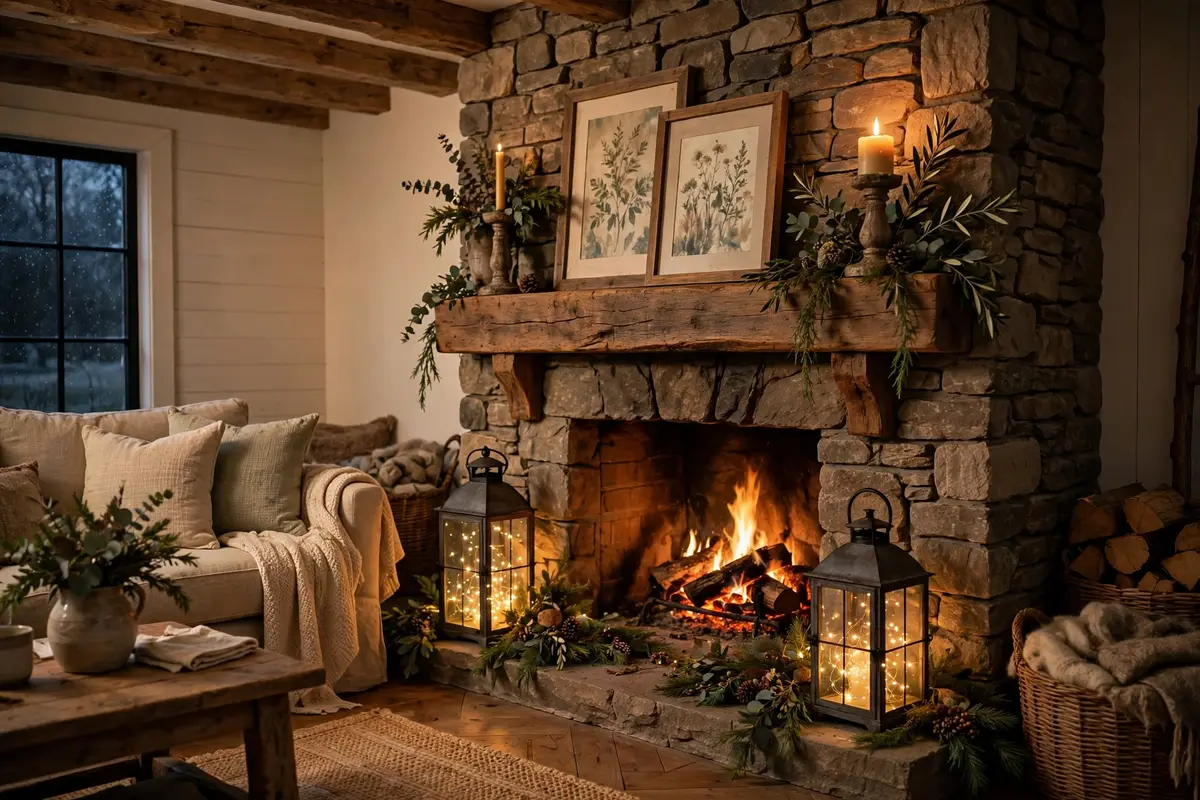
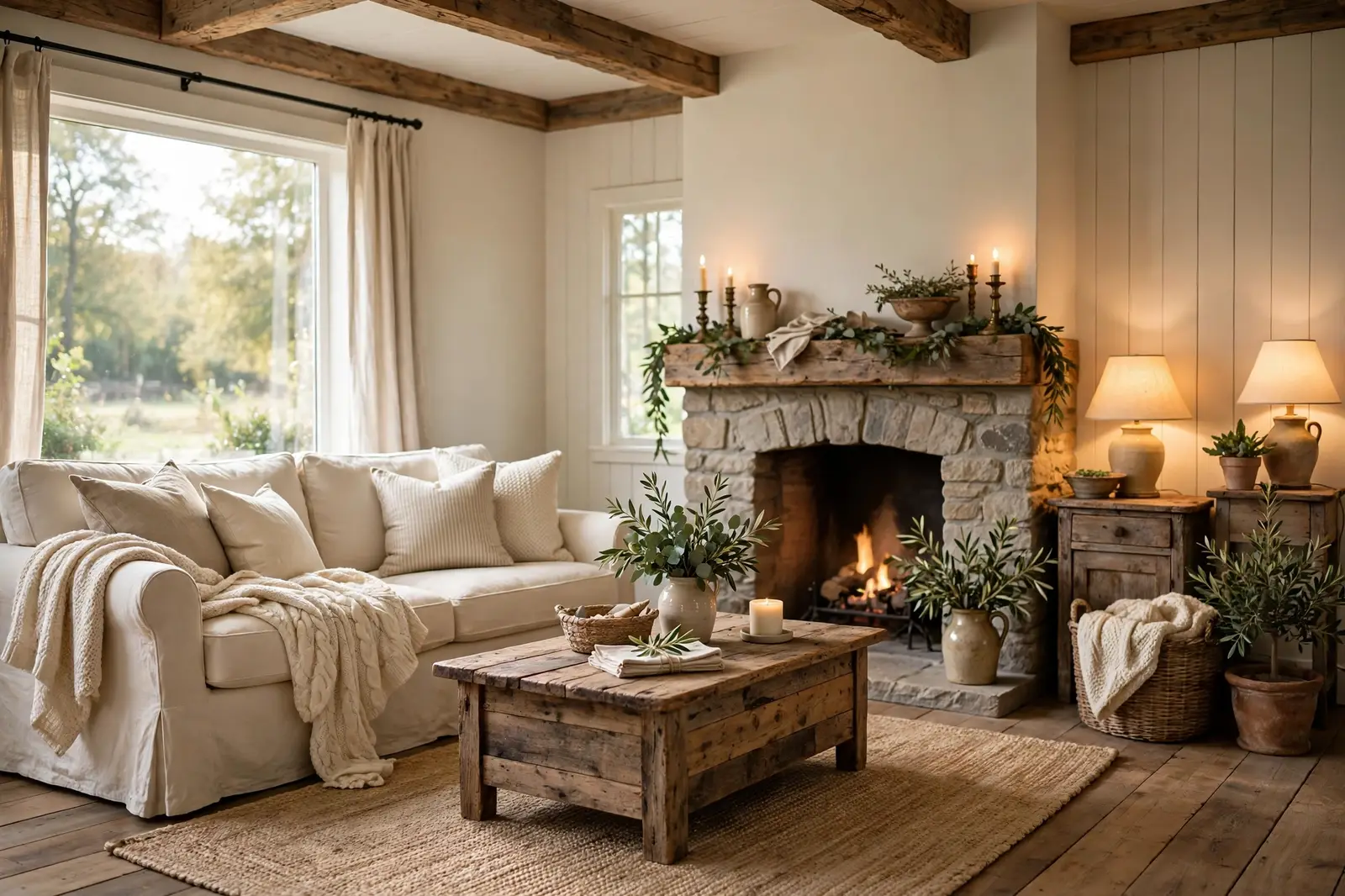
A fireplace naturally draws people together, so it makes sense to arrange the room around it. Even a simple fireplace can become the warm centre of a farmhouse living room.
- Face the seating toward it. Arrange the sofa and chairs so they face the fireplace. This creates a natural gathering spot for family and guests.
- Keep the mantel simple. Decorate the mantel with a few items — a framed print, a small plant, and a pair of candles. Avoid covering every inch of the mantel.
- Add a wooden beam. A thick wooden mantel beam adds rustic character. It can be real reclaimed wood or a lightweight faux beam.
- Use the hearth for storage. Place a woven basket of firewood or rolled blankets beside the fireplace. This adds texture and keeps useful items close.
- Style the wall above. Hang a large mirror, a landscape painting, or a simple wreath above the mantel. One strong piece works better than several small ones.
- Warm it with light. If the fireplace is not used, place battery-powered candles or fairy lights inside it for a soft glow in the evenings.
- No fireplace? Create a similar focal point with a large mirror, a console table, or a gallery of framed prints on the main wall.
The fireplace should feel like the heart of the room — a place where people naturally gather, relax, and spend time together.
Bring in Warm Lighting for Evenings
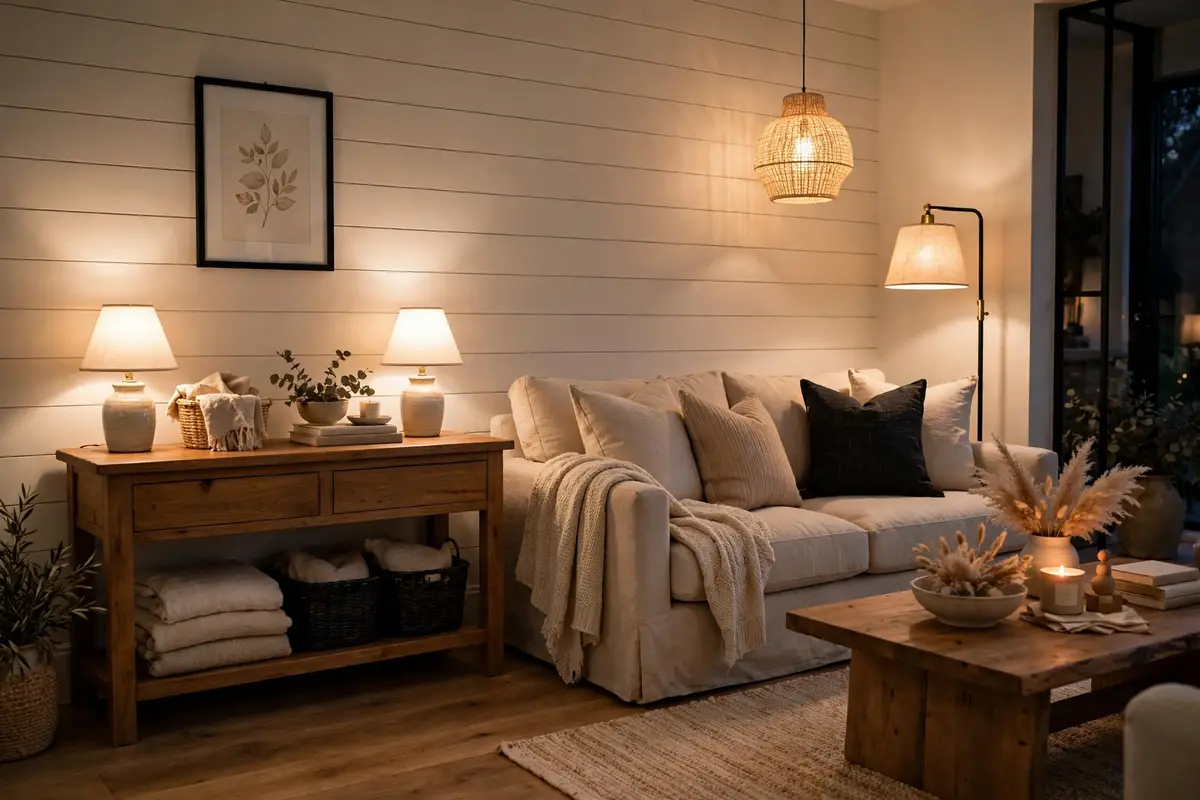
Lighting changes how a room feels after dark. Warm, layered lighting makes a farmhouse living room feel cozy and inviting in the evenings.
- Layer three light sources. Combine a ceiling light, a floor lamp, and a table lamp. Each source brightens a different part of the room.
- Choose warm bulbs. Warm white bulbs around 2700K create a soft glow. Avoid cool, blue-toned bulbs that can make the room feel stark.
- Use lanterns and candles. Metal lanterns, battery-powered candles, and simple candle holders add a rustic touch to shelves and side tables.
- Place lamps near seating. A floor lamp beside the sofa and a table lamp on a side table make reading and relaxing more comfortable.
- Add a dimmer. A dimmer switch lets you lower the ceiling light in the evening for a softer atmosphere.
- Keep window light open. During the day, open the curtains fully to let natural light in. Light-coloured curtains help the room feel bright without blocking the view.
Warm lighting highlights the natural textures in the room — the wood, linen, and woven fibres all look richer in soft, warm light.
Mix Old and New for a Collected Look
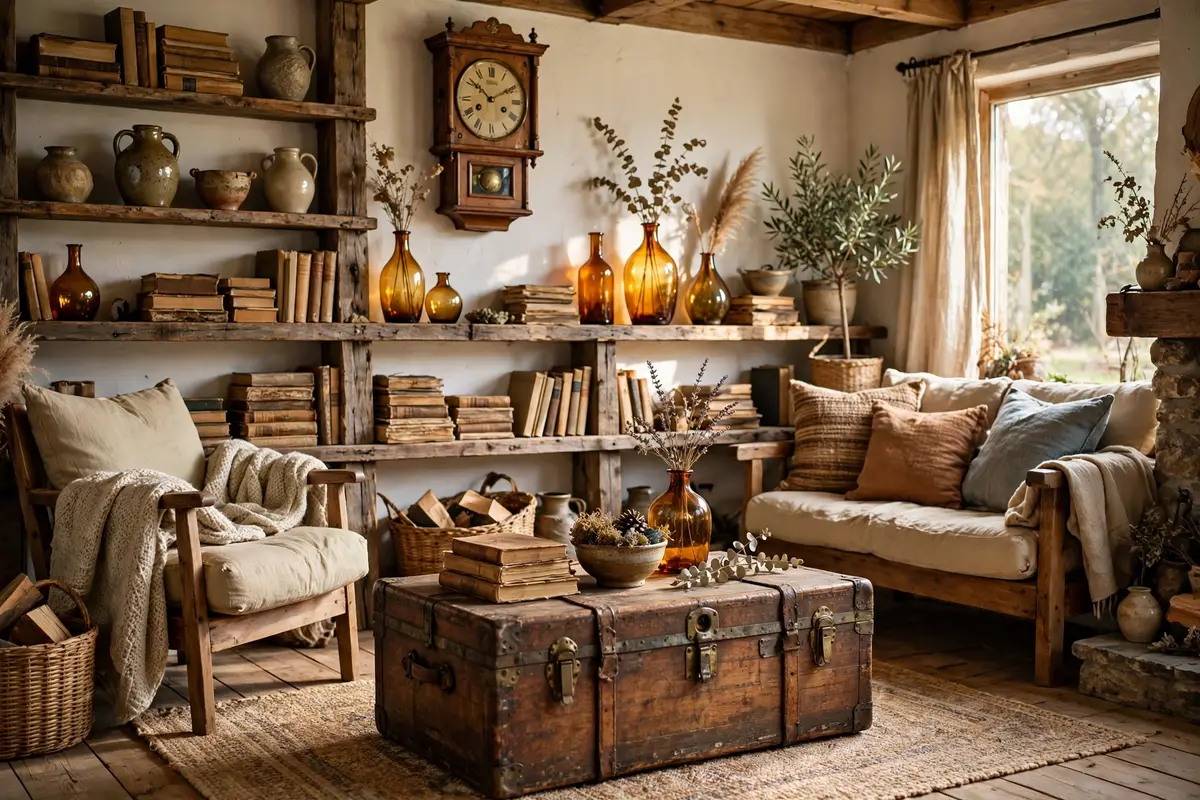
A farmhouse living room should look collected over time, not bought all at once. Mixing vintage finds with newer furniture creates a room with personality and history. For a cleaner, more streamlined take, explore these modern farmhouse living room ideas.
- Start with one vintage piece. A secondhand sideboard, an old wooden crate, or a thrifted mirror can become a focal point. Build the rest of the room around it.
- Balance old and new. Pair a vintage wooden table with a modern neutral sofa. The contrast keeps the room feeling fresh rather than like a museum.
- Use antiques practically. An old ladder can hold blankets, a vintage trunk can store toys, and an antique basket can hold firewood. Practical antiques feel natural in the room.
- Repeat materials. If the vintage piece is warm wood, repeat that wood tone in the coffee table or side table. This connects the old and new pieces.
- Keep the palette consistent. Vintage pieces in muted colours blend more easily than bright, bold antiques. Stick to cream, soft grey, warm brown, and pale sage.
- Shop secondhand first. Check thrift stores, flea markets, and online resale listings before buying new. A little patience often finds a unique piece for much less money.
- Avoid too many antiques. One or two vintage pieces add character. Filling the room with antiques can make it feel cluttered and dated.
The goal is a room that tells a story — pieces gathered over time, each with a reason for being there.
Budget-Friendly Farmhouse Swaps That Still Look Good
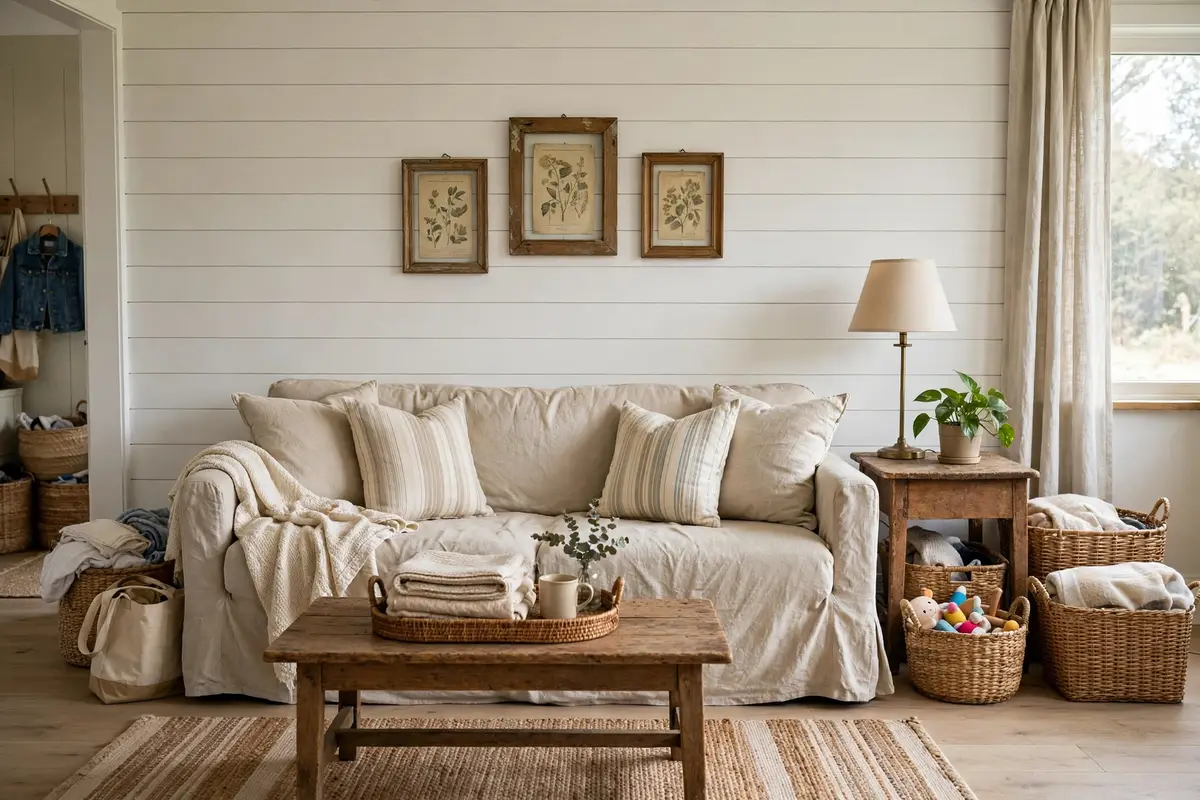
You do not need to spend a lot of money to create a warm farmhouse living room. A few affordable swaps can make a big difference.
- Swap cushion covers. New cotton or linen cushion covers in muted colours cost much less than new furniture and instantly refresh the sofa.
- Paint a thrifted table. A secondhand wooden side table can be sanded, painted cream, and lightly distressed for a farmhouse look.
- Add a DIY shiplap accent. Peel-and-stick shiplap panels or thin wooden planks can create an accent wall without hiring a contractor.
- Use baskets for storage. Woven baskets hide clutter and add texture. They cost far less than new cabinets and can be moved easily.
- Change the lighting. Swap a harsh ceiling light for a warm-toned bulb or add a simple lantern. Lighting changes the whole mood of the room.
- Thrift the decor. Look for vintage mirrors, wooden crates, and ceramic vases at thrift stores. These small finds add character for very little money.
- Make your own art. Frame a simple botanical print, a pressed leaf, or a piece of linen fabric. Handmade art feels personal and costs almost nothing.
- Rearrange first. Before buying anything, try moving the furniture. A better layout can make the room feel new without spending a penny.
An apartment living room can use the same budget-friendly swaps because the same principles apply — simple shapes, natural materials, and practical furniture work in any small rental space.
Conclusion
A farmhouse living room does not need expensive furniture or a complete renovation to feel warm and welcoming. Simple shapes, natural materials, comfortable seating, and thoughtful details create a room with real character. Start with a slipcovered sofa, add warm wood and layered textiles, and choose a few vintage pieces that tell a story. Save these ideas on Pinterest so they are easy to revisit, try the updates that suit your home and budget, and share this guide with anyone who loves simple, cozy living. Small, affordable changes can make your room feel like home.