Living Room Furniture Ideas for Comfortable Layouts

A comfortable living room furniture arrangement starts with a good layout, not a long shopping list. The right placement makes everyday activities easier, creates natural conversation areas, and helps everyone feel comfortable without overcrowding the space.
Whether you have a small apartment or a spacious open plan, a few thoughtful choices can make a big difference. Start with the pieces you already own, consider how your household uses the room, and leave enough space to move around. With the right combination of seating, tables, lighting, and storage, you can create a practical layout that looks balanced and feels inviting every day.
Start With Your Layout
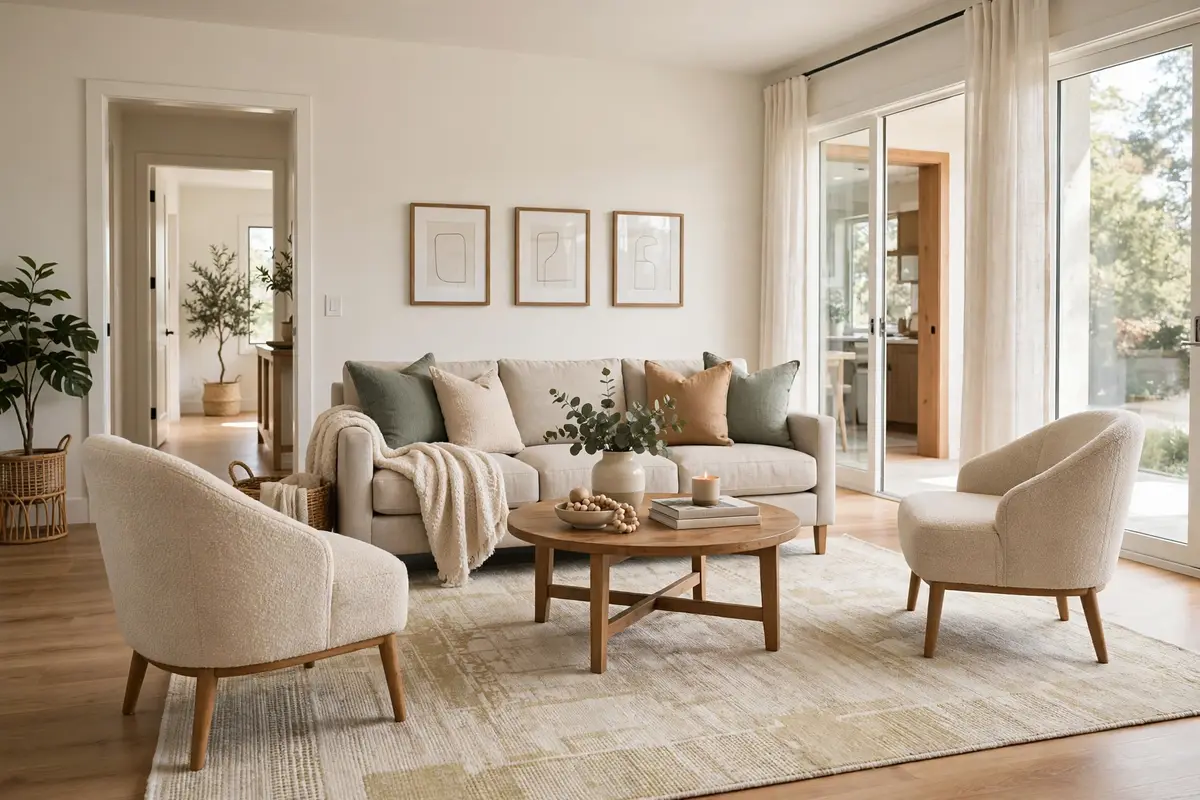
Before buying anything new, decide how you want the room to function. Think about who uses the space, what activities happen there, and how people move between different areas. A room used mainly for watching television needs a different arrangement from one designed for reading, entertaining, or family conversations.
Try to make every piece part of one clear seating group. Avoid placing individual chairs or tables wherever there happens to be empty floor space. Each item should have a purpose and relate to the other pieces nearby.
Measure the room before moving large items. Note the position of windows, doors, radiators, fireplaces, and electrical outlets. These details help you identify practical locations for larger pieces and prevent common placement problems.
It also helps to sketch a simple floor plan. Mark the main walkway and approximate furniture sizes before moving anything heavy. I find that this small step saves time and makes it easier to spot awkward arrangements before committing to them.
Choose One Focal Point
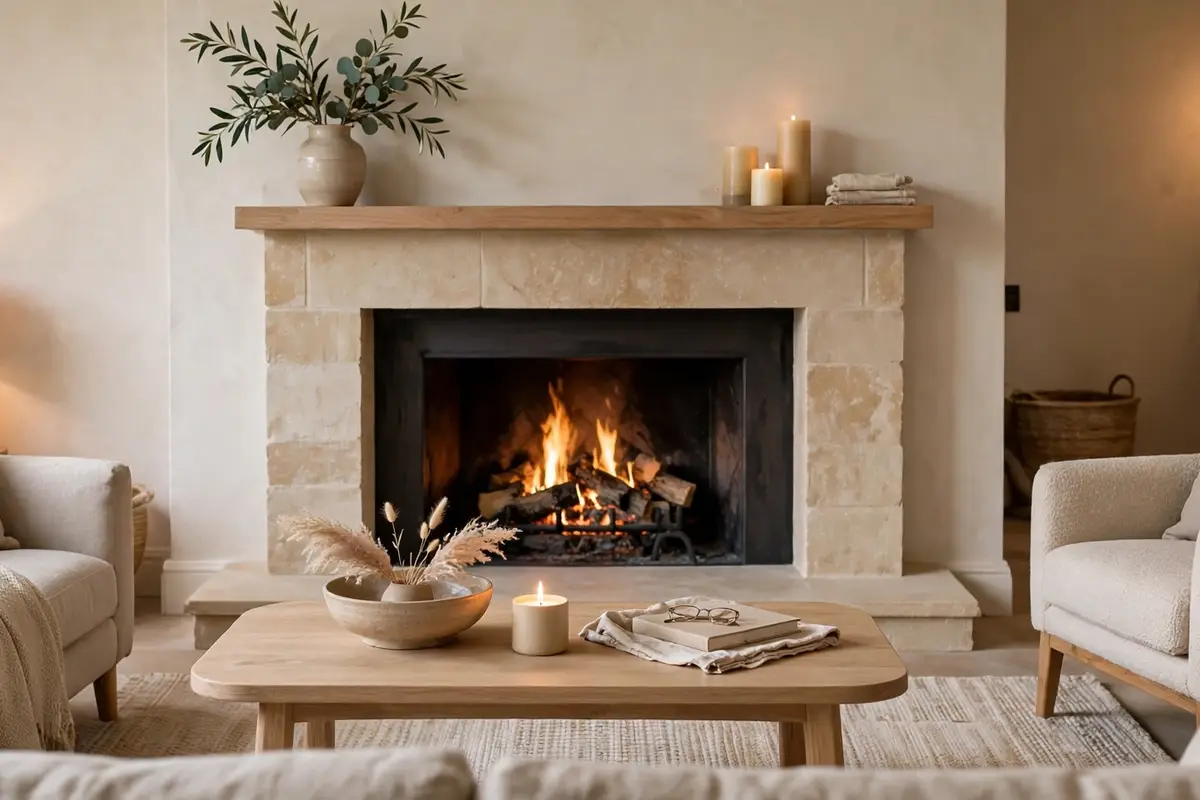
A clear focal point gives the room direction and makes furniture placement easier. Choose the feature that matters most to your household, then arrange the main seating around it.
Good focal point options include:
- Television: Place the main sofa where everyone can comfortably see the screen without twisting their necks.
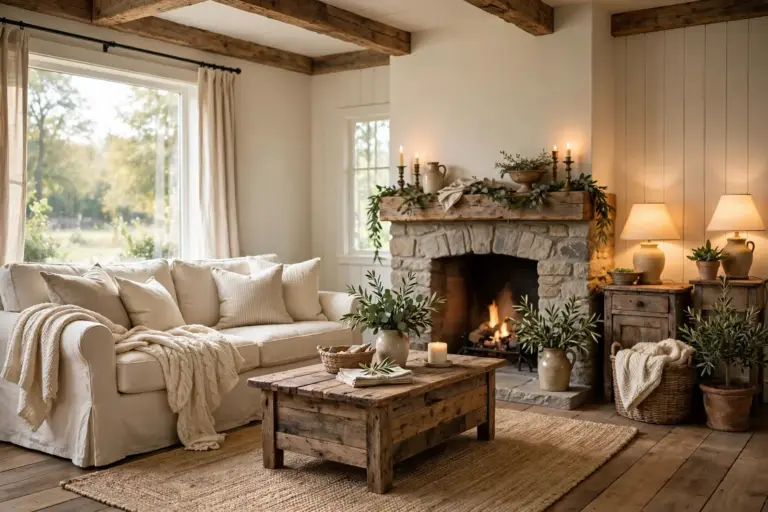
- Fireplace: Arrange the primary seating to enjoy the fireplace, leaving enough clearance for safe use.
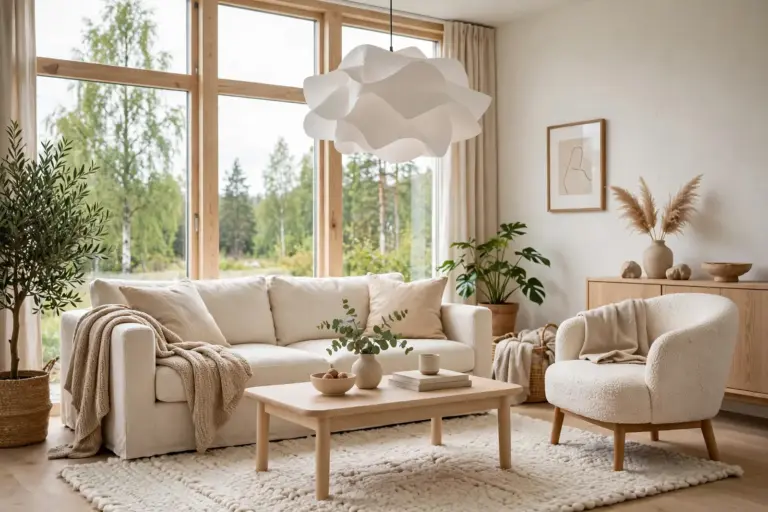
- Large window or view: Position chairs and sofas to take advantage of natural light and attractive outdoor scenery.
- Built-in feature: Use an interesting bookcase, architectural detail, or statement wall to guide the arrangement.
If your room has several attractive features, decide which one deserves the most attention. Trying to make everything the center of attention can leave the layout feeling scattered.
You can still enjoy other features without turning every seat toward them. A chair angled slightly toward a window, for example, can provide a pleasant reading spot while remaining connected to the main seating area.
Six Layouts That Work
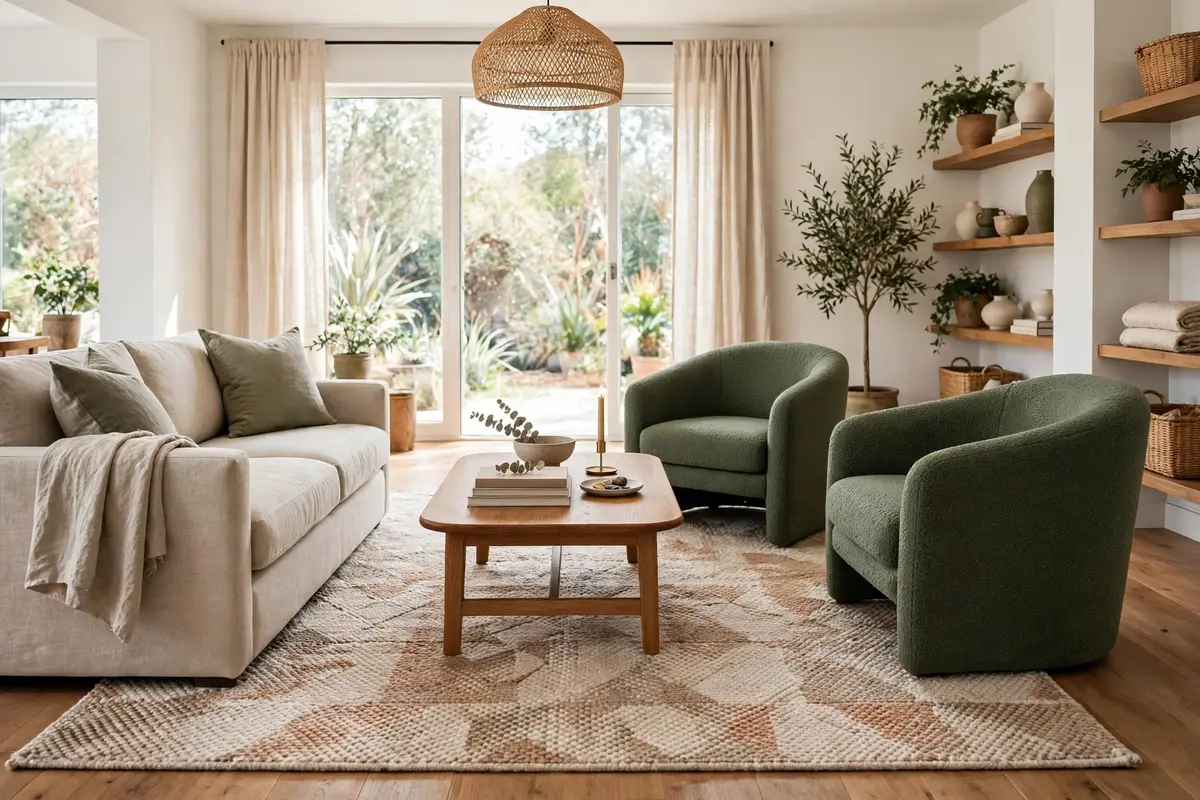
These six arrangements are reliable starting points for different room shapes and household needs. Adjust the measurements and seating sizes to suit your available space.
- Face-to-face conversation area: Place two sofas or a sofa and two chairs opposite each other. This arrangement encourages conversation because everyone can see and speak to one another comfortably.
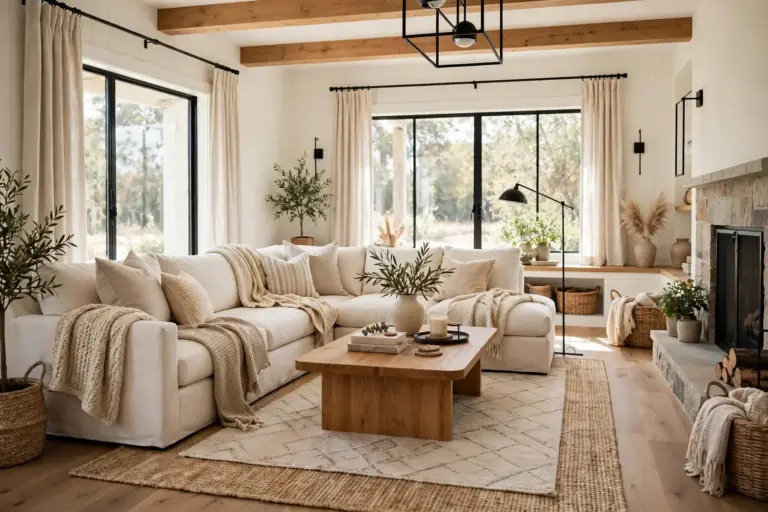
- L-shaped seating: Position a sectional or a sofa and loveseat at a right angle. This creates a connected seating area without requiring every piece to face the same direction.
- Symmetrical seating: Place two matching sofas opposite each other, or position a sofa across from a pair of matching chairs. This gives the room a balanced appearance and works especially well in traditional spaces.
- Floating sofa arrangement: Pull the main sofa away from the wall to create a separate seating zone. This is particularly useful in open plan homes where you want to distinguish the living area from the dining or kitchen space.
- Small room arrangement: Keep one compact seating group and maintain a clear walkway. A smaller sofa, one accent chair, and a practical coffee table can provide everything needed without making the room feel crowded.
- TV-focused arrangement: Place the main sofa directly across from the television. Add chairs at the sides if space allows, making sure the screen remains visible from the other seats.
Choose the layout that supports your daily routine rather than copying a room arrangement simply because it looks attractive in a photograph.
Spacing That Feels Right
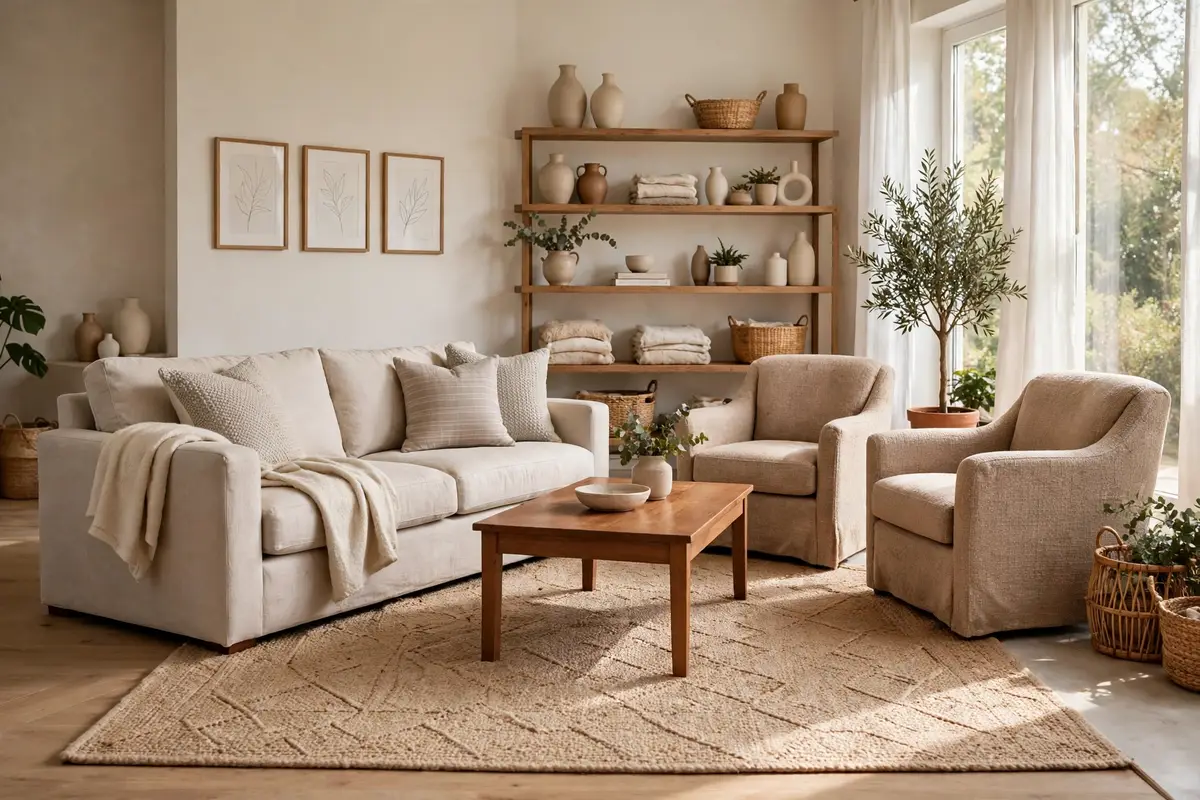
Good spacing makes even a modest room feel more comfortable. A few simple measurements can help you avoid cramped walkways and furniture that feels too far apart.
Do:
- Leave approximately 14 to 18 inches between the sofa and coffee table. This provides enough legroom while keeping drinks and other items within reach.
- Allow at least 30 to 36 inches for main walkways so people can pass without squeezing between pieces.
- Keep conversational seats no more than 8 feet apart for easy discussion.
- Choose a rug large enough for at least the front legs of every seat to rest on it.
- Start with about 7 feet between the sofa and television as a practical planning reference, then adjust for screen size and viewing comfort.
- Pull the sofa approximately 3 to 5 inches away from the wall to create a little breathing room.
Avoid:
- Pushing every piece against the walls simply to create an empty center.
- Choosing an oversized coffee table that makes it difficult to walk around.
- Placing chairs so far apart that conversation feels uncomfortable.
- Using a tiny rug that makes the seating group look disconnected.
- Blocking doorways, frequently used routes, or access to windows.
These measurements are useful starting points rather than strict rules. Always consider the room’s dimensions and the needs of the people using it.
The Core Pieces
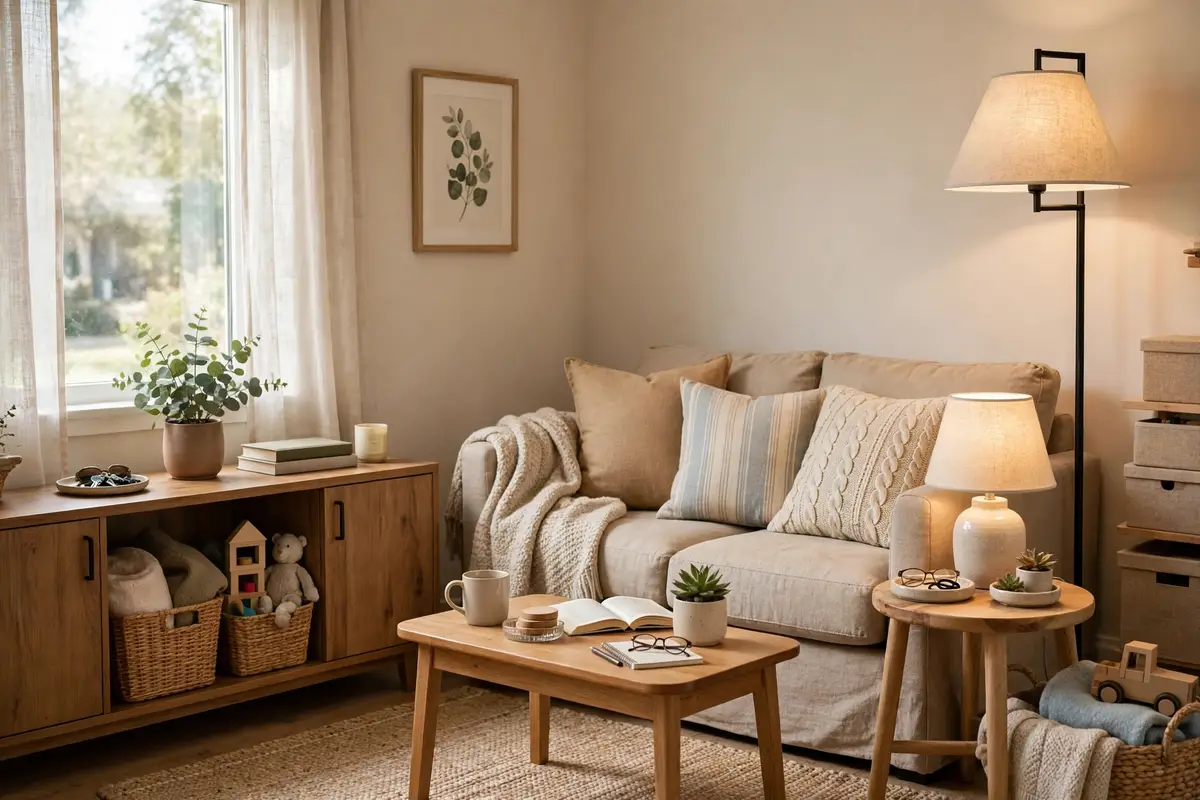
A functional living room does not need dozens of decorative pieces. Start with the essentials and add extras only when they improve comfort or solve a practical problem.
Here are five useful tips for choosing the basics:
- Provide enough everyday seating: Think about the number of people who regularly use the room. A sofa with one or two additional chairs may be enough for many households.
- Give every seat a nearby surface: A side table, small drink table, or shared coffee table keeps everyday items within easy reach.
- Layer your lighting: Combine ceiling lights with floor lamps and table lamps. Different light sources make the room more useful for relaxing, reading, and entertaining.
- Include practical storage: Use baskets, cabinets, shelves, or drawers for remotes, magazines, blankets, and children’s belongings.
- Keep the center functional: Choose a coffee table or ottoman that fits the seating group without taking up too much walking space.
Think about what normally collects on your coffee table. If books, toys, chargers, and blankets regularly pile up there, the room probably needs better storage rather than another decorative accessory.
Choosing the Right Sofa
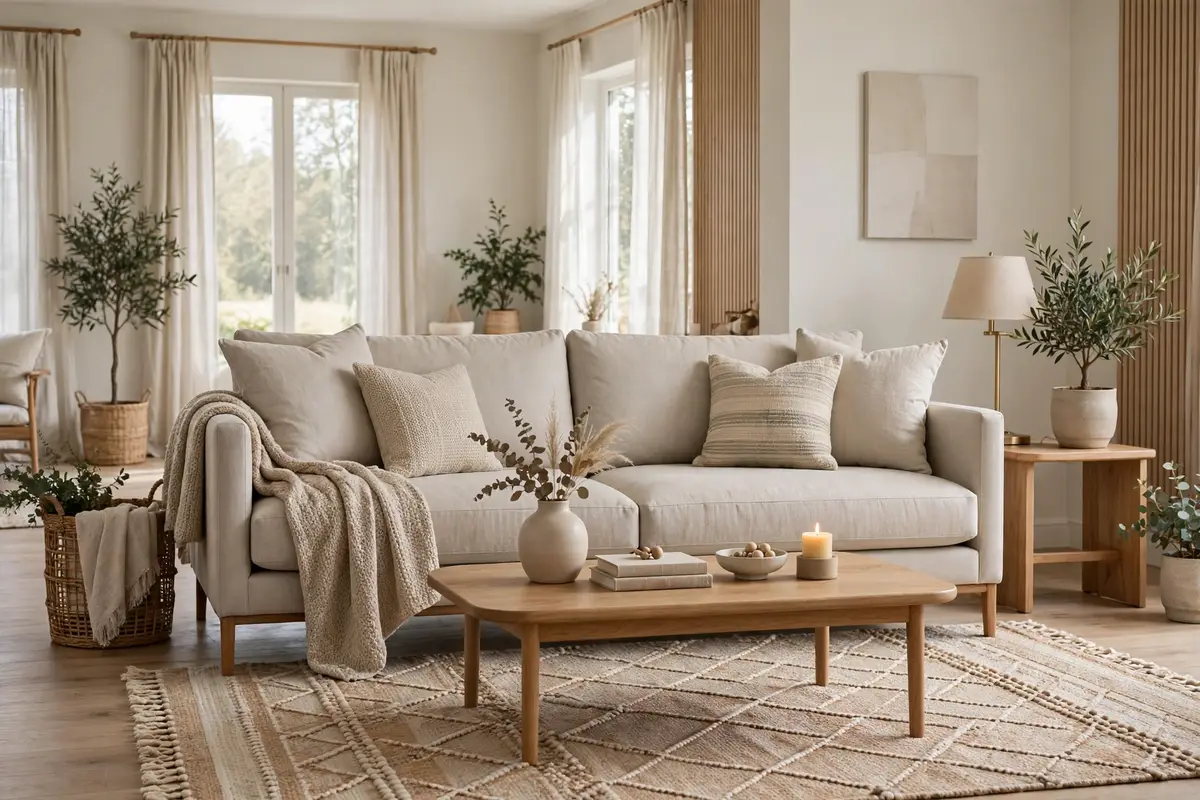
The sofa is usually the largest and most visually important piece in the room. Its size, shape, color, and placement influence how everything else fits together.
Start by measuring the available wall or floor area. Consider the sofa’s total width, depth, arm shape, and back height. A deep sofa may be wonderful for lounging, but it can take up too much space in a narrow room. A compact design with slim arms may offer more usable seating without overwhelming the layout.
For more inspiration on choosing the right style and proportions, explore different couches living room ideas before making your decision.
Consider these practical factors:
- Room size: Choose a sofa that leaves enough space for additional seating and comfortable walkways.
- Household needs: A larger family may benefit from a spacious sectional, while a smaller household may prefer a standard three-seat sofa.
- Cushion comfort: Look for supportive cushions that suit how you sit and relax.
- Upholstery: Select a fabric that matches your lifestyle, especially if you have children or pets.
- Visual weight: A sofa with raised legs and a lighter profile can make a small room feel more open.
Color also matters. Neutral shades are easy to coordinate with different rugs and cushions, while deeper colors can add personality and make the sofa a stronger feature.
Before purchasing, check the measurements of doorways, staircases, and hallways. A sofa that fits the room may still be difficult to bring inside.
Chairs, Chaise and Shape
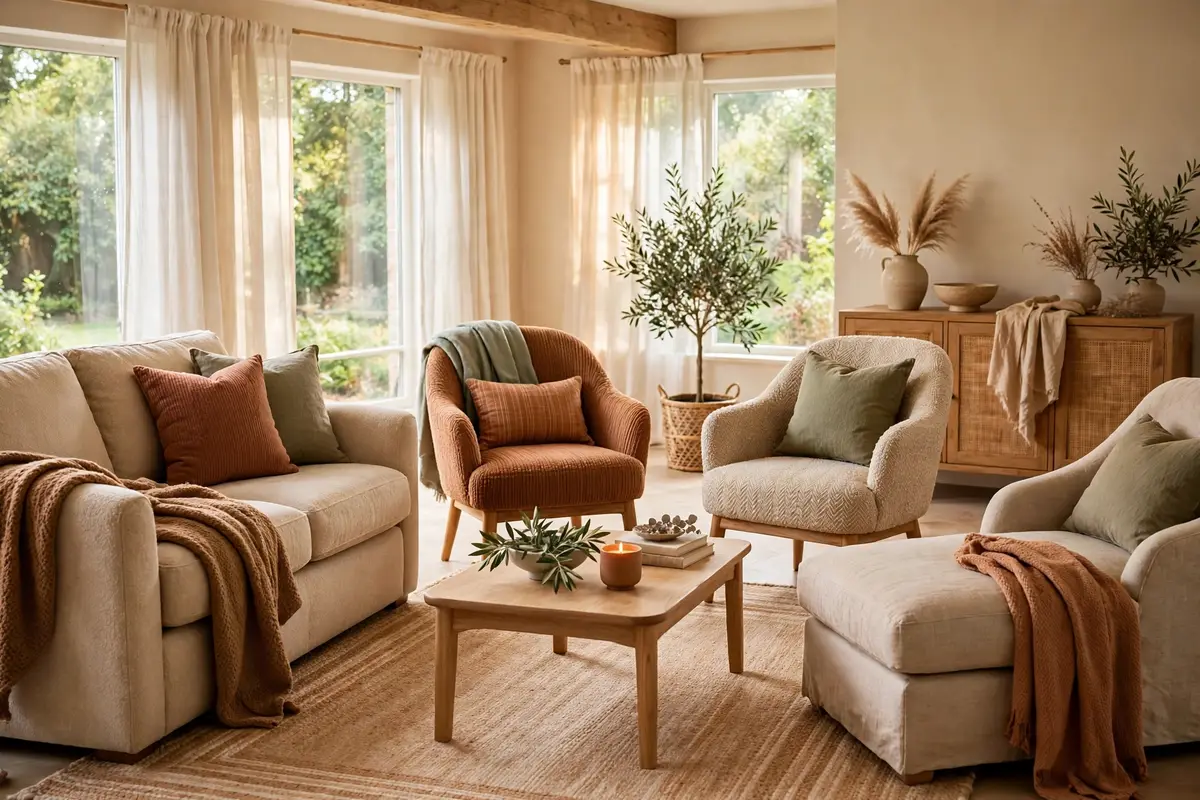
Additional seating helps complete the arrangement and gives people more ways to use the room. The key is choosing pieces that complement the sofa without making the space feel crowded.
Consider these options:
- Accent chairs: Place one or two chairs opposite or beside the sofa to create a more social arrangement. Angle them slightly inward to make conversation easier.
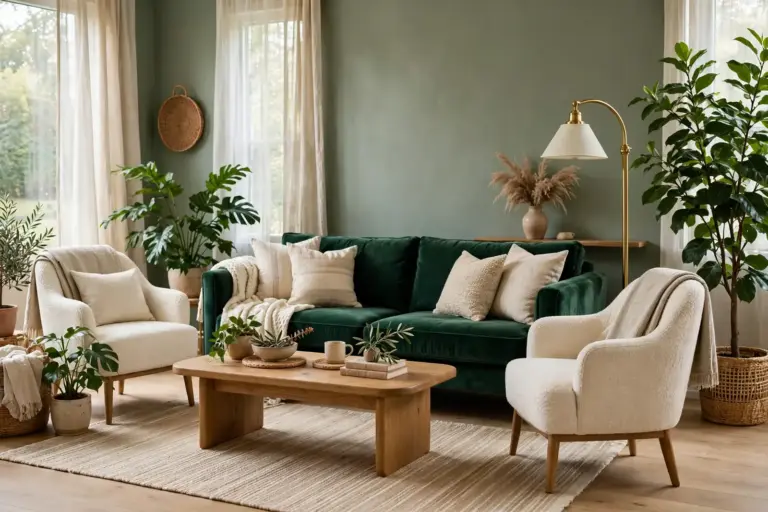
- Matching chairs: Use a pair of similar chairs for a balanced look, particularly when the sofa sits opposite the fireplace or television.
- A chaise lounge: Add a chaise when you want a comfortable place to stretch out. Choose a position that does not block the main walkway.
- A loveseat: Pair a smaller two-seat sofa with a larger sofa when you need additional seating but do not have room for a full sectional.
- An occasional chair: A lightweight chair can provide flexible seating and be moved when guests visit.
Two combinations work especially well in many homes.
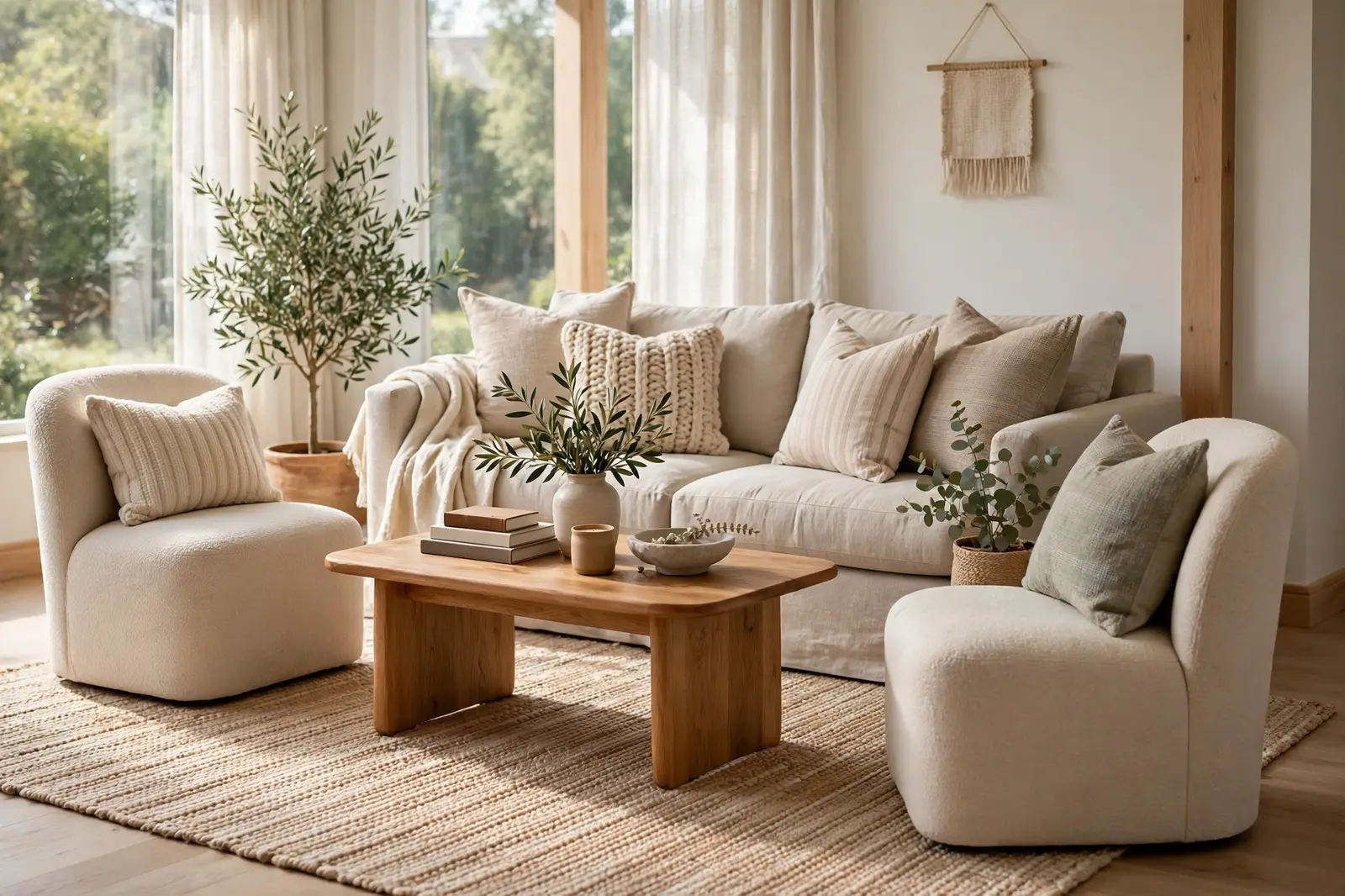
A sofa with two accent chairs creates a classic conversation area. It offers several comfortable seats while keeping the arrangement visually balanced.
A sofa with a chaise and one accent chair provides a more relaxed feel. The chaise offers space to stretch out, while the separate chair keeps the layout from becoming too enclosed.
Pay attention to the scale of each piece. Large, bulky chairs can make a modest room feel crowded, while very small chairs may look out of place beside a substantial sofa.
Small Spaces, Smart Pieces
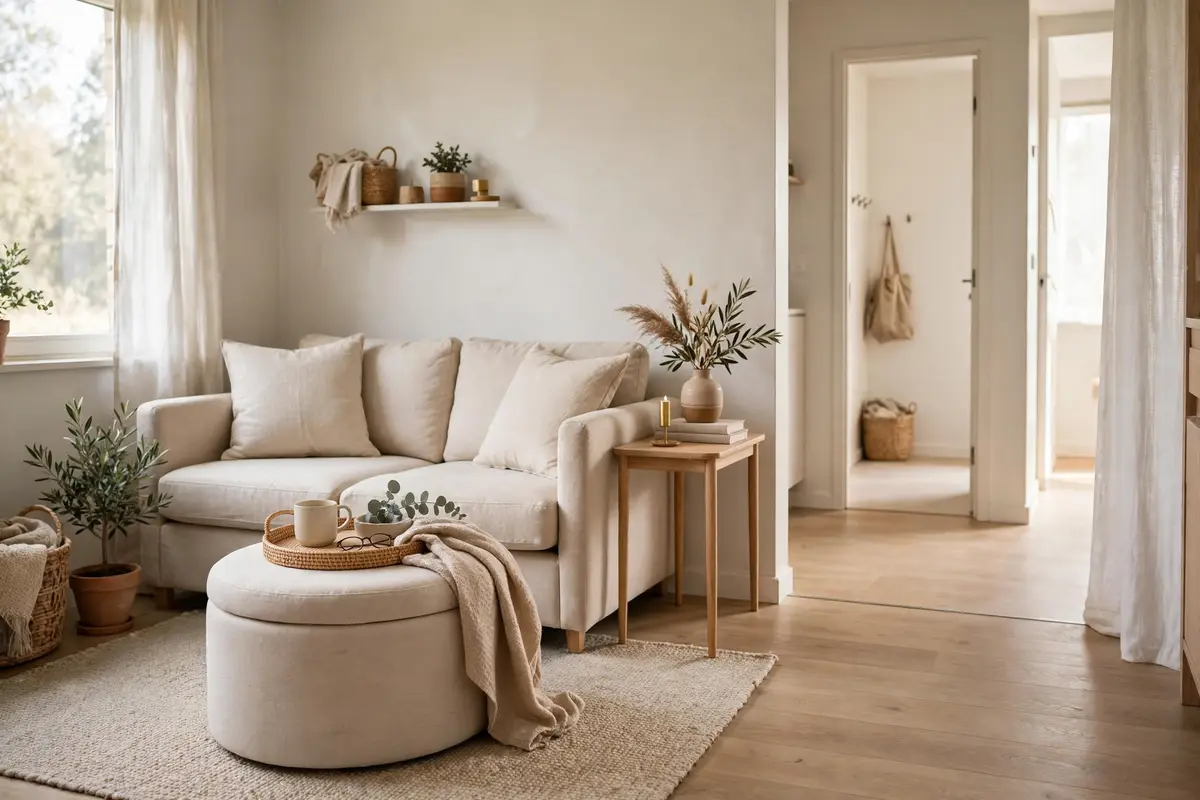
Small rooms benefit from pieces that perform more than one job. Rather than filling every available corner, choose items that provide comfort, storage, or flexibility.
Follow these steps to make the most of limited space:
- Choose a compact sofa: Measure the room carefully and select a design with proportions that leave enough space for movement.
- Use a storage ottoman: Replace a traditional coffee table with an ottoman that can hold blankets, toys, or extra cushions. Add a tray on top when you need a stable surface.
- Consider a sleeper sofa: A sofa bed provides everyday seating and an additional sleeping space for overnight guests.
- Try modular pieces: Modular sofas and individual seating sections can be rearranged as your needs change. They are particularly useful in rooms with unusual dimensions.
- Add nesting tables: These can be separated when needed and stacked together when you want more open floor space.
- Keep accessories light: Choose slim floor lamps, wall shelves, and small side tables instead of oversized pieces that occupy valuable floor area.
Remember that empty space is useful too. Leave enough room for people to walk comfortably and for doors, drawers, and storage compartments to open fully.
Zoning an Open Plan
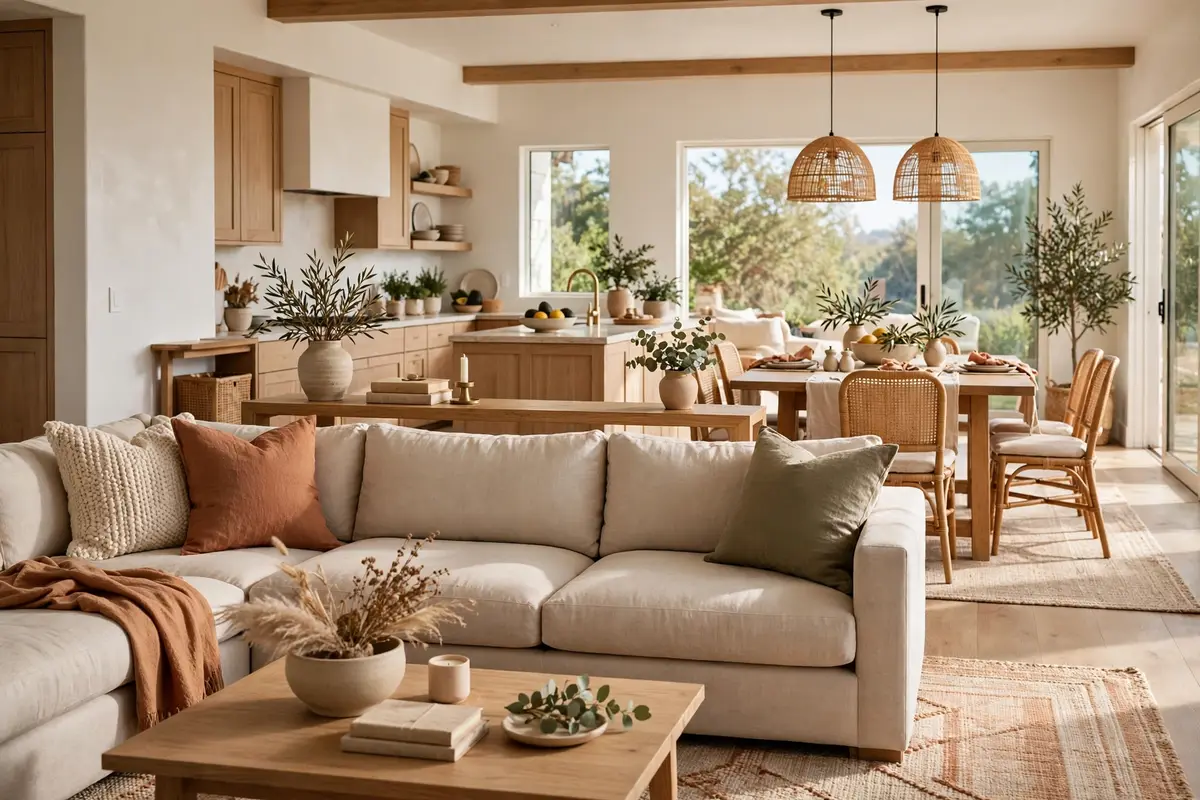
Before: An open plan room can feel unfinished when sofas, chairs, and tables are scattered across a large floor area. Without clear boundaries, the living and dining spaces may blend together, making the entire room feel less organized.
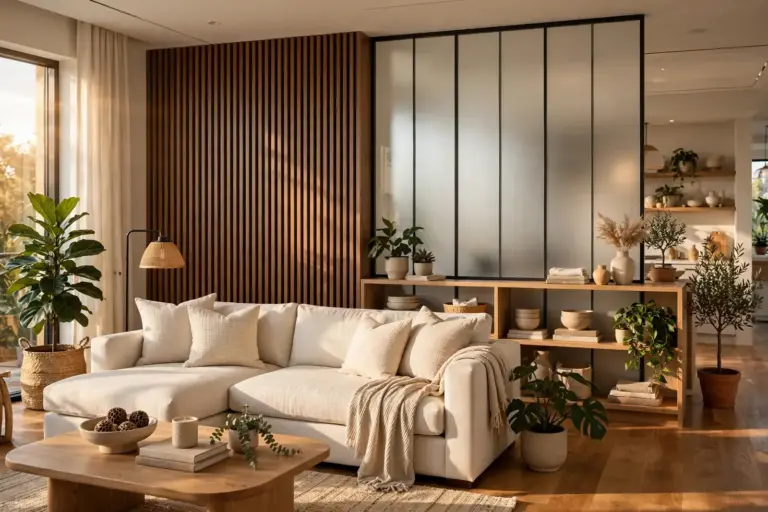
After: A sectional creates a natural boundary for the seating area. Position it with its back toward the dining or kitchen space when appropriate, keeping the main walkway clear.
A few additional pieces can make this arrangement work even better:
- Place a narrow console table behind the sofa to create a useful surface for lamps, books, and decorative accessories.
- Use a large area rug to visually connect the seating pieces and distinguish the living zone from nearby areas.
- Arrange the coffee table and chairs around the sectional so the seating feels like one complete group.
- Keep a clear route between the kitchen, dining area, and living space.
- Use matching or complementary finishes to make the different zones feel connected.
You can also use lighting to define each area. A pendant over the dining table and floor lamps near the sofa provide separate sources of light without making the open space feel divided.
The goal is to create distinct functional areas while maintaining a natural flow throughout the home.
Warm and Family Friendly
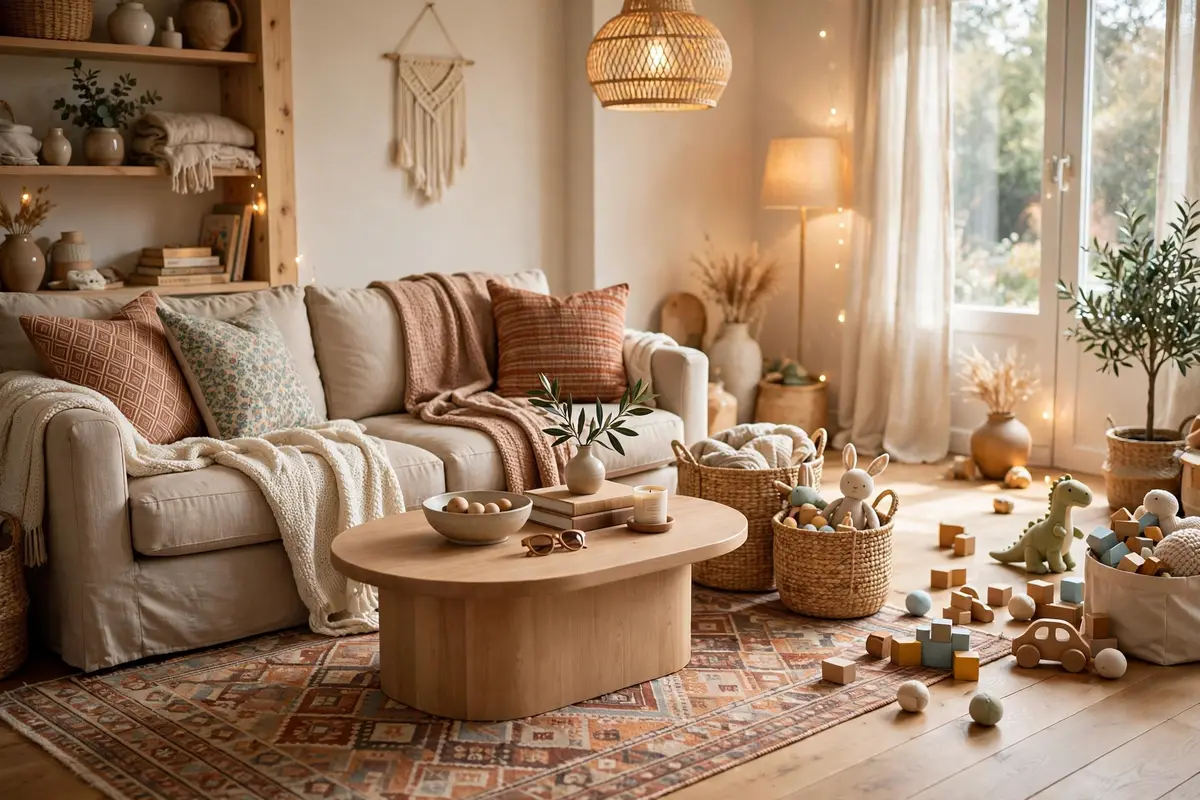
A practical layout should also feel comfortable and personal. The right finishing touches help soften the room, while family-friendly choices make it easier to enjoy every day.
Use these tips to create a welcoming space:
- Choose durable upholstery: Look for easy-to-clean fabrics that can handle regular use, spills, and everyday wear. Removable cushion covers can make maintenance simpler.
- Leave room for play: Keep some open floor space available for children, toys, and family activities. Avoid filling every corner with decorative pieces.
- Add flexible seating: Recliners, modular sectionals, and lightweight chairs make it easier to adjust the arrangement for different activities.
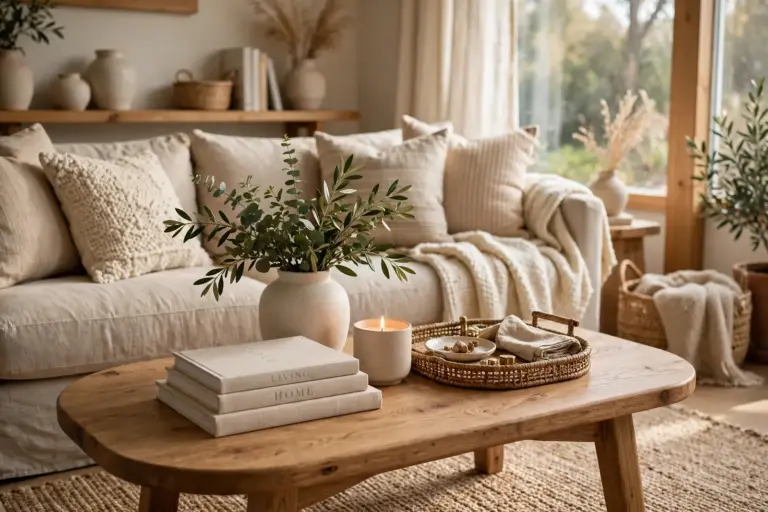
- Layer soft textures: Add throws, cushions, and a comfortable rug to make the seating area feel warmer and more inviting.
- Use gentle lighting: Combine warm table lamps and floor lamps to create a relaxed atmosphere in the evening.
- Include accessible storage: Baskets and closed cabinets make it easier to put away toys, games, and everyday clutter.
- Keep the layout adaptable: Choose movable pieces that can be shifted when you need extra space for guests or family activities.
For a little more inspiration, borrow ideas from a cosy living room and bring in soft fabrics, comfortable cushions, and warm lighting. These simple details help the finished arrangement feel inviting without requiring expensive updates.
Think about safety as well as appearance. Rounded table edges, secure shelving, stable lamps, and clear walkways are helpful choices for busy family homes.
Conclusion
Creating a comfortable room starts with understanding how you use the space. The best living room furniture arrangement balances practical seating, useful surfaces, appropriate storage, and enough room to move around.
Start with one focal point, choose a layout that suits your household, and use simple spacing guidelines to keep everything comfortable. Add chairs, soft textures, and flexible pieces as needed. You do not have to buy everything at once. Save your favorite ideas on Pinterest, try the arrangements that suit your home, and share these tips with someone planning a room refresh.