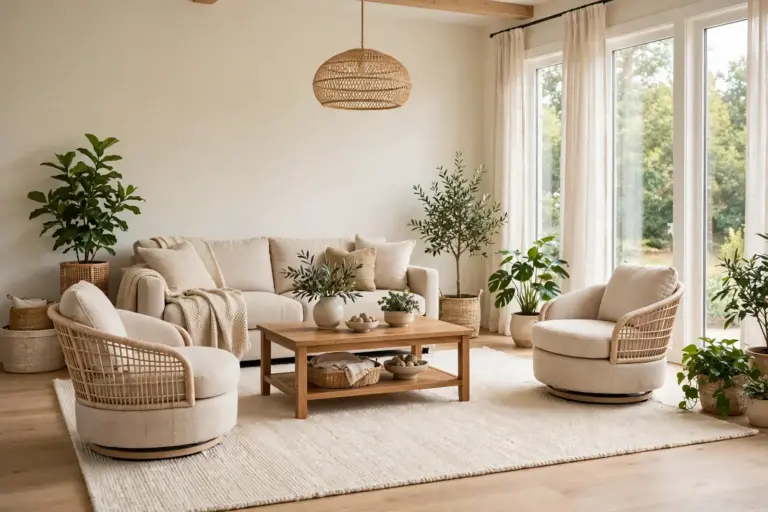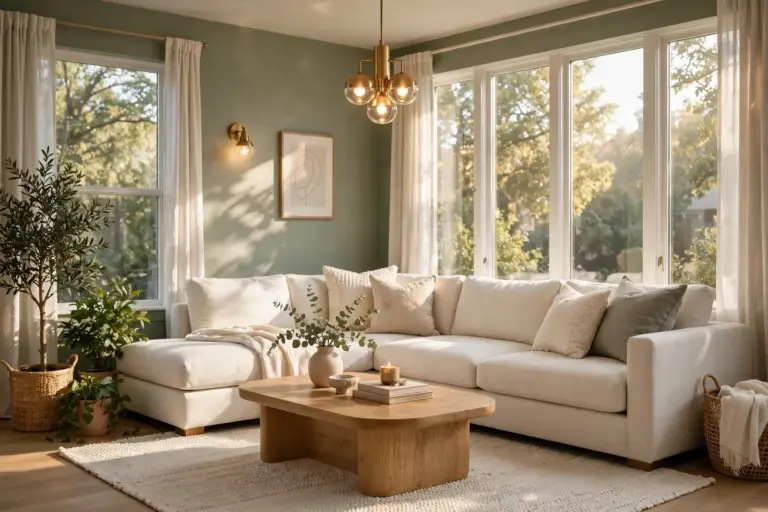
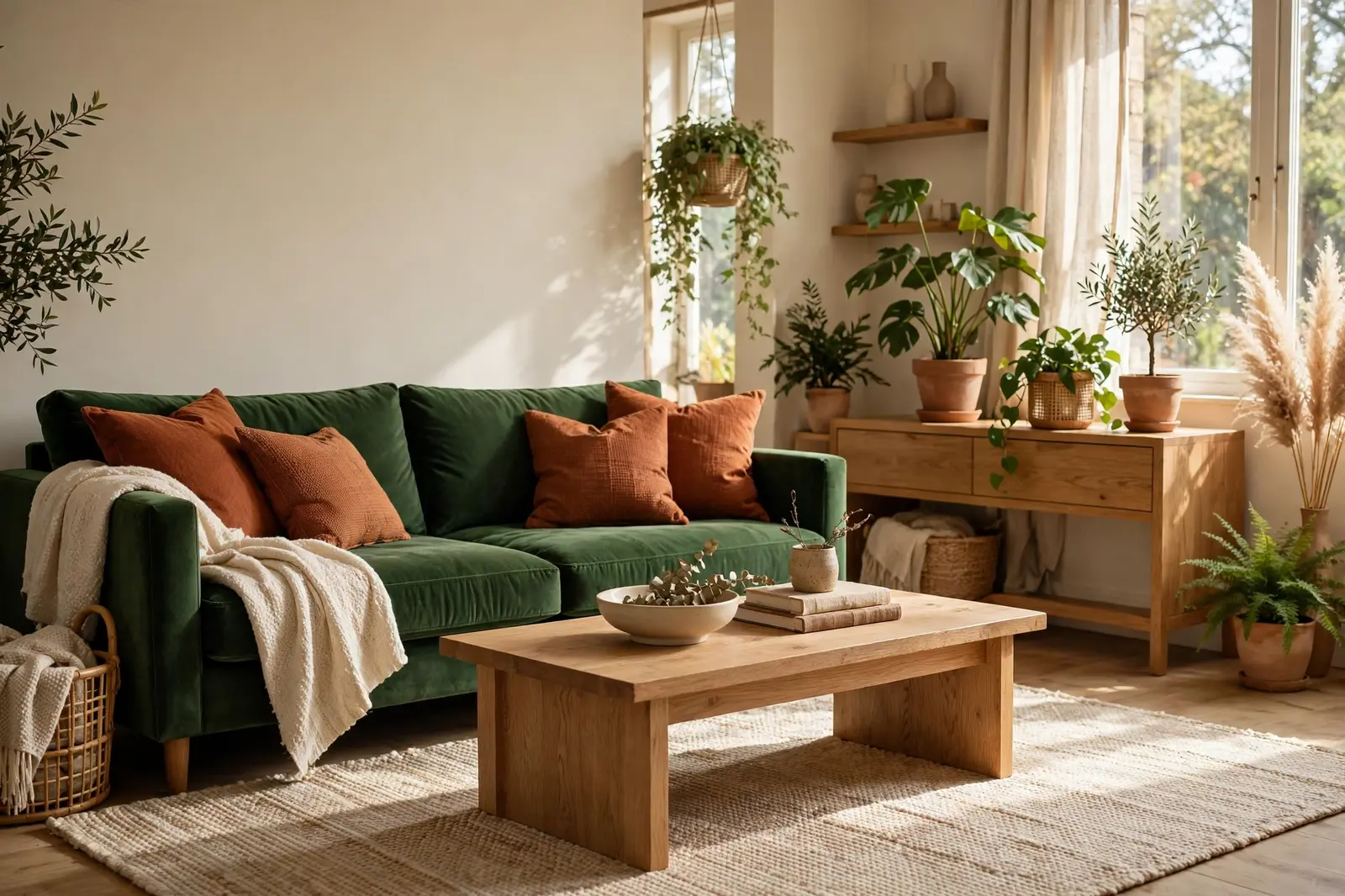
Green Couch Living Room Ideas With Easy Color Pairings

A green couch living room can feel fresh, cozy, and full of personality with the right color pairings. Whether your sofa is soft sage, earthy olive, or rich emerald, the colors around it make a big difference. You do not need to replace your furniture or choose complicated decorating schemes to make everything work together.
The easiest approach is to look at your sofa’s undertone first, then build a simple palette around it. Warm wood, creamy fabrics, natural textures, and a few carefully chosen accent colors can help your green sofa feel right at home. These practical ideas will help you create a balanced room that feels comfortable, attractive, and easy to live in.
Start With the Green Shade
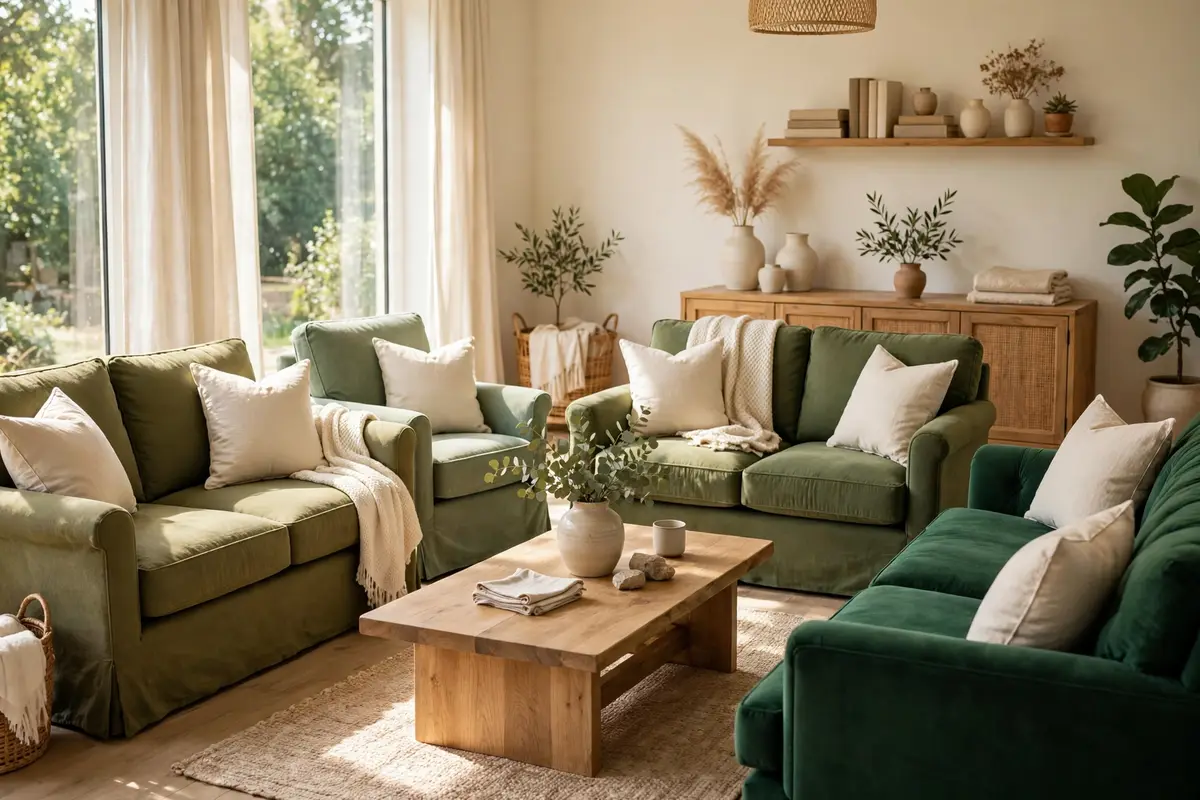
Before choosing paint colors, cushions, or accessories, take a close look at your sofa’s particular shade of green. Not every green works with the same colors, and understanding its undertone makes decorating much easier.
Warm greens, including olive and moss, have yellow or earthy undertones. They look especially good with walnut furniture, warm oak, terracotta, camel, rust, creamy whites, and aged brass.
Cool greens, such as sage, eucalyptus, and emerald, lean more toward blue or gray. These shades pair nicely with soft gray, charcoal, cooler whites, pale wood, and silver finishes.
A useful way to check your sofa’s undertone is to:
- Look at the fabric beside a piece of plain white paper.
- Compare it with warm cream and cool gray fabrics.
- Check the color in morning light and evening light.
- Notice whether it appears more yellow, blue, or gray.
- Bring home fabric samples before choosing permanent paint or large furniture pieces.
I always recommend checking fabric samples in the actual room before making a final decision. Green upholstery can look surprisingly different under natural daylight and artificial lighting.
Build a Balanced Palette
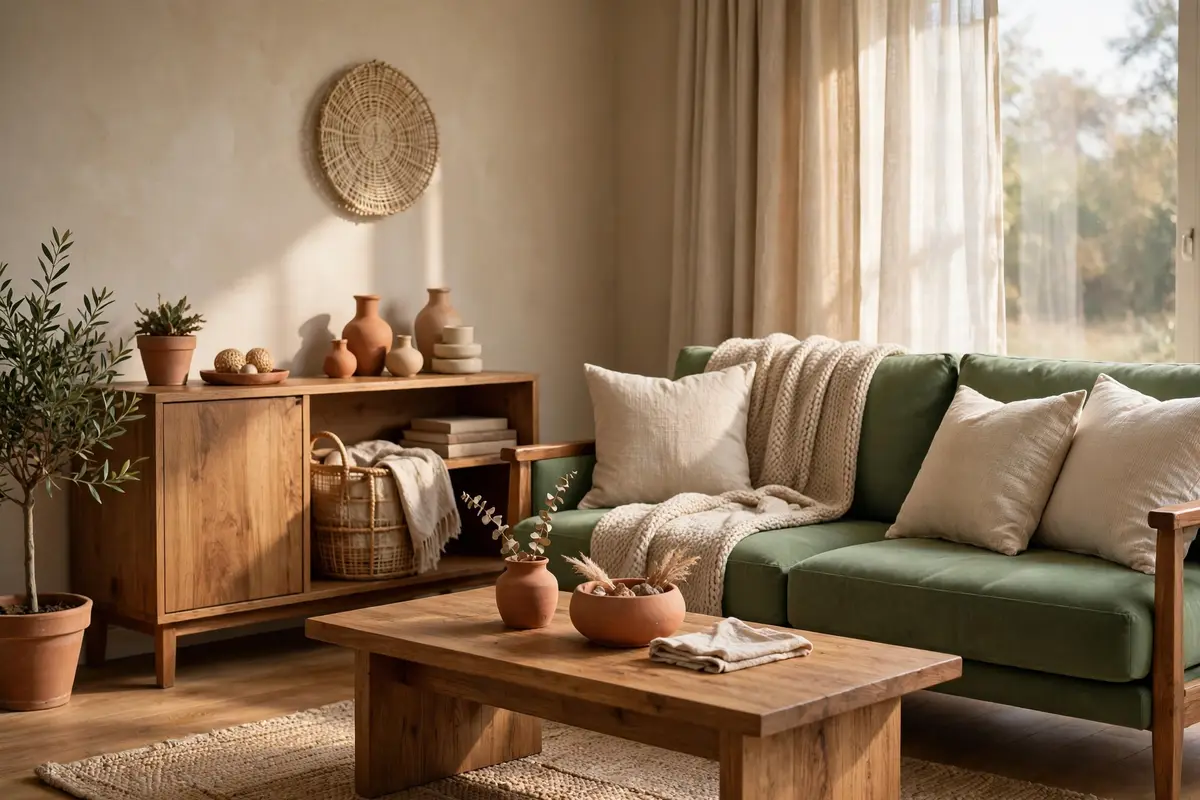
Once you understand the shade, choose whether you want a warm, cool, or balanced color scheme. Keeping your palette simple prevents the room from feeling busy.
The 60-30-10 color rule is an easy starting point:
- 60 percent dominant color: Use a main neutral such as warm ivory, soft beige, or light gray for walls, larger rugs, and other substantial surfaces.
- 30 percent secondary color: Bring in your green sofa, complementary furniture, curtains, or larger decorative textiles.
- 10 percent accent color: Add smaller touches of rust, mustard, blush, navy, or brass through cushions, artwork, and accessories.
Here are three simple directions to consider:
- Warm palette: Olive green, creamy white, walnut, terracotta, and camel.
- Cool palette: Sage green, soft gray, charcoal, pale oak, and silver.
- Balanced palette: Deep green, warm ivory, natural wood, muted blush, and a little black.
You do not need to follow the percentages perfectly. Think of them as a helpful guide for deciding which colors should dominate and which ones should simply add interest.
Choose the Right Wall Color
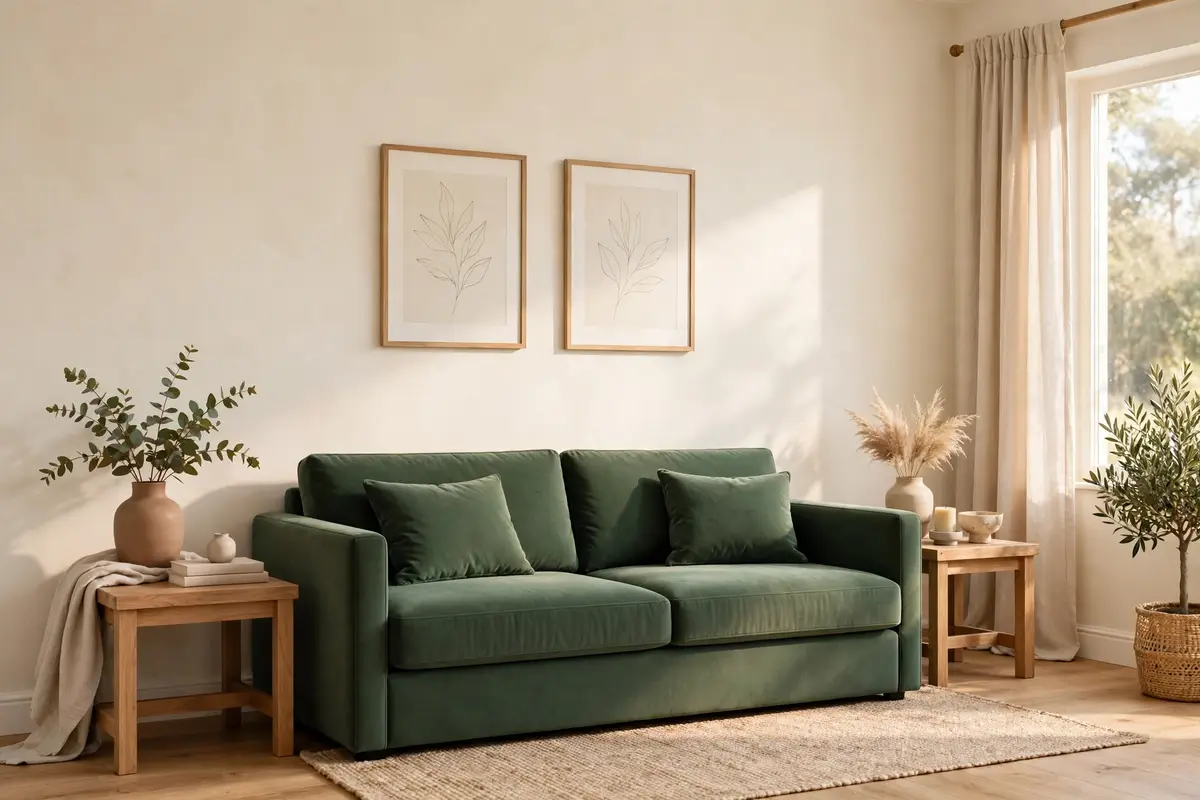
Wall color can change the entire feeling of a room. The good news is that green sofas work with several approachable paint choices, from light neutrals to deeper, more dramatic shades.
Try these wall colors:
- Warm ivory: A reliable choice that softens strong greens and creates a bright, welcoming backdrop.
- Creamy white: Adds warmth without making the room feel too yellow or stark.
- Soft greige: Combines gray and beige for a subtle, comfortable look.
- Light taupe or putty: Creates a more enveloping atmosphere, especially with olive or moss upholstery.
- Muted sage gray: Gives the room a gentle tonal appearance when paired with a deeper green sofa.
- Charcoal: Creates contrast and drama, particularly with emerald green and lighter furniture.
- Dusty pink: Adds a soft, unexpected warmth that works beautifully with muted greens.
- Muted butter yellow: Brings a cheerful touch without overwhelming the natural feel of the room.
For a simple decorating update, start with warm ivory or soft greige. If you prefer a more colorful room, try dusty pink or butter yellow on a smaller wall or in decorative accessories before committing to a full paint job.
Always test paint samples beside the sofa and check them at different times of day.
Pair Emerald With Warm Accents
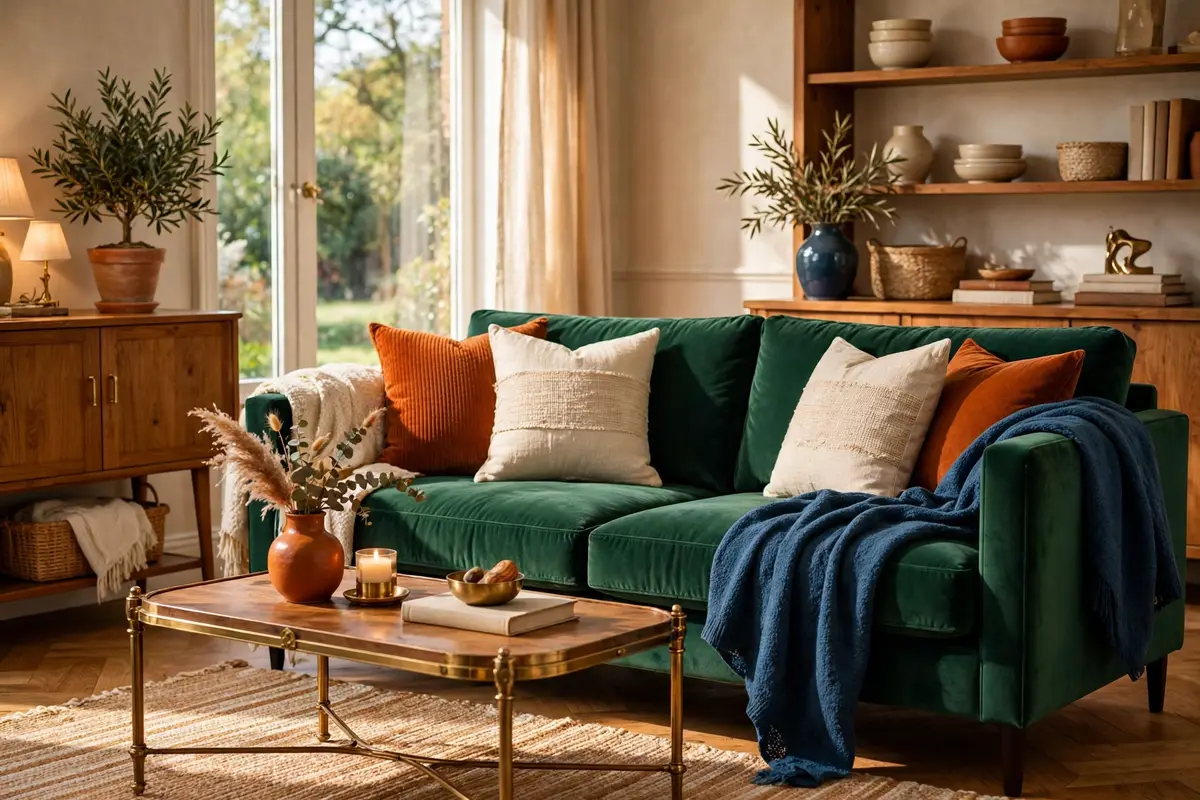
Emerald green has a rich, saturated appearance that naturally draws attention. Rather than surrounding it with too many bold colors, give it a few warm partners that make the room feel welcoming.
Here are some easy ways to style an emerald sofa:
- Add cream or warm beige cushions to soften the strong green.
- Choose brass or gold finishes for lamps, picture frames, and coffee table accessories.
- Introduce burnt orange or rust through a throw, artwork, or one accent cushion.
- Use navy or deep blue for a more dramatic, layered color combination.
- Bring in walnut furniture to add warmth and visual depth.
- Choose a soft ivory rug to balance the darker upholstery.
For a more colorful approach, combine emerald with burnt orange. The contrast feels lively without requiring a completely different decorating style.
If you prefer a quieter look, stick with cream, walnut, and brass. These materials allow the sofa to remain the main feature without making the rest of the room feel plain.
Warm Up Olive Green
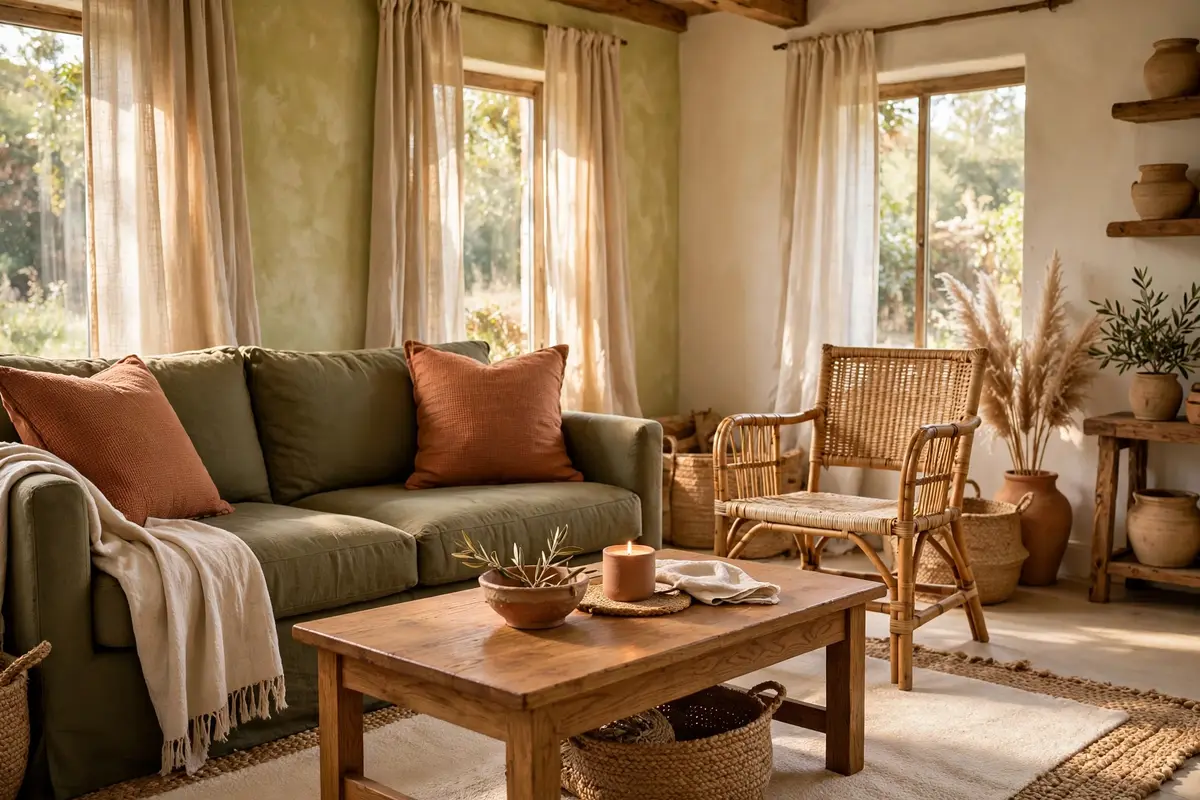
Olive green has an earthy quality that makes it especially easy to pair with natural materials. It works well in farmhouse, rustic, traditional, and relaxed contemporary interiors.
Try these decorating combinations:
- Wood: Choose warm oak or walnut side tables, shelves, and coffee tables.
- Rattan: Add woven baskets, occasional chairs, or decorative trays.
- Jute: Use a natural jute rug to introduce texture and an earthy finish.
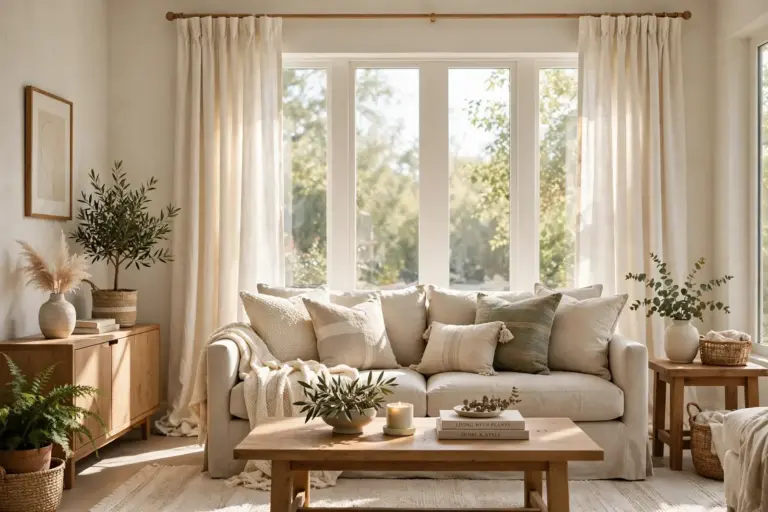
- Linen: Bring in cream or oatmeal linen cushions and curtains.
- Terracotta: Add warm clay colored pots, cushions, or decorative objects.
- Ochre: Use a small amount of golden yellow for a cheerful contrast.
- Rust: Introduce rust colored textiles to give the sofa a richer appearance.
The key is to let the natural textures do some of the decorating. You do not need lots of accessories when the room already has interesting wood grain, woven details, and soft fabrics.
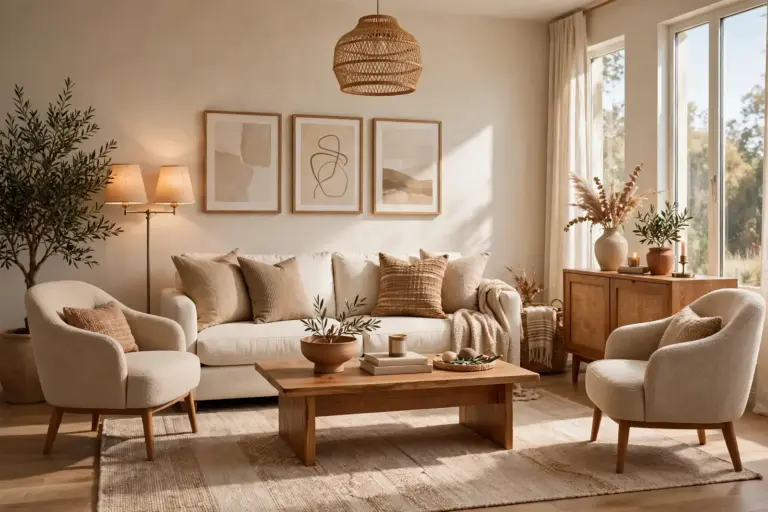
For an especially inviting look, combine olive upholstery with creamy linen, a warm wood coffee table, and one or two terracotta accents.
Keep Sage Soft
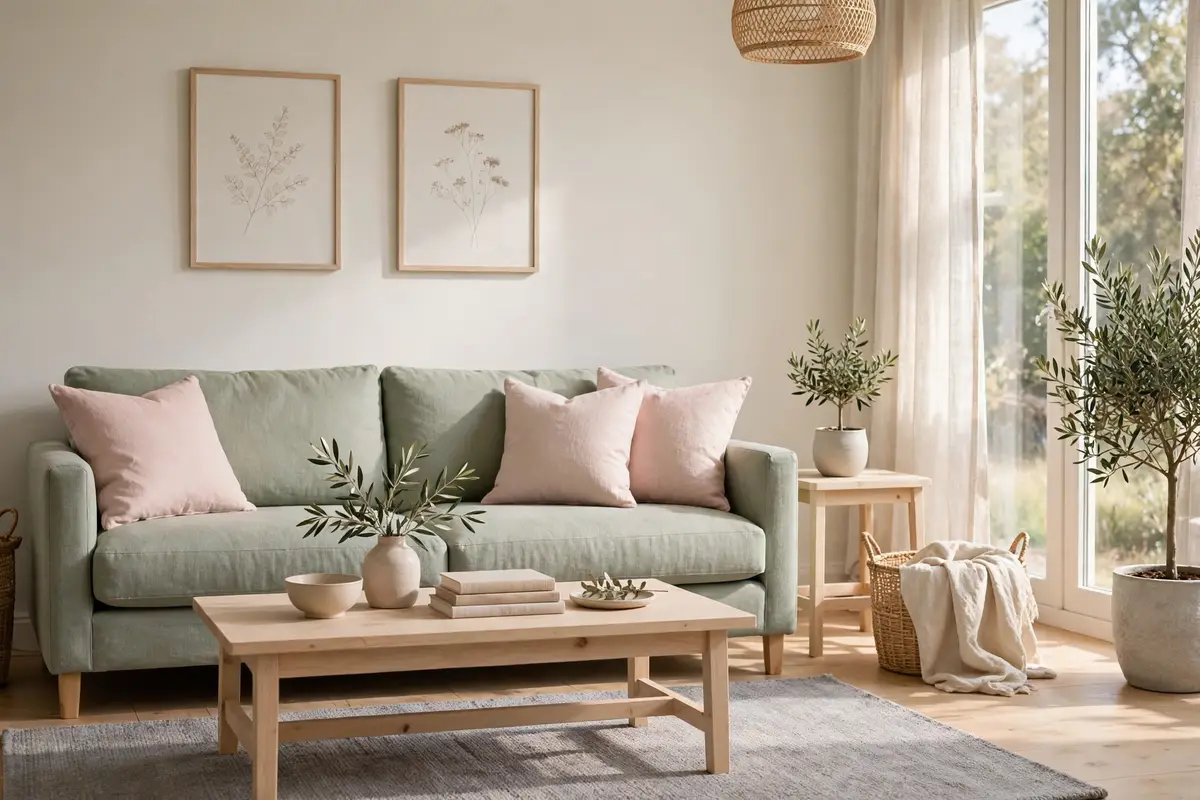
Sage green is a lovely option if you prefer a lighter, more relaxed interior. Its muted appearance makes it easy to combine with both warm and cool neutrals.
Use these ideas to create a soft, coordinated look:
- Begin with off-white: Choose warm white or creamy walls to keep the room bright.
- Add natural timber: Pale oak furniture gives the space a fresh, airy appearance.
- Layer soft gray: Use a light gray rug or cushion to complement the sofa’s muted undertone.
- Introduce blush pink: Add a few pink cushions or a small decorative accessory for gentle warmth.
- Try lilac: Use muted lavender in artwork or textiles for a subtle color contrast.
- Bring in soft blue: A pale blue throw or decorative cushion adds another calming shade.
Sage also looks lovely with natural beige, oatmeal, and warm cream. These colors help the sofa feel connected to the rest of the room rather than standing apart.
For a relaxed finish, choose simple patterns and soft materials instead of several competing accent colors.
Find the Right Rug and Wood
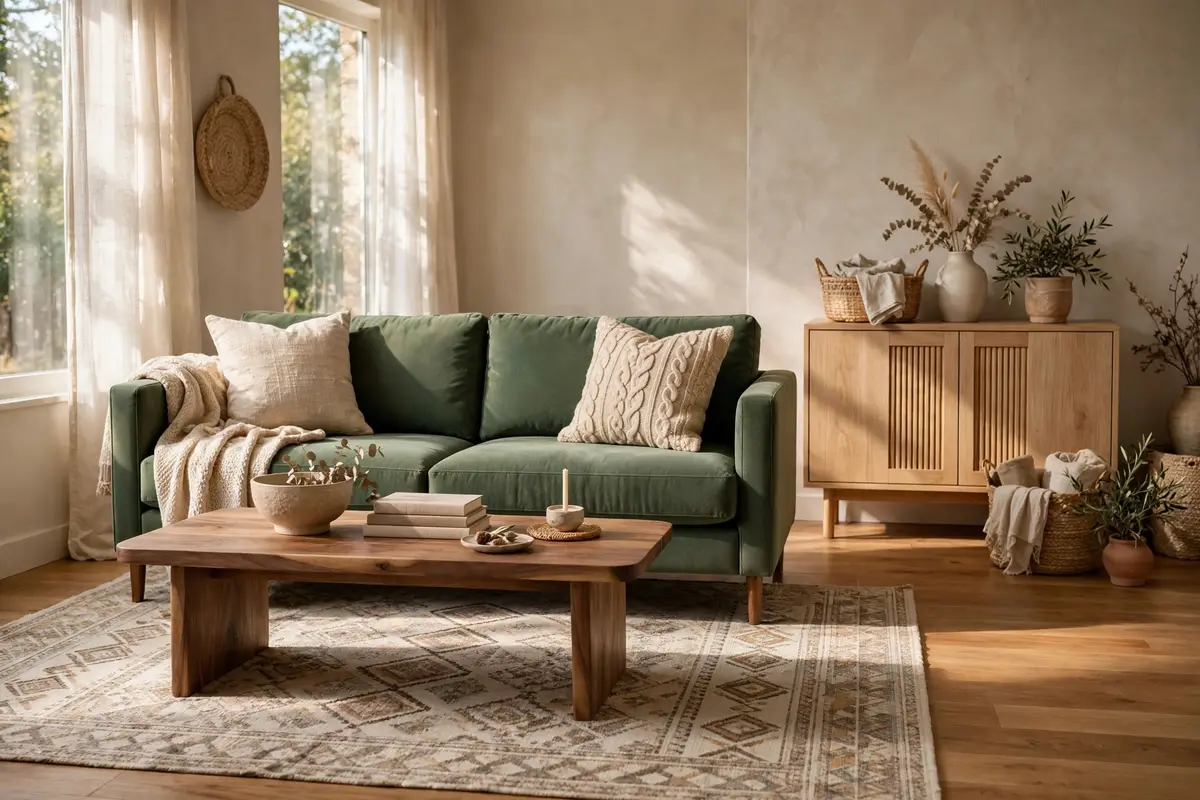
A rug helps connect your sofa, flooring, and other furniture. It can also introduce another color or pattern without requiring a major decorating change.
Before:
- A small rug that sits awkwardly in front of the sofa.
- Flooring and furniture that feel disconnected.
- Too many unrelated colors competing for attention.
- A plain seating area without enough texture.
After:
- A generously sized rug that reaches beneath the front legs of the sofa.
- A rug color that complements both the green upholstery and existing flooring.
- Subtle patterns that include shades already used in the room.
- Natural wood furniture that creates a warmer, more connected look.
When choosing a rug, consider these options:
- Cream and beige rugs are easy partners for nearly every green shade.
- Soft gray designs work particularly well with cooler sage and emerald sofas.
- Rust and terracotta patterns add warmth beside olive upholstery.
- Traditional patterns can introduce several complementary colors without looking overly busy.
- Natural jute rugs provide texture and suit earthy, relaxed interiors.
Wood finishes matter too. Pale oak creates a fresh, lighter appearance, while walnut adds richness and warmth. Try to repeat the same wood tone in at least two pieces of furniture so the room feels intentional.
Layer Curtains and Lighting
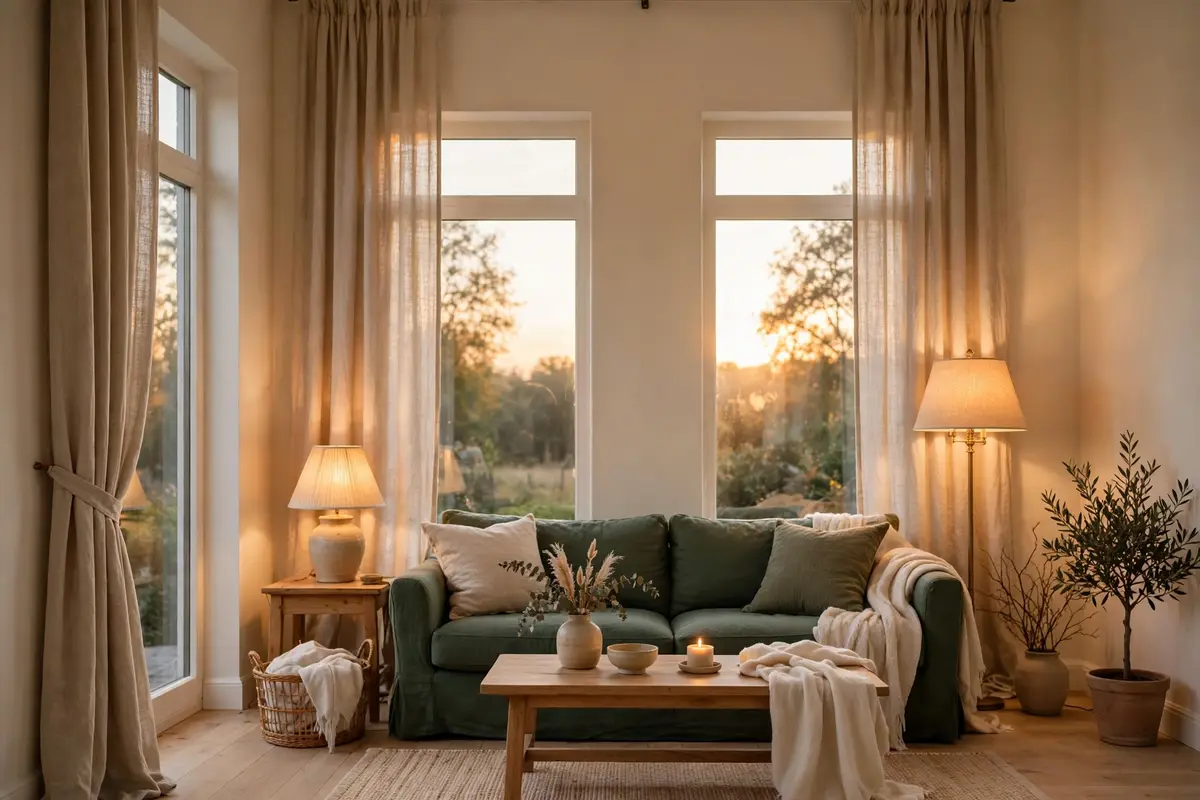
Curtains and lighting are practical details that can make a noticeable difference to the finished room. They help control the atmosphere, soften hard surfaces, and bring the different colors together.
Tips for choosing curtains and lighting:
- Hang curtains higher than the window frame to create the appearance of taller ceilings.
- Extend the curtain rod wider than the window so the panels sit outside the glass when open.
- Choose natural linen for a light, relaxed finish.
- Try wheat gold or warm beige curtains for an earthy palette.
- Use deep green curtains if you want a richer, more layered appearance.
- Repeat the sofa color in the curtains if you want a coordinated look.
- Add table lamps and floor lamps to create softer pools of light around the seating area.
Bulb temperature also matters. Choose warm white bulbs between 2700K and 3000K for a comfortable glow that softens saturated green upholstery.
Avoid relying entirely on bright, cool overhead lighting. It can make warm fabrics appear less inviting and change how your sofa’s color looks in the evening.
Add Chairs and Plants
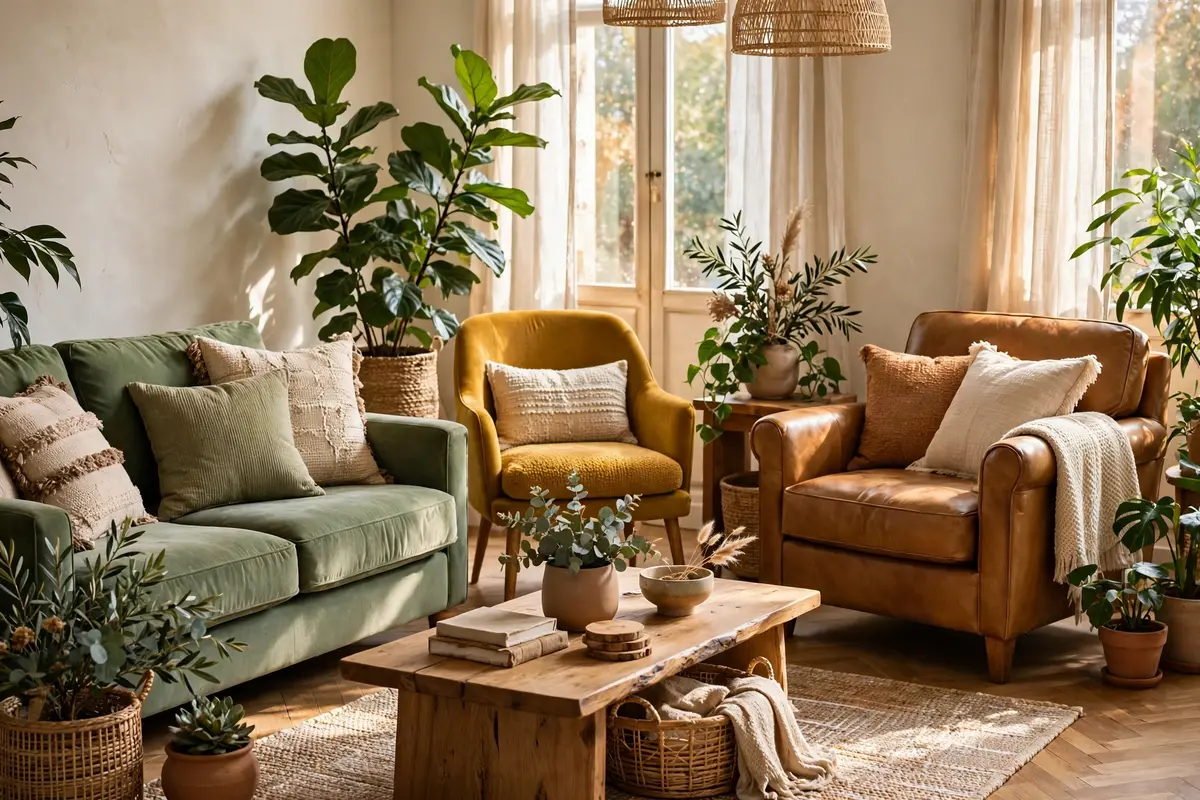
Accent chairs and greenery are two simple ways to make a green sofa feel more connected to the room. They also give you an opportunity to introduce another texture or complementary color.
Do:
- Choose a mustard velvet chair for a warm, cheerful contrast.
- Add a classic tan or caramel leather chair beside olive or emerald upholstery.
- Use cream or oatmeal fabric chairs for a quieter, neutral arrangement.
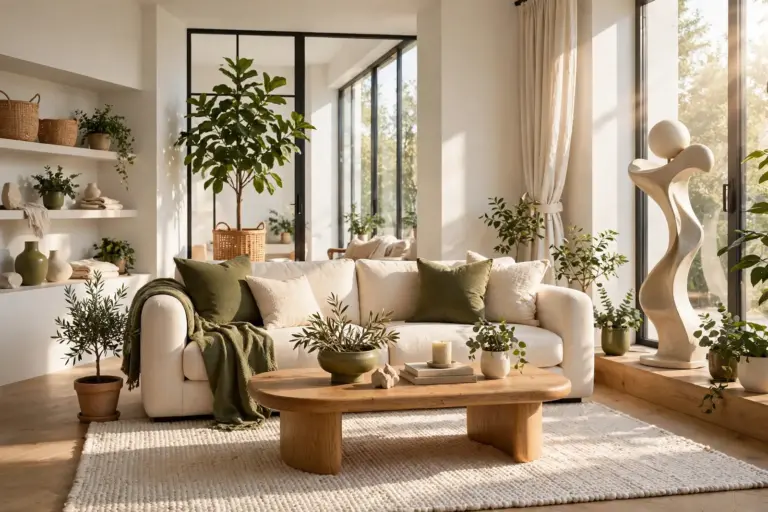
- Include leafy indoor plants to echo the green tones of the sofa.
- Place plants at different heights using floor pots, shelves, and side tables.
- Choose terracotta or woven planters to add natural warmth.
- Repeat one or two sofa colors in nearby cushions, artwork, or decorative objects.
Avoid:
- Choosing several bold accent chairs in unrelated colors.
- Filling every empty corner with plants and accessories.
- Using too many competing prints in a small seating area.
- Placing furniture so close together that people cannot move comfortably.
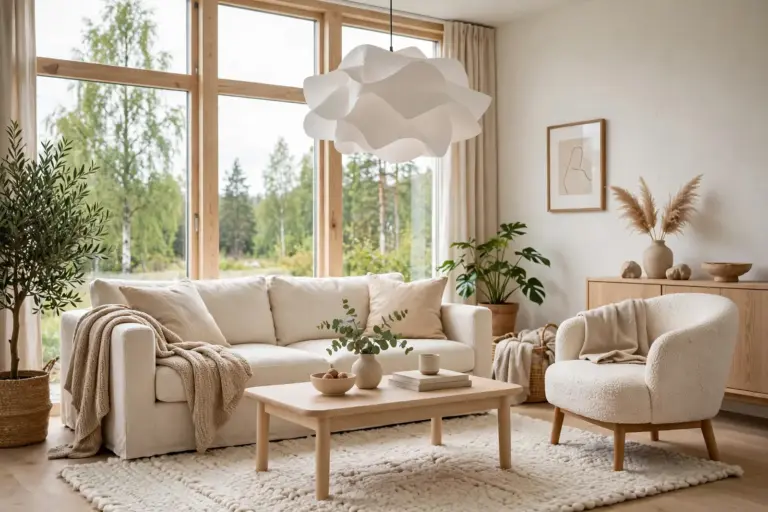
You can also make a cosy living room feel warmer by layering a soft throw, textured cushions, and a comfortable accent chair. These small additions make the seating area more inviting without requiring a complete makeover.
Choose the Right Sofa Shape
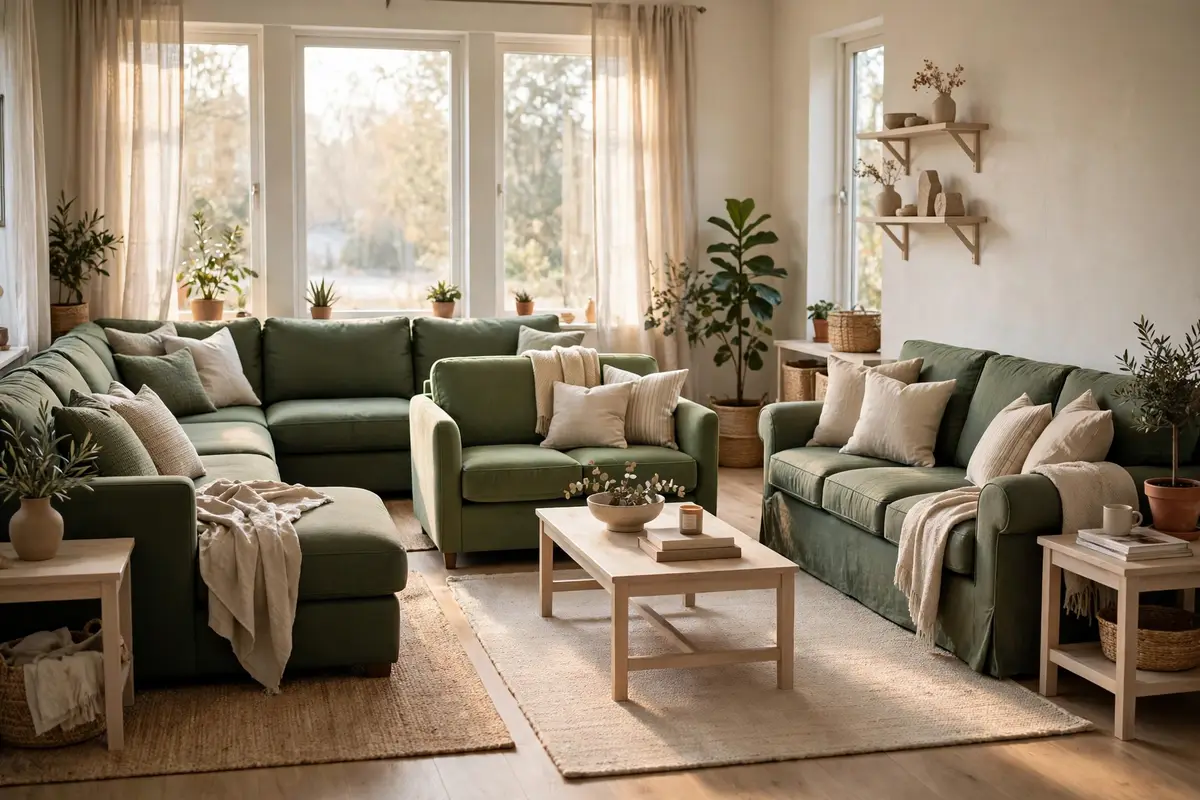
Color is important, but the size and shape of your sofa matter just as much. A beautiful green couch can still feel out of place if it overwhelms the room or leaves too little space for everyday movement.
Before buying, consider these practical points:
- Measure the room: Check the available wall length, walking areas, and distance between other furniture.
- Consider a loveseat: A smaller two seat sofa can work well in apartments, compact living rooms, and secondary seating areas.
- Look at sectional sofas: An L-shaped design offers generous seating, but needs enough floor space to avoid crowding.
- Choose a classic three seat sofa: This is a flexible option for many average sized living rooms.
- Check the sofa depth: Deep seats offer a relaxed lounging position, while shallower designs can suit tighter spaces.
- Measure doorways: Check entrances, hallways, and staircases before arranging delivery.
If you are comparing different couches living room styles, pay attention to both the overall silhouette and the upholstery. Rounded arms create a softer look, while straight arms and clean lines feel more contemporary.
Once you find the right shape, repeat the green elsewhere in the room at least twice. A pair of cushions, a piece of artwork, leafy plants, or matching curtains can help connect the sofa to the wider color scheme.
Conclusion
A green couch living room does not need complicated decorating choices to look beautiful. Start with your sofa’s undertone, choose a simple color palette, and bring in complementary rugs, wood finishes, curtains, and accessories. Whether you love earthy olive, gentle sage, or dramatic emerald, small changes can make your space feel comfortable and well balanced. Try one or two ideas at a time and see what works in your home. Save your favorite inspiration on Pinterest, experiment with these pairings, and share this article with someone planning a living room refresh.