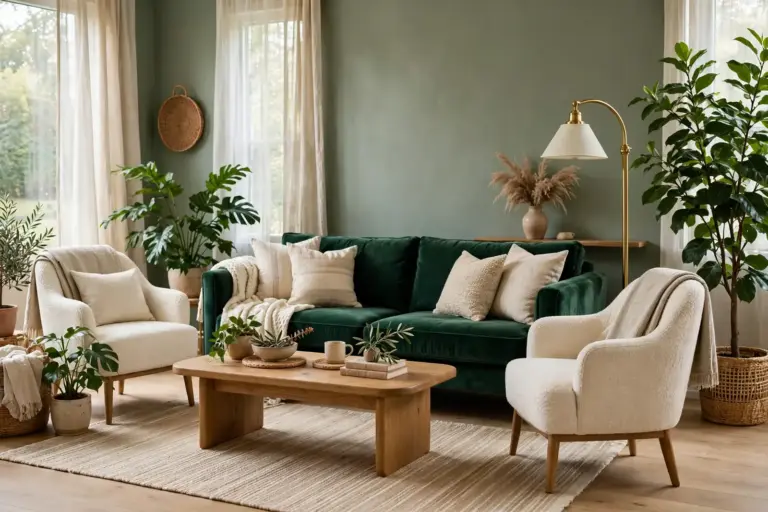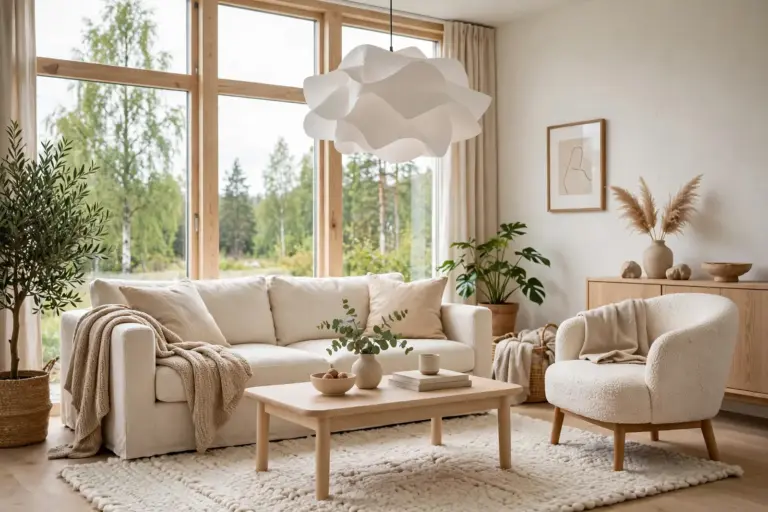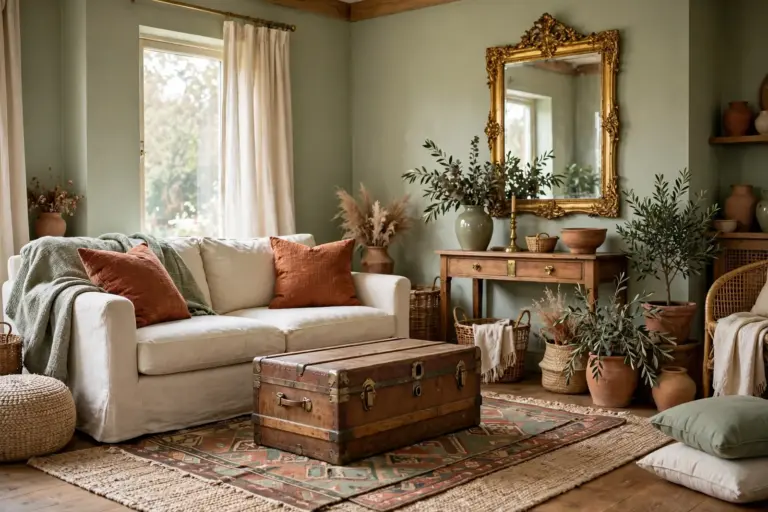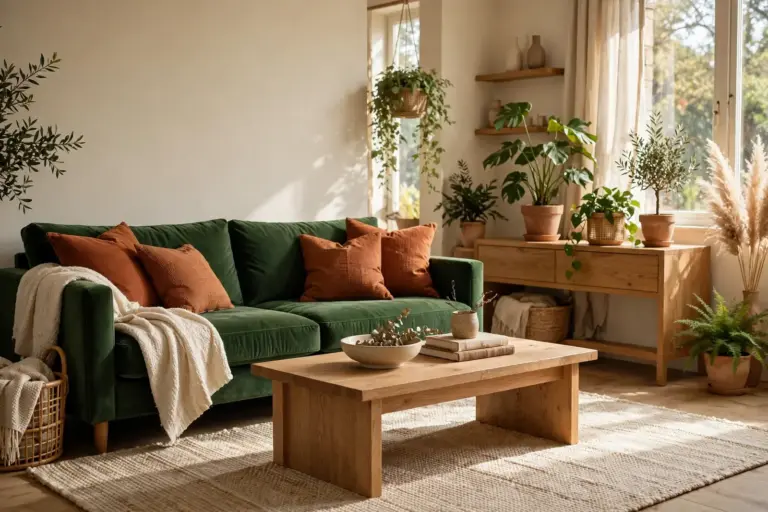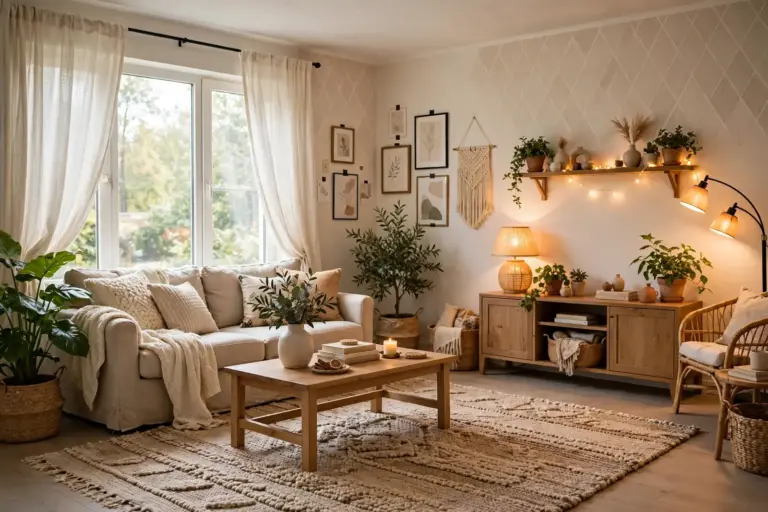
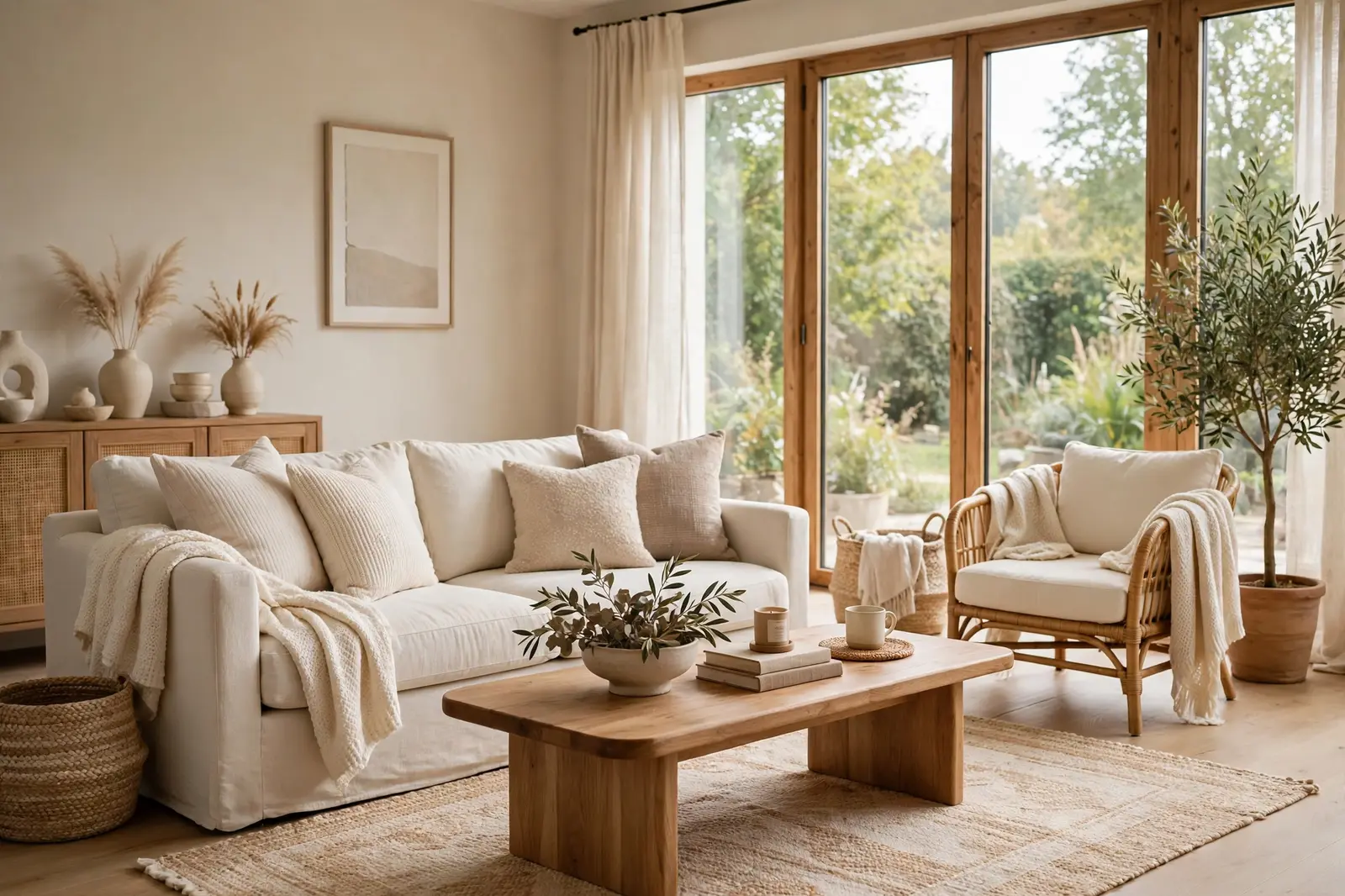
Couches Living Room Ideas for Seating That Fits Right

Choosing the right couches living room style can make a big difference in how comfortable, practical, and welcoming your home feels. The best sofa is not always the largest or most expensive option. It is the one that fits your room, suits your daily routine, and leaves enough space to move around.
Whether you have a small apartment, an open-plan layout, or a busy family home, the right seating arrangement can make your space work better. From compact loveseats to spacious sectionals, there are plenty of options worth considering. A little planning before you shop can help you find seating that looks beautiful and feels right for everyday living.
Measure Before Buying
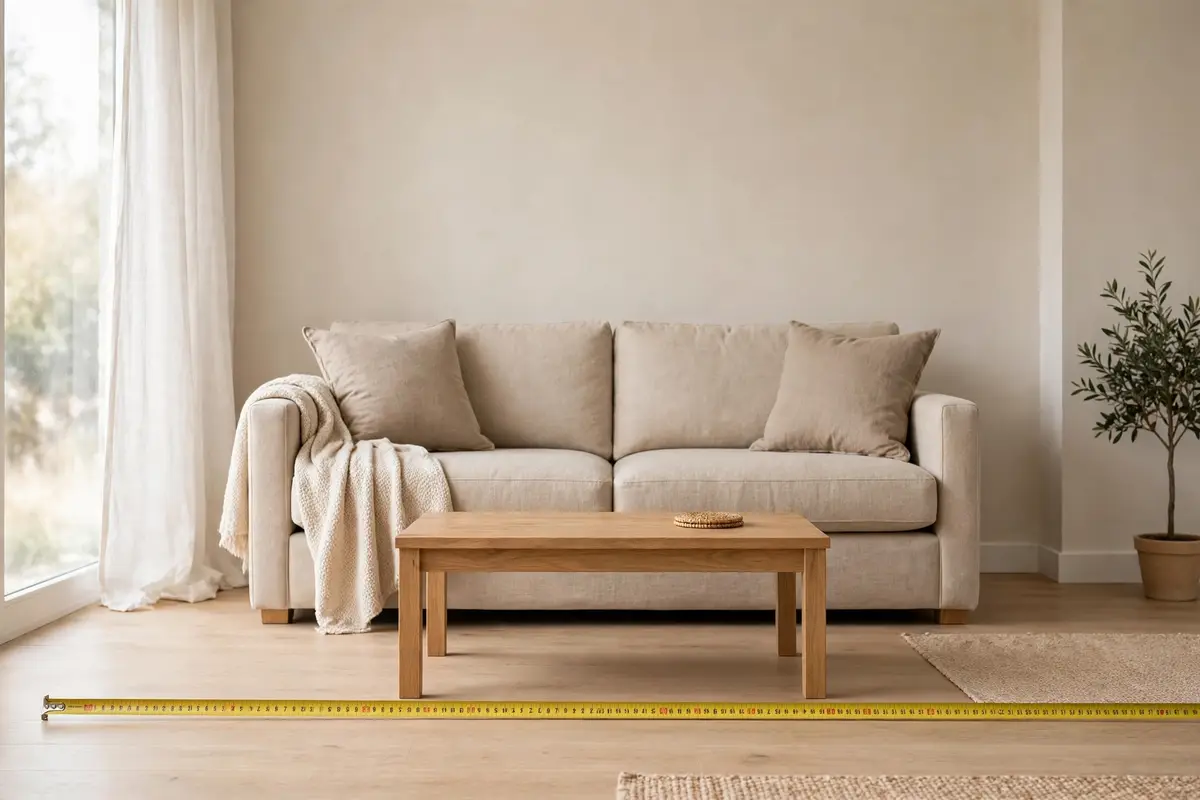
The first step is knowing exactly how much space your new sofa can occupy. A couch that looks perfectly sized in a showroom may feel oversized once it arrives in your home.
Start by measuring the wall where you plan to place it. A helpful guideline is choosing a sofa that is about two-thirds the length of the wall it faces. This creates a balanced look without making the furniture feel too dominant.
Keep these measurements in mind:
- Sofa width: Check the available wall space and leave some breathing room at both ends.
- Coffee table clearance: Aim for approximately 18 inches between the sofa and coffee table.
- Walking space: Leave 30 to 36 inches for comfortable walkways wherever possible.
- Room depth: Measure how far the sofa will extend into the room, especially in smaller spaces.
- Door clearance: Check nearby doors, cabinets, and windows to make sure nothing gets blocked.
Also measure the full delivery route, including your front door, hallways, staircases, and tight corners. Check the sofa’s packaged dimensions, not just its finished measurements. These simple checks can prevent expensive delivery problems.
Choose Slim Profiles
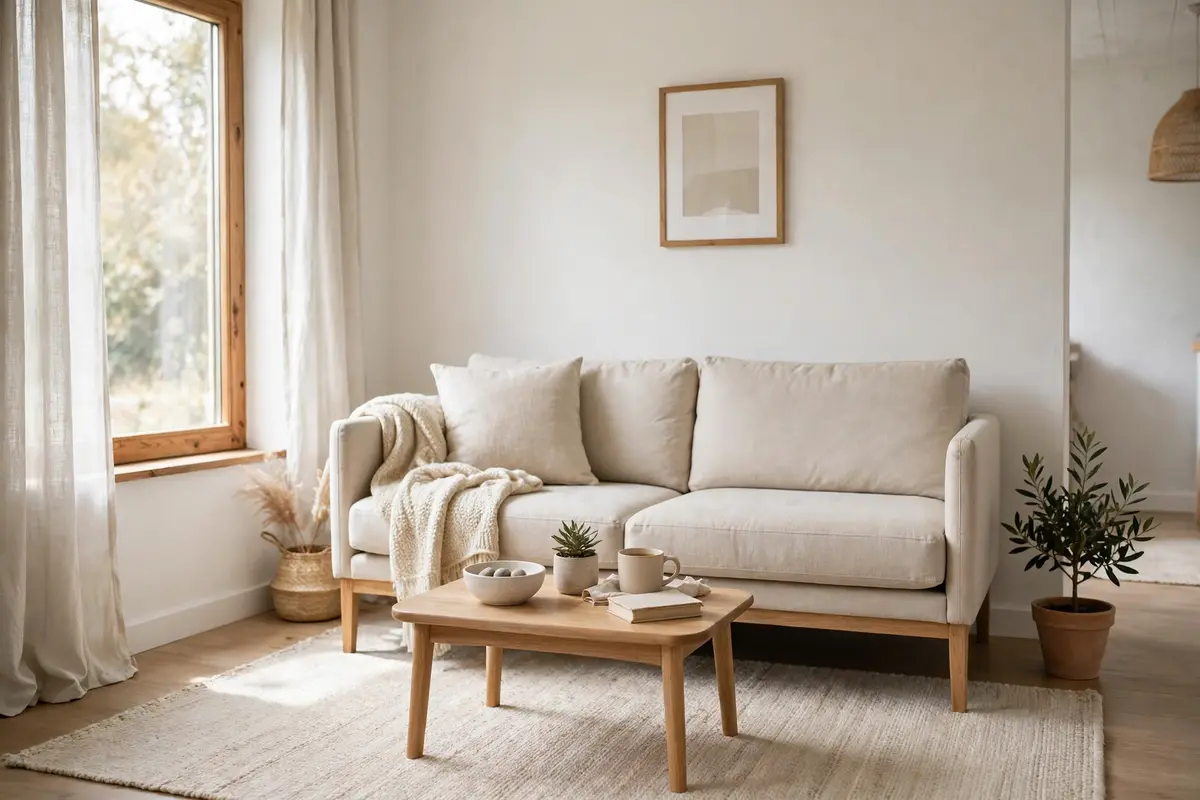
If your living room feels tight, the shape and construction of your sofa matter just as much as its overall width. Some designs take up less visual space while still offering comfortable seating.
Consider these space-friendly features:
- Slim arms: Narrow armrests reduce the overall width of a sofa without sacrificing the main seating area.
- Tall exposed legs: Raised sofas allow more floor space to remain visible, making a small room feel less crowded.
- Armless designs: An armless sofa can provide more usable seating within the same footprint.
- Simple cushions: Clean lines and fewer bulky details create a lighter appearance.
- Low visual weight: Light upholstery and open bases help furniture blend into smaller rooms.
Armless sofas are particularly useful if you want to fit more people into a limited area. They also work well in contemporary interiors where a simple, relaxed look is preferred.
You do not need to sacrifice comfort for a smaller footprint. Look for supportive cushions, sturdy construction, and enough seat depth for your usual sitting position.
Try Modular Seating
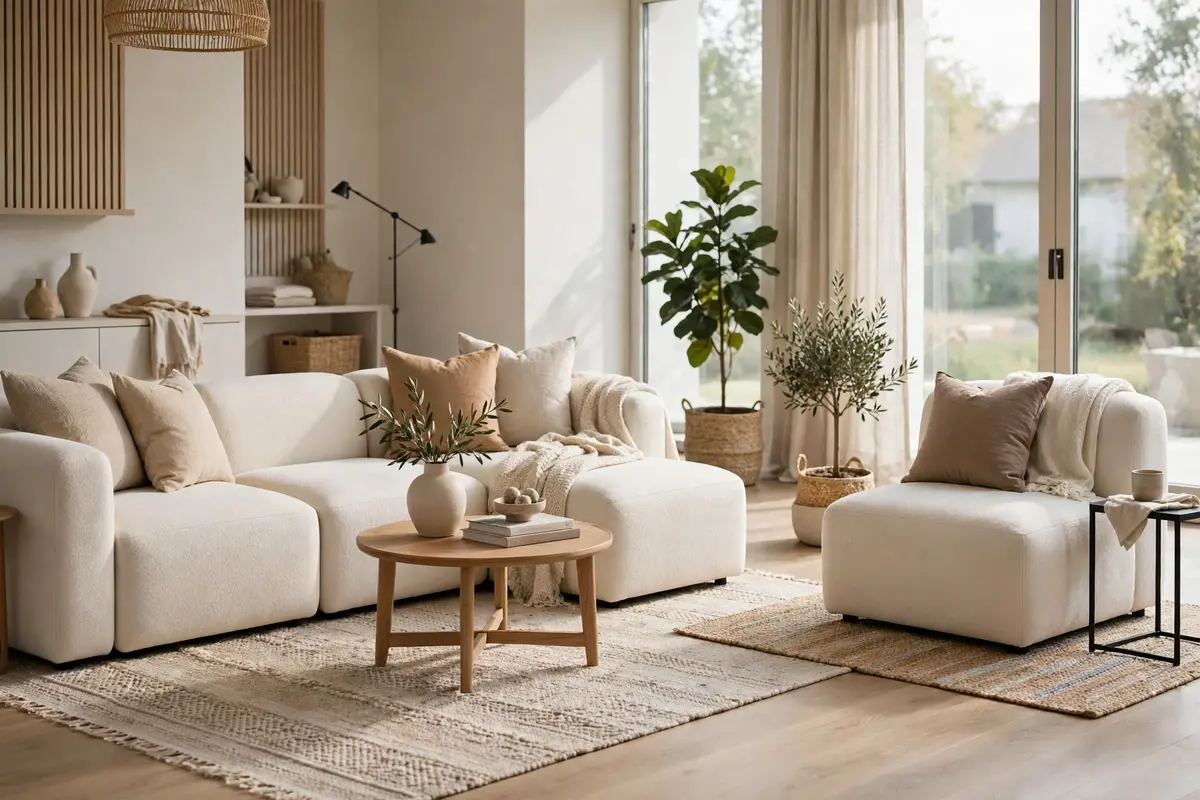
A modular sofa is a practical choice if your household needs flexibility. Instead of buying one fixed arrangement, you can choose separate pieces and position them to suit your space.
Follow these steps to choose a modular design:
- Start with your current needs. Decide how many people regularly use the sofa and how much seating you actually need.
- Choose the main pieces. Begin with a two-seat or three-seat section, then consider adding a corner unit or chaise.
- Check the connections. Make sure the sections lock together securely so they do not slide apart during everyday use.
- Think about future changes. Look for a collection that allows you to purchase matching sections later.
- Plan different layouts. Check whether the pieces can be rearranged into a straight sofa, corner arrangement, or separate seats.
The biggest advantage is that modular furniture can grow with your household. You might begin with a compact setup in an apartment and add another section after moving into a larger home.
It is also useful for renters who expect their furniture arrangements to change. Just check that the individual pieces can fit through your doorways and staircases.
Add Hidden Storage
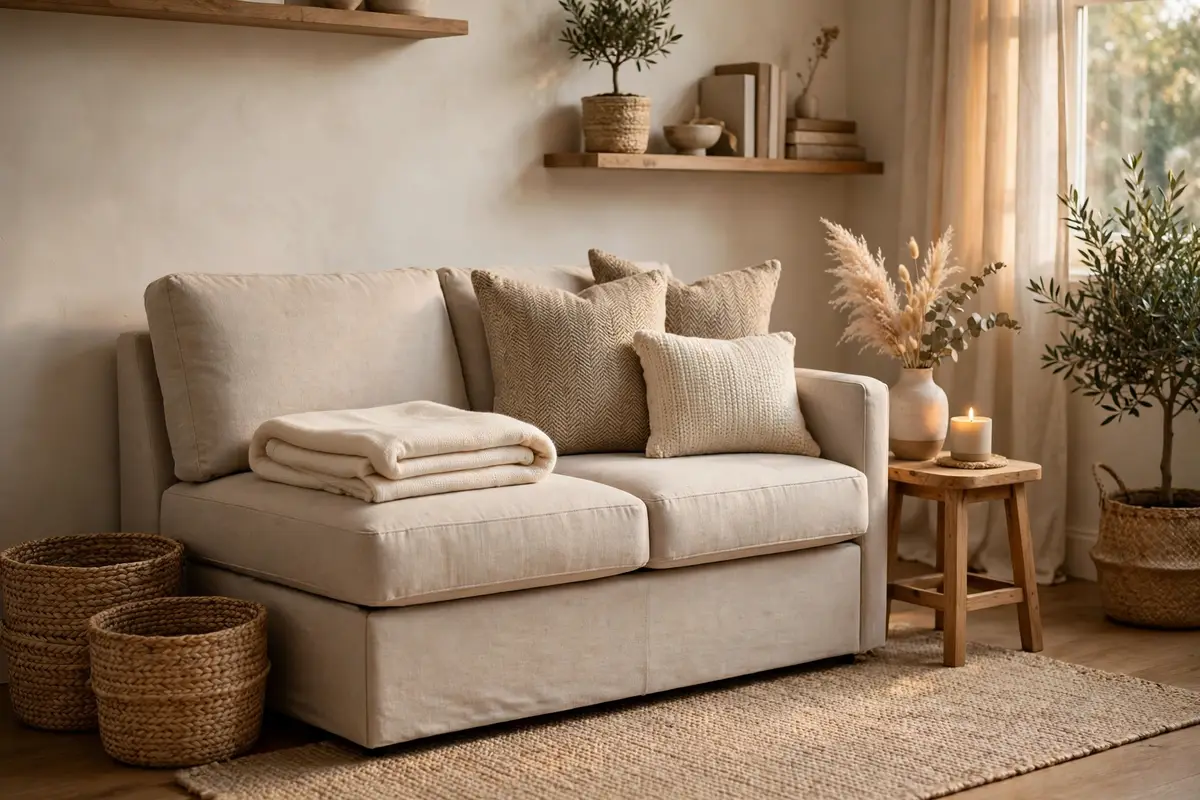
Small living rooms often need furniture that does more than provide a place to sit. A storage loveseat can help you make better use of limited space without adding another cabinet or bulky storage unit.
Before: Blankets, spare cushions, magazines, and children’s toys are scattered around the seating area. The room feels cluttered because everyday items do not have a convenient home.
After: A storage loveseat keeps extra blankets and other small household items inside its hidden compartment. The floor stays clearer, and the seating area looks more organized.
When shopping for storage seating, consider these details:
- A lift-up seat with an easy-to-open mechanism.
- Enough interior space for blankets and lightweight accessories.
- A sturdy frame that supports regular use.
- A lid that closes securely and safely.
- Upholstery that matches your existing furniture.
Storage loveseats are especially useful in apartments, guest rooms, and family spaces where every bit of storage counts.
However, check the interior dimensions before buying. A storage compartment may look generous in product photos but hold less than expected. Keep frequently used items somewhere easy to reach so you do not need to lift the seat repeatedly throughout the day.
Pick a Compact Chaise
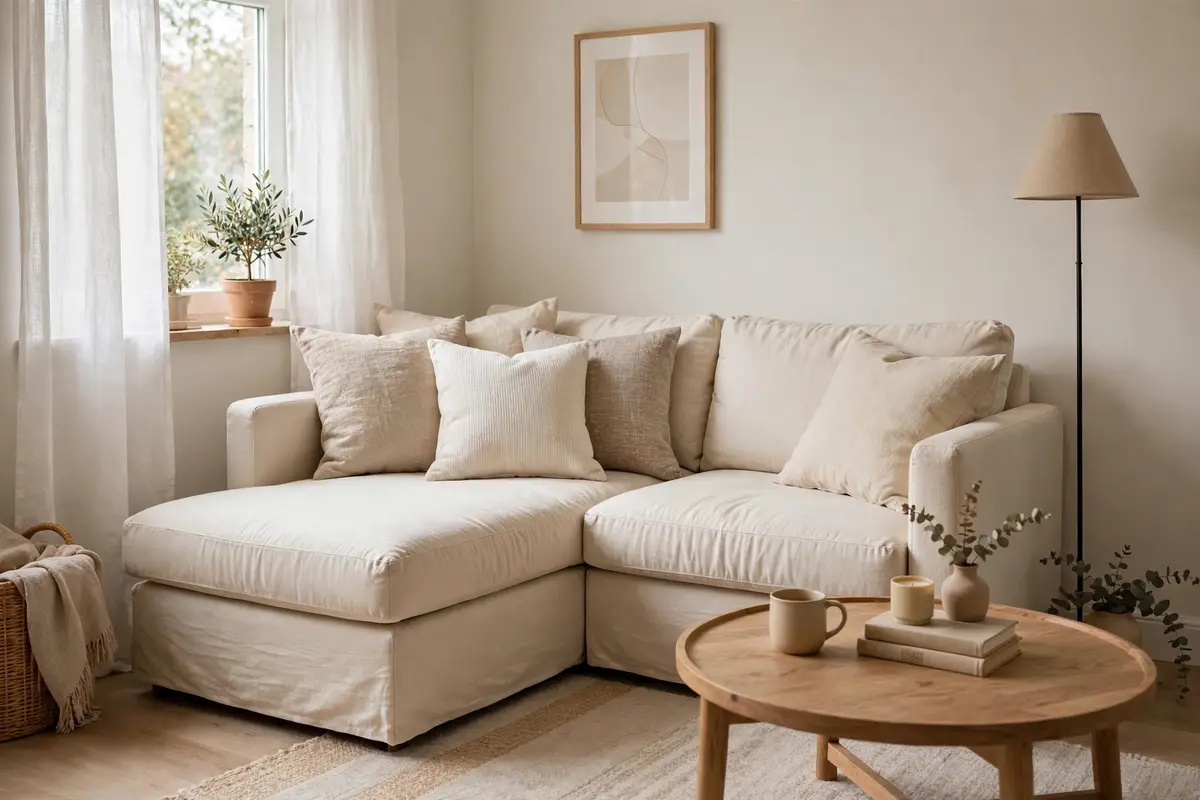
A chaise sofa gives you a comfortable place to stretch out without requiring a full-size sectional. It can be a smart middle ground between a traditional couch and a larger lounging arrangement.
Do:
- Choose a chaise that fits along an available wall.
- Measure the full extended length before ordering.
- Look for reversible chaise designs if you may change your layout.
- Pair the sofa with a small round or oval coffee table.
- Keep nearby accessories simple to preserve walking space.
Avoid:
- Choosing an oversized chaise that blocks a doorway.
- Placing the extended section across an important walkway.
- Buying a deep design without checking the room’s usable floor area.
- Adding too many bulky cushions that reduce the seating surface.
Seat depth also deserves attention. Standard lounging-friendly sofa seats often measure around 24 to 30 inches deep, although individual preferences vary. Deeper seats are comfortable for stretching out, while shallower ones can make sitting upright easier.
A compact chaise is particularly useful for people who enjoy relaxing with a book or watching television but do not have enough room for a large sectional.
Use Corner Seating
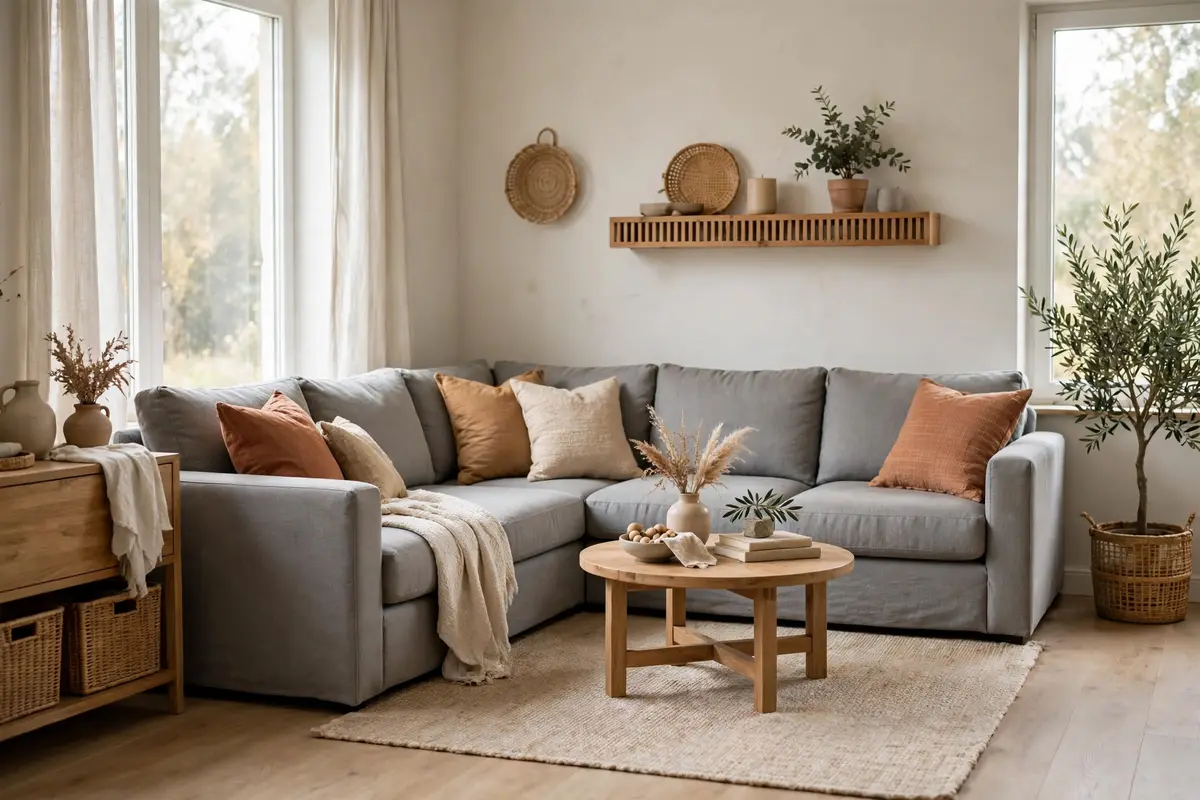
A corner sofa can make an awkward living room layout feel more organized. Instead of placing separate chairs around the room, it uses the corners and walls to create one comfortable seating area.
Here are a few practical tips:
- Use the walls: Position the sofa along two adjoining walls to keep the center of the room open.
- Check the orientation: Choose a left-hand or right-hand configuration that matches your room’s layout.
- Leave room for tables: Make sure the sofa does not prevent access to side tables, lamps, or nearby storage.
- Keep the middle clear: A compact coffee table helps maintain comfortable movement.
- Balance the arrangement: Add one lightweight accent chair if you need extra seating without overcrowding the room.
Corner sofas can be particularly helpful in square rooms where a traditional sofa arrangement leaves unused space.
They also work well in apartments with limited furniture options. Before purchasing, measure both sides of the sofa carefully. Some corner designs are much wider than they appear in photographs, especially when the armrests and cushions are included.
Make Room for Guests
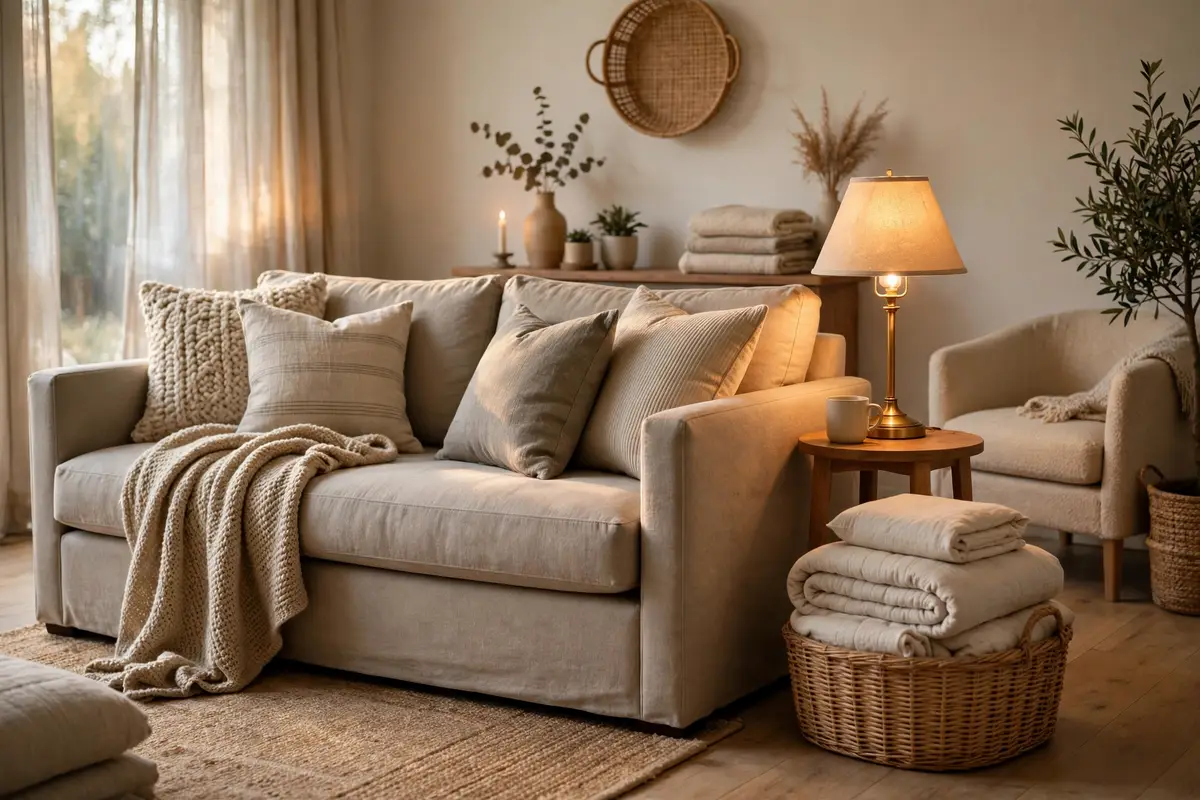
If you regularly welcome overnight visitors, a sleeper sofa can provide an extra bed without requiring a separate guest room.
There are several styles to consider, depending on your available space and how often you host guests.
A traditional pull-out sofa contains a mattress that unfolds from beneath the seat cushions. It is useful for regular overnight stays, but you need enough floor space for the bed to open fully.
A click-clack sofa converts from an upright position into a flat sleeping surface. This style often suits smaller apartments because the design is relatively simple and compact.
Some models also include storage compartments for spare sheets, pillows, and blankets. This can be especially helpful if your home does not have a dedicated linen closet.
Before choosing a sleeper design, check the following:
- The dimensions of the sofa when fully opened.
- The mattress thickness and sleeping surface.
- How easy the conversion mechanism is to operate.
- Whether bedding can be stored inside.
- The weight capacity and frame construction.
If guests stay frequently, test the sleeping surface as carefully as the regular seat. A sofa bed should feel comfortable in both positions.
Match Your Household
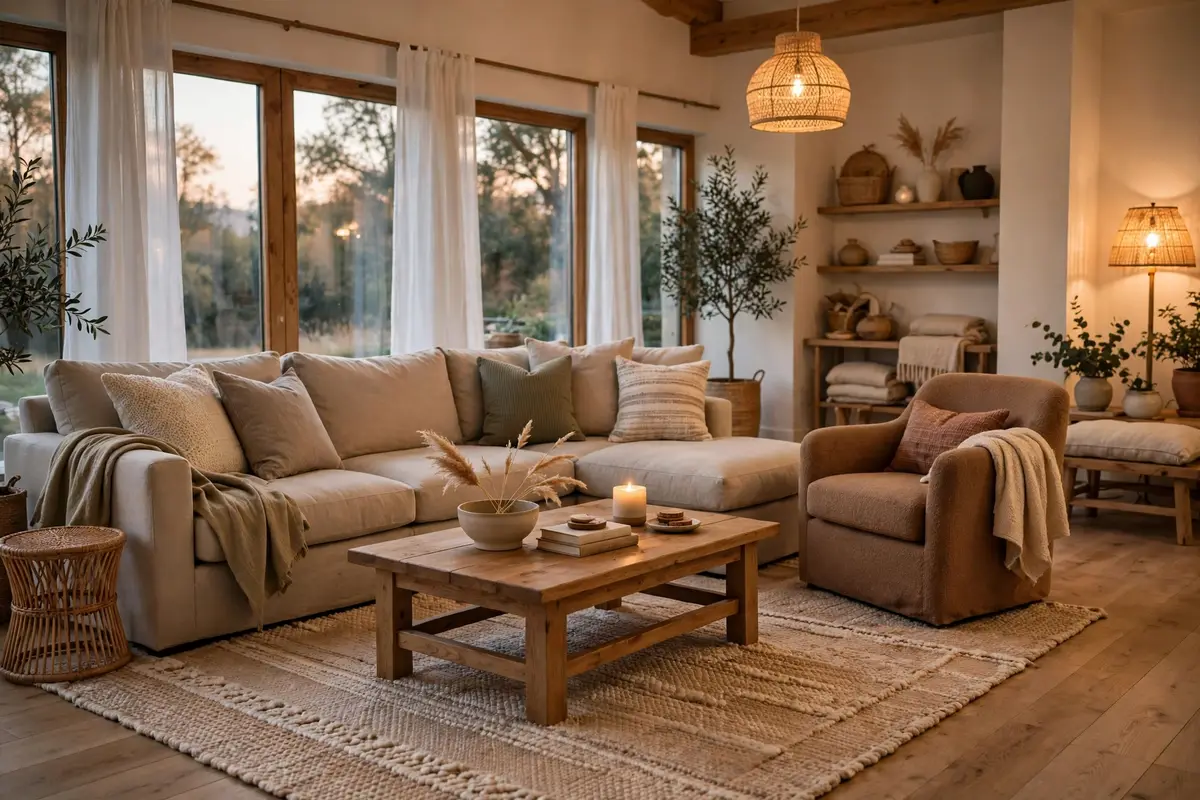
The best sofa arrangement depends on how your household uses the living room. A family with children may need a different setup from a couple who mainly use the space for relaxing.
Consider these seating options:
- Sectionals for large families: A spacious sectional offers multiple seats and creates a shared area for watching television, reading, or spending time together.
- Curved sectionals for conversation: A curved design encourages people to face one another, making it useful for entertaining and social spaces.
- Classic sofa and loveseat sets: Matching pieces provide flexible seating and can be arranged separately when you need more open floor space.
- Extra accent chairs: Lightweight chairs add seating without requiring another large sofa.
- Compact loveseats: These are generally around 48 to 60 inches wide and work well in smaller living rooms.
In open-plan homes, a sectional can also help define the living area without adding a physical divider. Position its back toward the dining space to create a natural boundary.
For a smaller family room, a sofa paired with a loveseat may provide enough seating while keeping the arrangement flexible.
Think about how many people use the room at the same time. Buying more seats than you need can make everyday movement difficult, while too little seating can leave everyone competing for the most comfortable spot.
Select Practical Fabrics
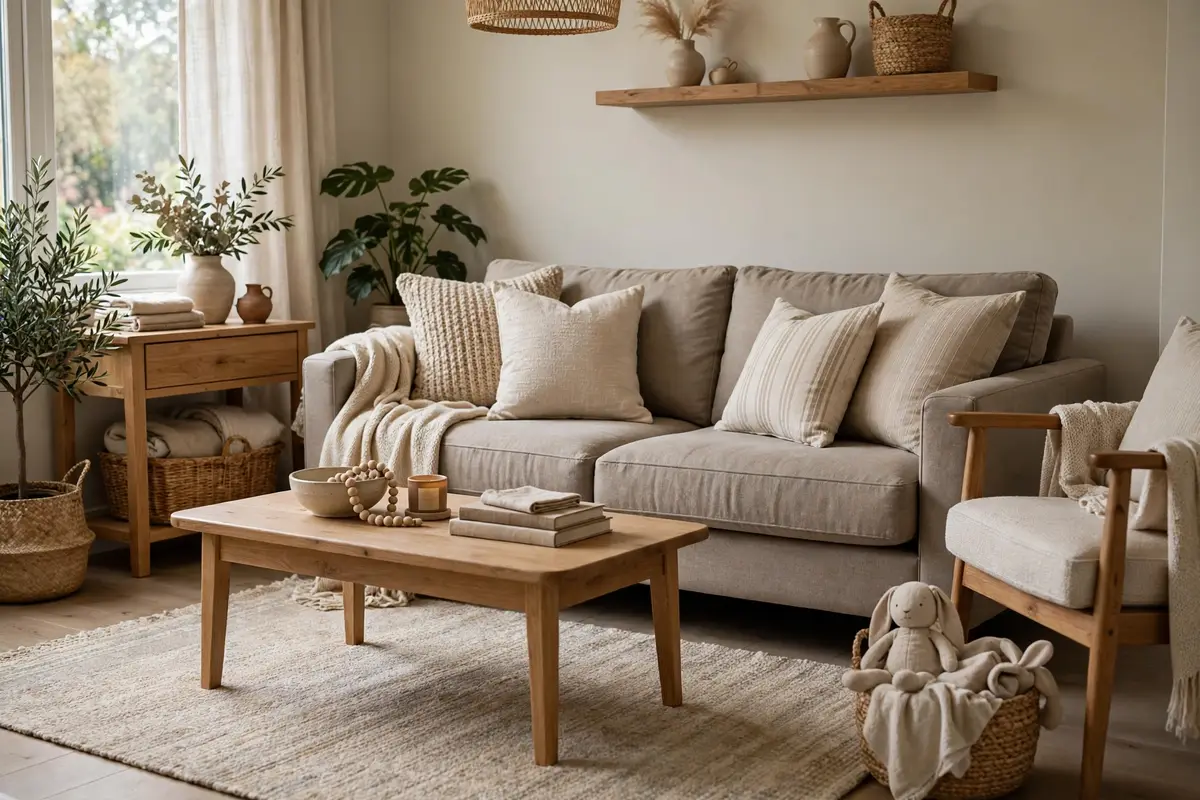
Fabric and color affect how your sofa looks after months or years of everyday use. The right combination can make cleaning easier and help hide the signs of regular wear.
Use these steps when comparing upholstery:
- Check the fabric construction. Performance fabrics are designed to handle frequent use and can be a practical choice for busy households.
- Look for washable covers. Removable cushion covers make it easier to clean spills, crumbs, and everyday dirt.
- Consider your pets. Tightly woven fabrics can be more practical than delicate materials that snag easily.
- Choose forgiving colors. Medium gray, taupe, beige with texture, and subtle patterns can help disguise minor marks.
- Review cleaning instructions. Check whether the material needs professional cleaning or can be maintained at home.
For homes with children and pets, durability should be a priority. A beautiful fabric is less useful if it requires constant attention or cannot handle regular cleaning.
Color also plays an important role. Very light upholstery can show stains, while extremely dark fabric may reveal dust, lint, and pet hair. Mid-tone shades often offer a useful balance.
If you love a neutral sofa, choose a textured fabric or patterned cushions to give the seating area more depth.
Test Before Ordering
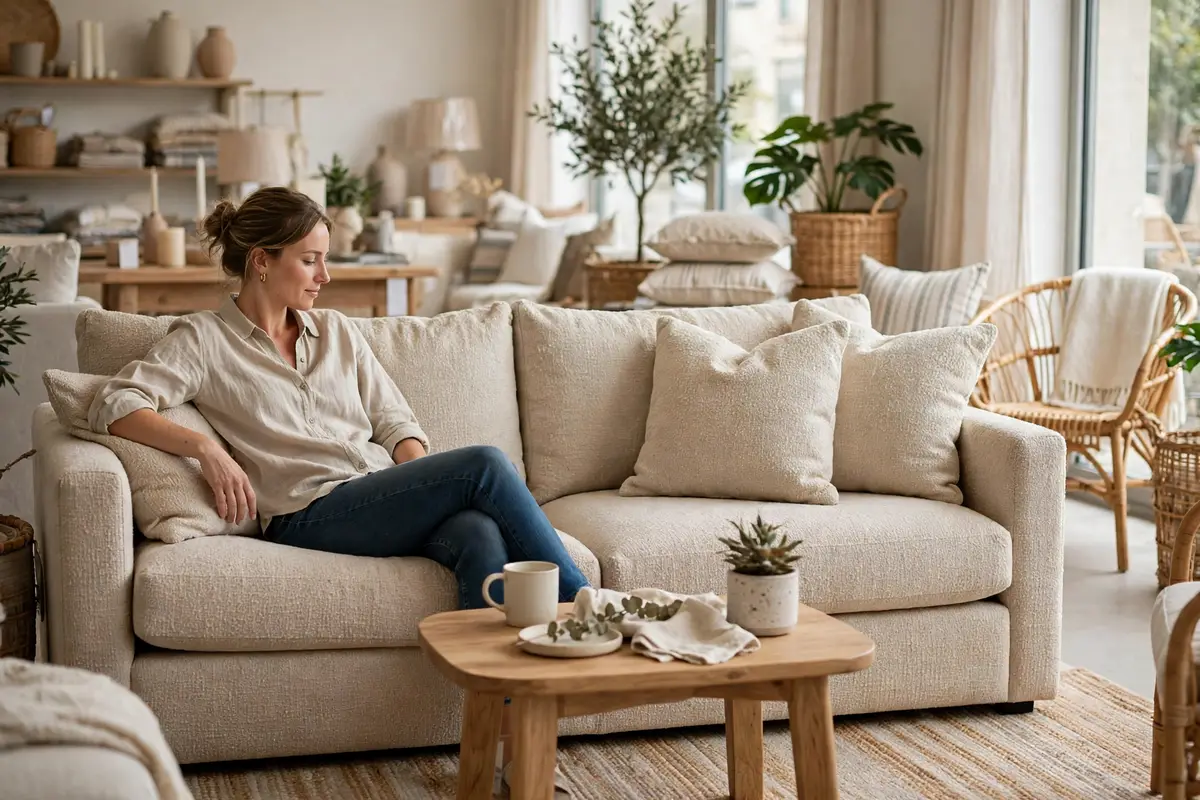
A sofa can look beautiful online but feel completely different when you sit on it. Testing comfort before buying helps you avoid choosing furniture that does not suit your body or daily habits.
Do:
- Sit on the sofa for several minutes instead of testing it briefly.
- Check whether your feet rest comfortably on the floor.
- Test the seat depth to see if you can sit upright without straining.
- Lean against the back cushions and check their support.
- Try lying down if you regularly use the sofa for lounging.
- Check whether the armrests are comfortable for resting your arms.
Avoid:
- Buying based on appearance alone.
- Assuming every deep sofa is comfortable.
- Ignoring back height and cushion firmness.
- Choosing a design that is difficult to get up from.
- Skipping the delivery and return policy details.
I find it helpful to test a sofa in the same positions I use at home, including sitting upright and stretching out. This gives a much better idea of whether the design will work for everyday life.
Finally, confirm the delivery details before placing your order. Measure doorways, hallways, staircases, and elevator openings. Ask whether the legs can be removed and whether the sofa arrives in separate sections.
Check the warranty, delivery charges, assembly requirements, and return conditions too. A little extra research can make the entire buying process much easier.
Conclusion
Choosing the right couches living room arrangement starts with understanding your space, lifestyle, and comfort needs. From slim sofas and compact loveseats to flexible modular designs and family-friendly sectionals, there is a seating option for almost every home. Measure carefully, compare fabrics, and always test comfort before making your final choice. Small details can make a big difference in how your living room looks and functions. Save your favorite ideas on Pinterest, try the ones that suit your home, and share this guide with someone planning a cozy living room update.