Living Room Aesthetic Ideas to Match Your Own Style

A welcoming living room aesthetic does not depend on expensive furniture or copying a trend. It comes from choosing pieces that work together and support the way you use the room. Start with a calm base, choose a small colour palette, then add comfortable seating, layered lighting and a few personal details. The same approach works in a compact apartment, a family home or a rental with plain walls. You can make meaningful changes gradually, using secondhand furniture, removable decor and textiles that are easy to replace. The goal is a room that feels considered, comfortable and distinctly yours, without stretching your budget.
What a Good Living Room Look Really Means
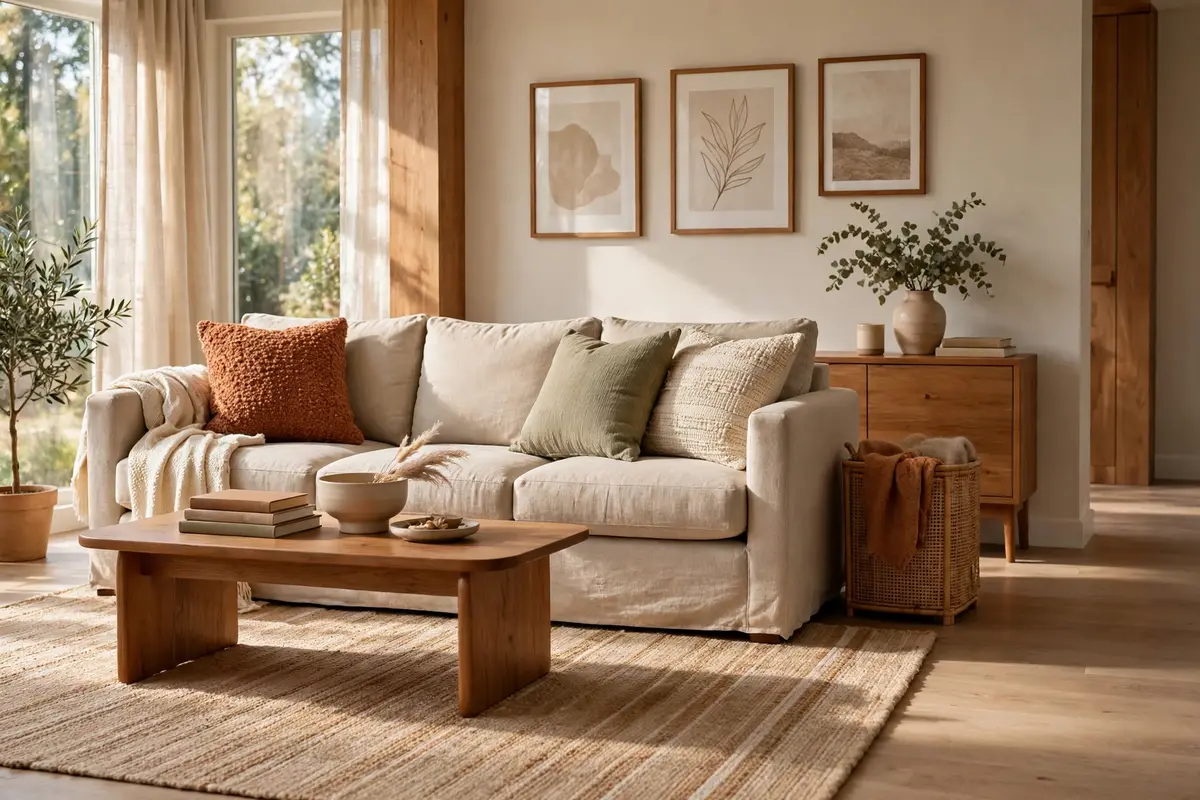
A beautiful living room aesthetic is not about filling every corner with decorative objects or buying everything from one collection. It is about creating a comfortable arrangement where furniture, colours, lighting and personal details feel connected.
Good proportions matter. Furniture should suit the size of your room. An oversized sofa can make a small space feel crowded, while tiny furniture can look disconnected in a large room. Choose pieces that leave enough space for walking and everyday activities.
Comfort comes first. A room should look attractive while supporting relaxing, reading, entertaining and spending time with family. Choose practical seating, soft textiles and surfaces that are easy to maintain.
Balance makes the difference. Combine solid furniture with softer shapes, warm materials with cooler accents and decorative objects with open space. This keeps the room interesting without making it feel busy.
Personal details create character. Artwork, books, plants and secondhand accessories make a room feel individual. You do not need expensive decorations to create a polished result.
The best approach is to focus on what you already own, identify what is missing and make thoughtful changes instead of replacing everything.
Start With a Warm Modern Base
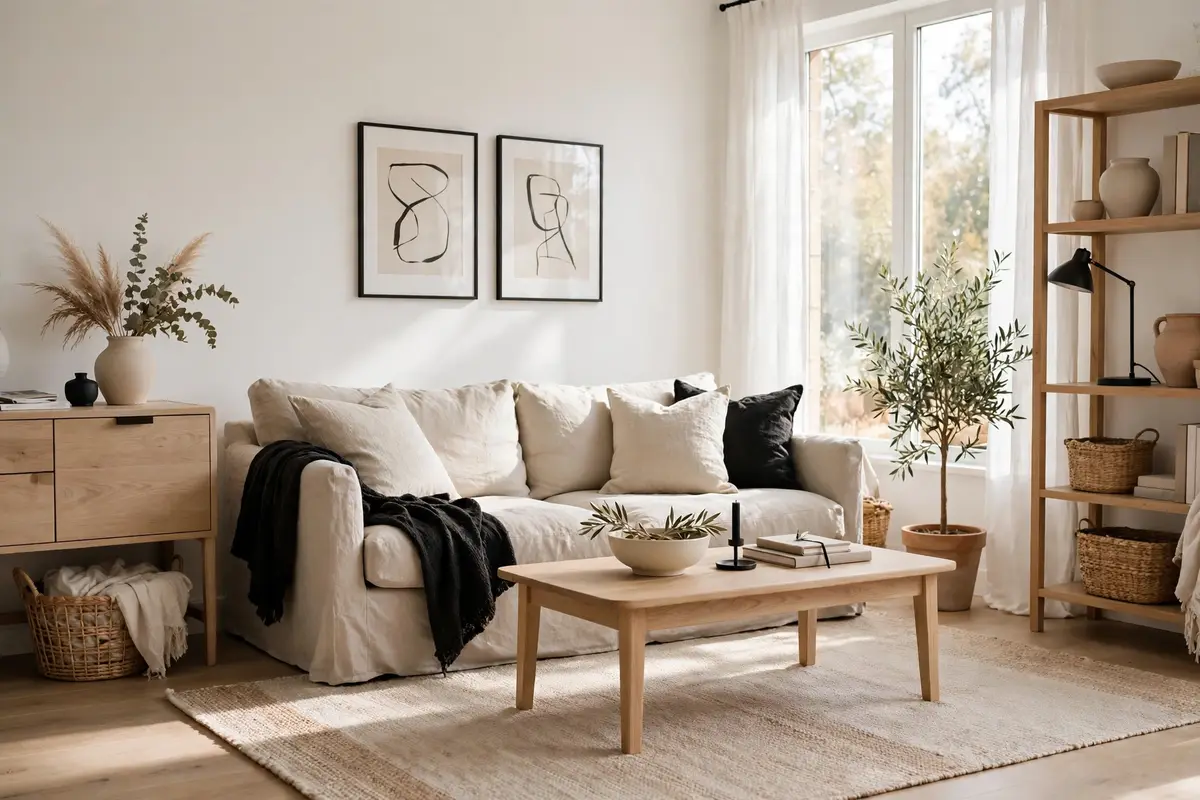
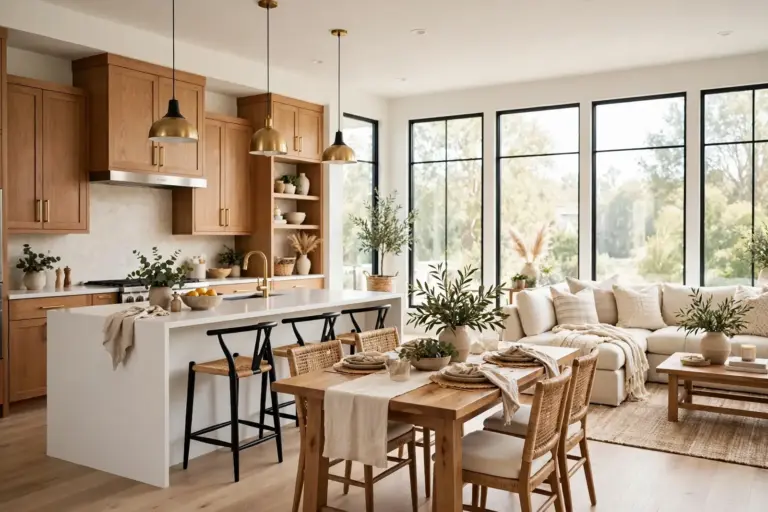
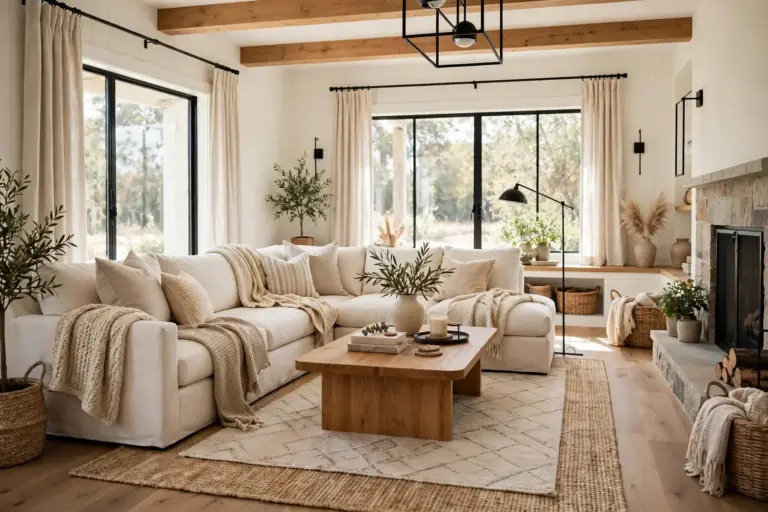
A warm modern foundation gives you more freedom to experiment with different decorating styles. It also makes budget updates easier because neutral walls, natural wood and simple furniture work with many colours and accessories.
Start with these essentials:
- Walls: Choose cream, warm white or soft ivory instead of a stark, cold white. These shades create a gentle background and make natural materials look warmer.
- Furniture: Look for pale oak, walnut or simple wood finishes. If replacing furniture is not affordable, update an existing wooden piece with suitable paint or a fresh finish.
- Sofa: A linen-look or neutral upholstered sofa provides a flexible foundation. Choose a practical fabric that suits your household.
- Rug: Add one generous rug to bring the seating arrangement together. A textured cream, beige or light taupe design works with different decorating directions.
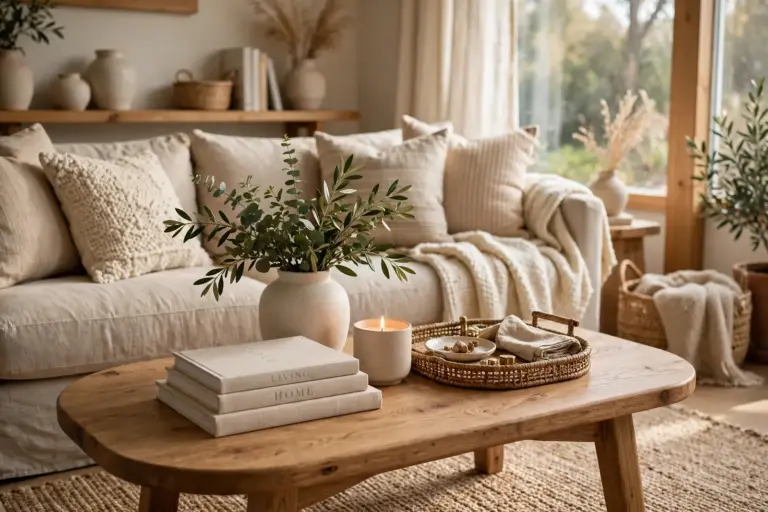
- Accessories: Introduce matte ceramics, woven baskets and simple wooden accents to add warmth without overcrowding the room.
Keep the larger pieces simple and use smaller accessories to introduce your personality. If you want more inspiration for furniture arrangements and contemporary finishes, explore these modern living room ideas.
For renters, removable wallpaper, peel-and-stick wall details, freestanding shelving and decorative cushions can provide a similar effect without permanent changes.
Pick Colours That Feel Calm and Collected
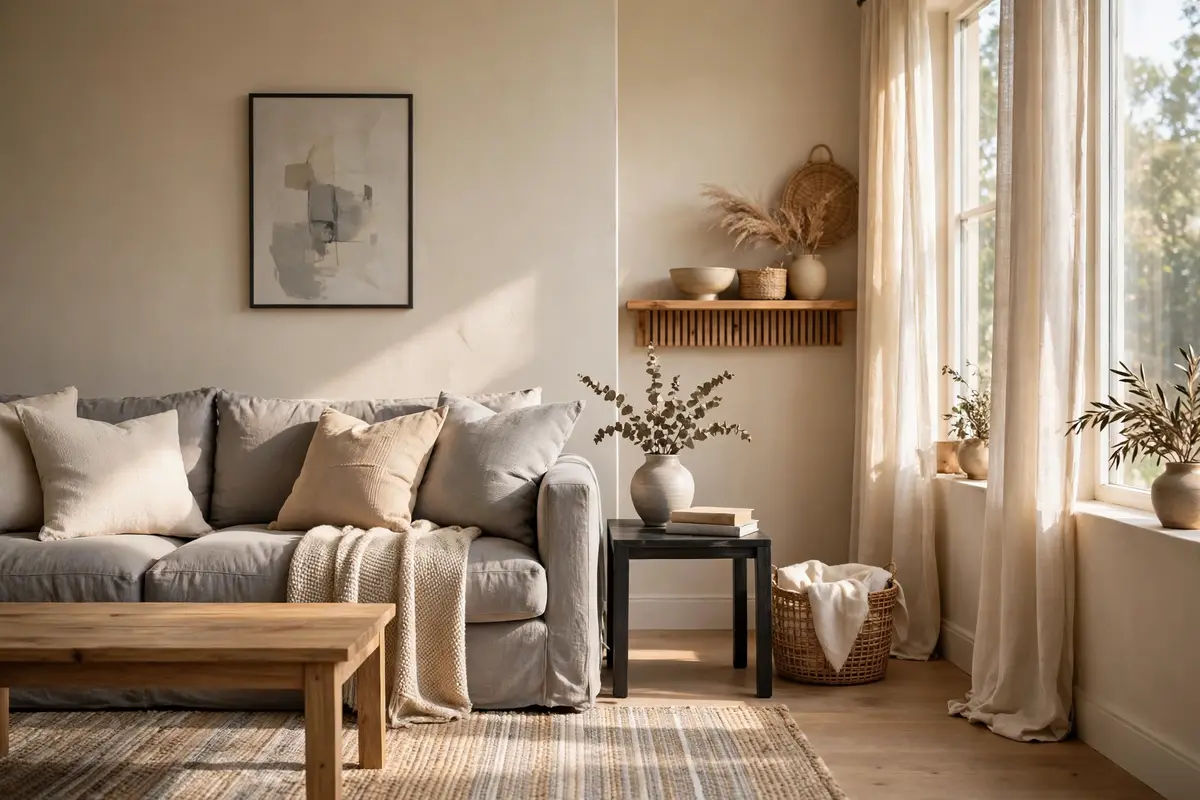
Colour can change how spacious, warm and balanced your living room feels. A simple palette is often easier to decorate with because it prevents furniture and accessories from competing for attention.
Use these three steps to build a balanced colour scheme.
- Choose your main colour, 60 percent. This should cover the largest surfaces, including walls, major upholstery and larger rugs. Cream, white, beige and light grey are dependable choices.
- Choose your secondary colour, 30 percent. Bring in a supporting shade through curtains, accent chairs, cushions or occasional furniture. Consider muted olive, warm taupe, dusty blue or soft brown.
- Choose your accent colour, 10 percent. Use a smaller amount of a stronger shade to create interest. Terracotta, rust, deep green, black or bronze can work beautifully.
A light room also benefits from one darker accent. Try a black side table, charcoal lamp, dark picture frame or bronze decorative accessory. This creates visual definition and stops pale colours from looking flat.
If you prefer a little more colour, introduce it through artwork and replaceable accessories rather than committing to expensive furniture. This makes seasonal changes easier and keeps your decorating budget under control.
Before choosing paint, test samples on different walls and observe them in natural and artificial light. Colours can look surprisingly different throughout the day.
Make the Sofa Your Main Focal Point
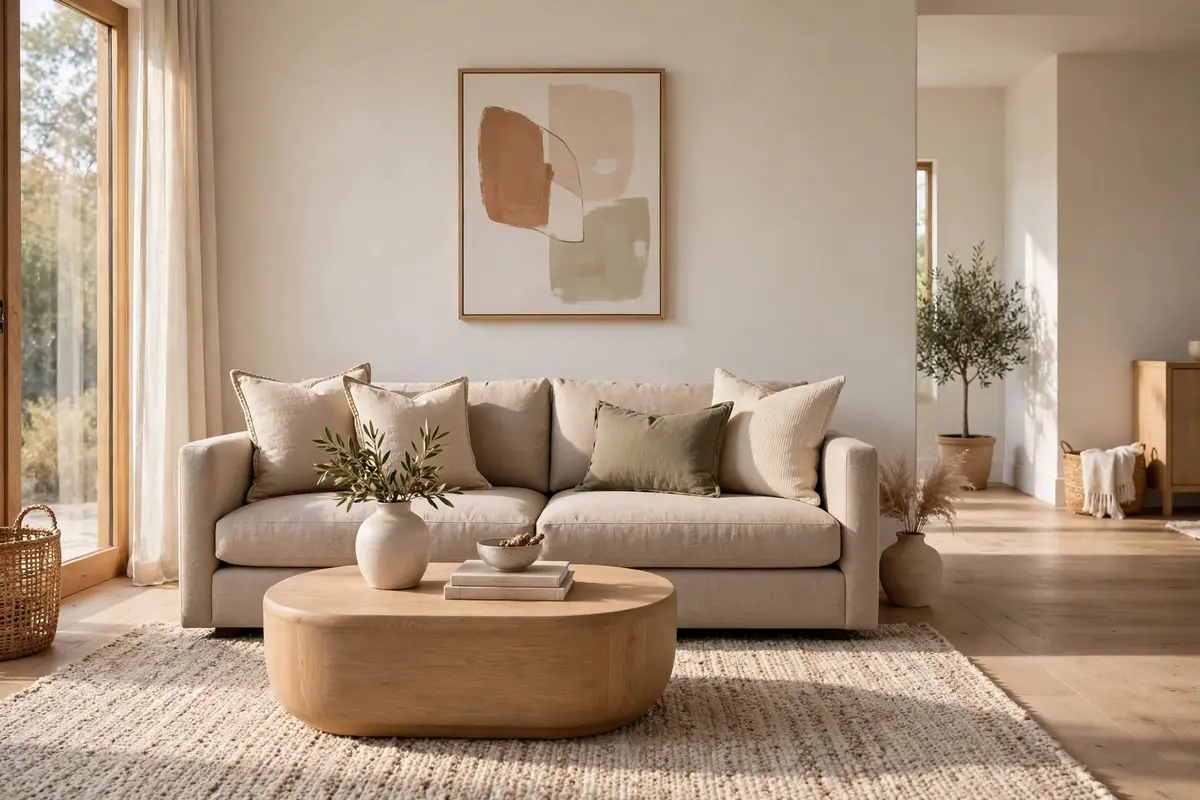
The sofa usually takes up more visual space than any other living room furniture. Choosing the right shape, colour and placement can make the entire room feel more organized.
A simple silhouette is a reliable choice. Look for a sofa with clean lines, a low or medium back and comfortable seat depth. Tailored cushions give it a neat appearance without making it feel formal.
Quick tips:
- Measure your available floor space before buying a sofa. Include enough room for side tables, walking paths and other seating.
- Position the sofa where it feels naturally connected to the main activity area, rather than automatically pushing every piece against a wall.
- Choose a neutral sofa if you enjoy changing cushion colours and decorative accessories.
- Consider a secondhand sofa with a strong frame if your budget is limited. A professional clean or new removable cover can improve its appearance.
- Select performance fabric, washable covers or tightly woven upholstery if you have children or pets.
- Use a few coordinated cushions instead of covering the entire sofa with pillows.
- Keep the sofa visually balanced with artwork, a floor lamp or a suitable side table.
In smaller rooms, an apartment-sized sofa or compact loveseat may provide more usable space than a large sectional. If you need additional seating, consider a small upholstered ottoman that can also serve as a footrest.
Layer Texture, Cushions and Soft Furnishings
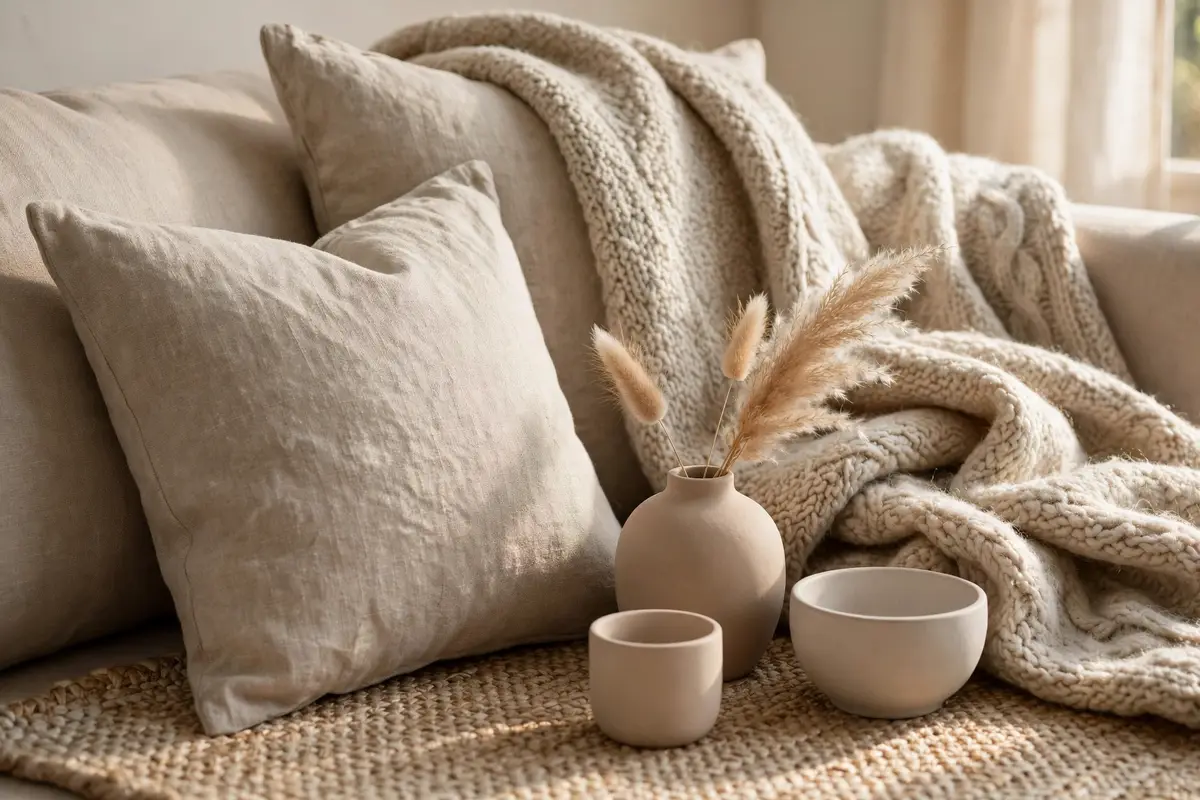
Common mistake: Using too many decorative cushions.
The fix is to choose three to five cushions in two or three related colours, depending on your sofa size. Mix one larger solid cushion, a textured design and a smaller patterned option for variety.
Common mistake: Choosing every textile in the same material.
The fix is to combine linen, cotton, wool, velvet and woven fabrics. Different finishes create depth even when the colours remain neutral.
Common mistake: Adding patterns that compete with each other.
The fix is to select one noticeable pattern and support it with smaller, quieter designs. For example, pair a patterned cushion with plain linen covers and a textured wool throw.
Common mistake: Using decorative fabrics that are difficult to maintain.
The fix is to choose washable cushion covers, washable throws and durable upholstery. This is especially helpful in busy family homes.
Common mistake: Forgetting the windows.
The fix is to hang curtains high, close to the ceiling, with enough width to stack beyond the glass. Full-length curtains make the room feel taller and give windows a finished appearance.
Texture should add comfort, not clutter. A woven basket, soft rug, natural linen curtains and one ceramic accessory can provide plenty of visual interest without filling every surface.
Light the Room in Layers
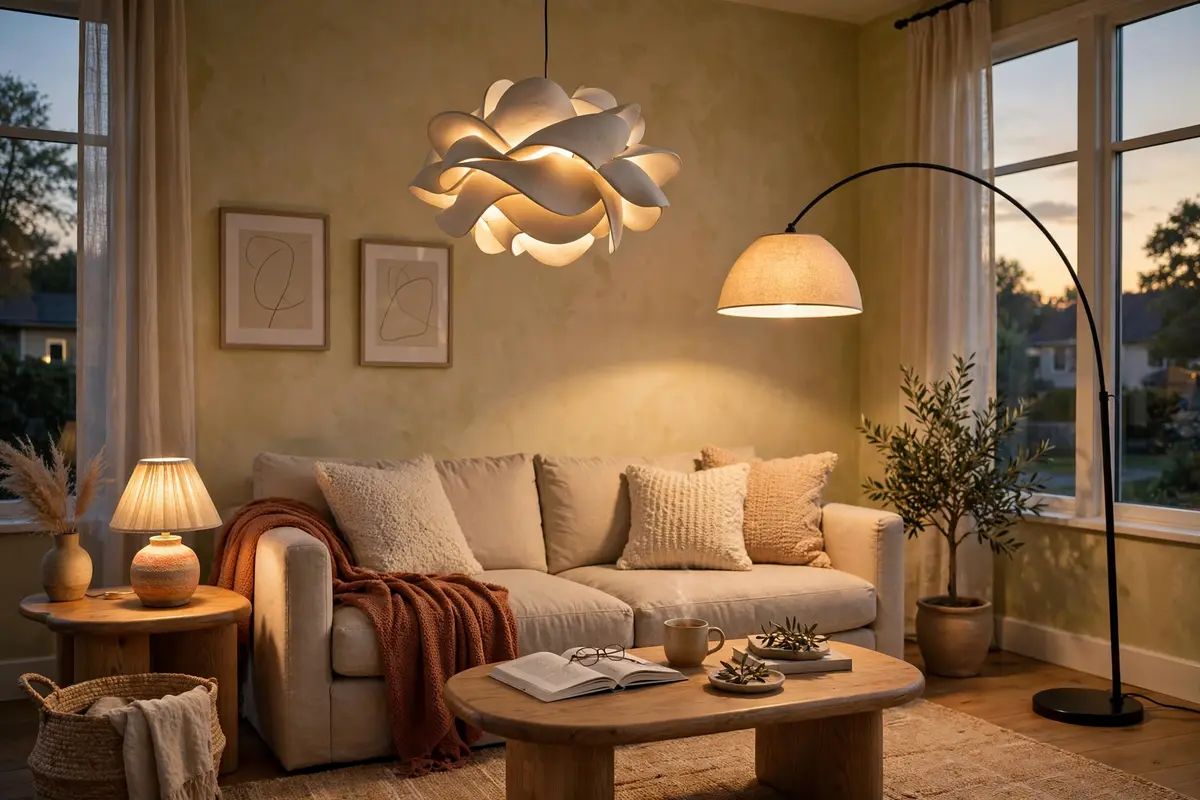
Before: One bright ceiling light illuminates the entire room, leaving darker corners and making the space feel flat. Reading areas may also lack focused lighting, while the overall atmosphere can feel harsh in the evening.
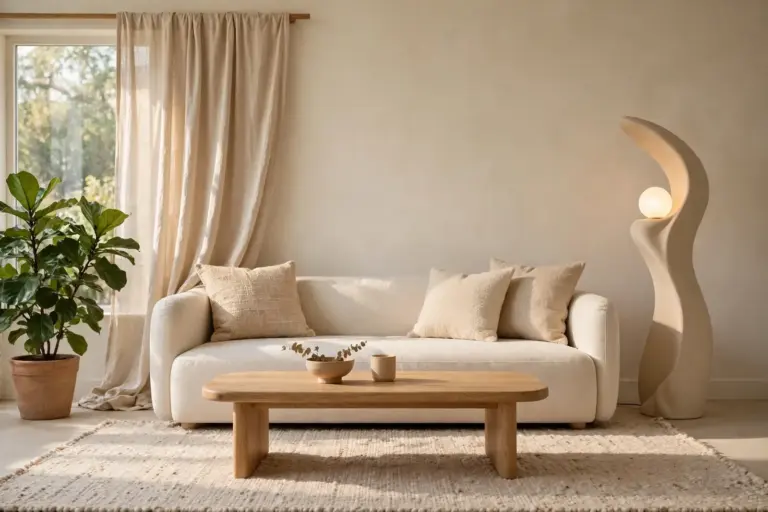
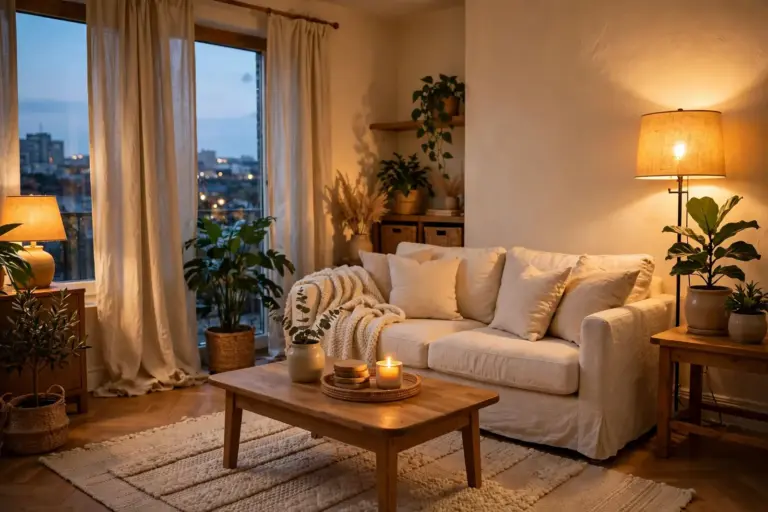
After: A pendant or ceiling fixture provides general illumination, supported by smaller lamps at different heights. An arched floor lamp brightens a darker corner, while a ceramic table lamp creates a comfortable reading area.
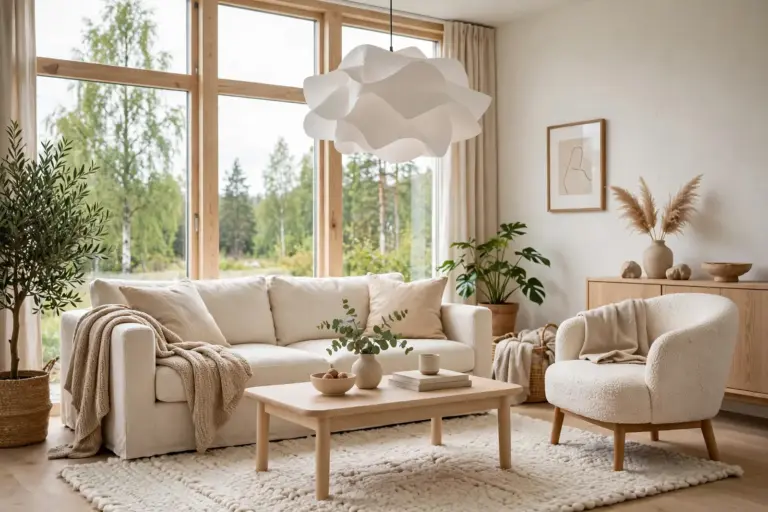
Start with one sculptural light as the main decorative feature. A paper pendant, an arched floor lamp or a ceramic table lamp can add character while serving a practical purpose.
Then build around it with smaller sources of light.
- Use a table lamp beside the sofa for reading or relaxing.
- Place a floor lamp in a darker corner to improve the overall balance.
- Choose warm white bulbs for a comfortable evening atmosphere.
- Use dimmable lighting where possible to adjust brightness throughout the day.
- Consider plug-in wall lights if you want the appearance of wall-mounted lighting without electrical installation.
You do not need expensive designer fixtures. Secondhand lamps, affordable ceramic bases and simple fabric shades can create a similar decorative effect.
For renters, plug-in lamps and battery-operated accent lights are useful alternatives to permanent electrical changes.
Use Art, Rugs and Curves to Pull the Room Together
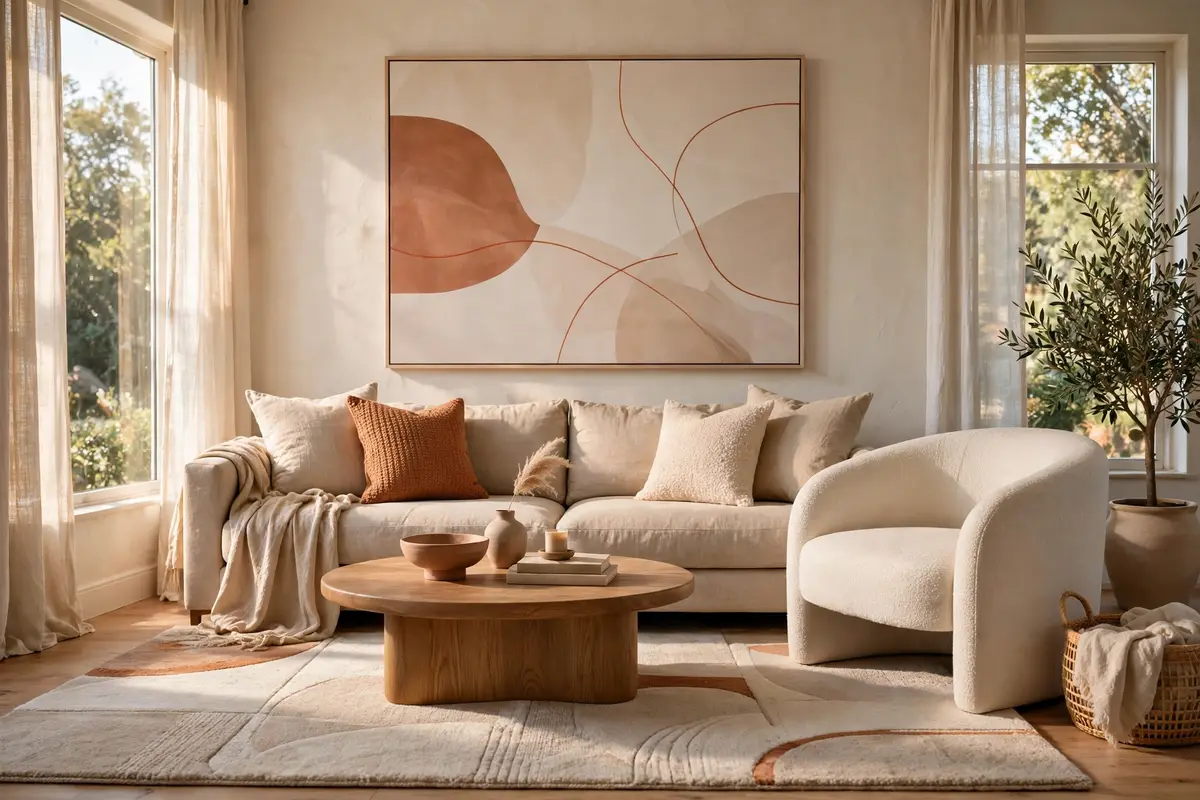
A room can have attractive furniture and still feel unfinished if the pieces do not connect visually. Artwork, rugs and rounded furniture help create a more balanced arrangement.
Do this:
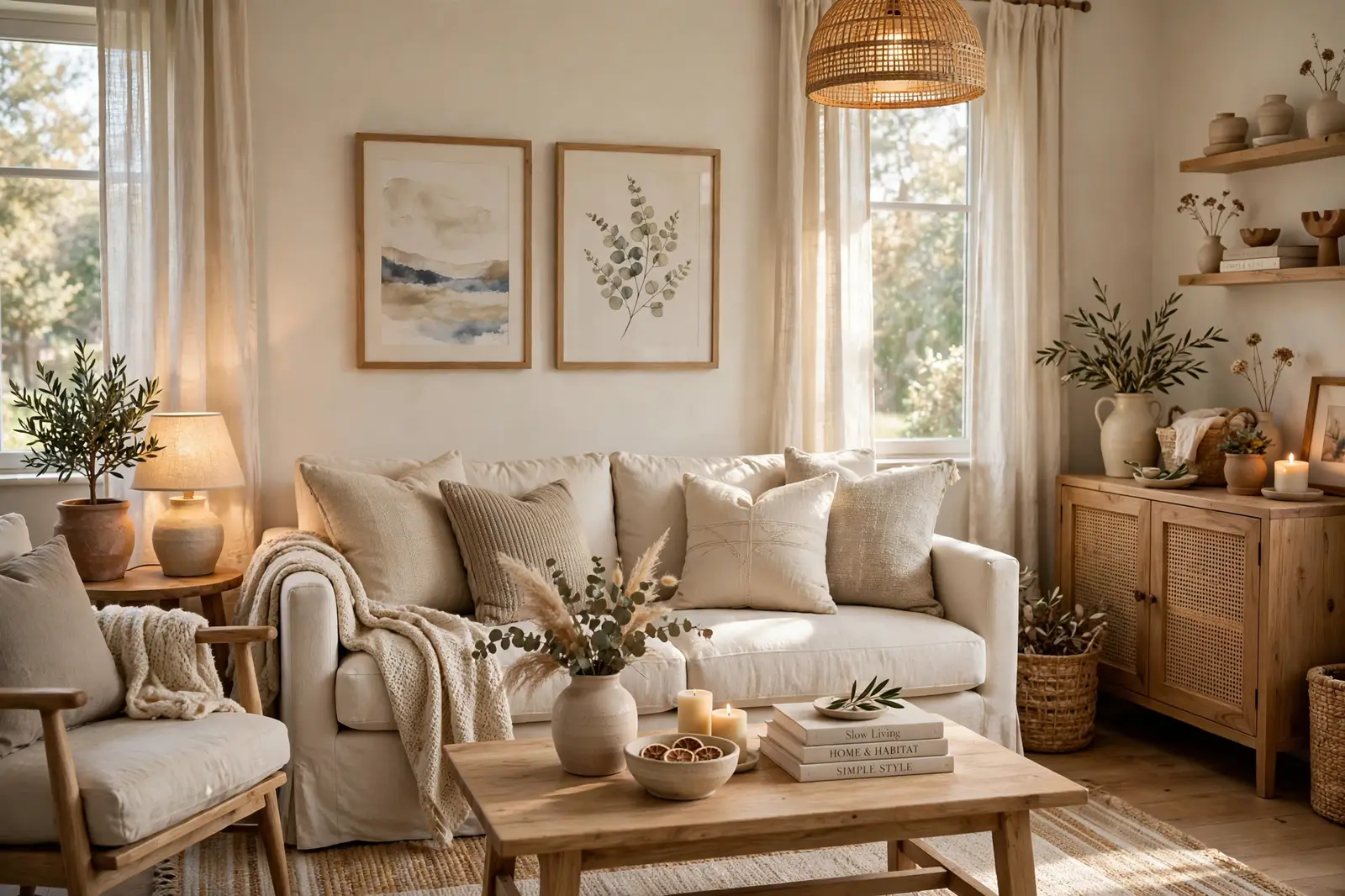
- Choose one strong artwork above the sofa to introduce a colour such as clay, olive, rust, muted blue or black.
- Select a rug large enough to sit beneath the front legs of the sofa and chairs. This makes the seating area feel like one connected zone.
- Add a curved accent chair, barrel chair or rounded lounge chair to soften the straight lines of larger furniture.
- Consider a round or oval coffee table if your sofa and other furniture have strong rectangular shapes.
- Use frames that relate to your existing wood or metal finishes.
- Choose artwork with a loose connection in colour or subject rather than buying a perfectly matching set.
Avoid this:
- Hanging artwork too high above the sofa.
- Choosing a rug that is too small for the seating arrangement.
- Filling every wall with small, unrelated pictures.
- Using only square and rectangular furniture in a room that already feels rigid.
- Selecting artwork that clashes with the existing colour palette.
For more help with furniture placement, visual balance and decorating proportions, use this interior design living room guide.
Affordable framed prints, thrifted artwork and secondhand rugs can give your room plenty of character without requiring a major decorating budget.
Style Shelves, Mirrors and Plants With Restraint
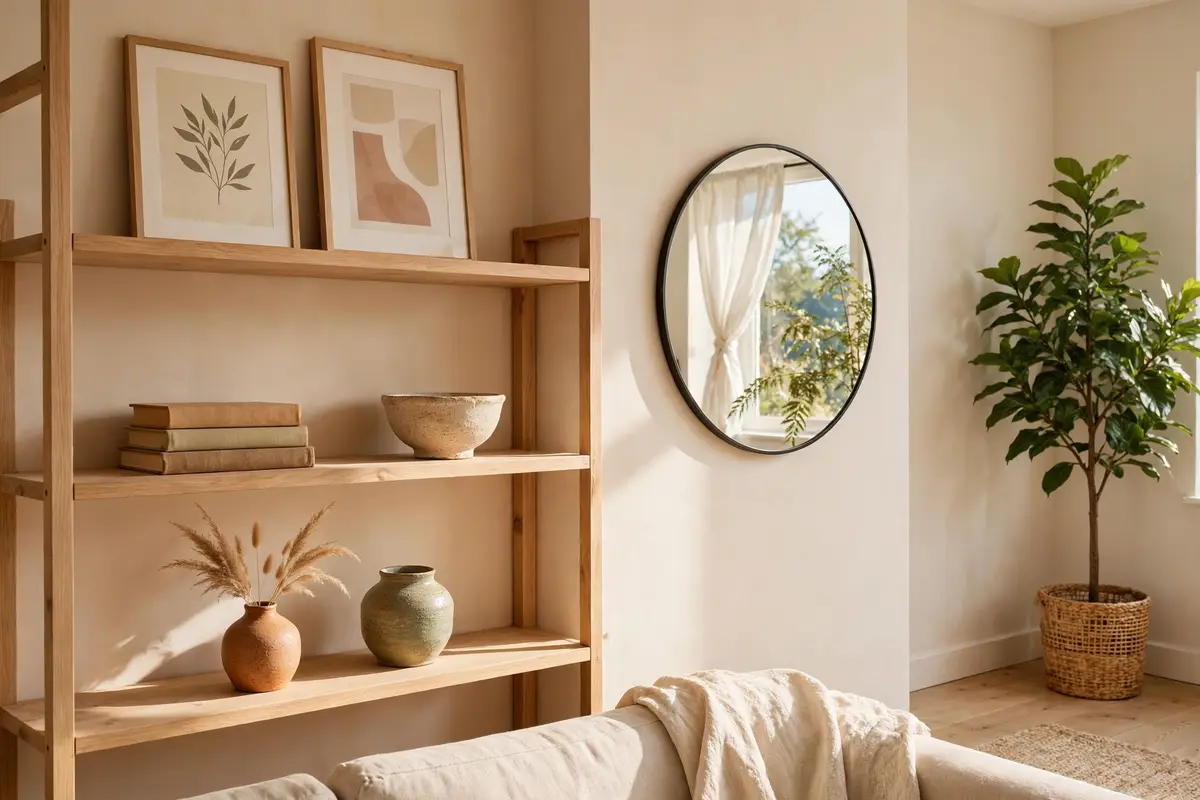
You do not need a large collection of accessories to make your living room feel complete. A few well-placed objects can add personality while keeping shelves and surfaces easy to clean.
What you need:
- A small selection of books in different sizes.
- Two or three decorative ceramics or handmade objects.
- One or two framed photographs or artwork pieces.
- A tall indoor plant for height.
- One or two smaller plants for additional greenery.
- A mirror that reflects something attractive.
- A basket or closed storage box for everyday items.
Arrange shelf accessories in small groups. Mix horizontal and vertical books, place a decorative object beside a framed print and leave some empty space between arrangements.
A mirror works best when it improves what you see. Position it to reflect natural light, artwork or greenery. Avoid placing it where it reflects a cluttered corner or an untidy storage area.
Plants should add shape rather than take over the room. One tall plant beside a window or empty corner, supported by one or two smaller plants, is often enough.
You can also mix modern accessories with vintage finds. An older wooden bowl, secondhand vase or framed print can make inexpensive furniture feel more individual.
For a lower-maintenance option, choose hardy indoor plants suited to your available light. If natural greenery is not practical, a good-quality artificial plant can provide a similar decorative touch.
Find the Style That Fits You
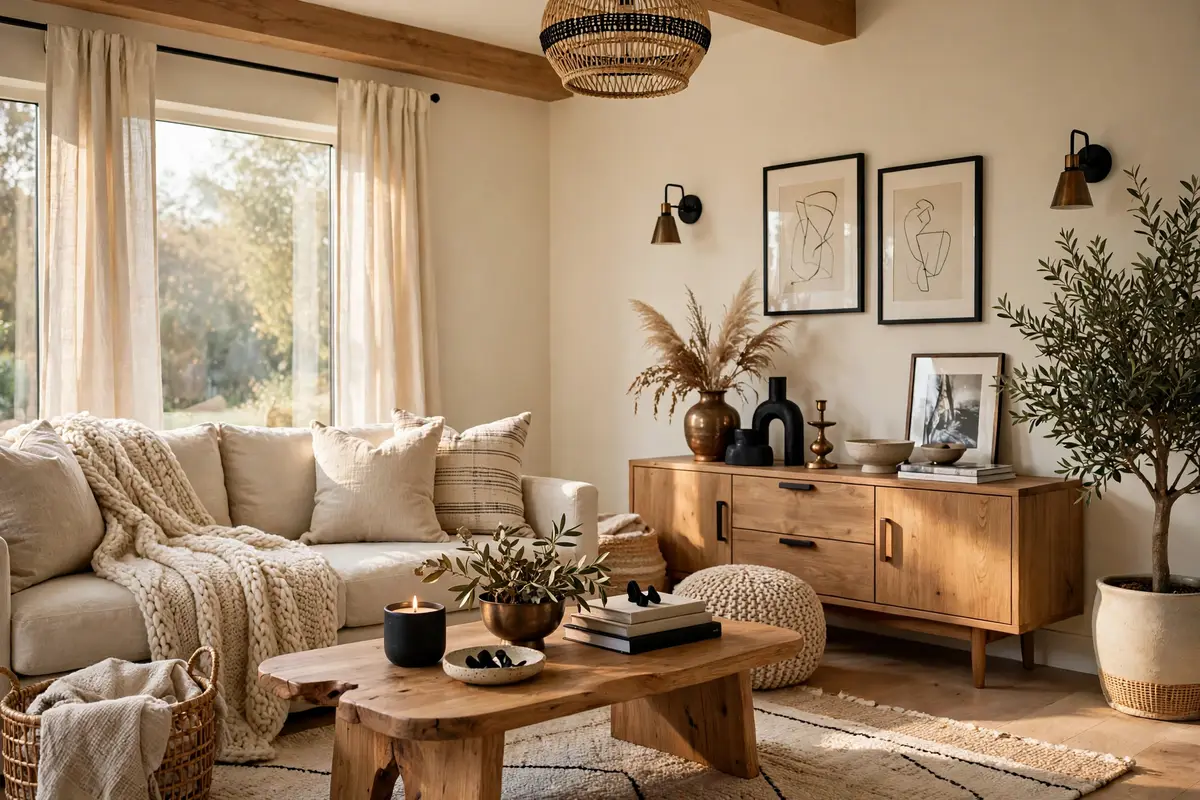
Warm modern: Choose cream walls, natural wood, linen upholstery and soft lighting. This direction works well if you want a comfortable room that feels fresh without looking too formal. Add a few black or bronze details for contrast.
Minimal: Keep furniture simple, reduce unnecessary decorations and focus on useful pieces. A limited colour palette and uncluttered surfaces make this approach particularly suitable for small apartments.
Organic modern: Combine natural wood, stone-inspired accessories, woven materials and rounded furniture. Soft earthy colours and tactile finishes help create a relaxed environment.
Japandi: Mix simple Japanese-inspired forms with Scandinavian warmth. Choose functional furniture, natural finishes, low visual clutter and a restrained palette of cream, beige, brown and muted green.
Collected or vintage mix: Bring together secondhand furniture, older artwork, modern seating and meaningful accessories. Keep a loose connection through colour and material so the room feels individual rather than random.
Controlled-colour approach: Choose one or two favourite colours and repeat them through cushions, artwork, curtains and smaller decorative pieces. This is an easy way to add personality while keeping larger purchases neutral.
Dark-accent approach: Keep the main furniture and walls light, then introduce charcoal, black, deep brown or bronze through smaller details. This gives the room definition without making it feel too dark.
You can also combine two directions. For example, a warm modern foundation with vintage accessories creates a relaxed and personal result. Choose the elements you genuinely enjoy rather than following every detail of a decorating trend.
Avoid Common Mistakes and Make It Work for Real Life
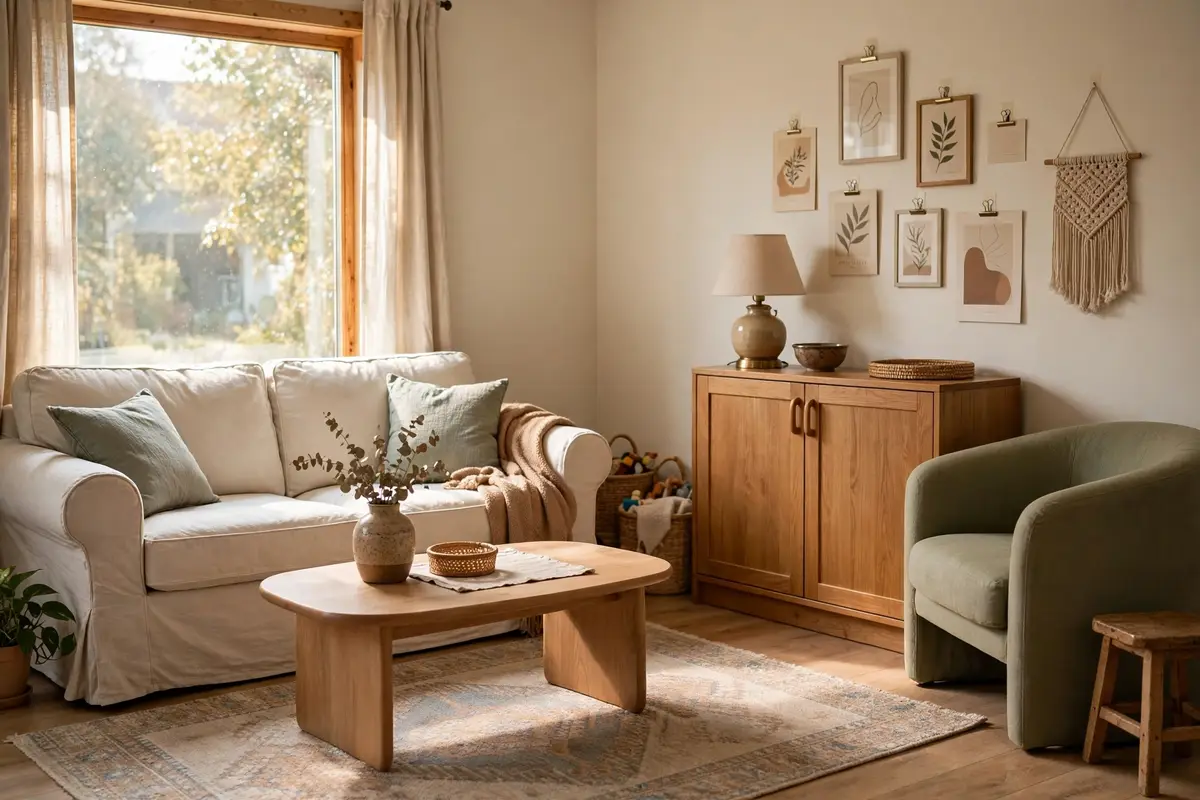
A beautiful room should remain comfortable and practical after the decorating is finished. Keep these ideas in mind before making your final purchases.
- Avoid matching every furniture surface. Too much identical wood or metal can make a room feel flat. Mix a few complementary finishes for a more natural appearance.
- Avoid overfilled shelves. Leave open areas between books, ceramics and decorative objects. This makes cleaning easier and helps individual pieces stand out.
- Avoid mirrors facing clutter. Position mirrors to reflect windows, artwork or attractive parts of the room instead.
- Try renter-friendly updates. Use removable wallpaper, adhesive picture strips, freestanding shelves, plug-in lamps and tension curtain rods where suitable. Always check product instructions and your rental agreement before applying anything to walls or windows.
- Choose affordable budget swaps. Replace cushion covers instead of buying a new sofa. Shop secondhand for coffee tables, lamps and accent chairs. Thrifted frames and inexpensive prints can refresh plain walls.
- Make small rooms work harder. Choose furniture with visible legs, use a round coffee table, add wall-mounted or freestanding vertical storage and keep walking paths clear. Mirrors can help reflect light and improve the sense of space.
- Choose kid-friendly materials. Look for washable slipcovers, stain-resistant upholstery, rounded table edges and durable rugs. Use baskets or closed cabinets to keep toys organized.
- Consider pets before choosing fabrics. Tightly woven upholstery, removable covers and easy-clean rugs are practical options. Select materials that suit your pet’s habits and grooming needs.
- Keep everyday storage accessible. Use an ottoman with hidden storage, attractive baskets or a closed cabinet for remote controls, blankets and other frequently used items.
- Avoid buying everything at once. Live with your furniture arrangement, identify what is missing and purchase accessories gradually. This prevents unnecessary spending and helps you make better choices.
The most successful decorating decisions are the ones that make your home easier to enjoy. Prioritize comfort, practical storage and materials that suit your household before spending money on additional decorations.
Conclusion
Creating a beautiful living room aesthetic is about finding the right balance between comfort, personality and thoughtful decorating choices. Start with a warm neutral foundation, choose colours you enjoy, add practical furniture and build interest through texture, lighting, artwork and greenery. You do not need a large budget or a complete furniture makeover to achieve a room that feels special. Make small updates, reuse what you already own and let your personal style guide each decision. Save these ideas on Pinterest, try your favourite changes and share this guide with someone planning a cozy living room of their own.