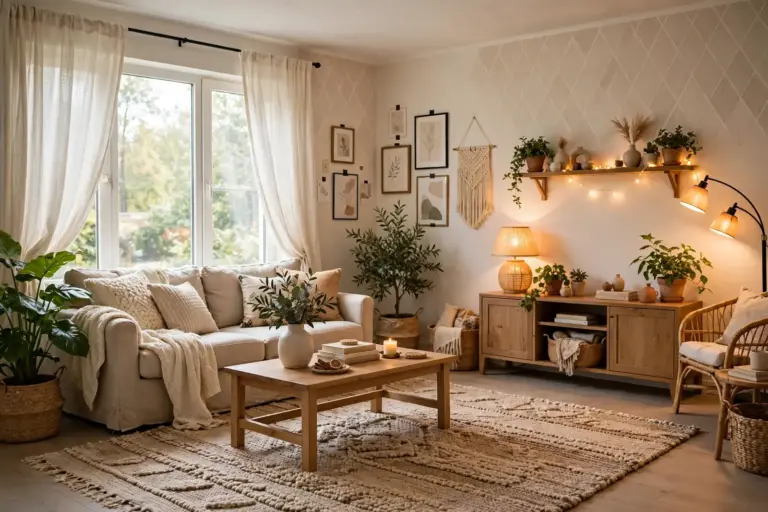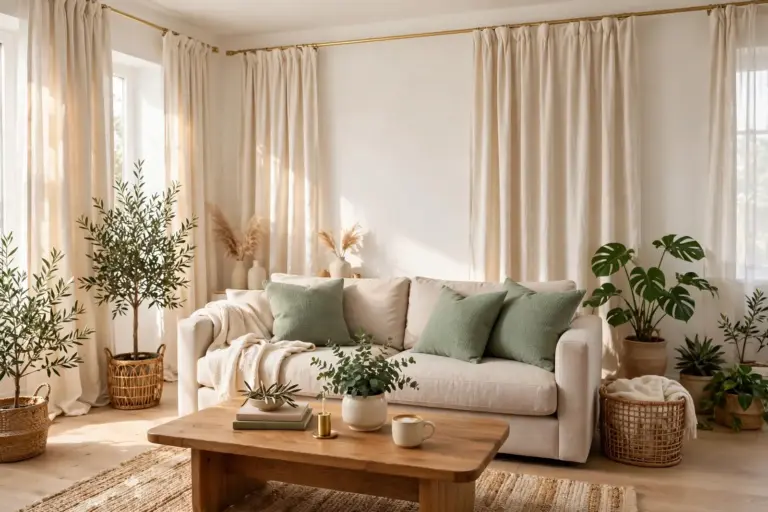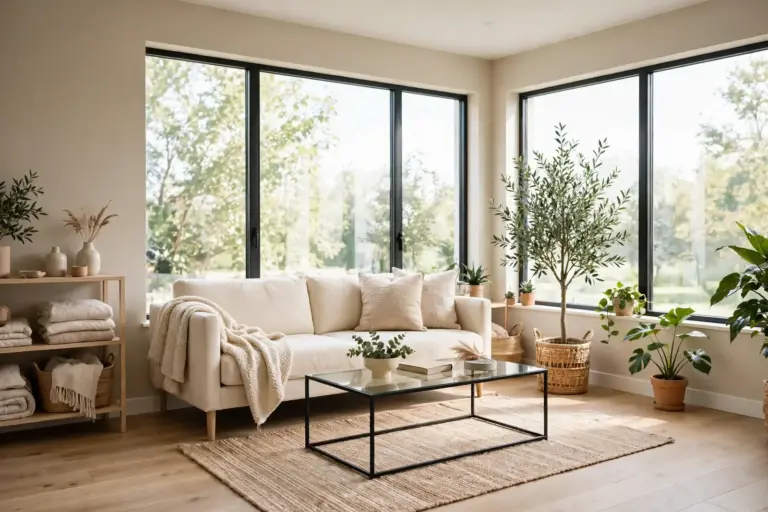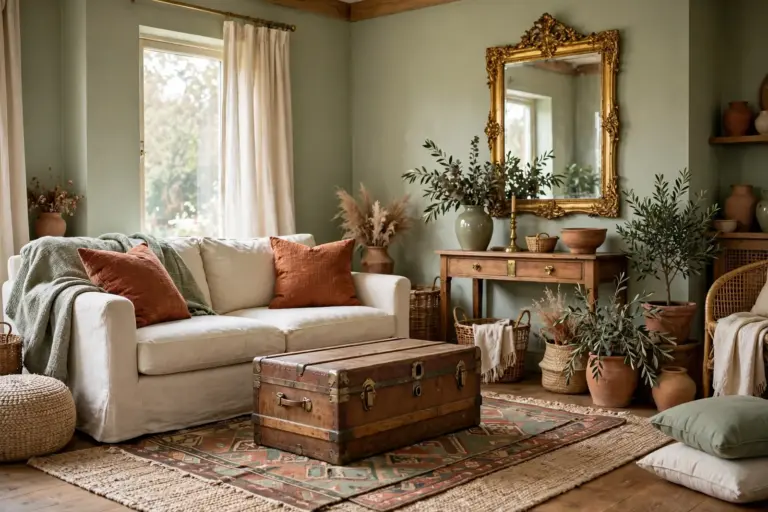
Minimalist Living Room Ideas With Warmth and Function

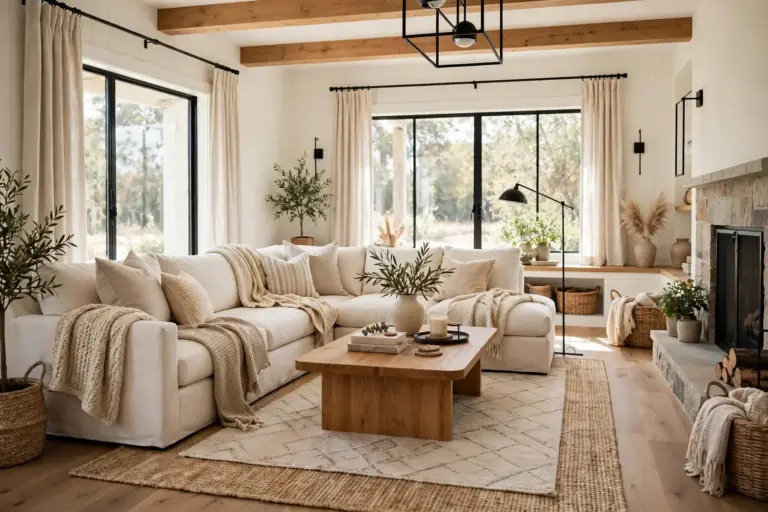
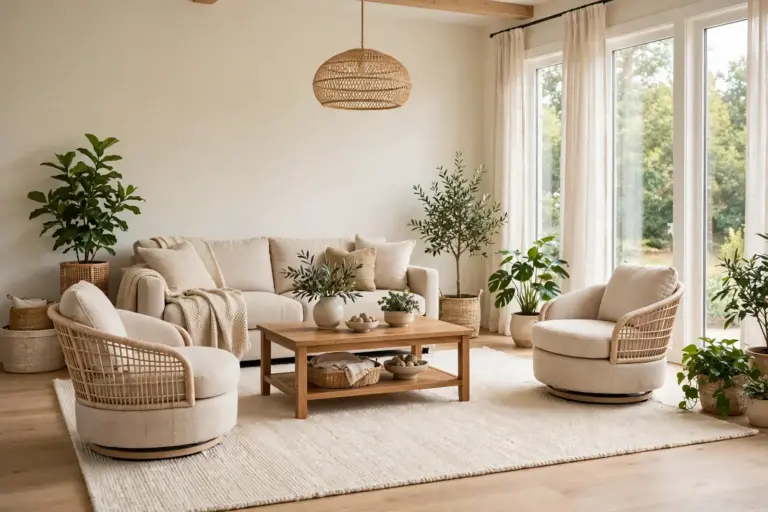
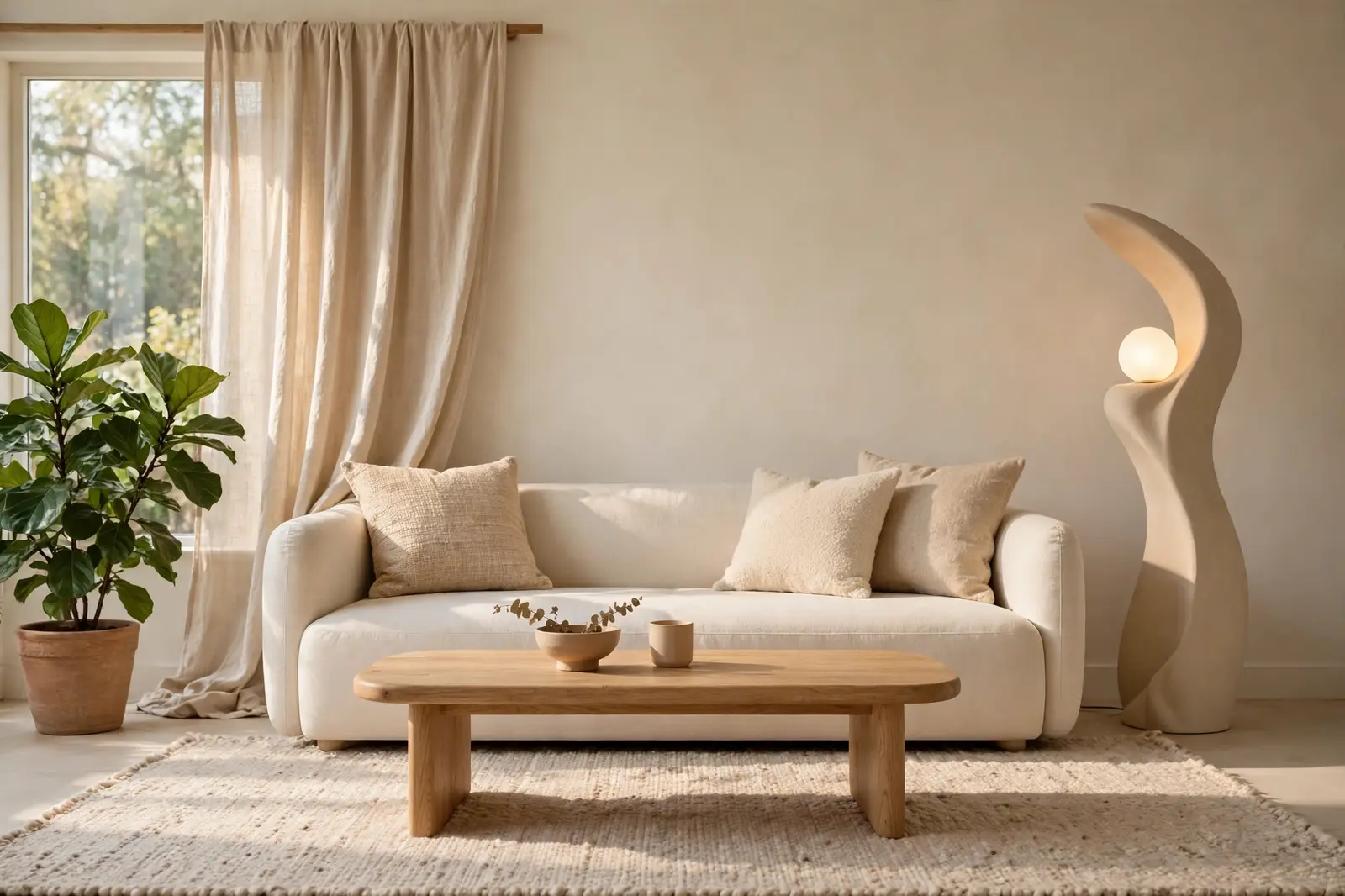
A minimalist living room can feel peaceful, welcoming, and comfortable without looking empty or overly decorated. The secret is choosing fewer pieces that serve a purpose while adding enough warmth through natural materials, soft colors, and inviting textures.
Whether you own your home or rent a small apartment, you do not need expensive furniture or a complete makeover to create a calmer space. A thoughtful sofa, practical storage, warm lighting, and a few personal touches can make a noticeable difference.
The goal is to create a room that looks clean but still supports everyday life, from relaxing after work to entertaining guests and spending time with family.
Start With a Warm and Simple Color Palette
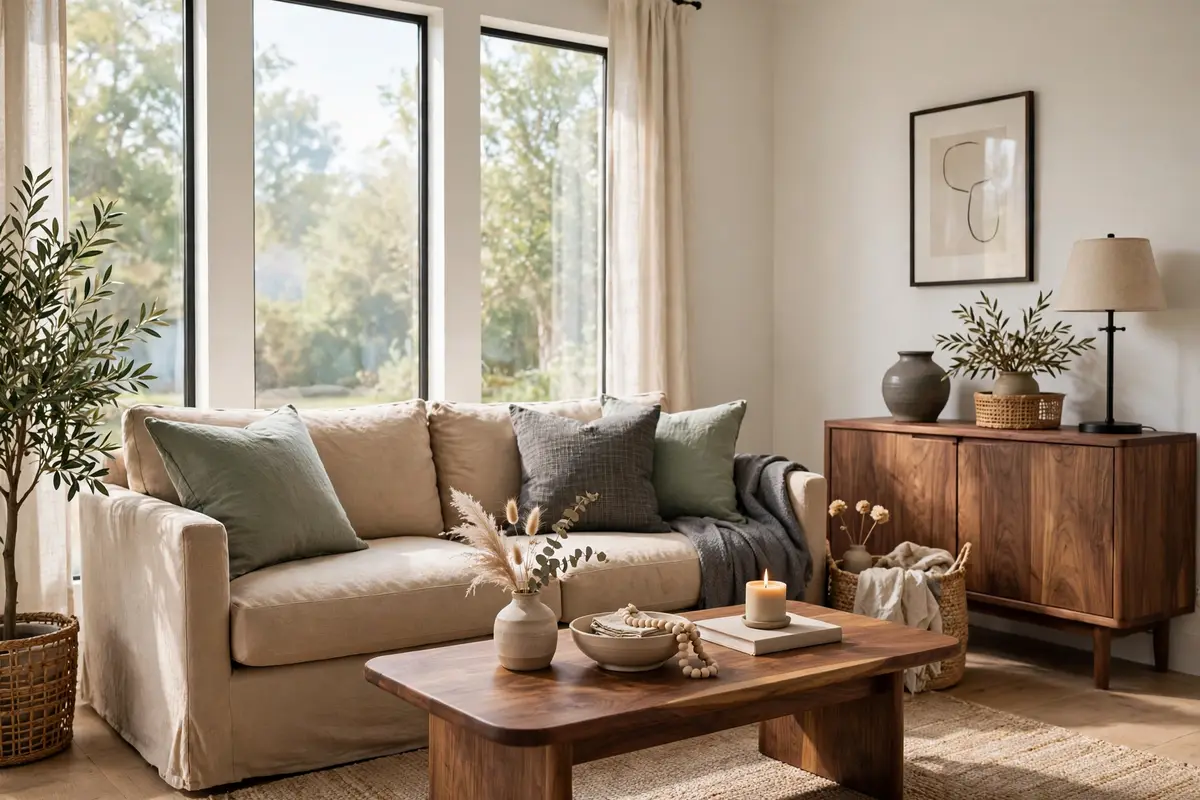
Color has a major influence on how comfortable a room feels. Instead of decorating with bright white and cool gray alone, choose softer shades that create a relaxed atmosphere.
Warm white, cream, beige, stone, sand, and light taupe make excellent starting points. These colors reflect natural light while keeping the space visually quiet. Add walnut brown, muted sage, or charcoal for contrast without making the room feel busy.
A helpful approach is the 60-30-10 color rule:
- 60 percent dominant color: Use warm white, cream, or another soft neutral on walls, large furniture, and major surfaces.
- 30 percent secondary color: Introduce beige, stone, warm gray, or natural wood through rugs, curtains, and furniture.
- 10 percent accent color: Add sage green, terracotta, or charcoal through cushions, artwork, and small accessories.
Quick Tip: Before buying anything, choose three main colors and keep them consistent throughout the room. This makes decorating easier and prevents unnecessary purchases.
Start by looking at your existing sofa, flooring, and wall color. Choose complementary shades around those fixed elements, then test fabric and paint samples in natural and evening light before committing.
Choose Furniture That Serves a Real Purpose
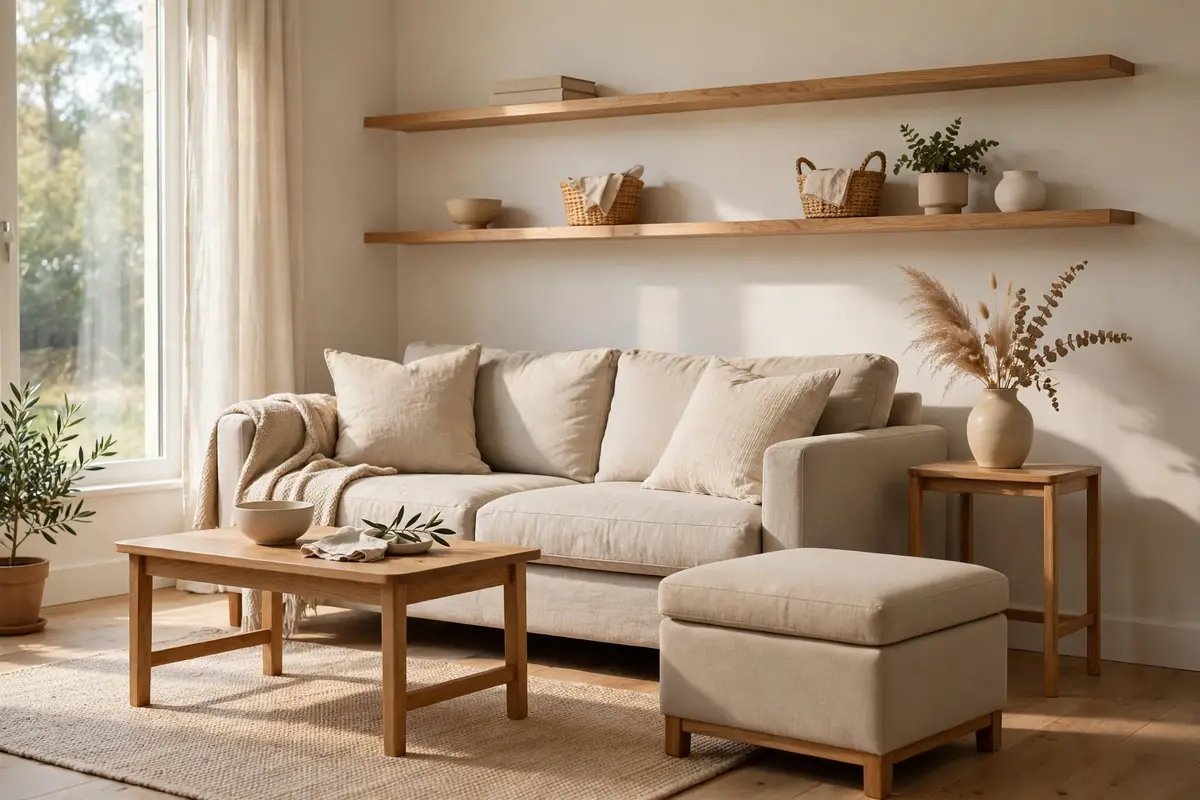
Furniture should make everyday life easier, not simply fill empty corners. Before purchasing anything, consider how you actually use your living room.
A comfortable sofa is usually the most important investment. Choose a size that allows people to move around comfortably without blocking windows, doorways, or walking paths.
Follow these steps when selecting furniture:
- Measure your room: Record the length and width of the space, along with doorways and window positions.
- Choose a suitable sofa: Look for simple shapes, comfortable cushions, and durable upholstery.
- Add multifunctional pieces: A storage ottoman can provide extra seating, hide blankets, and replace a bulky coffee table.
- Consider flexible furniture: A sofa bed or nesting tables can be useful in smaller homes.
- Keep walking space clear: Avoid placing furniture where it interrupts natural movement.
Common Mistake: Buying several small furniture pieces because they seem easier to fit into a compact room.
The Fix: Choose fewer, more useful items. One well-sized sofa and one practical coffee table often work better than several unnecessary pieces.
Before shopping, make a list of what your household needs. Prioritize seating, storage, and surface space, then purchase additional furniture only when a genuine need appears.
Use Natural Textures to Make the Room Feel Cozy
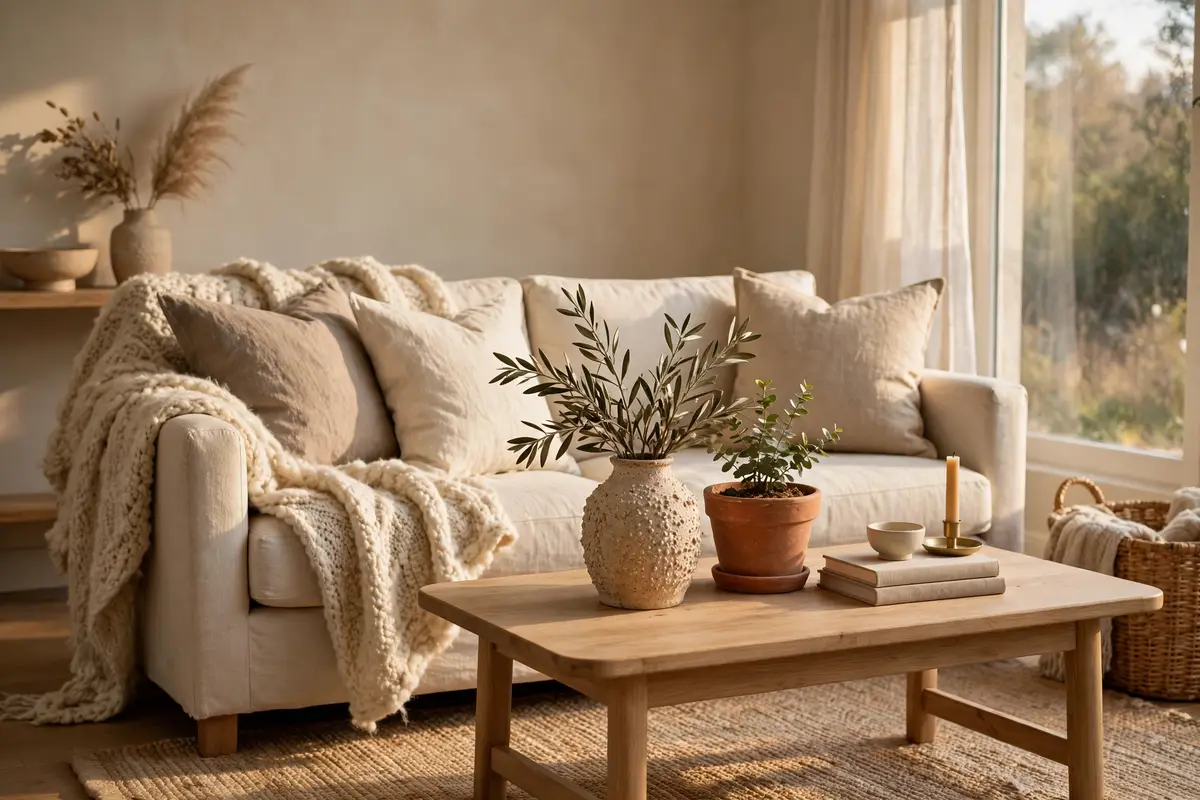
A simple color palette does not have to mean a plain-looking room. Texture adds visual interest without introducing lots of decorative objects.
Natural materials are especially useful because they bring warmth and character into a space. Even a room with only a few furniture pieces can feel inviting when the materials work together.
Try incorporating these textures:
- Linen: Use linen cushion covers or curtains for a relaxed, natural appearance.
- Wool: Add a soft throw or textured rug to make seating areas more comfortable.
- Jute: Choose a jute rug for subtle texture and an earthy finish.
- Wood: Let natural wood grain show through coffee tables, shelves, and side tables.
- Ceramic: Use one or two handmade-looking ceramic pieces for gentle visual interest.
- Terracotta: Introduce a warm earthy shade through a planter or small decorative bowl.
For more inspiration on combining rich materials and comfortable finishes, explore these luxury living room ideas.
Before: A plain sofa, smooth flooring, and matching accessories that make the room feel flat.
After: The same furniture styled with a wool throw, linen cushions, a natural rug, and a wooden accent.
Start with the largest soft surface in your room, usually the rug or sofa. Add two different textures, then step back before introducing anything else. This keeps the result comfortable rather than cluttered.
Create Warm Lighting With Different Light Sources
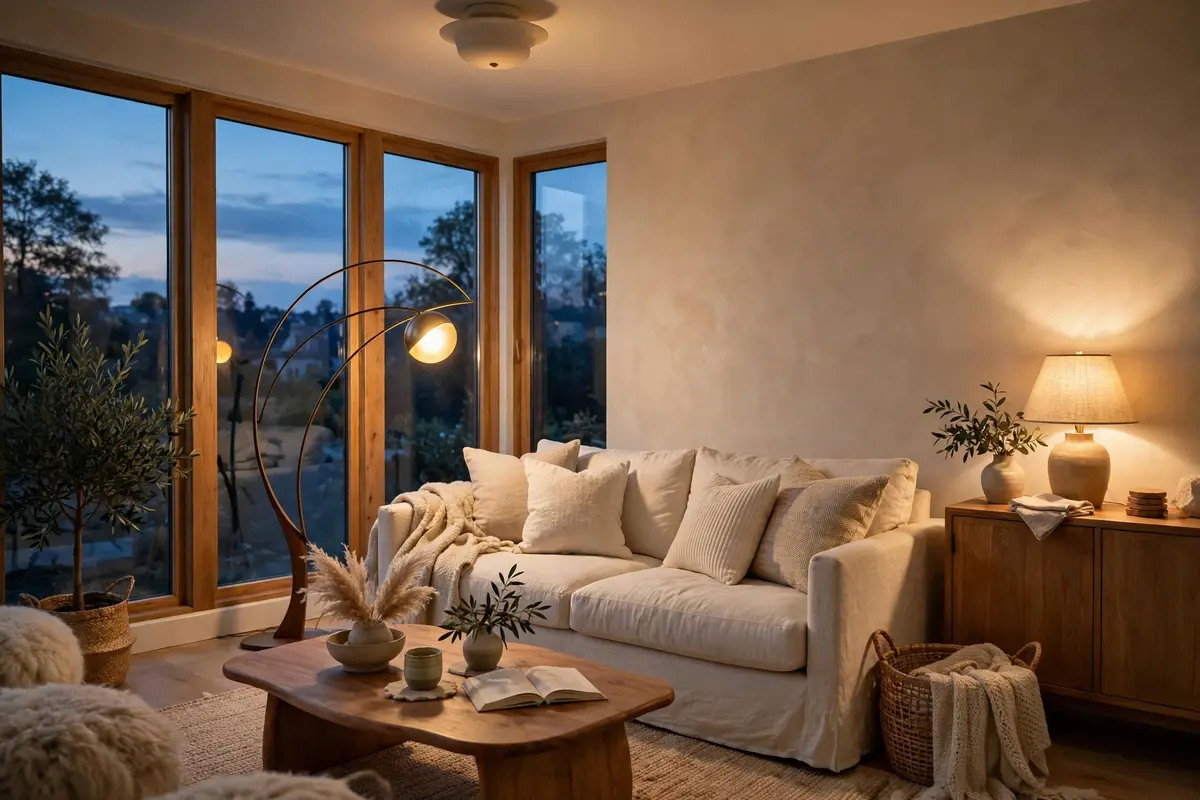
Lighting can completely change the atmosphere of a living room. Even beautiful furniture may feel uncomfortable if the only light source is a bright ceiling fixture.
The best approach is to combine different types of lighting so the room works throughout the day.
- Ambient lighting: Use a ceiling fixture or recessed lights to provide general illumination.
- Task lighting: Place a reading lamp beside the sofa or near your favorite chair.
- Accent lighting: Add a small table lamp to highlight a shelf or create a softer evening atmosphere.
- Decorative lighting: Choose one sculptural pendant or floor lamp that looks attractive while providing useful light.
Choose warm white bulbs between 2700K and 3000K for a comfortable glow. Dimmable bulbs are especially helpful because you can adjust brightness depending on the activity.
Quick Tip: A floor lamp with an upward-facing shade can brighten the ceiling and make the room feel more spacious.
Avoid relying on decorative lighting alone. Make sure reading areas have enough brightness, and use separate switches or smart bulbs when possible. Start by adding one floor lamp near the main seating area, then adjust the remaining lighting based on how the room feels at night.
Use Curtains to Soften Windows and Add Height
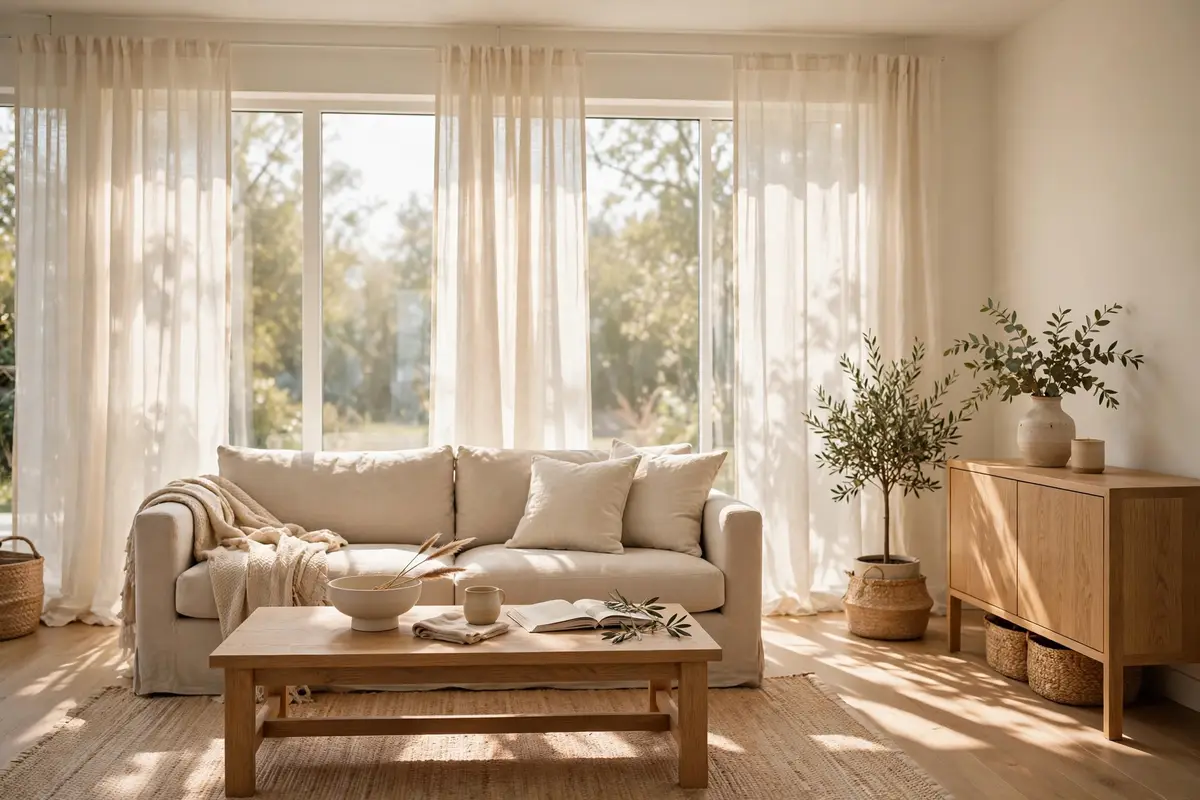
Windows offer an opportunity to add softness without filling the room with decorations. The right curtains can make walls appear taller, improve privacy, and balance the hard surfaces of furniture and flooring.
For a simple, polished look, choose lightweight fabrics in warm white, ivory, oatmeal, or soft beige.
Follow these practical styling tips:
- Hang curtain rods close to the ceiling rather than directly above the window frame.
- Choose full-length panels that reach the floor or sit just slightly above it.
- Extend the rod beyond the window edges so the curtains do not block too much natural light when open.
- Select linen or linen-look fabric for a soft, relaxed finish.
- Use blackout lining when privacy or light control is important.
Renters can use tension rods, suitable removable hardware, or existing curtain fixtures to avoid unnecessary wall damage.
If you are unsure about fabric, length, and placement, these curtains living room ideas can help you choose a style that complements your space.
Do This:
- Keep curtain colors close to your main neutral palette.
- Measure the window and desired hanging height before ordering.
- Choose fabric that suits your privacy needs.
Avoid This:
- Hanging panels too low or too narrowly.
- Choosing heavy patterns that compete with other room features.
- Buying curtains without checking their finished length.
Measure twice before purchasing. A simple pair of correctly sized panels can make a room feel taller and more finished without requiring additional decorative accessories.
Add Smart Storage to Keep Surfaces Clutter-Free
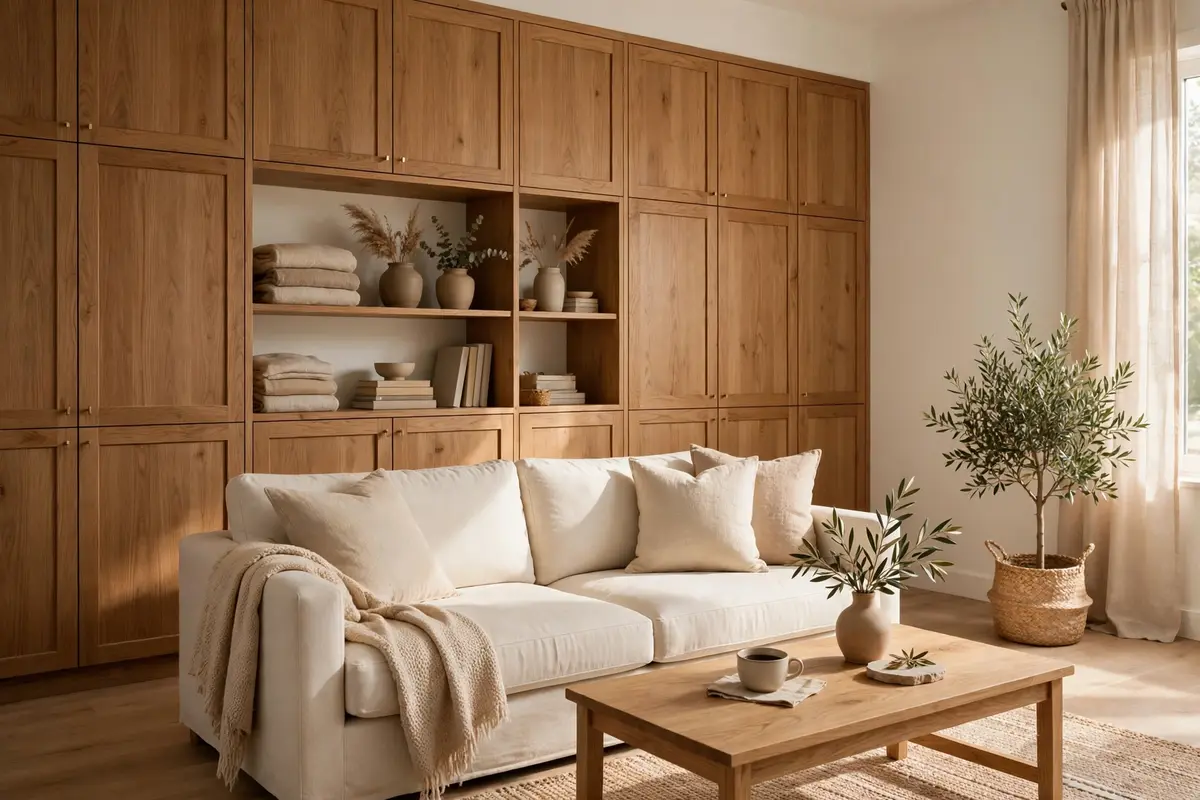
A tidy living room is easier to maintain when everything has a suitable place. Instead of constantly moving objects from one surface to another, create storage that supports your daily routine.
Built-in cabinets are excellent for creating a clean appearance because they keep everyday belongings out of sight. However, you do not need custom carpentry to achieve a similar result.
Consider these affordable storage solutions:
- Closed cabinets: Hide electronics, games, books, and household supplies.
- Storage baskets: Use woven baskets for blankets, toys, or magazines.
- Ottomans with storage: Keep frequently used items close to the seating area.
- Floating shelves: Display a few meaningful objects without using floor space.
- Media cabinets: Organize cables, remotes, and entertainment equipment.
What You Need:
- One main storage unit.
- Two or three matching baskets.
- A small tray for everyday essentials.
- Cable organizers for electronic equipment.
You can also create a built-in appearance with affordable modular cabinets or matching furniture placed along one wall. For renters, freestanding shelves and closed storage units are practical alternatives.
Begin by identifying the items that create the most visible clutter. Give each category a storage location, then remove anything you no longer use. Keep open shelves lightly styled so storage remains useful rather than becoming another display area.
Bring Nature Indoors With Low-Maintenance Plants
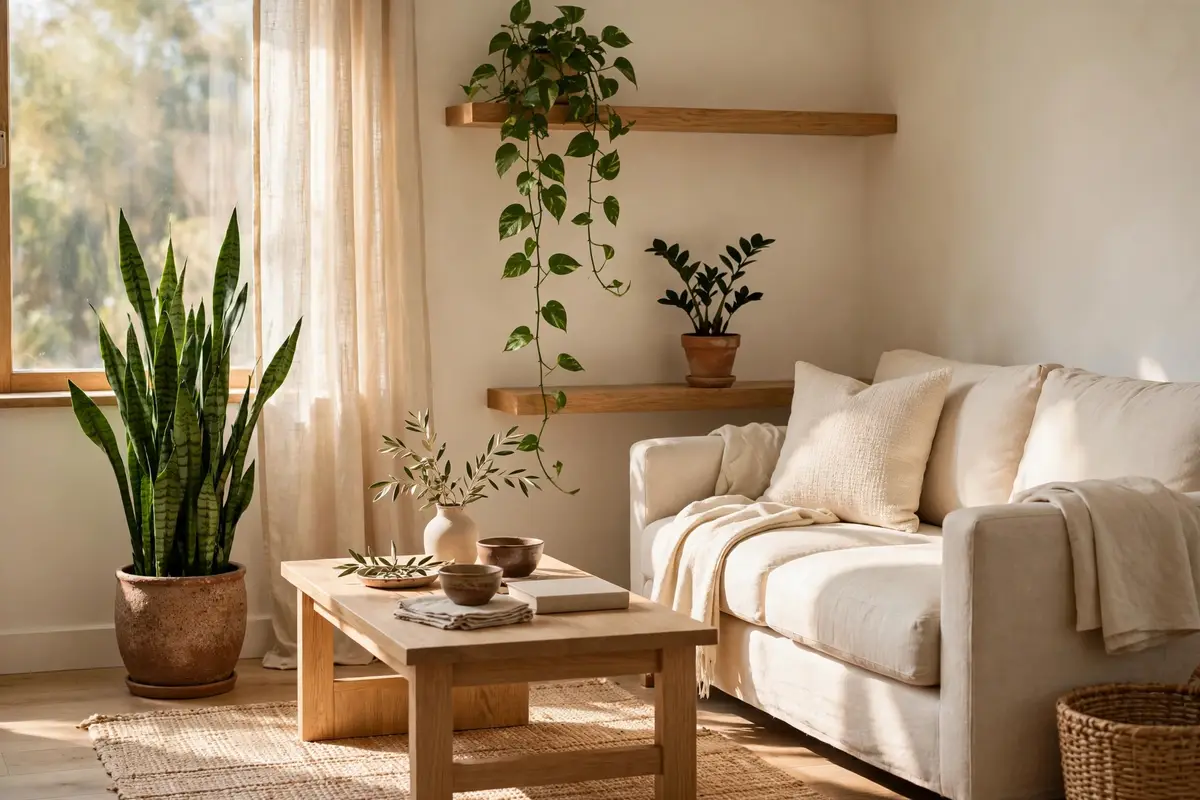
Plants bring color, natural shapes, and a sense of life into a simple living space. You only need a few well-placed plants to make a noticeable difference.
Choose varieties that match your lighting conditions and the amount of care you can provide.
Some popular options include:
- Snake plant: An architectural-looking plant that generally needs little watering and tolerates lower light.
- Pothos: A trailing plant that works beautifully on shelves and in hanging planters.
- ZZ plant: A low-maintenance option with glossy green leaves that tolerates periods of dry soil.
Place a taller plant beside the sofa, near an empty corner, or next to a window. Smaller plants can sit on shelves or side tables.
Common Mistake: Filling every available surface with small plants and decorative pots.
The Fix: Choose one larger plant and one or two smaller varieties. Use simple planters in terracotta, cream, or natural stone shades.
Remember that some common houseplants, including pothos and snake plants, can be harmful if chewed by pets. Keep them out of reach and check plant safety before bringing new varieties into a home with animals.
Start with one suitable plant and learn its watering and lighting needs before adding more greenery.
Create a Small Reading Nook or Relaxing Corner
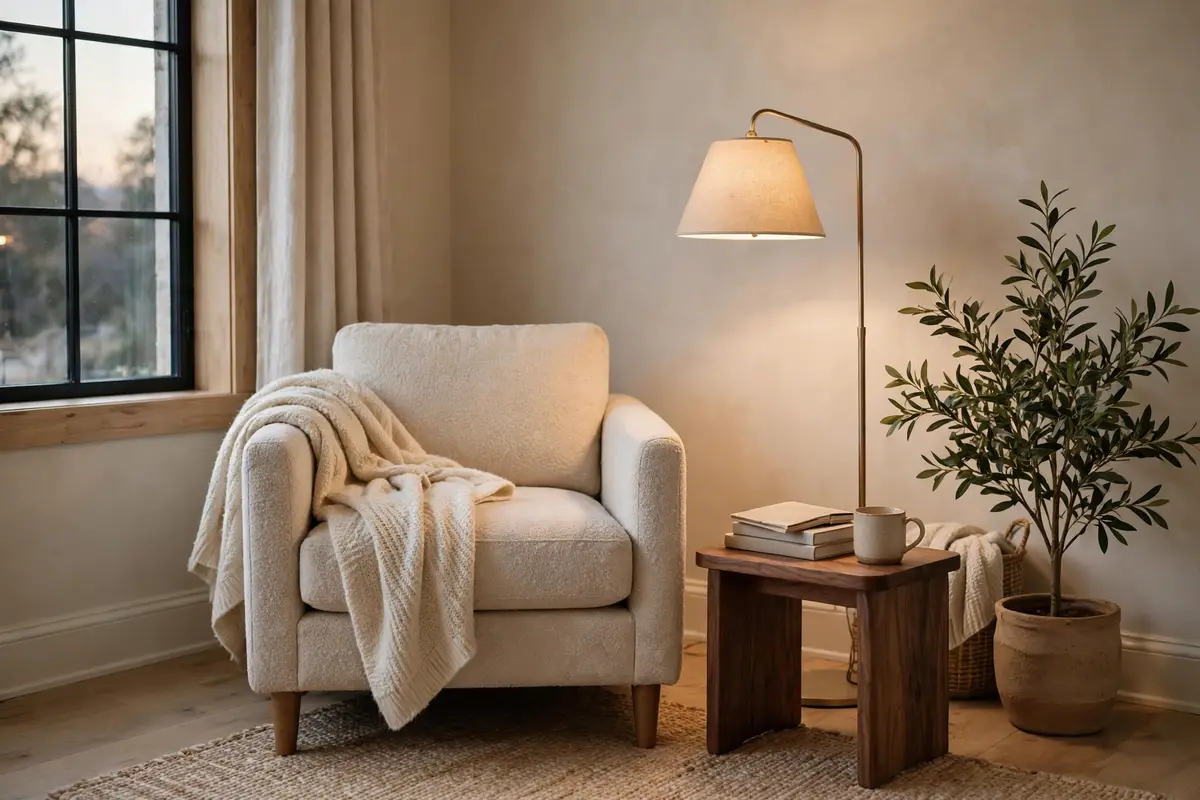
A comfortable living room should have spaces that support different activities without needing extra furniture everywhere.
If you have an unused corner or a little space beside a window, consider creating a reading nook. It can become a useful place for reading, enjoying coffee, or simply taking a break.
Follow these steps:
- Choose a compact accent chair that fits the available space.
- Add a small side table for a book, drink, or reading glasses.
- Position a floor lamp nearby to provide comfortable task lighting.
- Add one soft cushion or throw for extra comfort.
- Include a small basket underneath or beside the chair for books and blankets.
A window seat is another practical option if your home has a suitable window area. Add a fitted cushion and a few washable covers to make it comfortable.
Quick Tip: In a small apartment, use an existing armchair rather than buying another one. A different cushion and a nearby lamp can create the feeling of a separate relaxation zone.
Measure the corner before purchasing anything. Keep enough room to move around comfortably, and choose pieces that can serve another purpose if your needs change.
Make the Room Budget-Friendly and Renter-Friendly
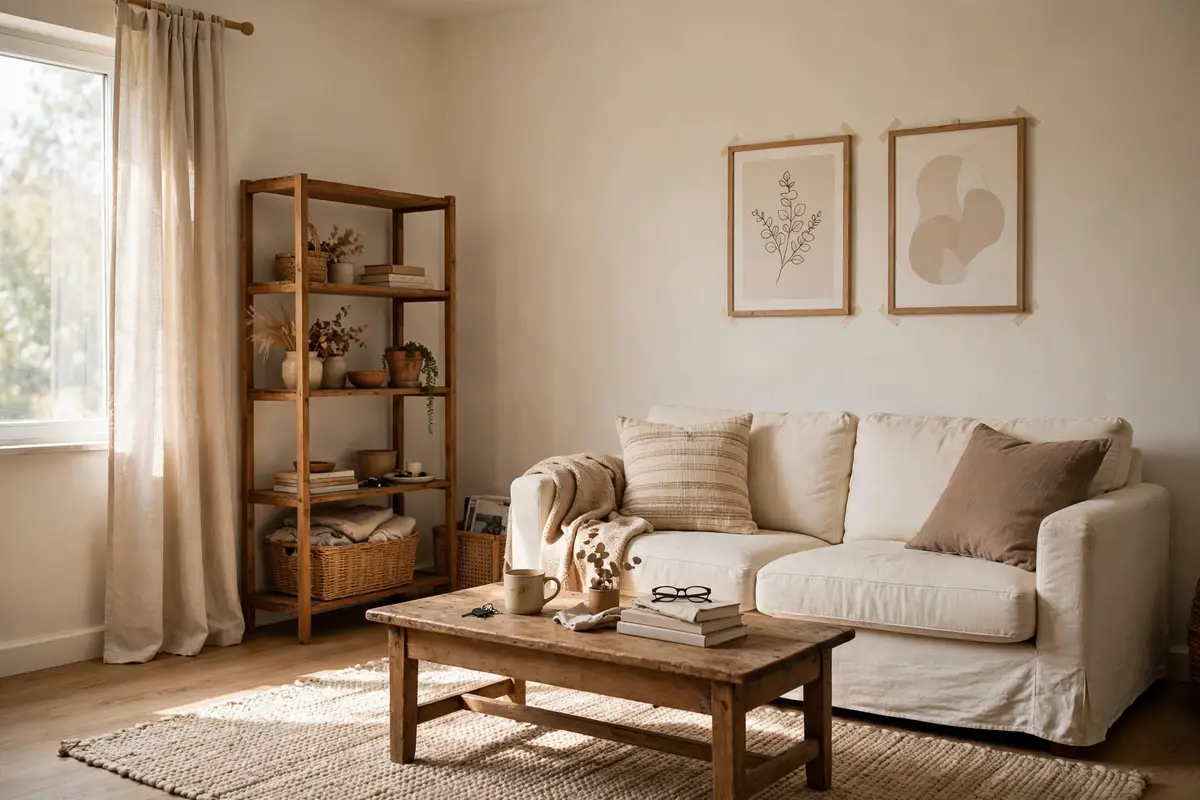
A comfortable, uncluttered home does not require expensive designer furniture. Small changes can make an existing room feel more organized and welcoming.
The best budget approach is to work with what you already own before buying anything new.
Try these affordable swaps:
- Replace several small decorative objects with one larger statement piece.
- Use cushion covers instead of purchasing a new sofa.
- Refresh an old coffee table with sanding and a suitable wood finish.
- Shop secondhand for solid wood furniture.
- Use inexpensive baskets to organize loose belongings.
- Rearrange existing furniture to improve the room’s layout.
- Replace cool-toned bulbs with warm white lighting.
- Choose removable artwork and peel-and-stick accents for rental properties.
For renters, freestanding bookcases, non-permanent hooks, tension rods, and furniture with built-in storage offer flexibility without major changes.
Before: An outdated living room with mismatched accessories, visible cables, and crowded surfaces.
After: The same room with fewer accessories, organized storage, coordinated cushions, warm lighting, and a clearer furniture arrangement.
Set a small decorating budget and divide it into priorities. Spend first on items you use every day, such as seating and lighting. Save money on accessories by shopping secondhand or reusing pieces you already have. Make one improvement at a time rather than buying everything together.
Keep Your Minimal Decor Practical for Kids and Pets
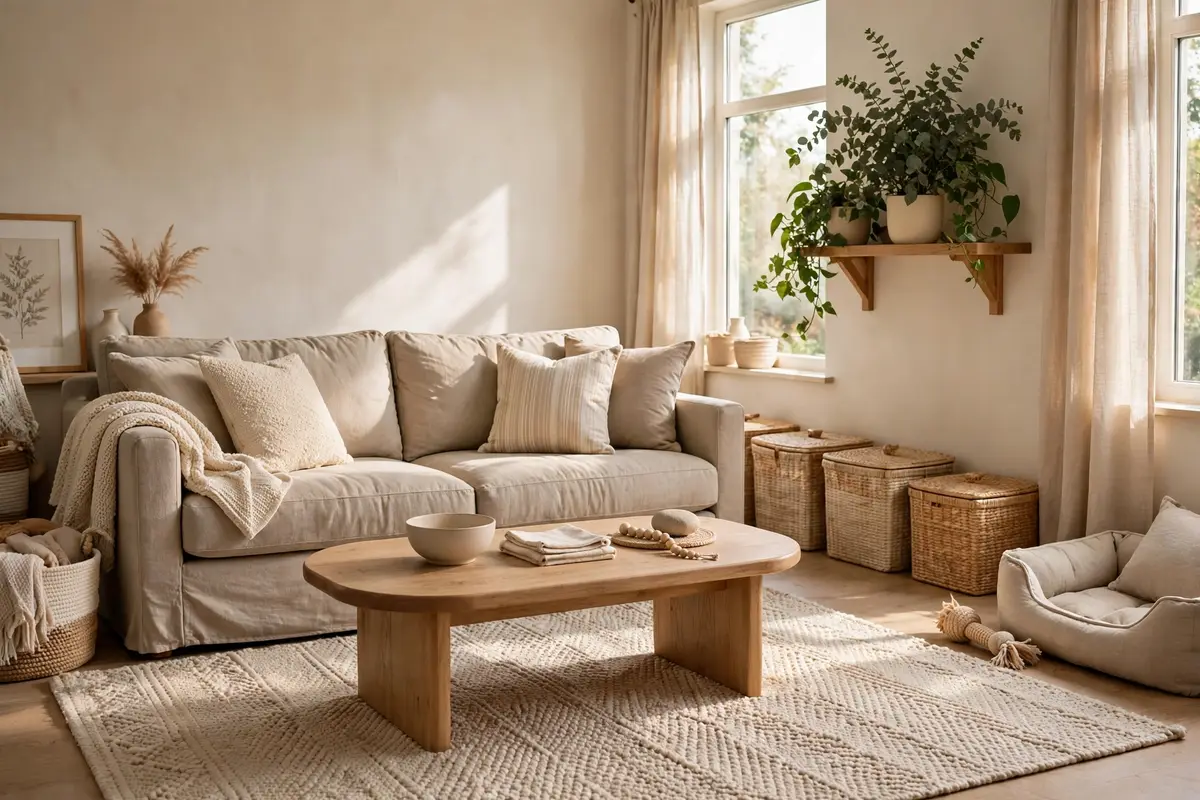
A clean living room should work for the people and pets who use it every day. You do not need to remove every personal item or choose uncomfortable furniture to maintain an organized appearance.
The key is selecting practical materials and giving everyday belongings a designated place.
For households with children, consider:
- Washable cushion covers and removable sofa fabrics.
- Rounded coffee table corners to reduce bumps.
- Closed baskets for toys, books, and games.
- Durable rugs that can handle spills.
- Wall-mounted shelves secured safely to suitable supports.
For pet owners, look for:
- Tightly woven upholstery that is easier to clean.
- Washable throws to protect seating areas.
- Rugs that do not trap excessive pet hair.
- Closed storage for toys, treats, and grooming supplies.
- Stable furniture that will not tip easily.
Do This: Keep frequently used toys in one attractive basket and choose furniture that can handle everyday activity.
Avoid This: Using delicate fabrics, unstable decorative objects, or easily damaged accessories in busy areas.
Clean surfaces and practical storage can coexist with family life. Start by identifying the items your household uses most, then make them easy to access and easy to put away. This creates a room that stays welcoming without requiring constant tidying.
Conclusion
Creating a warm minimalist living room is about making thoughtful choices, not removing everything you love. Start with a soft neutral palette, choose useful furniture, introduce natural textures, and build comfortable lighting throughout the space.
You can make meaningful improvements without spending much money. Rearrange existing furniture, organize visible clutter, add washable textiles, and choose storage that suits your household.
Remember that a successful minimalist living room should feel comfortable, personal, and practical every day. Save this guide to Pinterest so you can revisit your favorite ideas, try the steps at your own pace, and share it with someone planning a living room refresh.