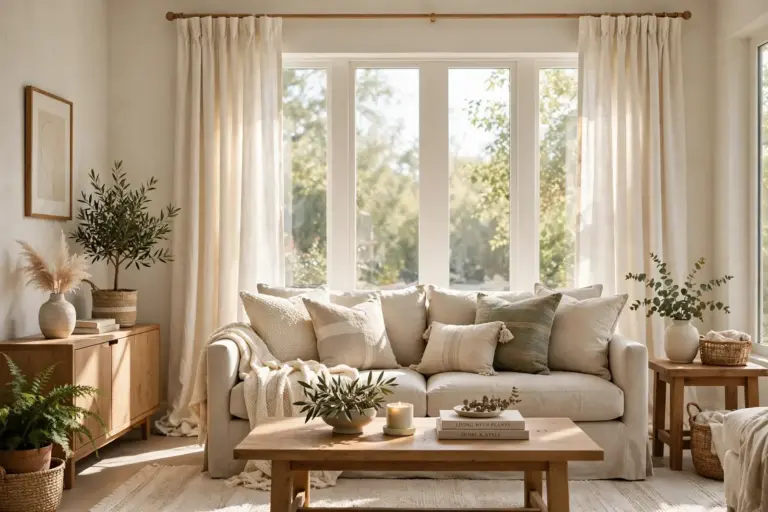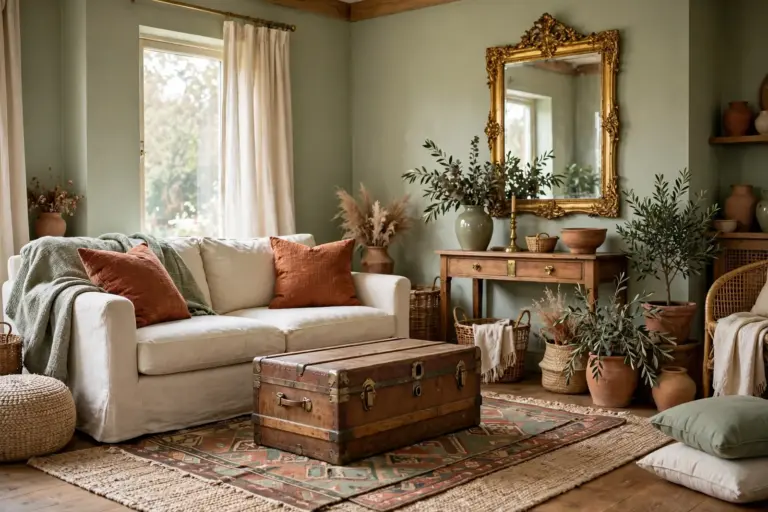
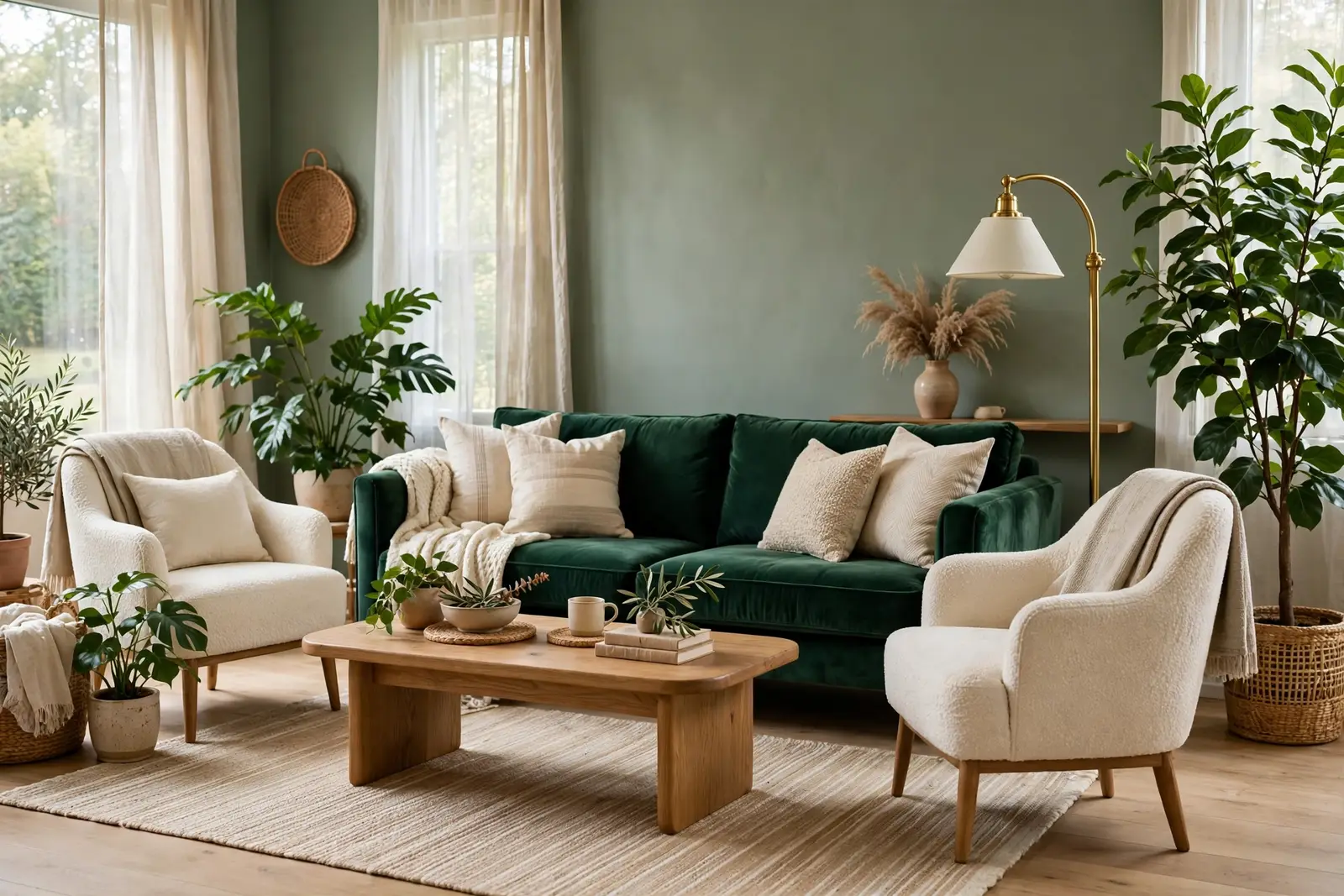
Why Do These 24 Green Living Rooms Feel So Refreshing?

A fresh, welcoming home often starts with the colors you choose. A green living room can bring a calming connection to nature while making everyday spaces feel warmer, brighter, and more inviting.
From soft sage walls and earthy olive accents to rich emerald furniture and leafy botanical details, green offers plenty of decorating possibilities. The secret is finding the right shade, balancing it with complementary colors, and choosing textures that make the room feel comfortable rather than overwhelming. Whether you’re decorating a small apartment, refreshing a rental, or updating your family living space, these 24 ideas offer practical inspiration you can adapt to your budget, furniture, and personal style.
1. Soft Sage Walls
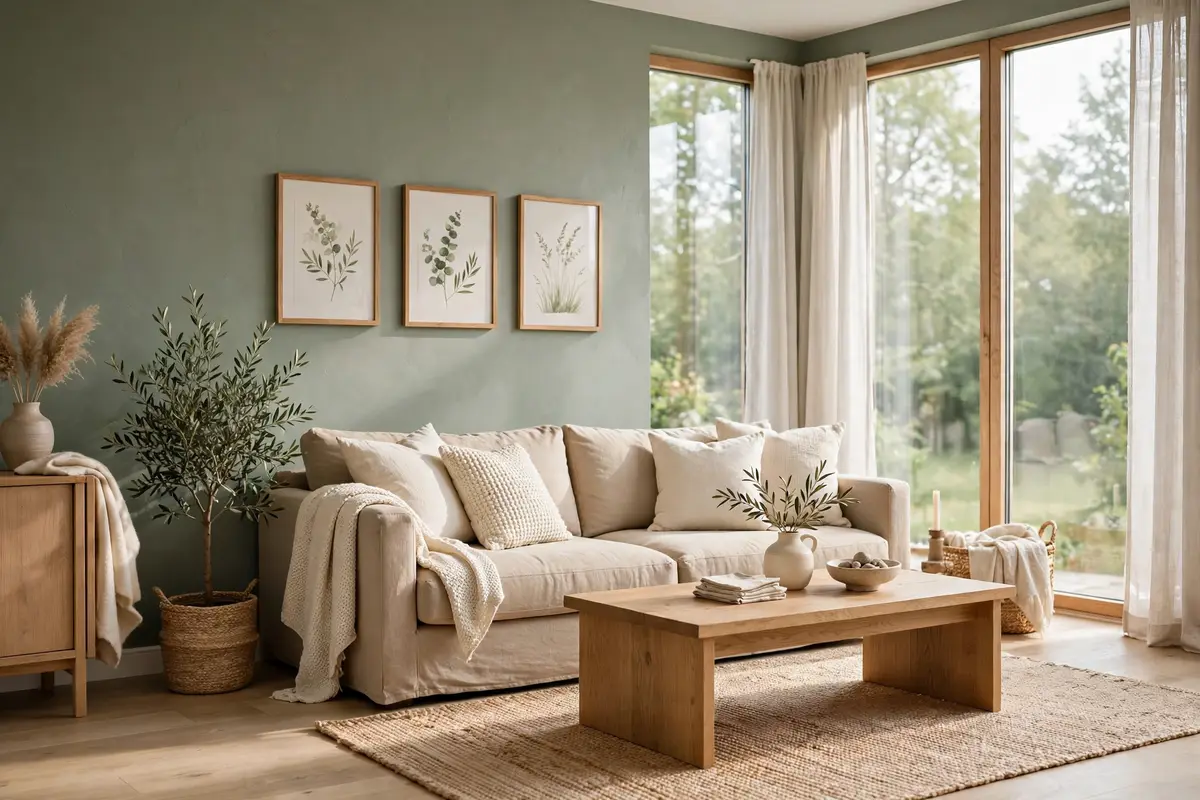
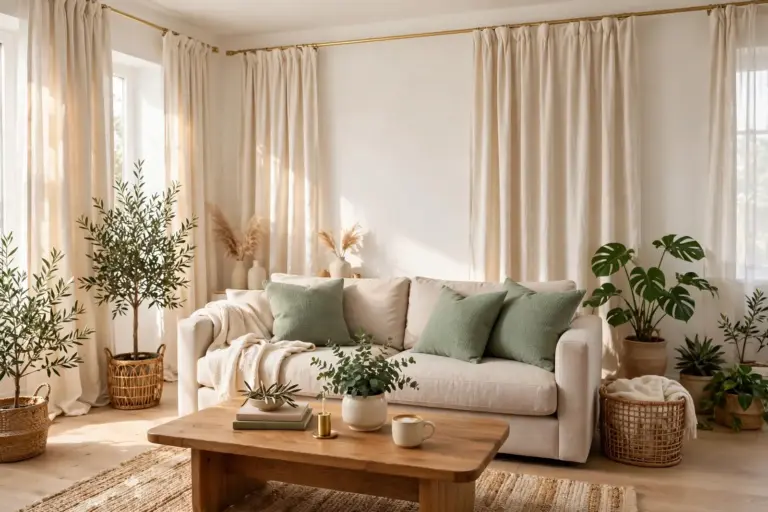
Soft sage creates a peaceful backdrop without making a living area feel dark or heavy. Its muted undertones work especially well with cream, beige, warm white, and natural wood.
Start by painting the largest wall surface in a gentle sage shade. Choose a sofa in a lighter neutral color to keep the room feeling open. Oak furniture and woven accessories introduce warmth, while a few darker green cushions add definition.
In my experience, sage works particularly well in rooms that receive plenty of natural daylight. It also makes a practical choice for renters who want a soothing color scheme they can recreate through removable decor and smaller furniture pieces.
2. Olive And Leather
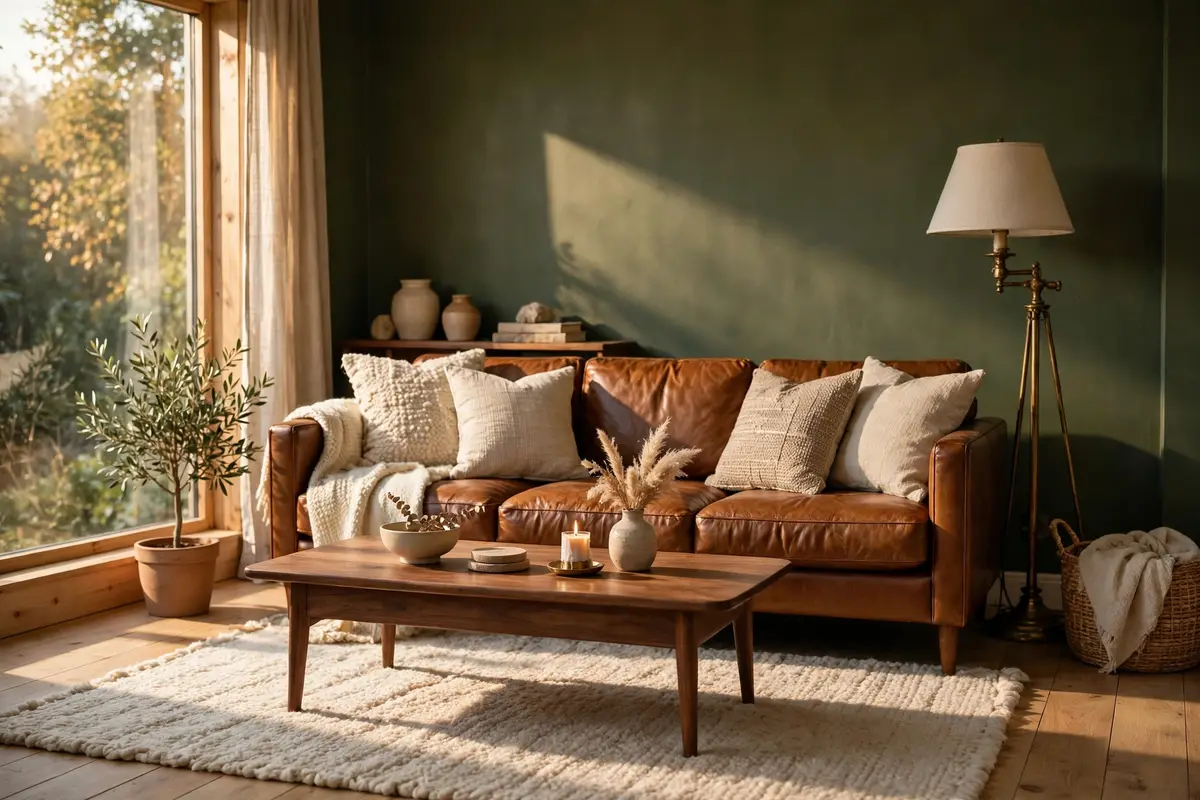
Olive and leather bring an earthy richness that feels comfortable rather than overly formal. The combination works because both colors have warm undertones, creating a naturally connected palette.
- Choose muted olive paint instead of a bright yellow-green shade.
- Add a cognac or caramel leather sofa as the main seating piece.
- Introduce walnut or dark oak furniture for additional warmth.
- Use cream cushions to soften the stronger colors.
- Finish with brass lamps or small vintage-inspired accessories.
Keep the larger furniture pieces simple so the color combination remains the main attraction. A textured rug can help connect the leather, painted walls, and wooden furniture without introducing another dominant shade.
3. Emerald And Brass
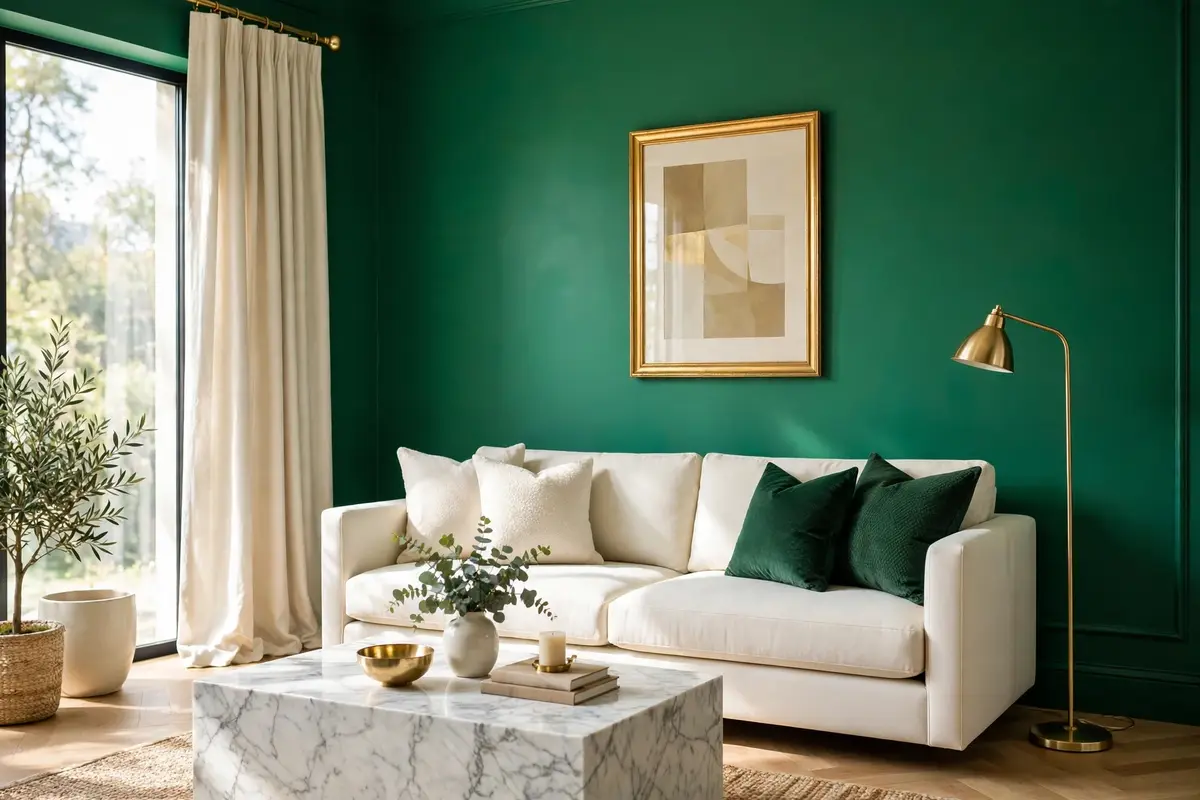
Quick Tip: Pair emerald green with warm ivory and brushed brass to create a rich, balanced atmosphere. Keep the largest furniture pieces light, then introduce metallic details through lighting, picture frames, and small decorative objects.
Emerald is a strong color, so it needs breathing room. A cream sofa or pale rug prevents the darker walls from dominating the entire space. Choose a few brass accents rather than covering every surface in gold finishes. This keeps the room looking polished, comfortable, and suitable for everyday living.
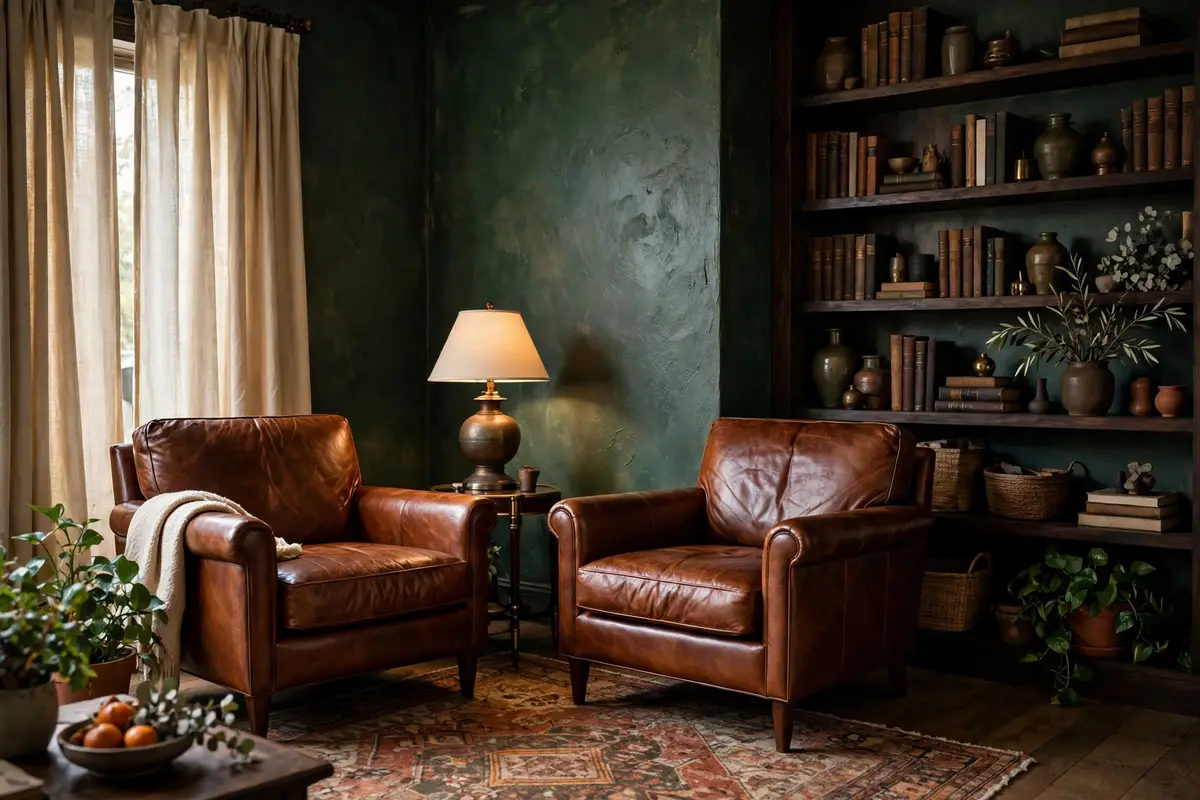
4. Forest And Cognac
BEFORE
The room has pale walls, mismatched furniture, and little visual contrast. The seating area feels disconnected, while the accessories lack a consistent color direction.
AFTER
Forest green walls create a deeper backdrop, while cognac seating introduces warmth. Dark wood furniture and a cream rug balance the stronger shades without making the space feel too dramatic.
The important detail is lighting. Use a combination of floor lamps, table lamps, and warm bulbs to prevent deep green paint from looking flat in the evening. This combination suits larger living areas particularly well, although a single forest green feature wall can work in smaller rooms.
5. Terracotta Touches
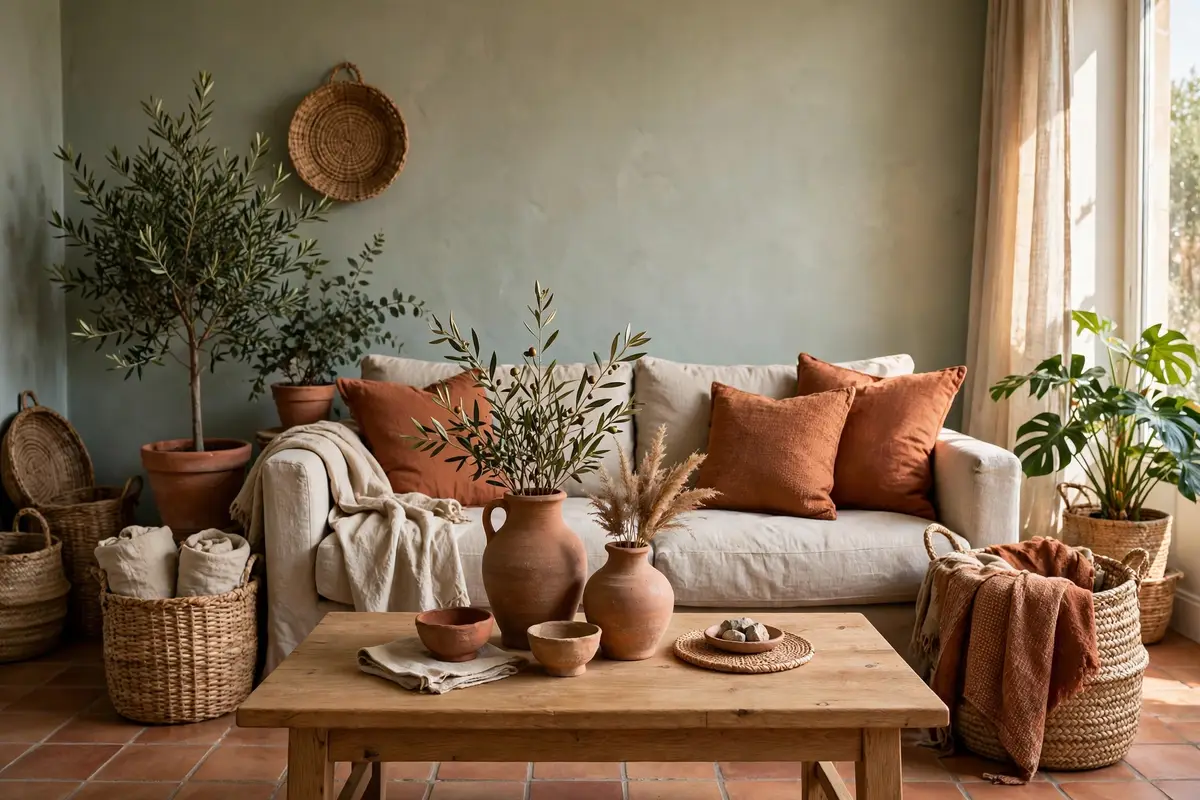
Terracotta brings an unexpected warmth to green interiors. Its rusty orange undertones create contrast without making the overall color scheme feel overly colorful.
- Begin with muted green walls or a green accent chair.
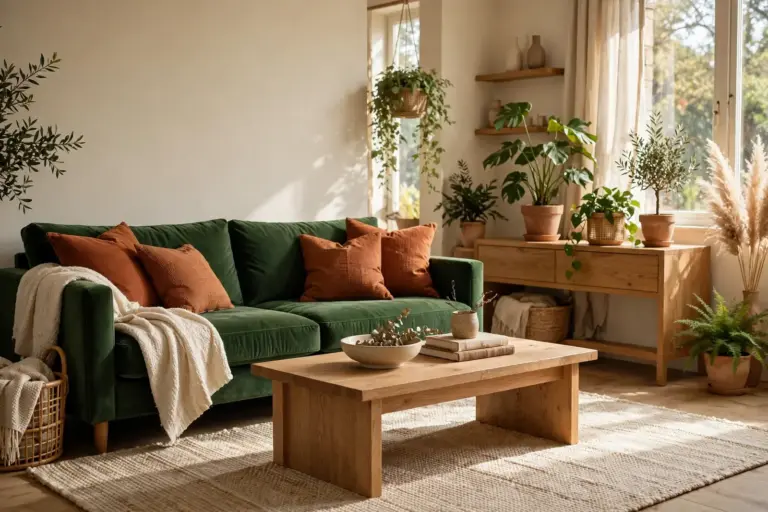
- Add two terracotta cushions in slightly different shades.
- Place a handmade ceramic vase on the coffee table.
- Introduce a natural fiber rug to connect the colors.
Keep terracotta concentrated around the seating area rather than distributing it randomly. A few repeated accents make the palette feel intentional. For a budget-friendly update, start with cushion covers and pottery before investing in larger furniture or repainting the walls.
6. Green And Gray
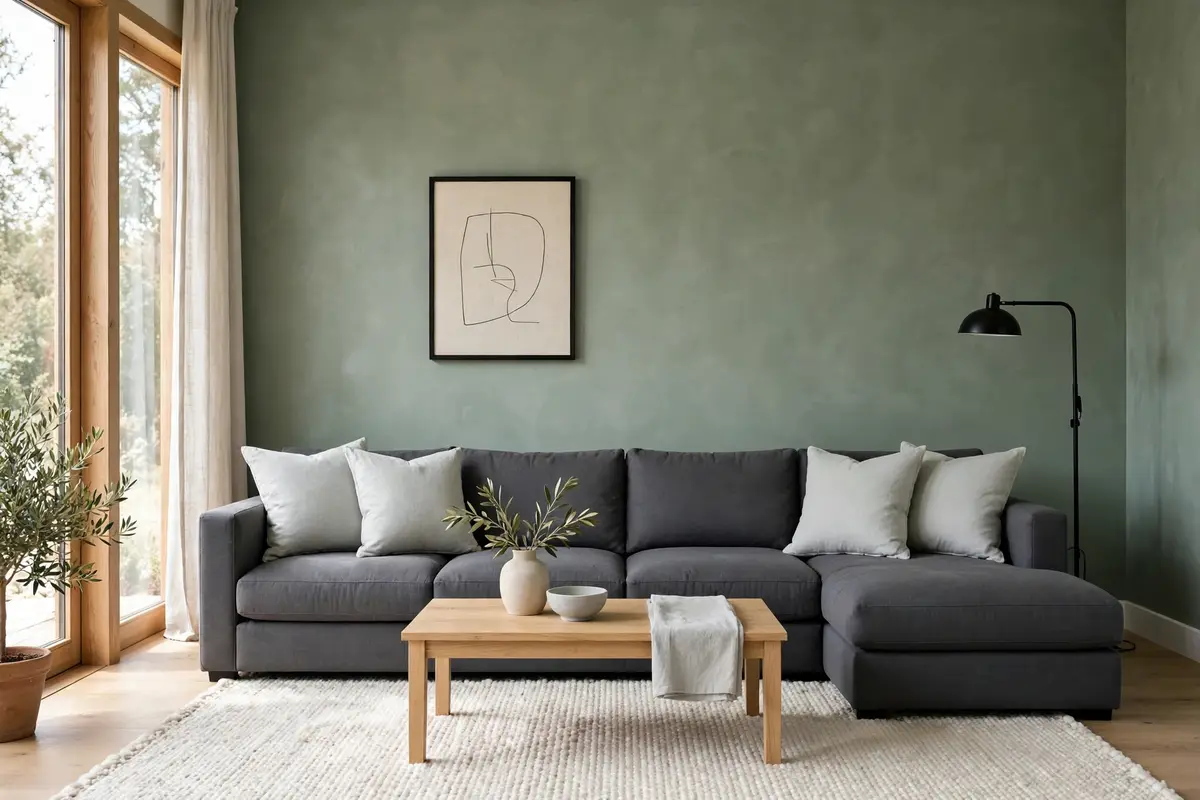
Option A: Green and light gray
Wall color: Soft sage or dusty green.
Sofa: Pale gray fabric.
Accessories: Cream, white, and natural wood.
Overall effect: Light, relaxed, and understated.
Option B: Green and charcoal
Wall color: Deep olive or forest green.
Sofa: Dark charcoal upholstery.
Accessories: Brass, walnut, and warm ivory.
Overall effect: Dramatic, grounded, and contemporary.
Both combinations work beautifully, but the room’s lighting should guide your choice. Light gray is useful in compact spaces, while charcoal creates stronger contrast in rooms with generous natural light.
7. Botanical Backdrop
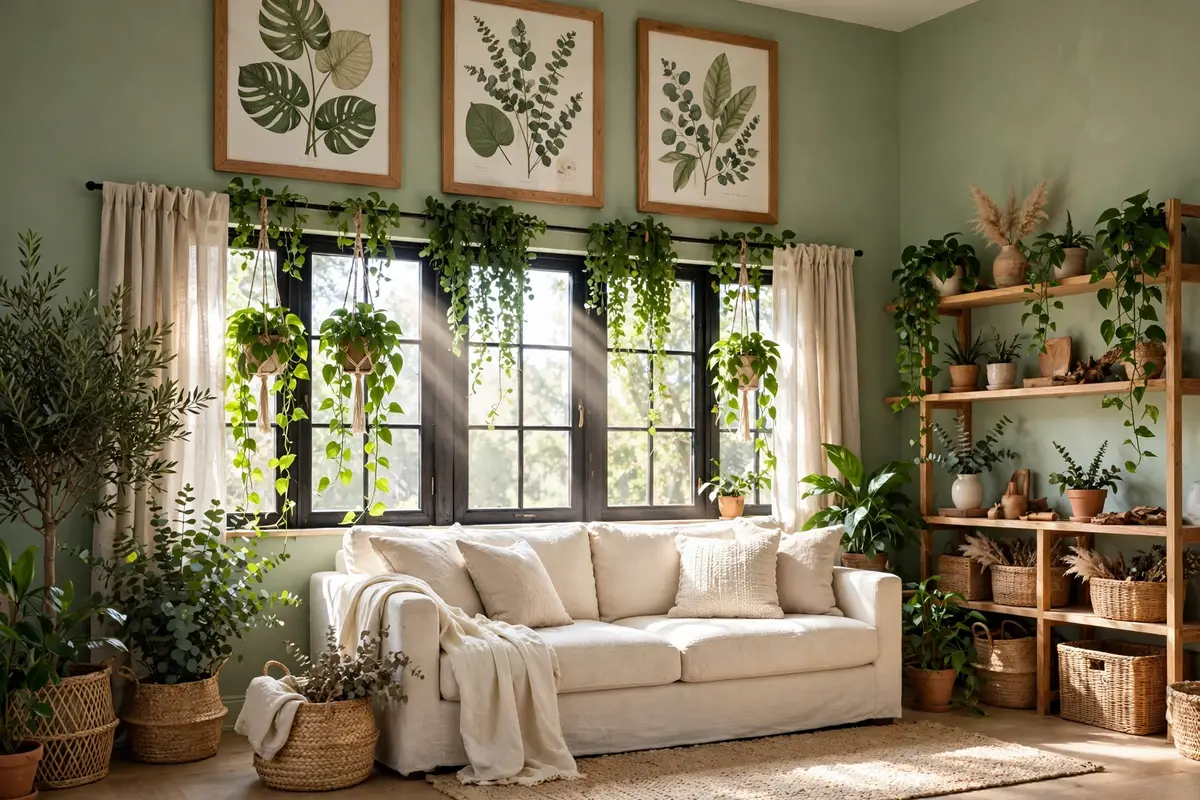
DO
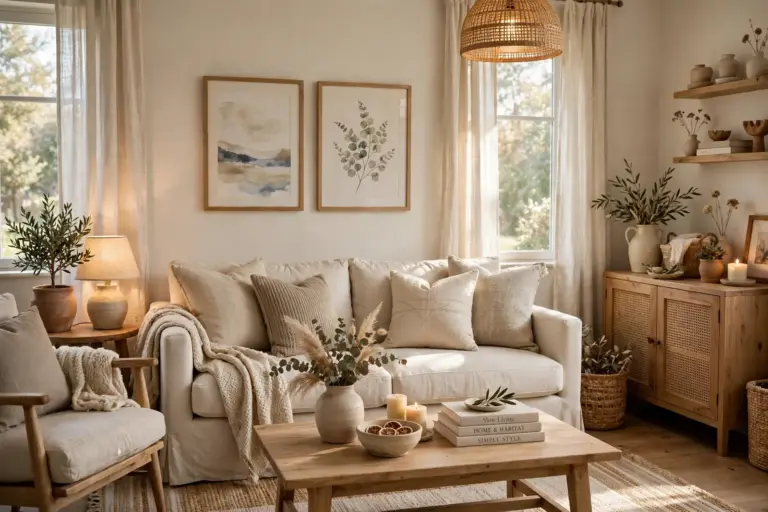
- Group botanical prints in matching wooden frames.
- Choose plants with different leaf shapes and sizes.
- Keep the sofa and curtains in neutral fabrics.
- Repeat natural wood finishes across shelves and furniture.
DON’T
- Cover every wall with competing botanical patterns.
- Place too many plants in one crowded corner.
- Mix several unrelated green undertones.
- Forget to check the light requirements of real plants.
A botanical theme feels most natural when the greenery has room to breathe. Combine framed artwork with a few healthy plants, then leave some open wall space. The result feels connected to nature without making the room resemble an indoor greenhouse.
8. Velvet Statement Sofa
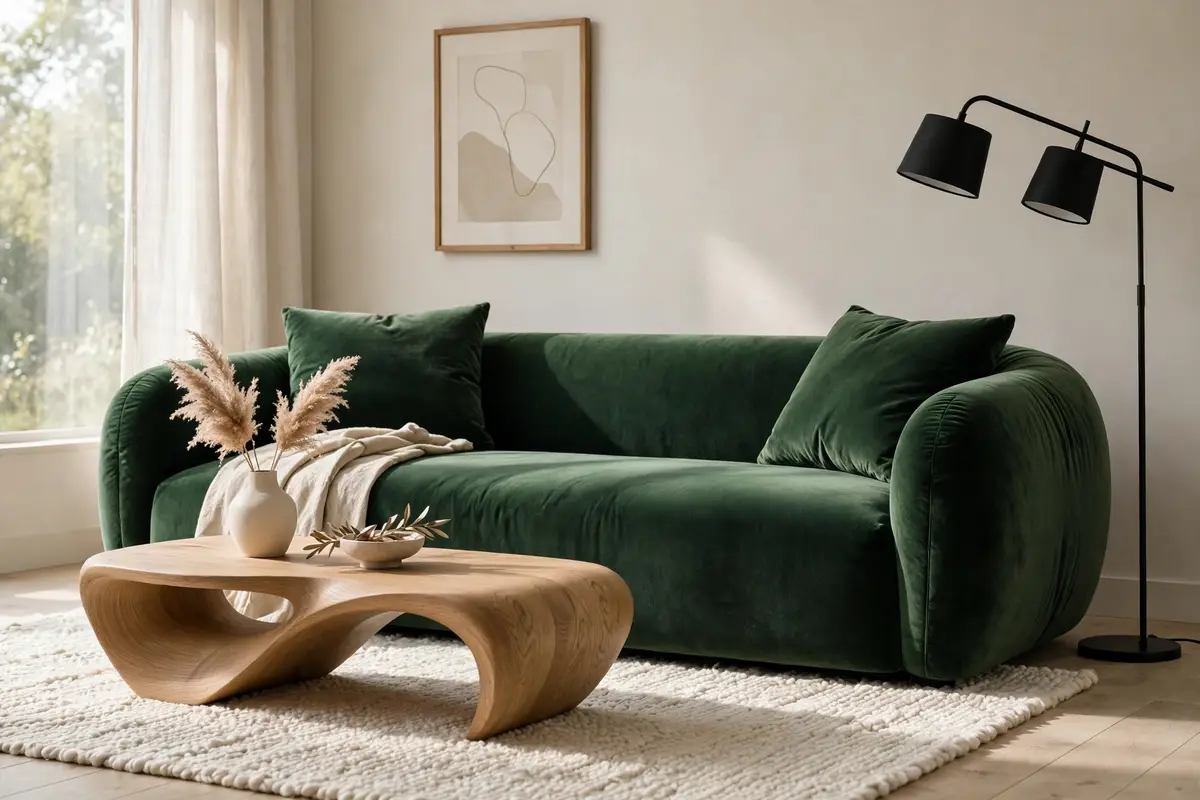
Cost: Medium to high, depending on sofa size and upholstery.
Time: One afternoon for a simple furniture refresh.
Skill Level: Beginner-friendly.
Best For: Neutral rooms needing a strong focal point.
A velvet sofa can introduce color without requiring painted walls or major renovations. Keep surrounding furniture understated so the upholstery receives attention. In smaller apartments, choose a compact two-seater with raised legs. This creates a lighter visual footprint while keeping the rich fabric as the room’s central feature.
9. Layered Green Textiles
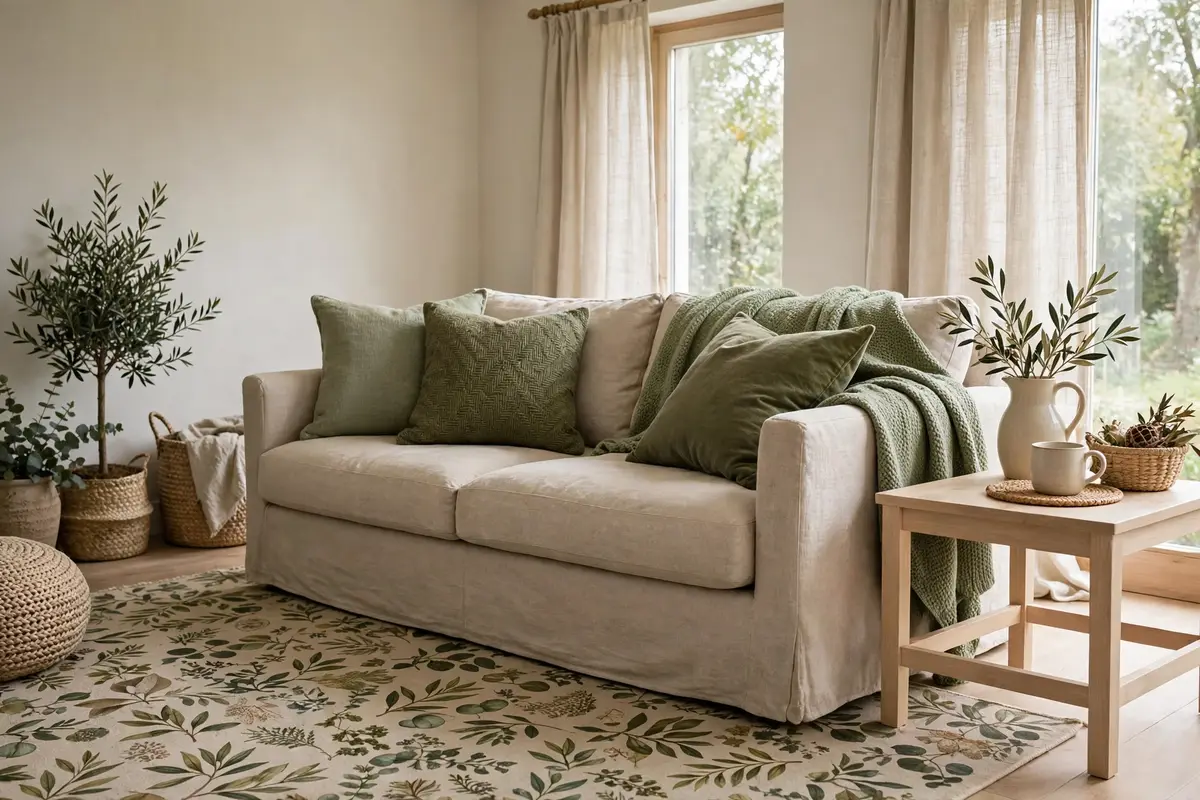
Some of the easiest color updates happen through fabric rather than paint. Layered textiles let you introduce several shades of green while keeping the walls and larger furniture neutral.
Start with three cushion colors: pale sage, medium moss, and deeper olive. Add a knitted throw across one sofa arm, then introduce a subtle green pattern through the rug. Repeat one shade in a small accessory, such as a lampshade or decorative bowl.
This approach is especially useful for renters. You can change the color scheme seasonally without repainting or replacing expensive furniture. Choose washable cushion covers if the seating area gets regular family use.
10. Leafy Plant Corners
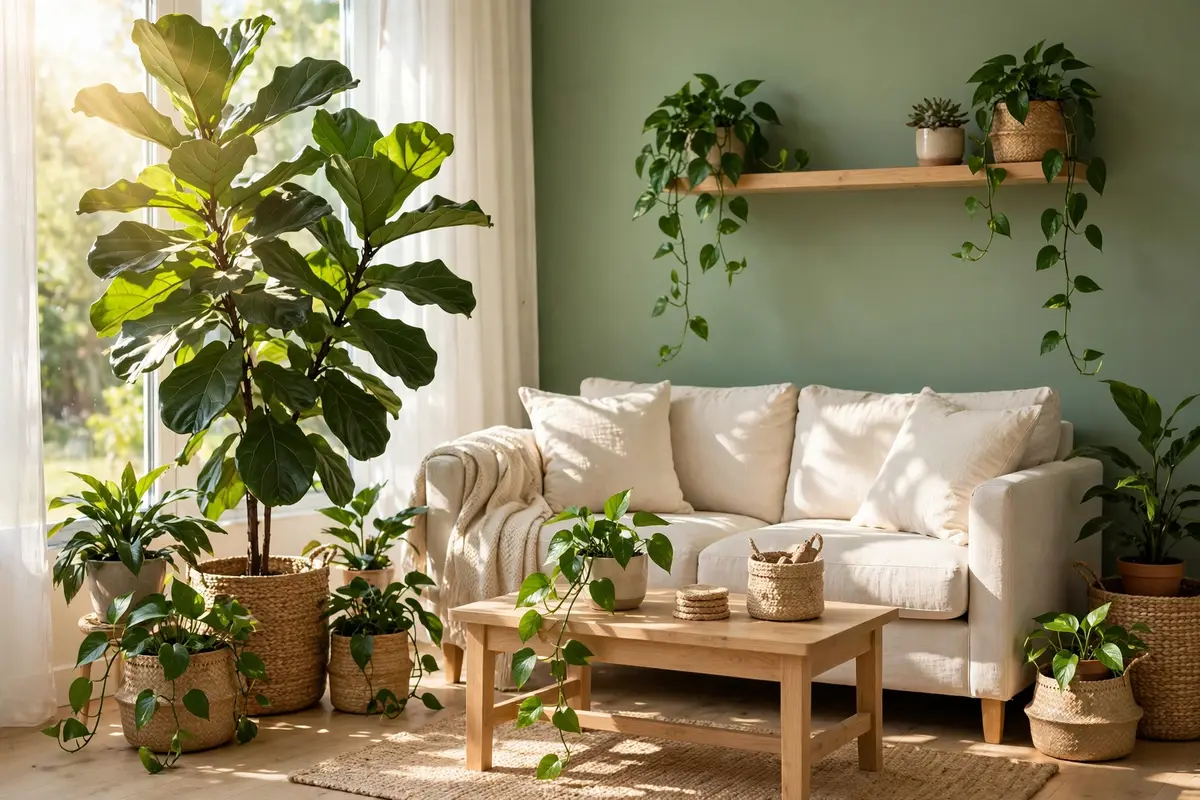
- Place a taller plant beside the sofa to add vertical interest.
- Use a trailing pothos on a shelf or bookcase.
- Group smaller plants on a sturdy side table.
- Choose ceramic or woven planters that complement existing finishes.
- Leave enough space around each plant for healthy growth.
Plants introduce natural variation that painted surfaces cannot fully reproduce. Their different leaf shapes add texture, while their placement helps fill empty corners without requiring more furniture.
Check sunlight, watering needs, and available floor space before buying new plants. A few healthy specimens usually look better than a crowded collection that becomes difficult to maintain.
11. Green Artwork
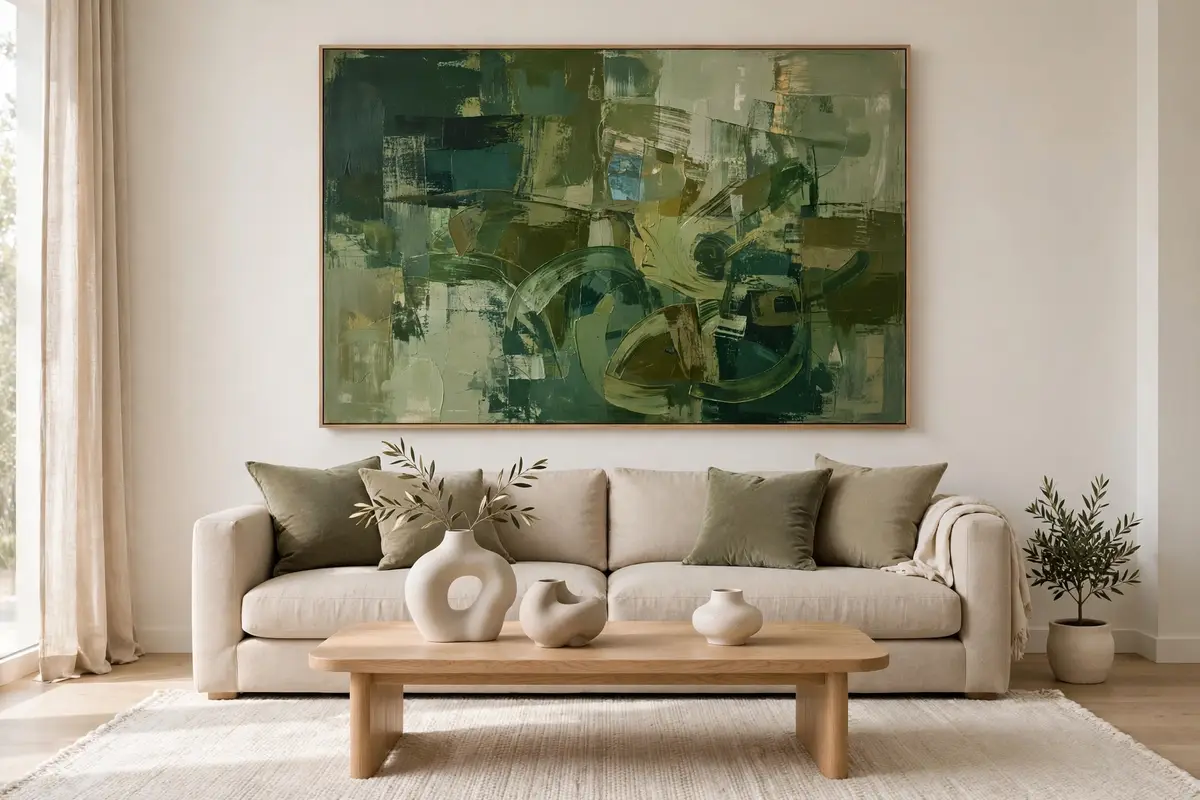
Quick Tip: Choose artwork that includes at least two shades already present in your furniture or accessories. Hang the center of the artwork approximately at eye level, adjusting slightly for the height of your sofa.
Large artwork can establish a color scheme without changing the walls. Look for abstract landscapes, botanical illustrations, or simple geometric prints. A natural wood frame introduces warmth, while a slim black frame creates sharper contrast. Repeat one color from the artwork in your cushions or vase for a connected finish.
12. Accent Chair Focus
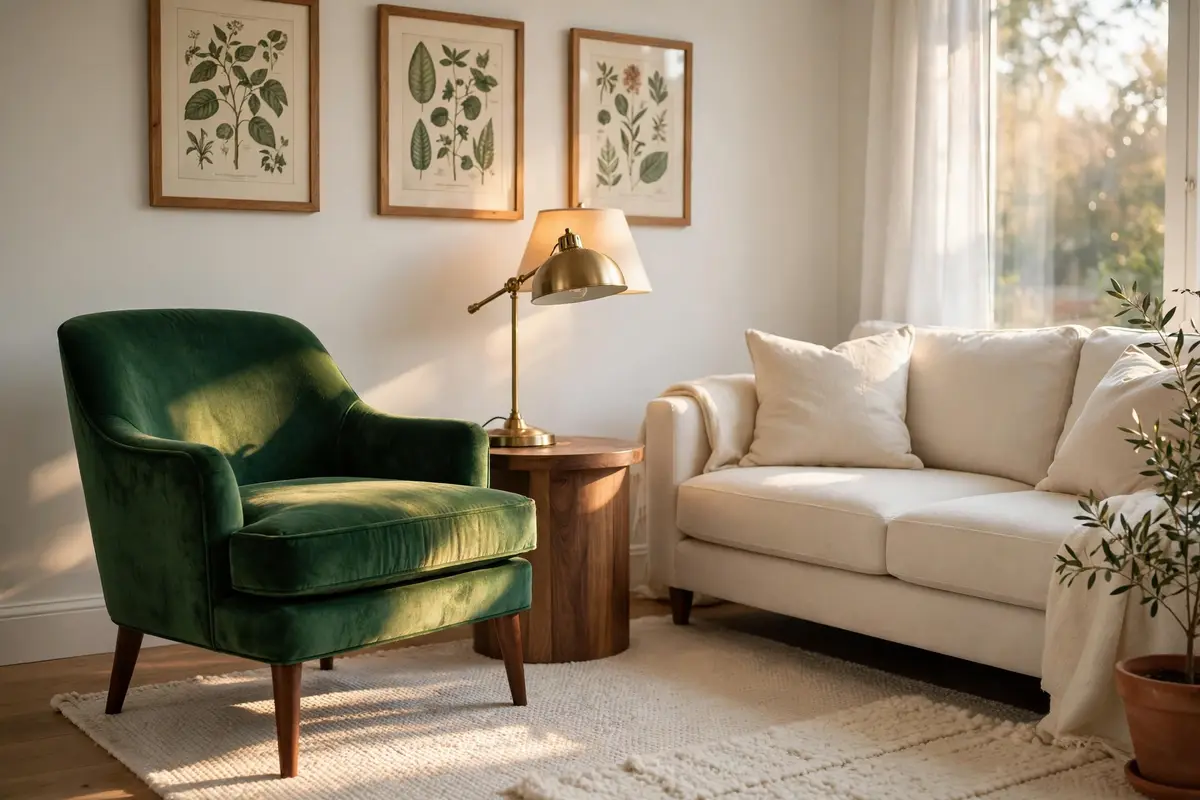
BEFORE
A neutral sofa and matching accessories make the seating area feel a little predictable. There is no clear focal point, and the furniture blends into the pale background.
AFTER
An emerald or moss green accent chair adds an immediate focal point. A small wooden side table and warm reading lamp turn the chair into a useful, comfortable corner.
Choose a chair shape that complements your existing sofa rather than competing with it. Rounded upholstery works well with softer interiors, while clean-lined designs suit modern rooms. Keep a practical walkway around the chair so the new focal point does not interrupt everyday movement.
13. Painted Ceiling
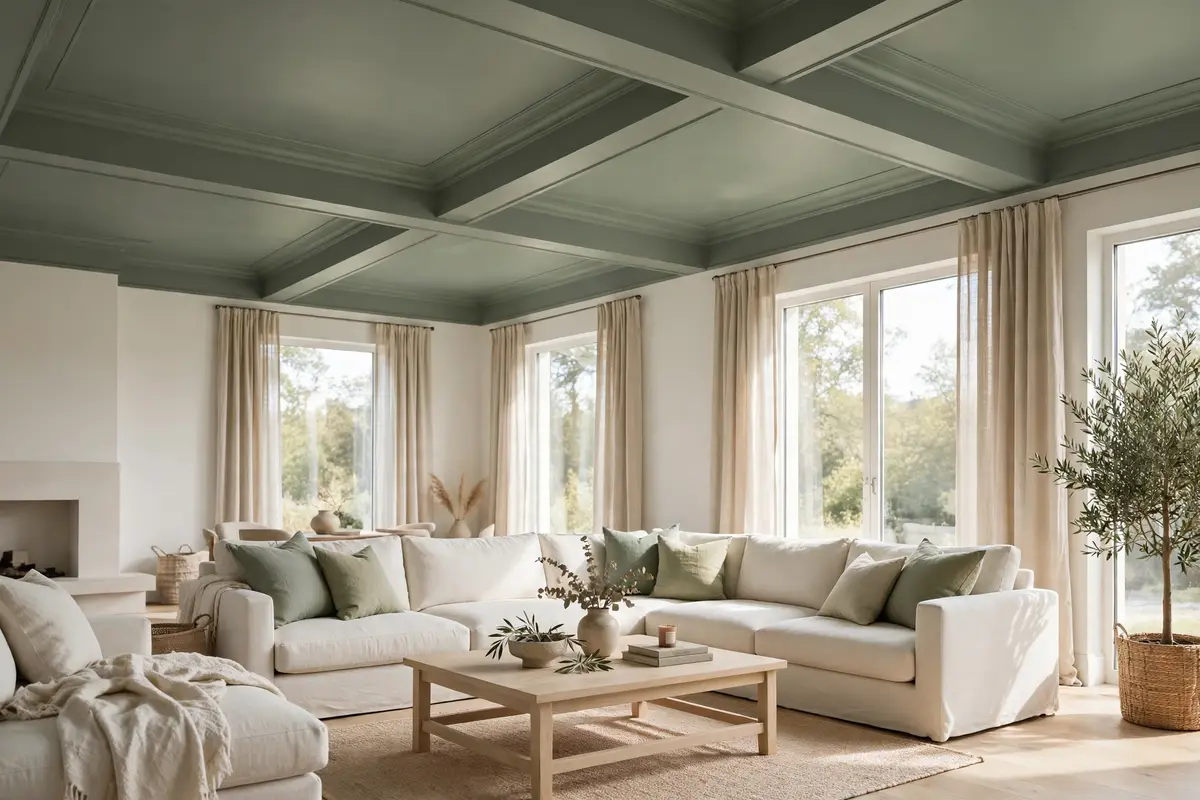
A colored ceiling draws the eye upward and gives an ordinary room a distinctive finish. Sage, pale eucalyptus, and soft olive are particularly attractive choices for this decorating technique.
- Test several paint samples under daytime and evening lighting.
- Choose a muted shade that complements the walls.
- Protect furniture and flooring before painting.
- Use an appropriate ceiling paint and finish.
- Repeat the ceiling color in two or three small accessories.
A lighter ceiling shade helps maintain an open atmosphere, especially in rooms with standard-height ceilings. If painting is not allowed, consider removable ceiling decor or repeat the color through lampshades and upper shelving instead.
14. Mixed Green Shades
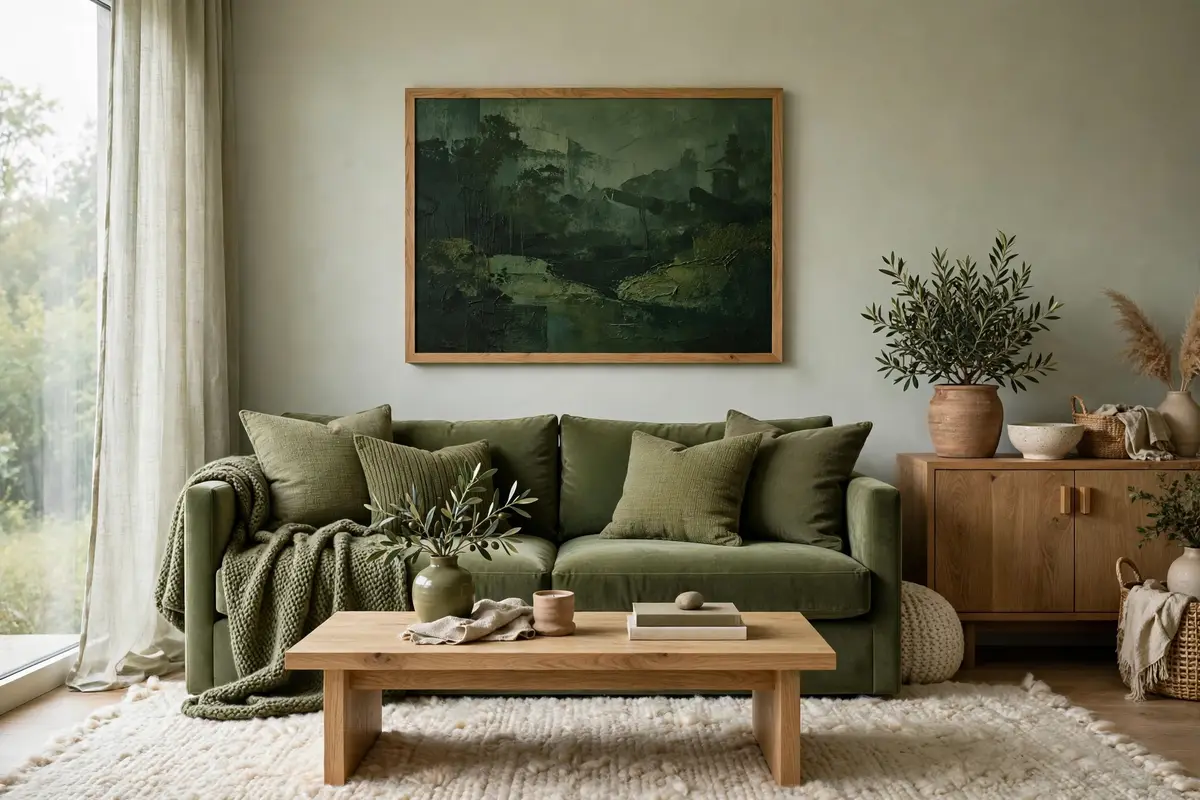
Option A: Closely related shades
Sage walls with moss cushions.
Olive accessories with muted green artwork.
Pale eucalyptus curtains with natural wood.
Option B: Strong tonal contrast
Deep forest walls with a light sage sofa.
Emerald accents with pale neutral textiles.
Dark green artwork with warm cream upholstery.
Closely related shades create a softer, quieter result, while contrasting tones bring more visual drama. Whichever direction you choose, include warm neutrals to separate the greens. This prevents the room from looking like one continuous block of color and gives each furniture piece its own definition.
15. Natural Wood Details
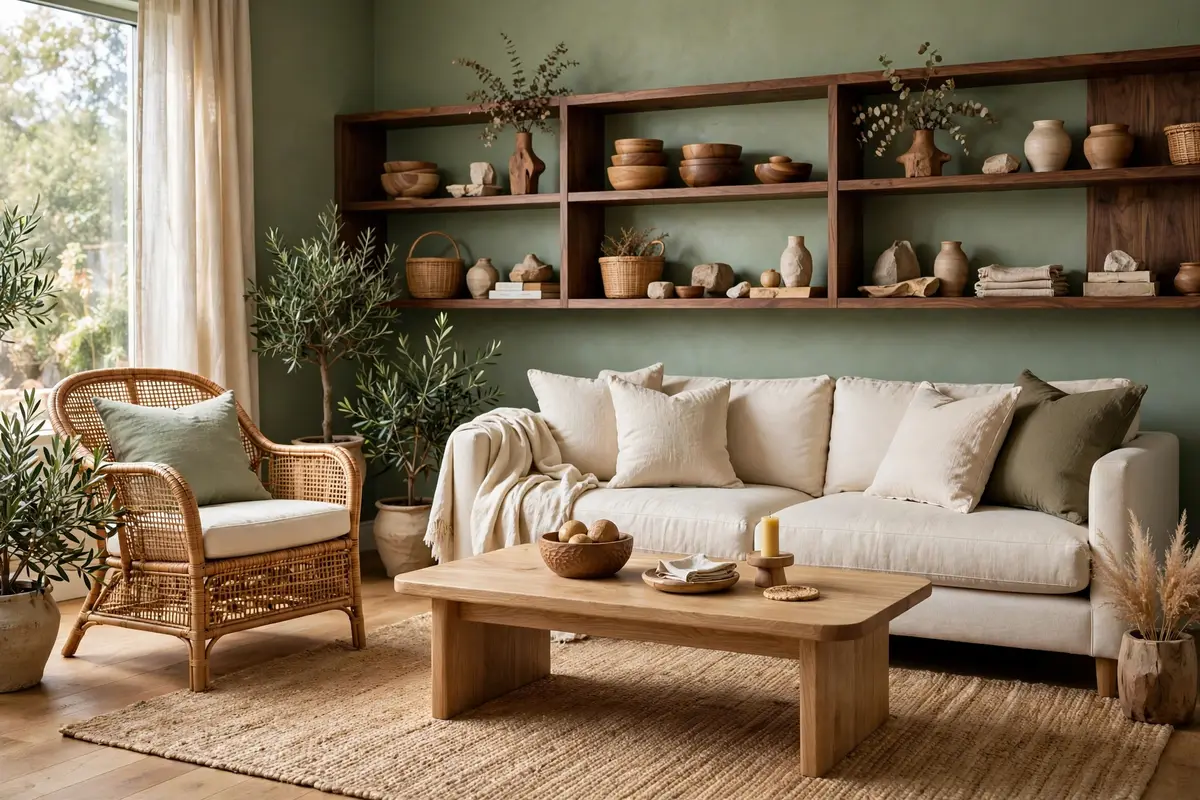
DO
- Combine light oak with softer green paint.
- Use walnut accents to introduce darker contrast.
- Include woven rattan baskets or occasional furniture.
- Choose natural wood finishes that share similar undertones.
DON’T
- Mix too many competing wood colors.
- Cover every surface with decorative objects.
- Use overly glossy finishes alongside rustic textures.
- Forget the practical needs of frequently used furniture.
Natural materials help green interiors feel grounded and comfortable. A wooden coffee table, woven chair, or simple oak shelf can add warmth without introducing additional strong colors. Repeat one or two finishes across the room for a consistent appearance that feels collected rather than overly coordinated.
16. Sage Serenity
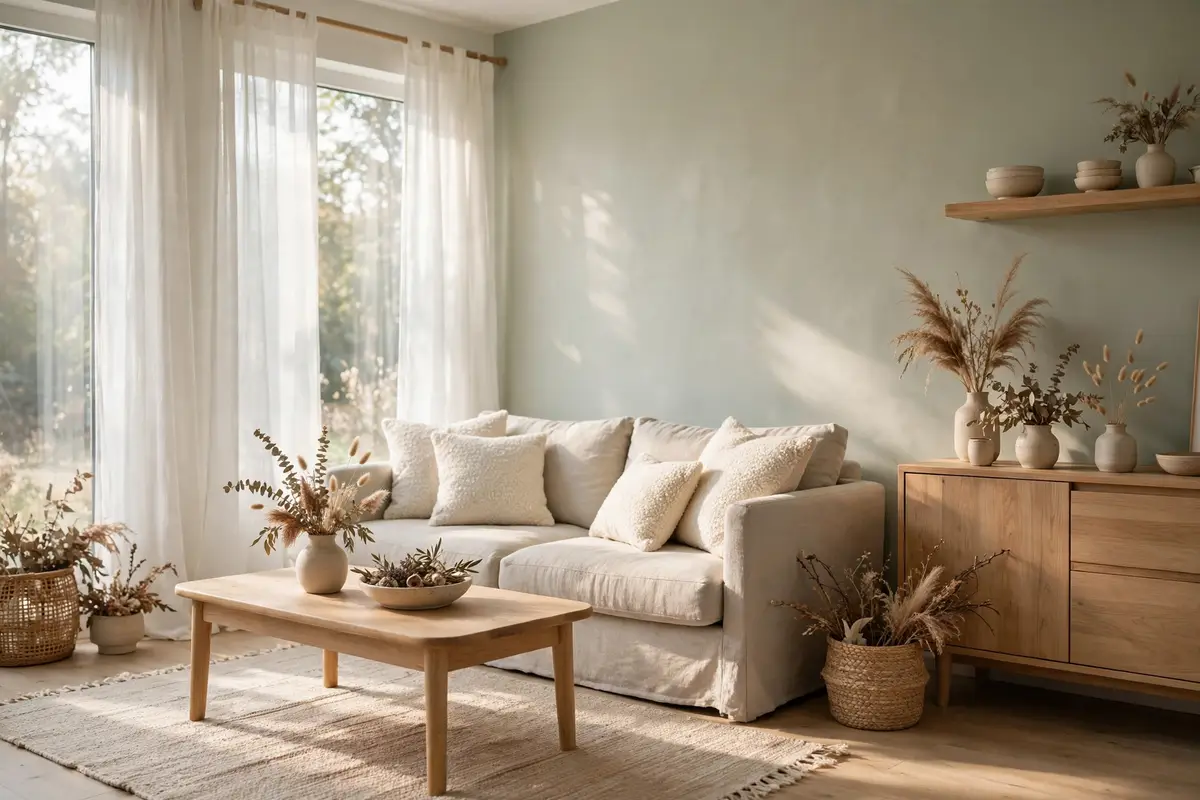
Cost: Low to medium, depending on whether you repaint or replace furniture.
Time: One weekend for painting and accessory updates.
Skill Level: Beginner-friendly.
Works In: Apartments, bedrooms with seating areas, and compact lounges.
The secret to a serene palette is restraint. Keep the larger pieces in soft neutrals and introduce green through the walls, cushions, and a few carefully chosen accessories. Avoid adding too many contrasting patterns. The room should feel restful, with enough texture to remain interesting throughout the day.
17. Emerald Elegance
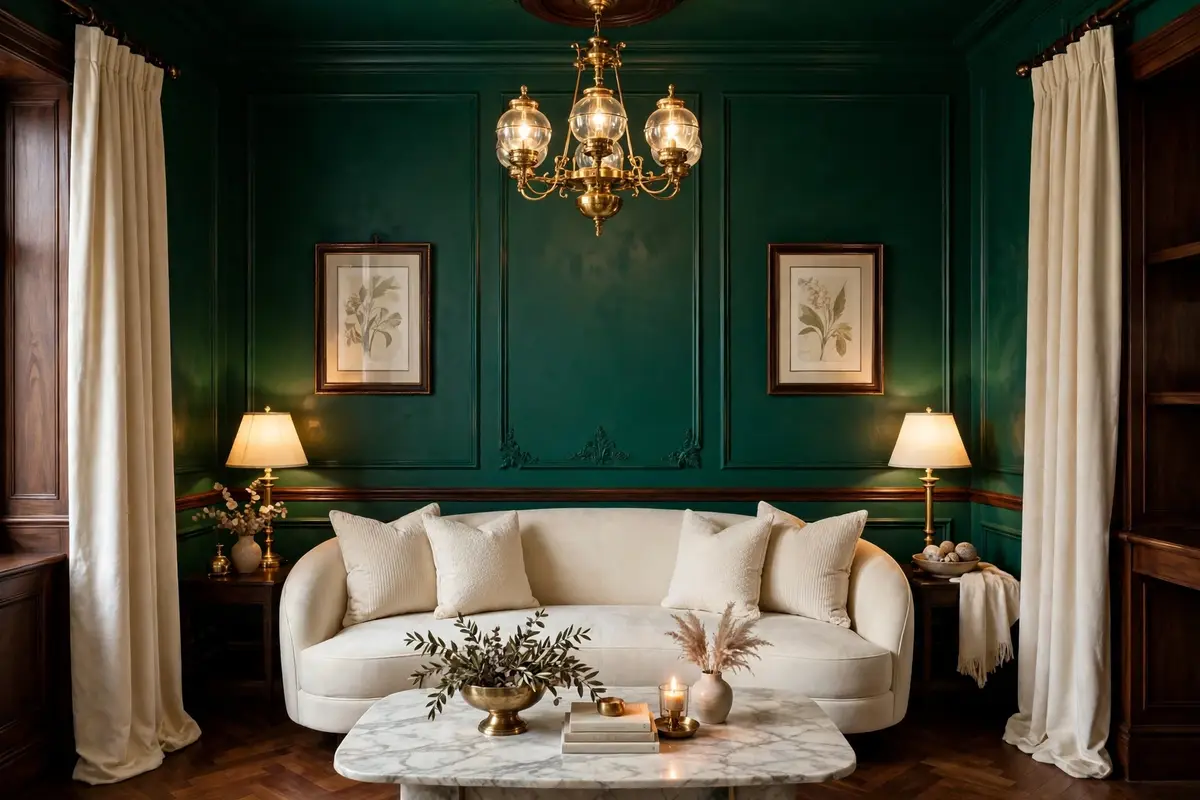
Emerald brings a more dramatic character than softer botanical shades. It works especially well with cream upholstery, marble surfaces, and brushed brass details.
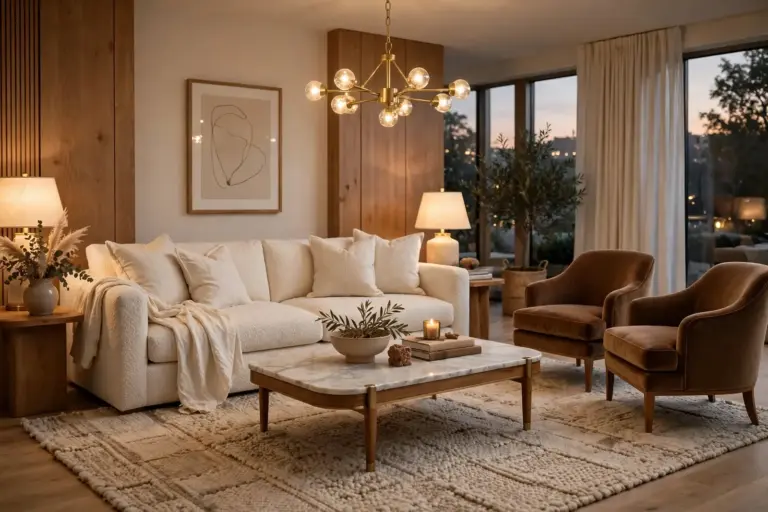
For a balanced arrangement, let the walls carry most of the color. Choose a pale sofa, then introduce emerald again through a cushion, decorative bowl, or artwork. A marble or stone coffee table adds a subtle natural contrast.
Avoid filling the entire room with dark furniture. A few lighter surfaces will help the richer colors stand out while keeping the seating area comfortable and welcoming.
18. Olive Oasis
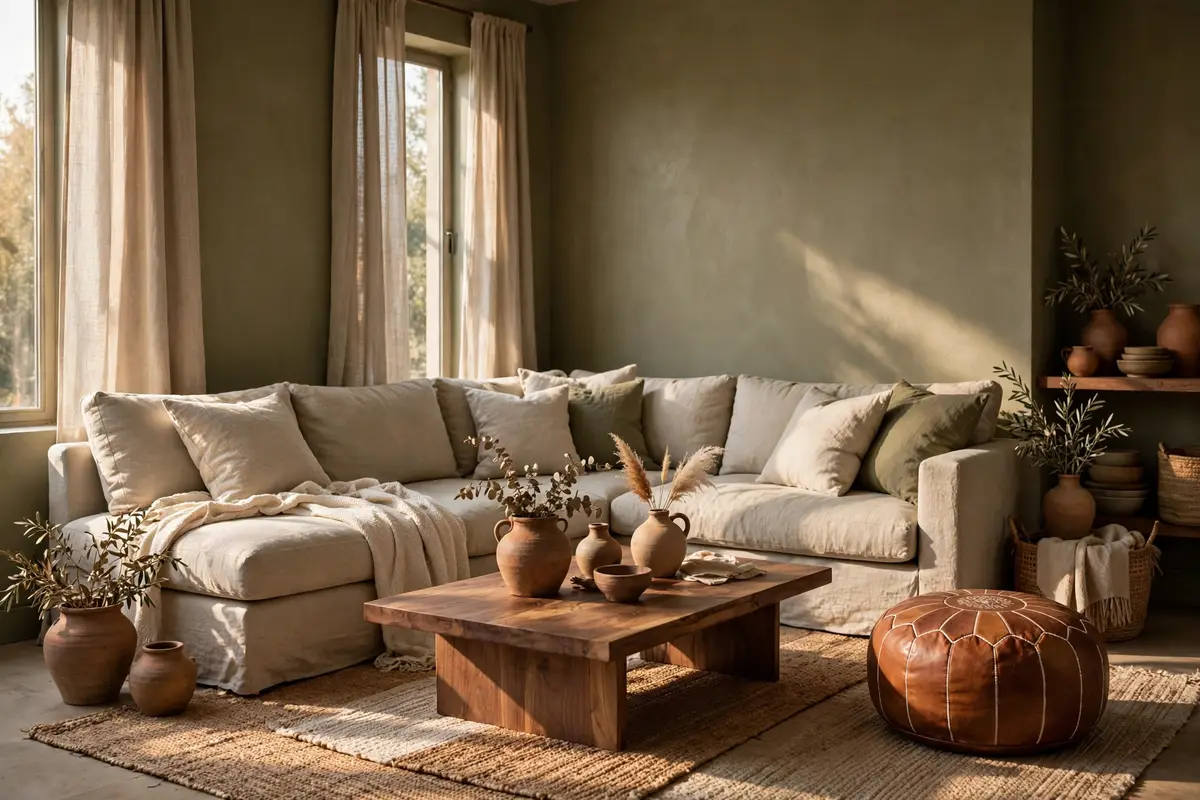
Start with an olive shade that has warm rather than overly yellow undertones.
- Choose linen or cotton upholstery in oatmeal or beige.
- Introduce cognac leather through a pouf or accent chair.
- Add walnut furniture for a deeper earthy contrast.
- Finish with clay pottery and a textured natural rug.
Olive works beautifully with materials that have visible grain and texture. Instead of adding lots of decorative colors, focus on the difference between smooth leather, woven fibers, natural wood, and soft upholstery. These details give the room depth without making the palette complicated.
19. Jade Jewel Tones
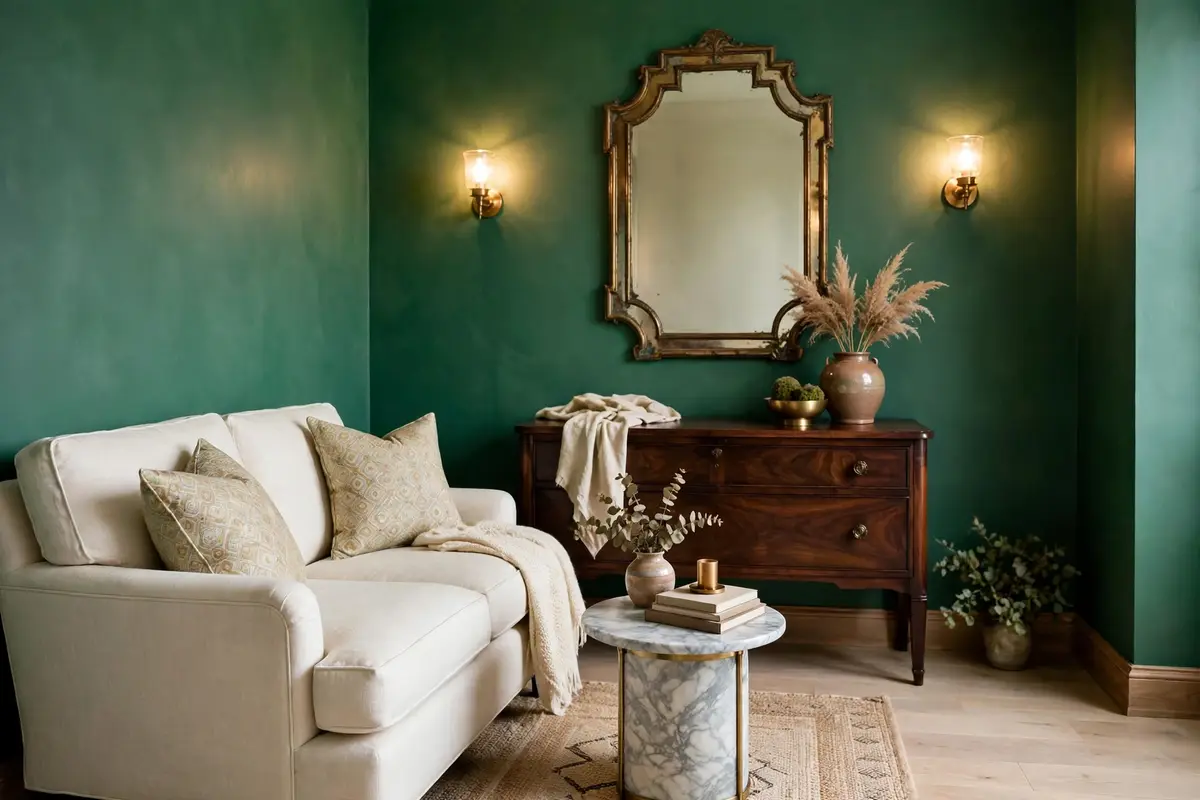
Quick Tip: Use jade on one main wall if your room has limited daylight. Pair it with a cream sofa, pale flooring, and warm lighting to prevent the deeper shade from making the space feel enclosed.
Jade has a distinctive blue-green quality that adds personality to contemporary interiors. It looks particularly attractive with warm metallic finishes and dark wooden furniture. Keep the decorative palette simple, then introduce texture through velvet, linen, and stone. A small room can benefit from this combination when the darker color is balanced carefully.
20. Fern Inspired Decor
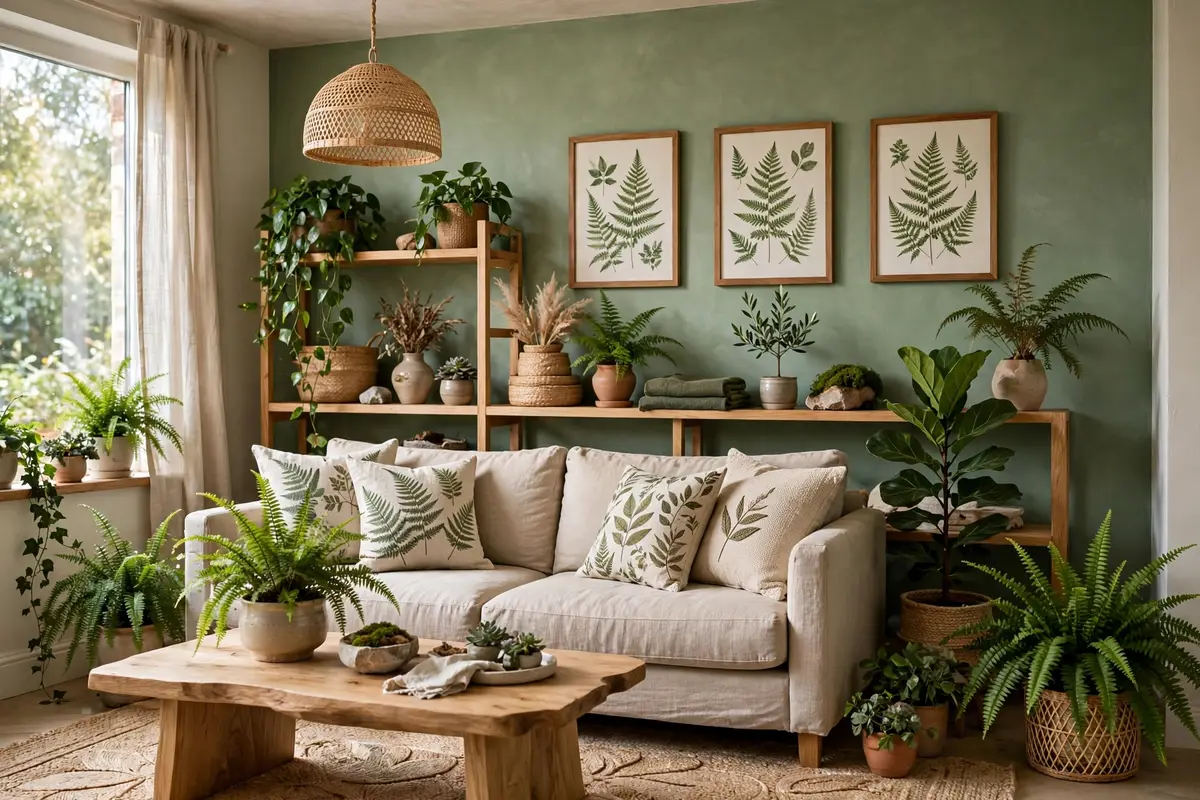
BEFORE
The living room has a plain neutral sofa, empty shelving, and little visual connection between the accessories. The space feels functional but lacks personality.
AFTER
Fern-inspired prints, patterned cushions, and a few leafy plants introduce natural shapes throughout the room. Muted green accents connect the decor without requiring a complete furniture replacement.
Choose botanical patterns in different scales. A larger leaf print works well above the sofa, while smaller patterns can appear on cushions or decorative accessories. Keep the background colors neutral so the patterns remain easy to appreciate rather than competing for attention.
21. Mint Revival
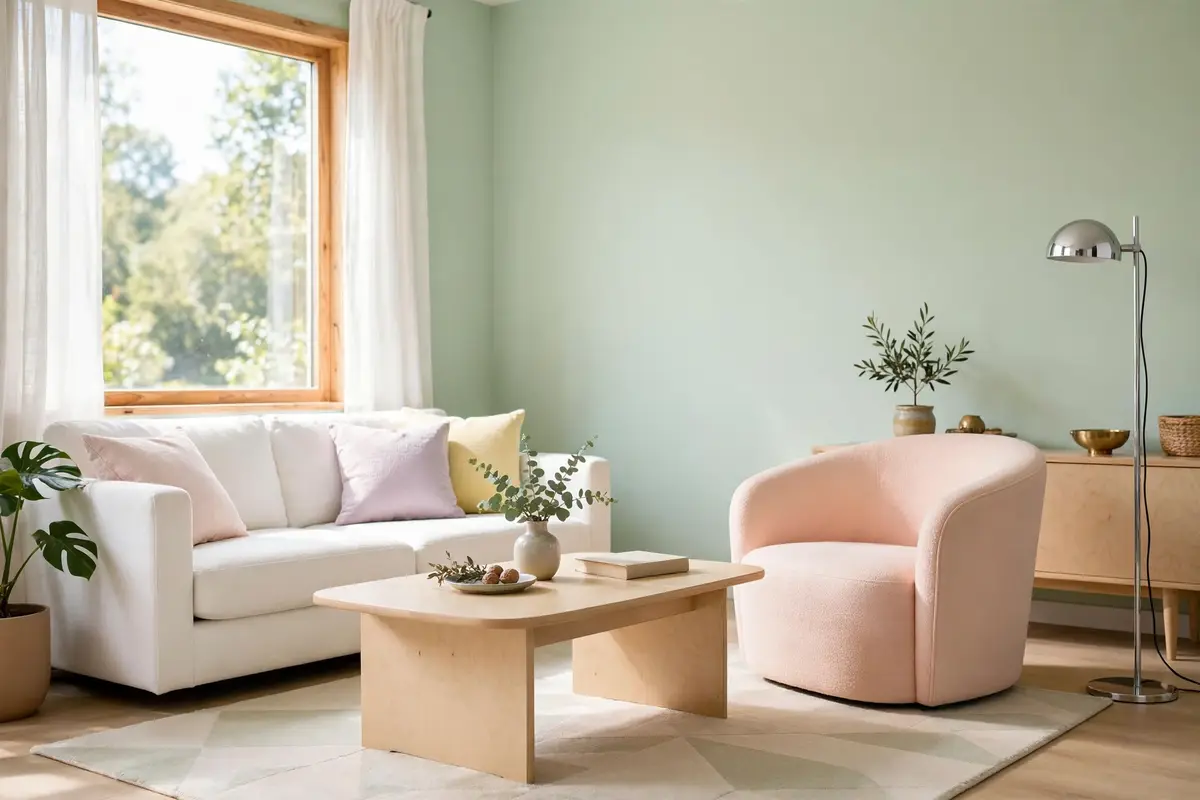
- Paint a feature wall in a soft mint shade.
- Select white or pale gray seating to maintain brightness.
- Add a curved chair or rounded coffee table for retro character.
- Introduce one geometric pattern through cushions or a rug.
- Finish with simple chrome or light wood details.
Mint works particularly well in rooms that need a brighter, more playful atmosphere. It pairs nicely with white, pale timber, and subtle pastel accents. Avoid combining too many saturated colors, especially in smaller spaces. A restrained palette keeps the look fresh rather than overly themed.
22. Seafoam Coastal
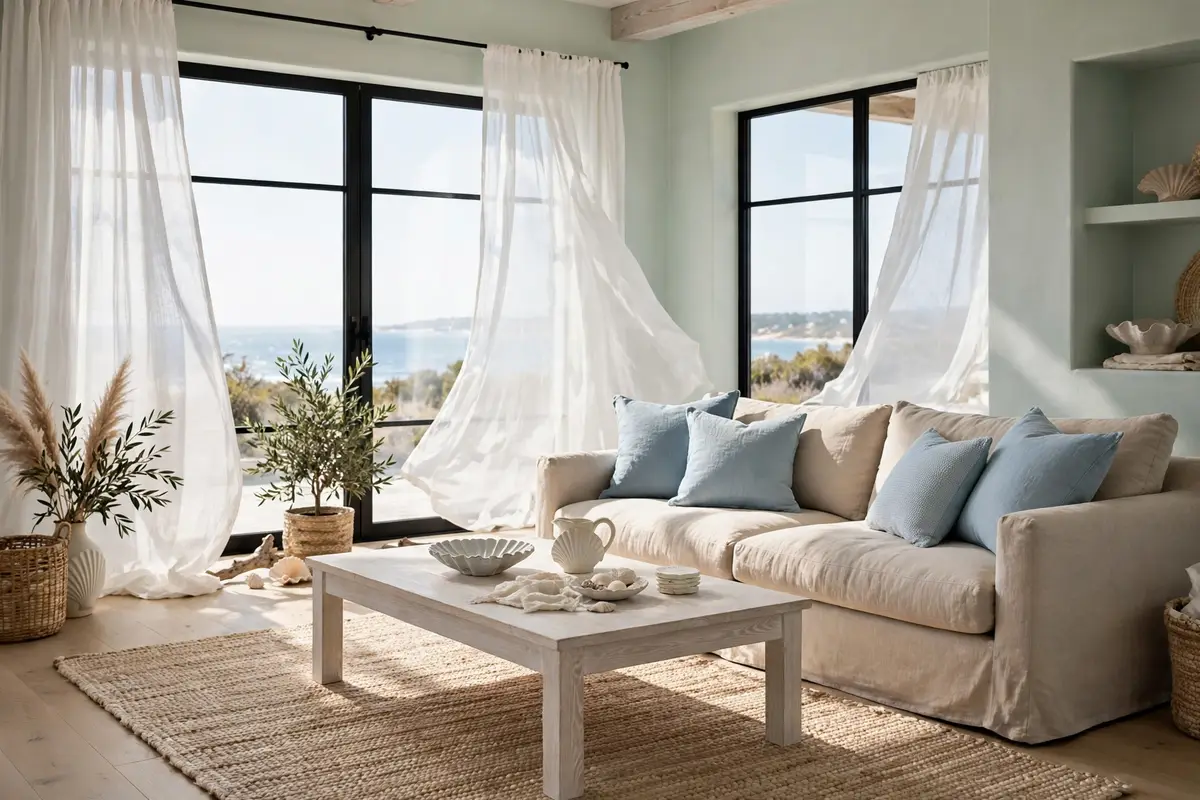
Option A: Soft coastal palette
Seafoam walls with white furniture.
Pale oak and sandy beige accessories.
Light blue cushions and sheer curtains.
Option B: Earthy coastal palette
Muted green walls with oatmeal upholstery.
Natural rattan and darker woven textures.
Warm wood and subtle terracotta accents.
The first option feels brighter and more traditional, while the second introduces a warmer, more organic character. Both benefit from natural textures and plenty of daylight. Avoid relying too heavily on nautical decorations. The colors and materials should create the coastal feeling naturally.
23. Rattan And Green
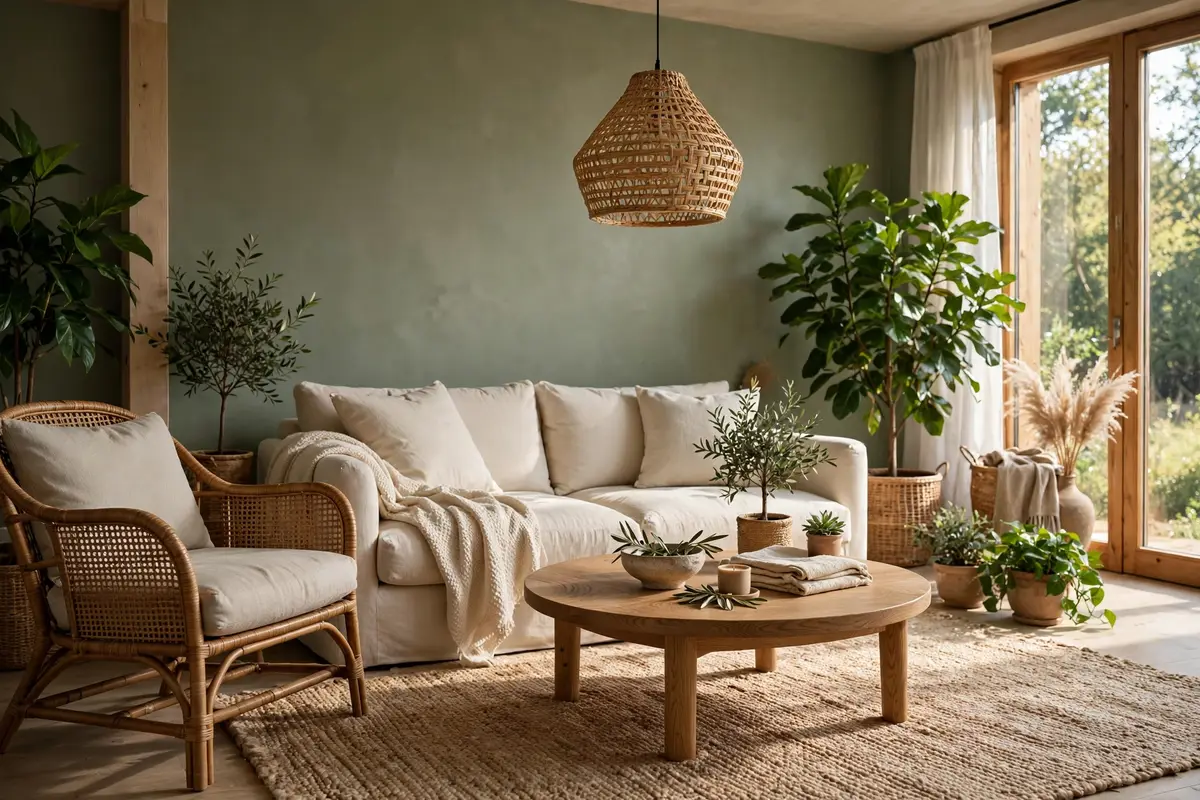
DO
- Choose one statement rattan chair or woven pendant.
- Repeat natural woven textures in baskets or small accessories.
- Balance rattan with solid upholstered furniture.
- Combine warm natural finishes with muted green shades.
DON’T
- Fill every corner with woven furniture.
- Combine too many unrelated patterns.
- Ignore the scale of larger rattan pieces.
- Choose uncomfortable seating simply for its appearance.
Rattan adds visual texture and a relaxed character without introducing another strong color. It also pairs naturally with timber, linen, and leafy plants. Keep the arrangement practical by choosing pieces that serve a purpose, such as extra seating, storage baskets, or a useful pendant light.
24. Marble And Brass
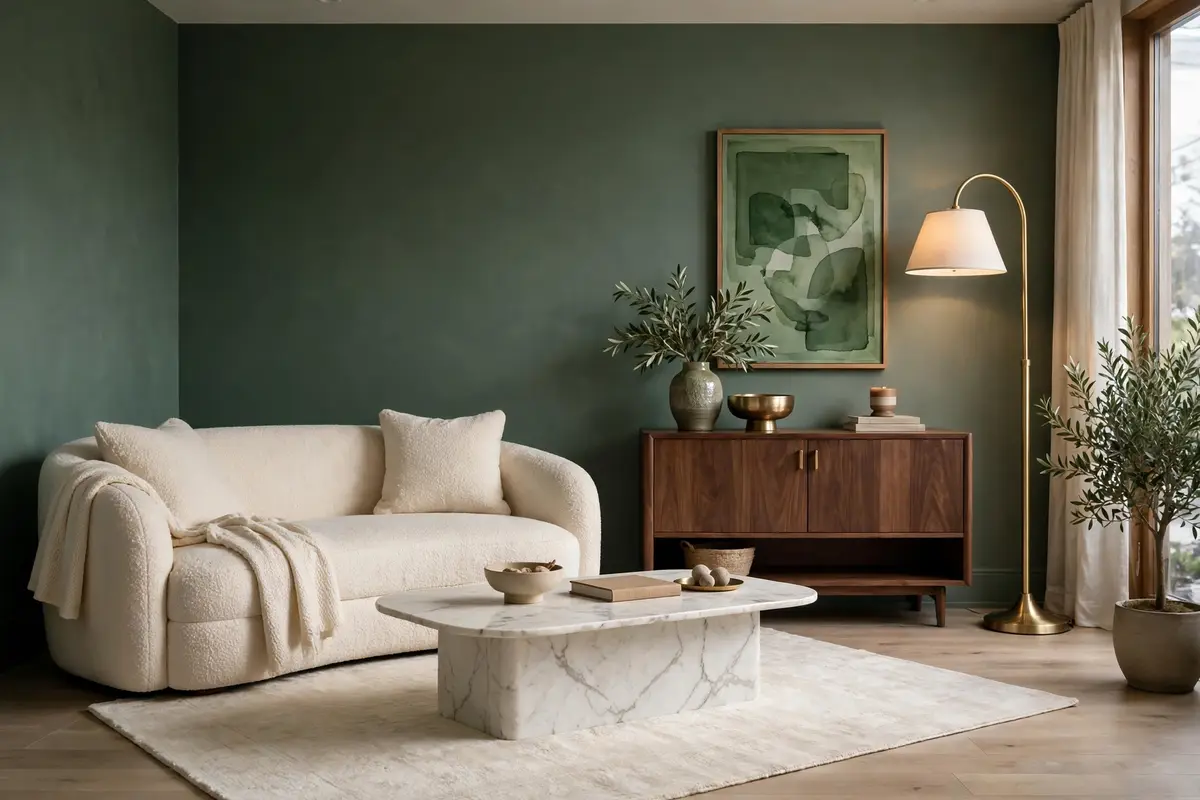
Cost: Medium to high, depending on marble and metal finishes.
Time: One to two days for a furniture and accessory refresh.
Skill Level: Beginner-friendly, although heavier furniture may need assistance.
Best For: Contemporary, transitional, and elegant interiors.
Marble and brass introduce contrasting finishes that give deeper green shades a refined appearance. You do not need expensive natural stone to achieve the look. A marble-effect coffee table and affordable brushed brass accessories can create a similar visual effect. Keep the sofa and rug soft and neutral so the harder materials never make the seating area feel cold.
Conclusion
A refreshing green living room does not require a complete renovation or an expensive furniture makeover. The right shade, thoughtful color pairings, natural materials, and comfortable textures can make an ordinary space feel welcoming and full of personality. Start with one idea that suits your room, whether it is sage walls, an emerald sofa, leafy plants, or warm wooden accents. Make small changes and build your color palette gradually. Save your favorite ideas on Pinterest, try the combinations that inspire you, and share this collection with someone planning a home refresh.