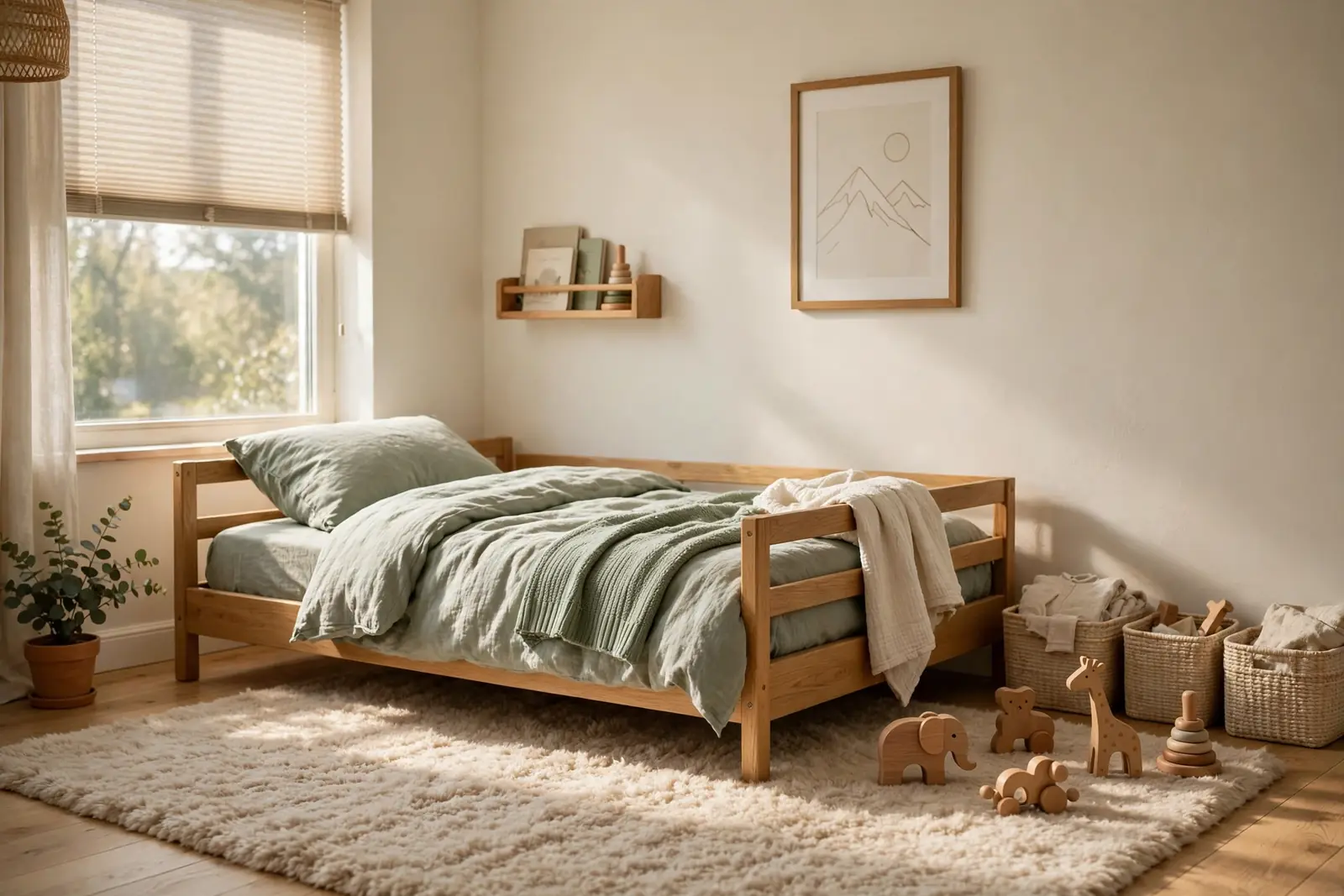
24 Kids Bedroom Ideas That Spark Wondrous Imagination

A child’s bedroom should be more than a place to sleep. It should be a little world where they can read, play, create, rest, and grow into their own personality. The best children’s rooms balance imagination with practical details that make everyday family life easier. Think soft rugs for toddlers, reachable toy storage for preschoolers, study corners for school-age children, and more personal touches for teenagers.
The secret is to invest in durable furniture and keep the decorative details flexible. You do not need a complete makeover every time your child develops a new interest. A few thoughtful changes to bedding, wall art, lighting, and storage can make the room feel completely different without stretching your budget.
Low Floor Bed Start
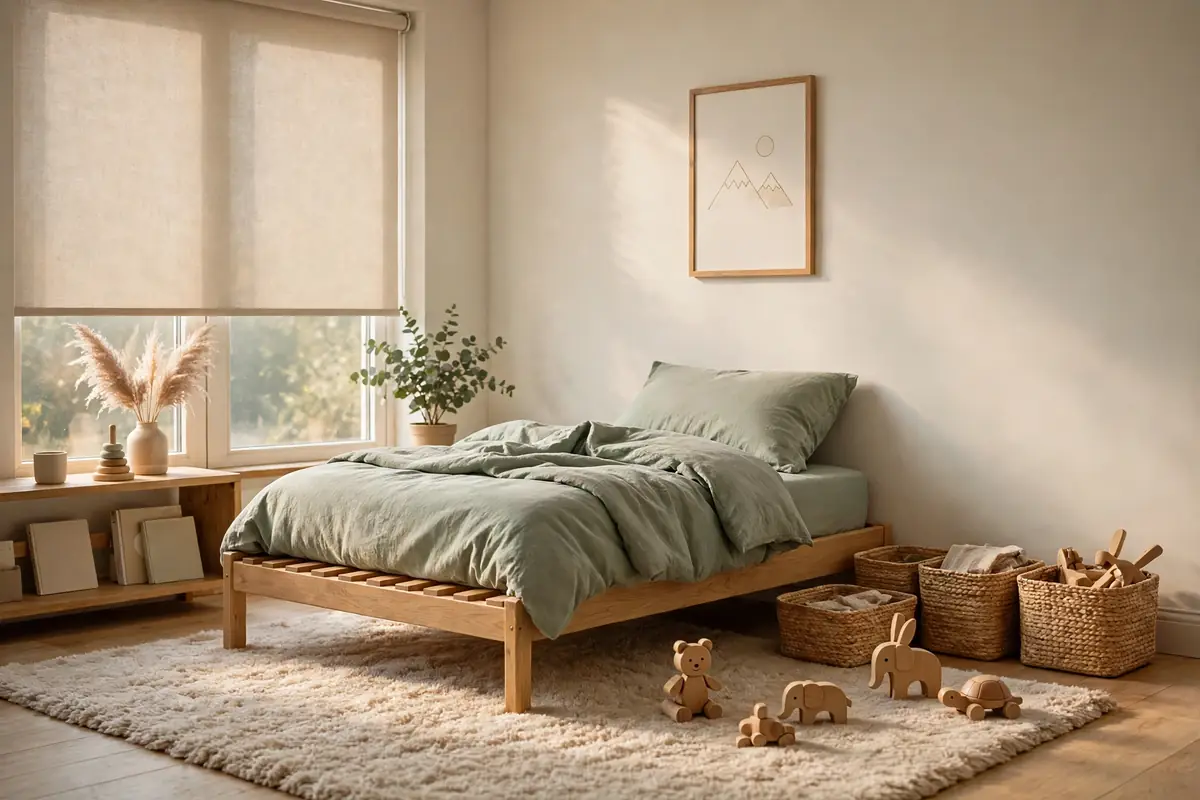
A low floor bed makes the bedroom feel welcoming and accessible for little children. Toddlers can climb in and out independently, while parents can keep the surrounding area simple and easy to supervise. Choose a sturdy wooden frame with rounded corners and a comfortable mattress. Keep the bedding lightweight and use a soft rug beside the bed to create a cozy landing area.
The beauty of this setup is its flexibility. A natural wood bed works with woodland themes, colorful bedding, pastel accessories, or even a more grown-up look later. Avoid placing pillows, loose blankets, or soft toys in an infant’s sleep space. For toddlers, follow age-appropriate safe sleep guidance and keep the floor around the bed clear. Check the mattress support and frame regularly for loose fittings.
Front-Facing Book Display
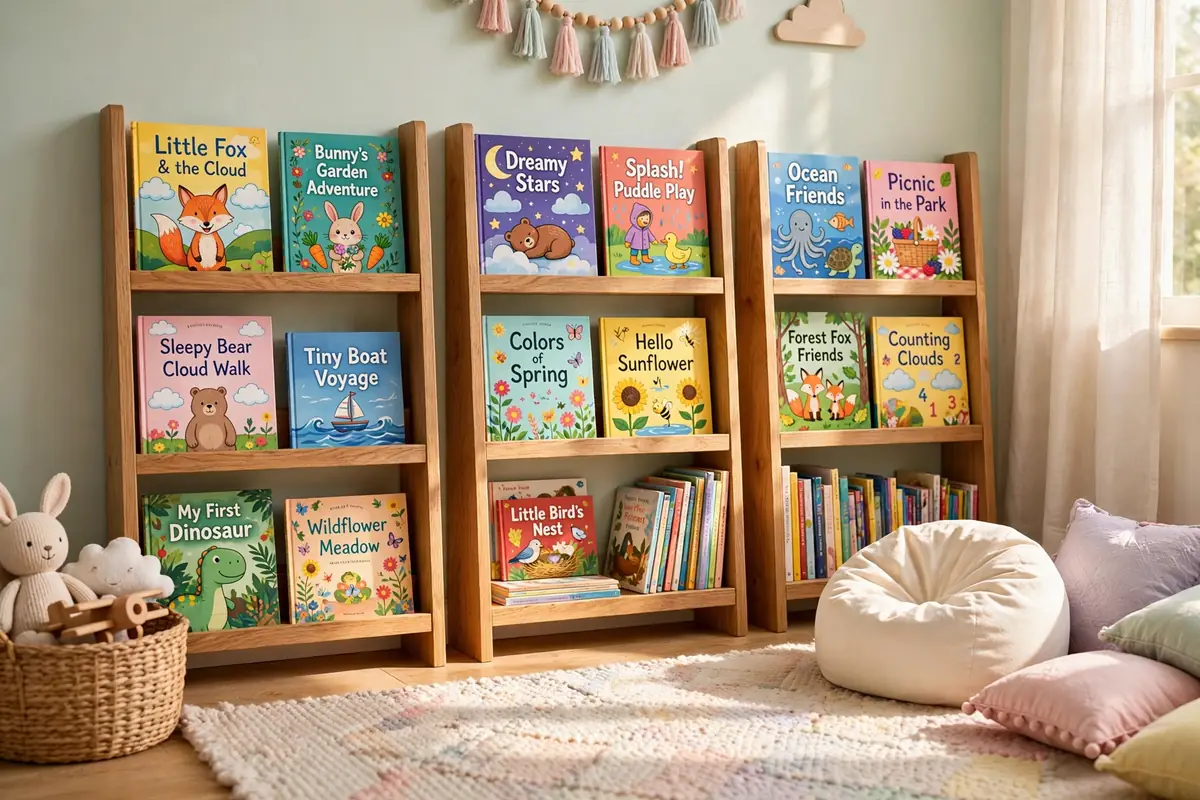
A book display that shows the covers can make reading much more appealing to young children. Instead of hiding favorite stories on traditional shelves, arrange a small selection with the colorful front covers facing outward.
- Choose wall-mounted picture ledges with secure fittings.
- Keep the lowest shelf within your child’s reach.
- Display around five to eight books at a time.
- Rotate stories regularly to keep the selection interesting.
- Leave enough space for little hands to remove books safely.
This arrangement works especially well beside a floor cushion or small reading chair. Keep heavier books on lower shelves and make sure every shelf is firmly attached to the wall. A simple wooden display can grow with your child, changing from picture books to chapter books and magazines over time.
Picture Label Bin System
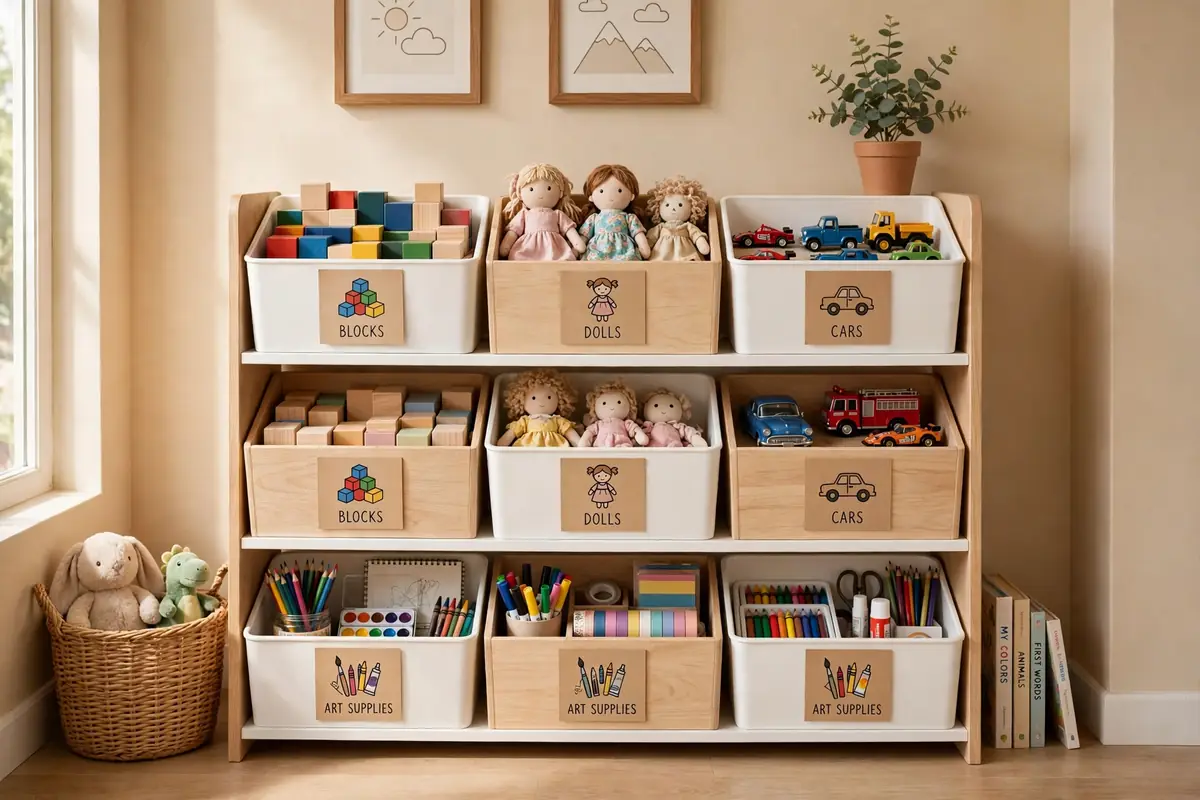
Quick Tip: Use photographs or simple drawings on storage labels rather than relying entirely on written words. Toddlers and preschoolers can recognize familiar objects before they learn to read.
Choose identical bins in a few complementary colors so the storage area looks tidy without feeling too formal. Put frequently used toys in the lowest containers and reserve higher shelves for items that need adult supervision. Keep each category simple, such as building blocks, dolls, puzzles, or craft materials.
This system makes cleanup easier because every toy has a recognizable home. Take photographs of the actual contents and attach them to the front of each bin. As your child grows, replace the pictures with written labels or a combination of both.
Cube Shelf Toy Storage
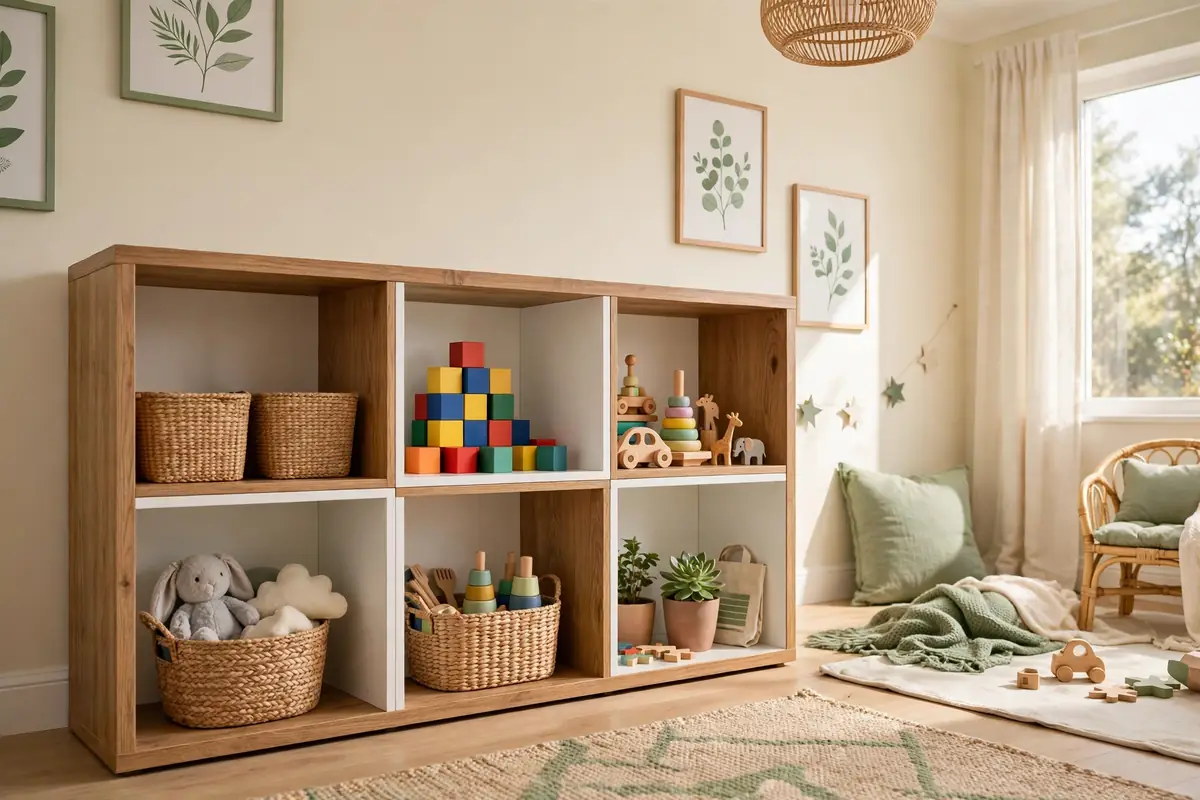
Cube shelving gives toys, books, and decorative objects their own little spaces without making the bedroom feel crowded. The individual compartments are easy to organize and can accommodate different storage baskets as your child’s needs change.
Place frequently used toys in open cubes and use baskets for smaller pieces that tend to scatter across the floor. Keep heavier objects in the bottom compartments, and avoid overloading the unit. If the shelving is tall or heavy, secure it to a wall stud or use appropriately rated drywall anchors according to the manufacturer’s instructions.
A combination of open display spaces and concealed baskets creates a balanced look. Choose neutral shelving that can stay in the room for years, then change the basket colors and decorative accessories as your child’s interests develop.
Under-Bed Rolling Drawers
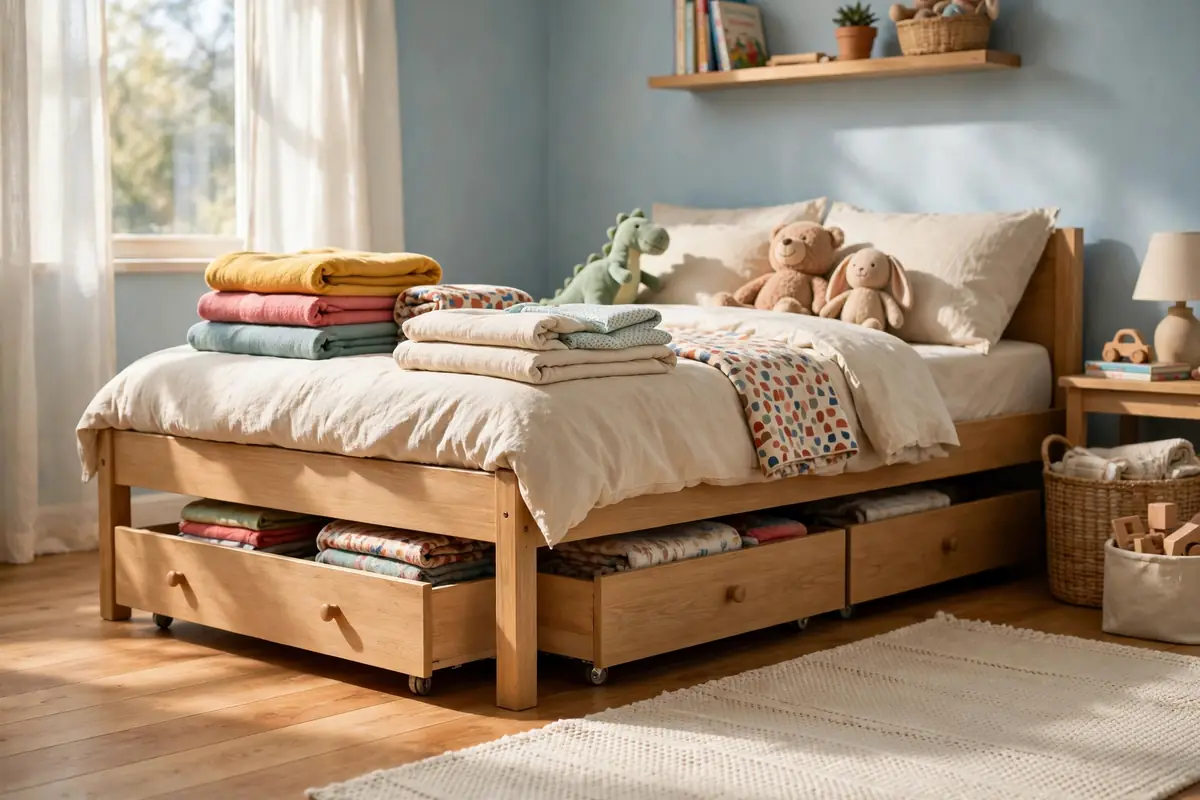
Make every inch of floor space work harder with rolling drawers underneath the bed. This is particularly useful in smaller bedrooms where a separate toy cabinet or linen cupboard might take up valuable room.
- Measure the available clearance beneath the bed frame.
- Choose low-profile drawers with smooth-rolling wheels.
- Sort belongings into separate categories before filling them.
- Add simple labels to identify each drawer.
- Leave enough clearance for the drawers to open fully.
Store spare bedding, seasonal clothing, dress-up costumes, or larger toys in these compartments. Avoid putting heavy objects inside drawers that children need to pull out independently. Check the wheels occasionally and keep the floor underneath clean. A well-organized under-bed area can make the entire bedroom feel more spacious.
Anti-Tip Anchor Check
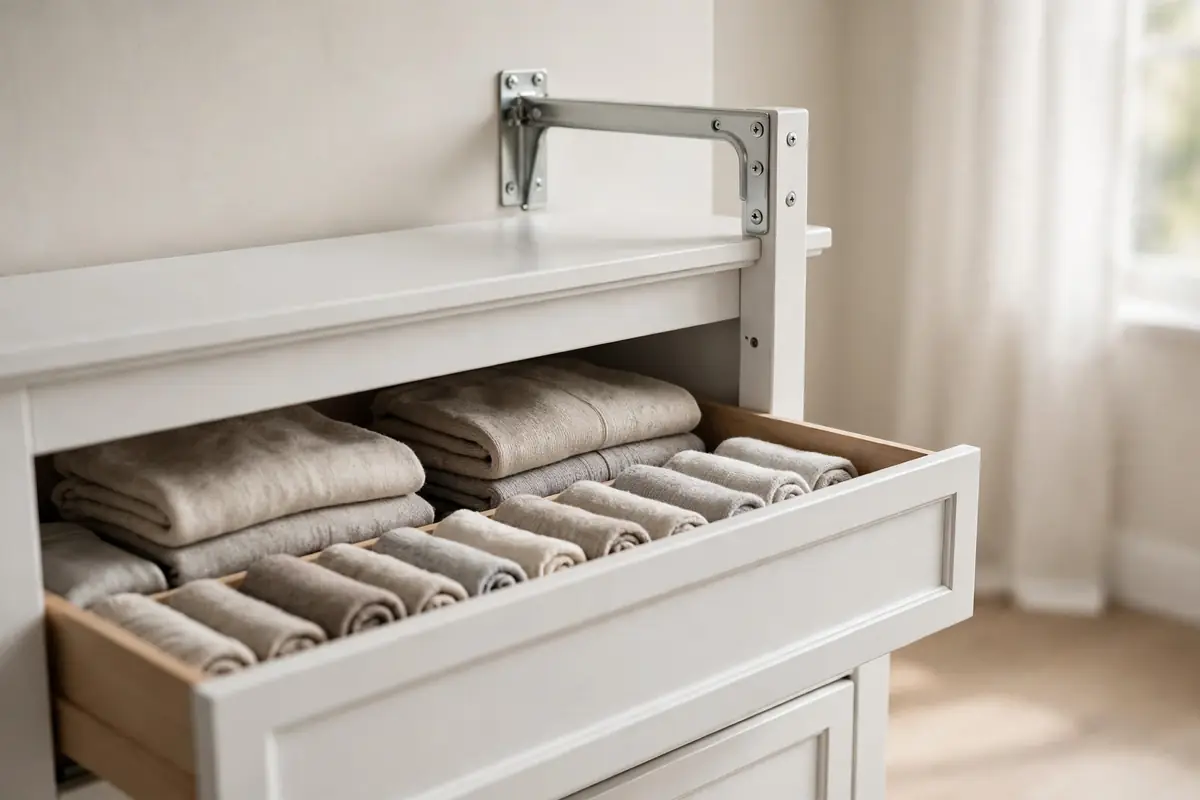
Quick Tip: Make furniture anchoring part of your bedroom setup, not something to consider after decorating. Every tall or heavy piece should be secured before the room is used.
Use the manufacturer’s recommended anti-tip hardware and locate a suitable wall stud whenever possible. Screws should penetrate at least two inches into the framing, with the correct length and type selected for the bracket and furniture. If a stud is unavailable, use appropriately rated drywall anchors suitable for the load and installation.
Position brackets on the top rail or back frame where specified by the manufacturer. Keep heavy objects in lower drawers and avoid storing attractive toys on top of dressers. Recheck the fittings every few months, especially after moving furniture or rearranging the bedroom.
Rounded Edge Furniture Choice
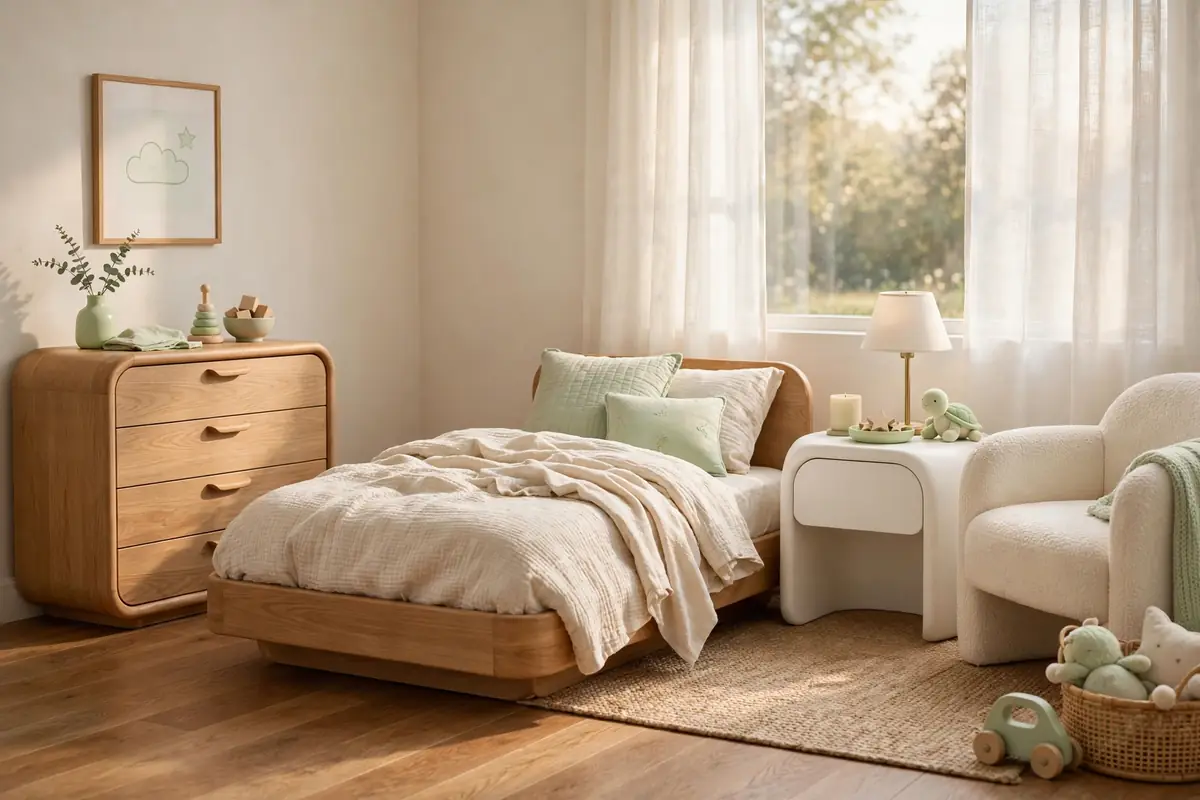
Sharp furniture corners can become an everyday concern in a room where children run, play, and move around quickly. Rounded edges offer a softer appearance and help reduce the risk of painful bumps.
DO
- Choose dressers and bedside tables with rounded corners.
- Look for sturdy furniture with a wide, stable base.
- Select non-toxic finishes suitable for children’s furniture.
- Keep frequently used items at reachable heights.
DON’T
- Place unstable furniture near play areas.
- Ignore rough edges or damaged furniture finishes.
- Leave heavy objects on top of tall cabinets.
- Assume corner guards replace proper supervision.
Natural wood, painted furniture, and rounded upholstered pieces can all create a softer bedroom environment. Check furniture regularly for loose handles, splinters, and damaged surfaces. A few thoughtful choices make the room more comfortable without sacrificing style or storage.
Cordless Blind Window Safety
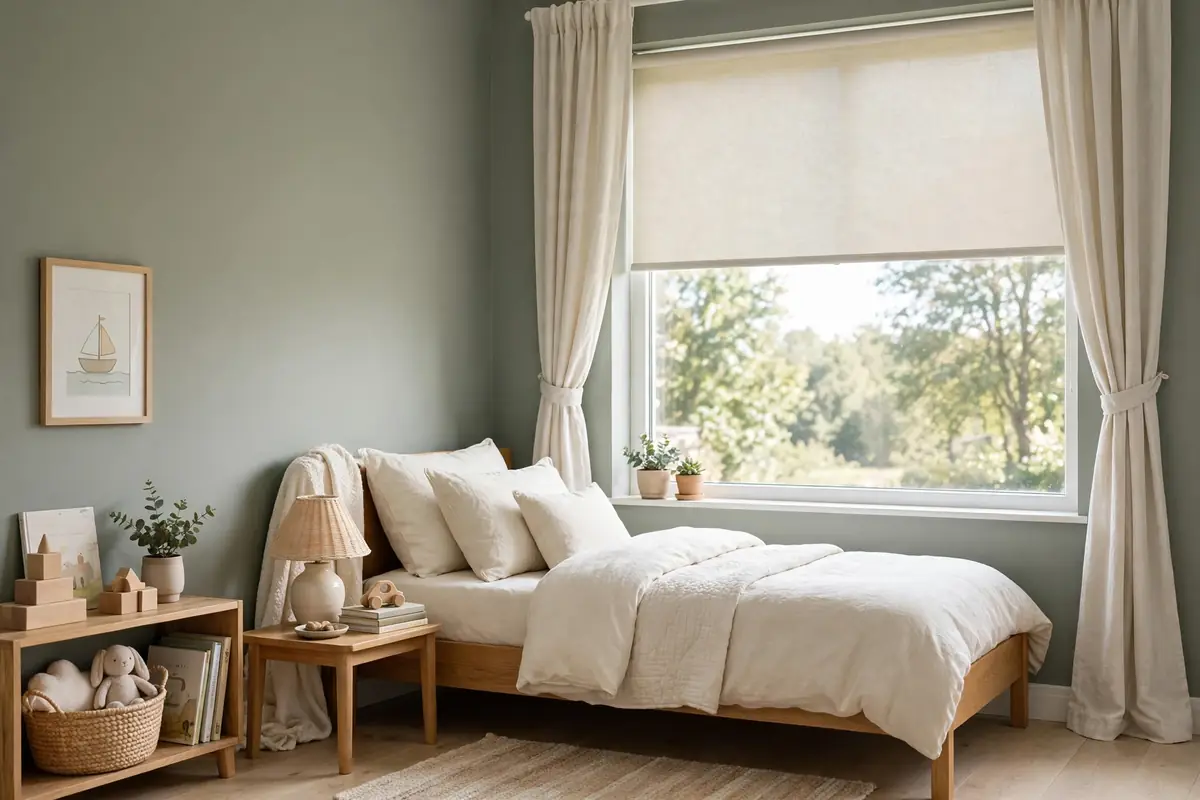
Window treatments should look beautiful while keeping unnecessary hazards out of a child’s reach. Cordless roller blinds are a practical choice because they eliminate accessible operating cords that can create a strangulation risk.
Cost: Varies by window size, material, and blind style.
Time: Installation usually takes around an hour, depending on the product and window.
Best For: Bedrooms shared by toddlers, school-age children, and teenagers.
Style Choice: Plain white, warm beige, or soft gray works with almost any bedding theme.
Choose properly fitted blinds and check their installation instructions before use. Window stops or opening restrictors should limit the opening to approximately four inches where appropriate, while still meeting local safety requirements. Keep beds, chairs, and climbing furniture away from windows. Decorative curtains can be added for softness, provided they do not introduce accessible cords.
Four By Five Play Zone
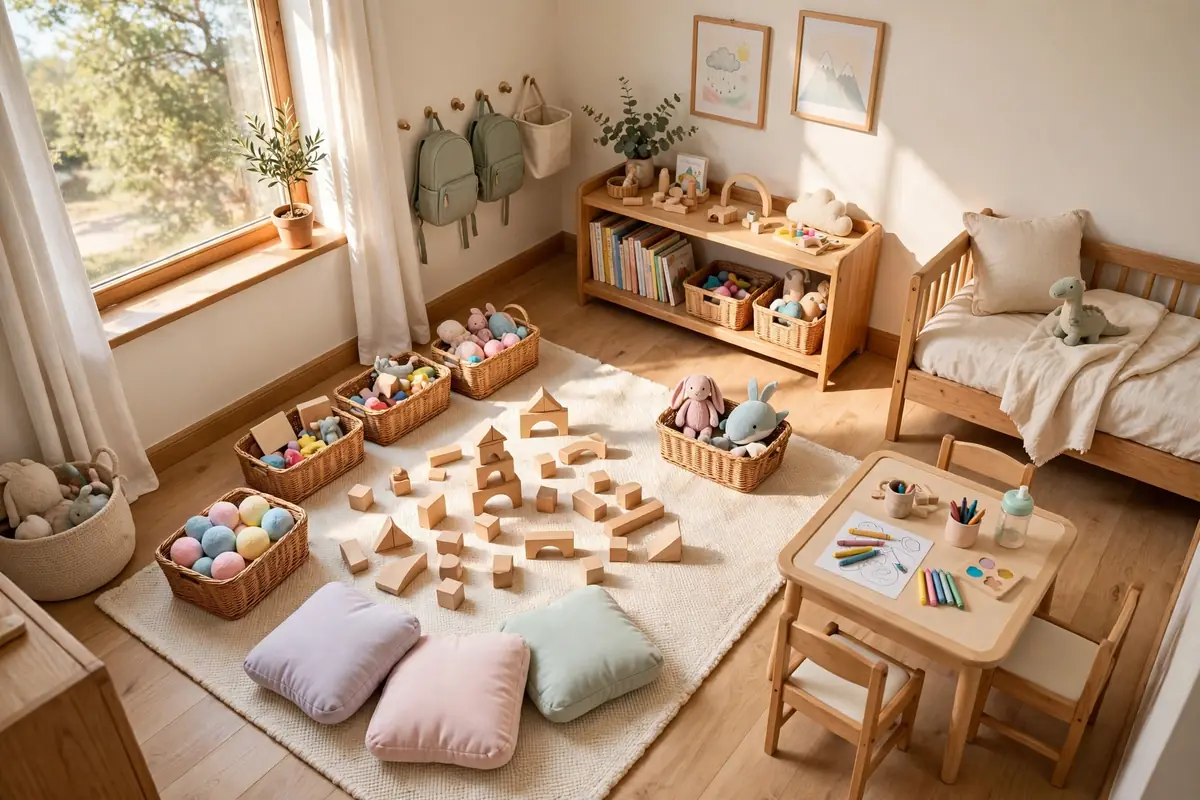
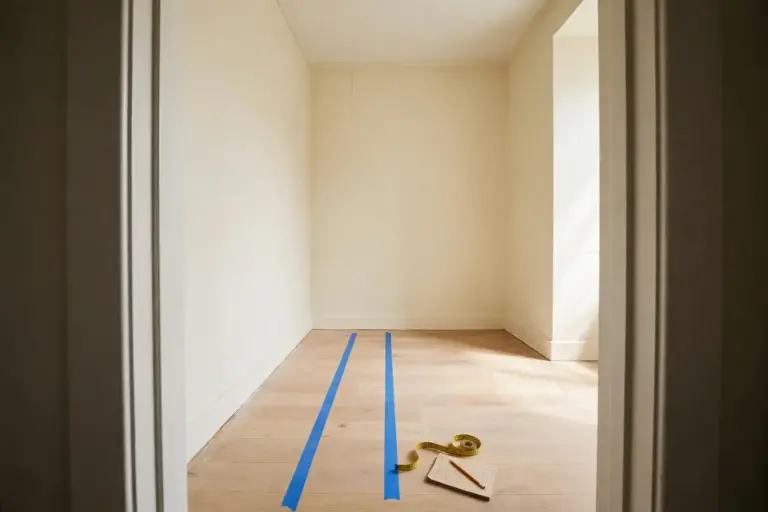
A dedicated play zone gives younger children a comfortable place to explore without filling every corner of the bedroom with toys. Even a small clear area measuring four by five feet can support imaginative play, building activities, and quiet games.
The trick is to define the area without adding bulky furniture. Use a washable rug, a low basket for toys, and a small table if space allows. Keep the center relatively open so children can spread out their blocks or arrange their favorite toys.
For more inspiration, explore these small bedroom decor ideas for making compact rooms feel organized and inviting. Choose storage that can be moved easily when the play area needs to become a reading or activity space.
Loft Bed Study Combo
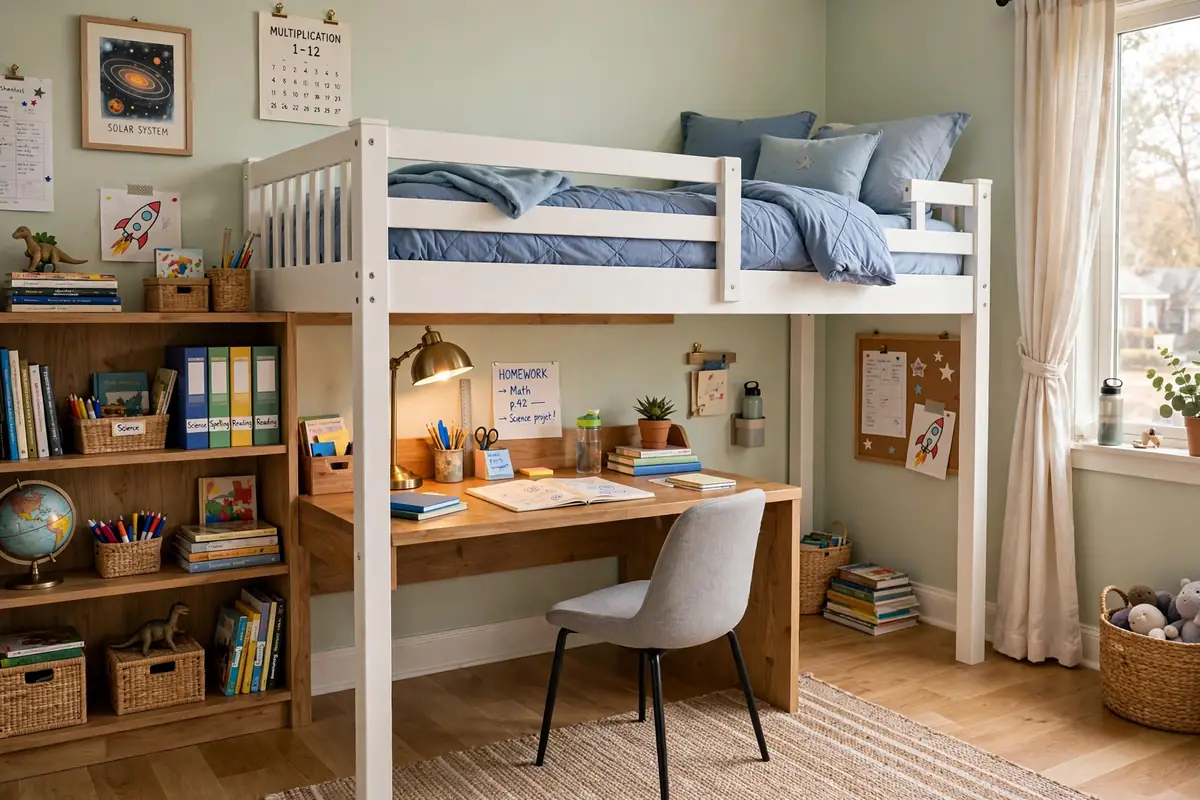
A loft bed with a desk underneath can free up valuable floor space while giving older children a dedicated place to complete schoolwork. The arrangement works particularly well in smaller bedrooms where a separate bed and study desk would feel crowded.
Option One: Integrated Desk
A built-in desk creates a compact arrangement with matching finishes and a consistent look. It is useful for children who need a permanent homework station, although the available workspace may be limited.
Option Two: Separate Desk
A freestanding desk beneath a suitable loft bed offers more flexibility. You can change its position, add drawers, or replace it as your child’s study needs become more demanding.
Before purchasing, check ceiling height, mattress clearance, weight limits, and manufacturer safety instructions. Only children aged six and older should use the top bunk, which must have a full safety rail. Keep ladders secure and avoid placing the bed near ceiling fans or light fixtures.
Adjustable Closet Rod System
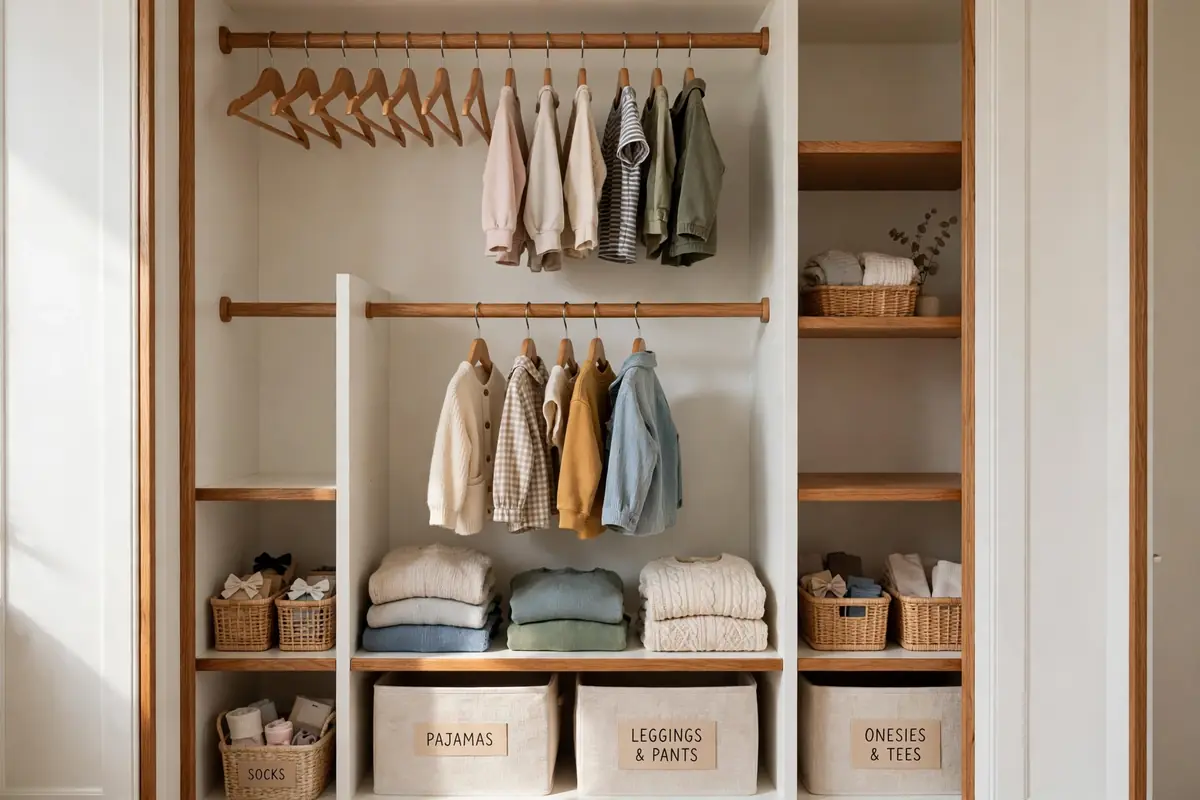
A closet that children can use independently makes getting dressed and putting clothes away much easier. Lowering the hanging space means little ones can reach everyday outfits without climbing or asking for help.
- Measure the closet’s available width and height.
- Install a lower hanging rod approximately 36 to 42 inches from the floor.
- Add a second rod above for less frequently used clothing.
- Place shoes and baskets on low shelves.
- Keep seasonal items in labeled upper storage.
Choose sturdy rods and suitable brackets that are securely installed. Leave enough space for clothing to hang without dragging on the floor. As your child grows, adjust the layout to accommodate longer garments, school uniforms, sportswear, and eventually a larger teen wardrobe.
Swappable Duvet Theme Layers
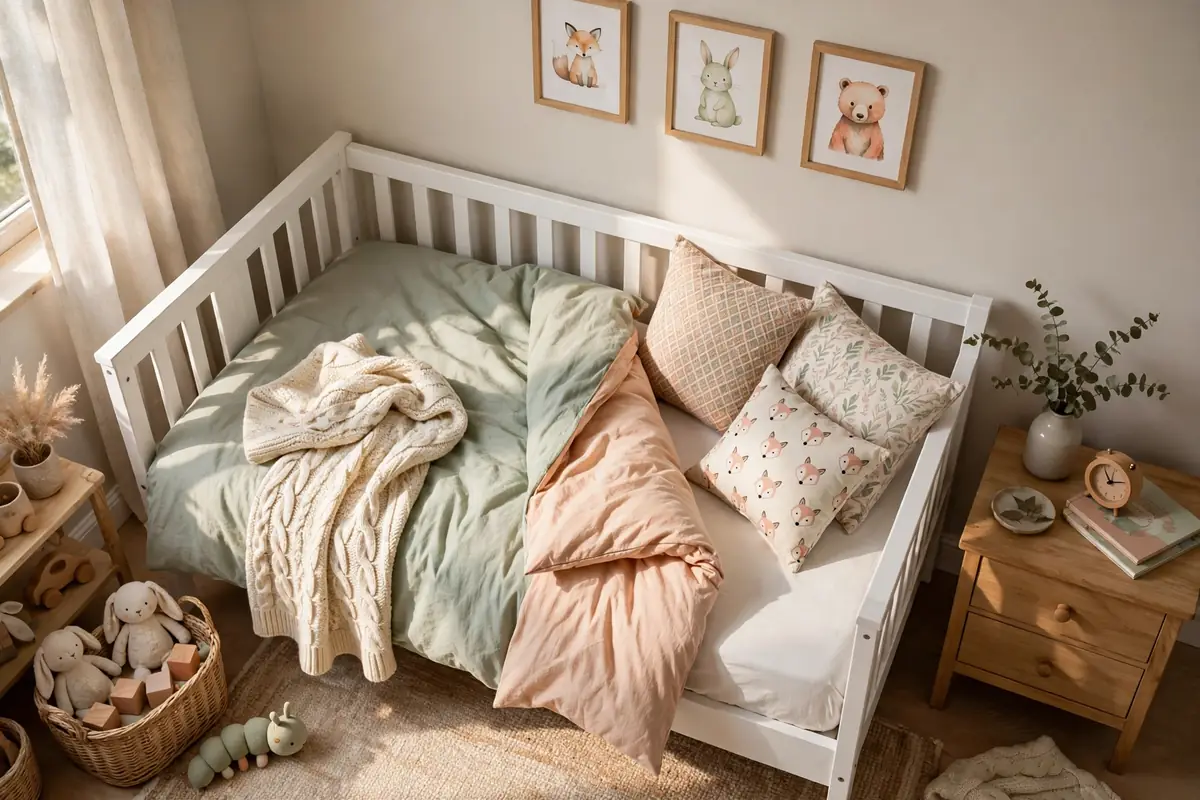
Quick Tip: Keep the bed frame and mattress neutral, then use duvet covers to introduce whatever colors or themes your child currently loves. Bedding is much easier to replace than large furniture.
A woodland theme can feature forest-green bedding and animal cushions, while a space-inspired room might use navy covers and star-patterned pillows. You can also choose two complementary duvet covers so the bedroom gets a fresh appearance whenever the bedding changes.
This approach is especially useful during the years when interests develop quickly. Store out-of-season bedding in a labeled under-bed drawer and choose washable fabrics that can handle everyday use. For younger children, keep sleep surfaces appropriate to their age and avoid loose decorative bedding in an infant’s sleep space.
Peel-And-Stick Decal Wall
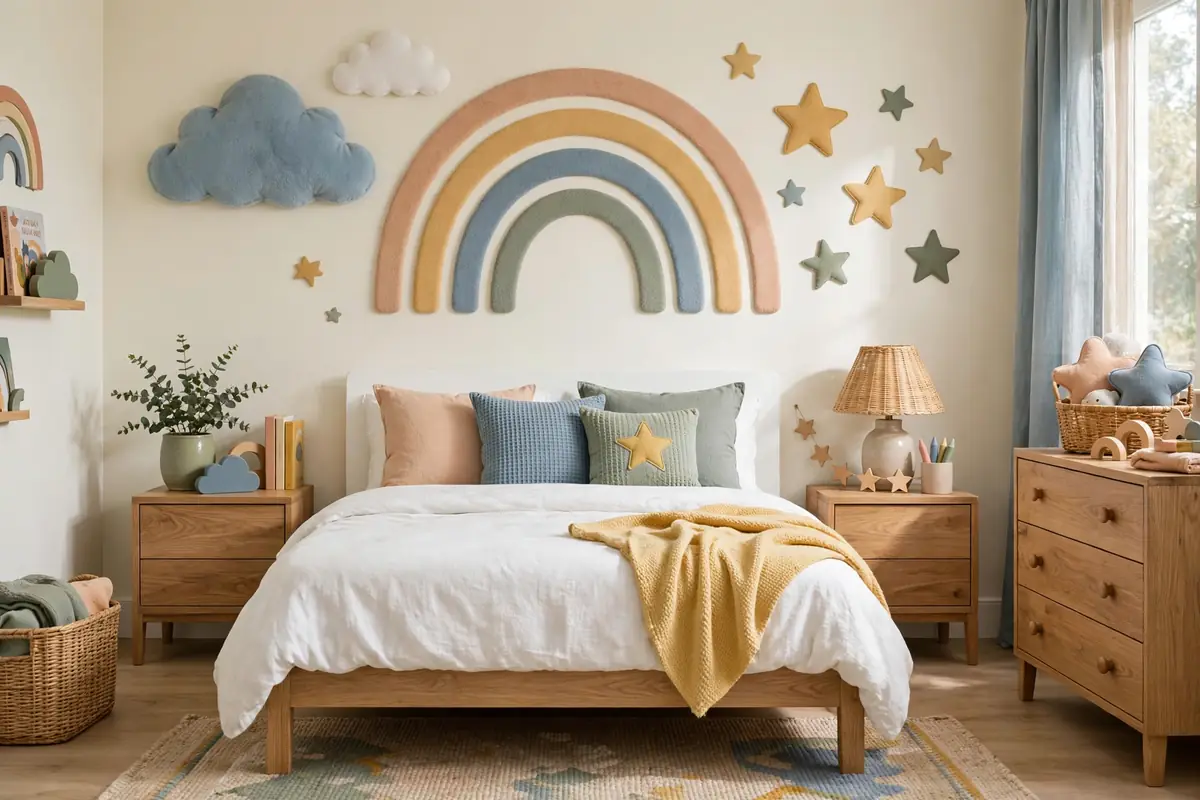
Wall decals are an easy way to give a child’s room personality without committing to permanent wallpaper or an elaborate painted mural. They work beautifully for changing interests, from dinosaurs and woodland animals to rainbows, planets, and abstract shapes.
BEFORE: A plain bedroom wall can feel a little unfinished, especially above the bed or beside a reading corner. Painting a detailed mural may require more time, money, and effort than the room needs.
AFTER: A carefully arranged collection of removable decals creates an attractive focal point with very little disruption. Choose a limited color palette and leave enough empty wall space to prevent the design from feeling overwhelming.
Always test a small decal on an inconspicuous area first. Wait 30 days after painting before applying decals, following the paint and decal manufacturer’s instructions. In homes built before 1978, test for lead paint before sanding or disturbing old painted surfaces.
Reading Nook Floor Cushions
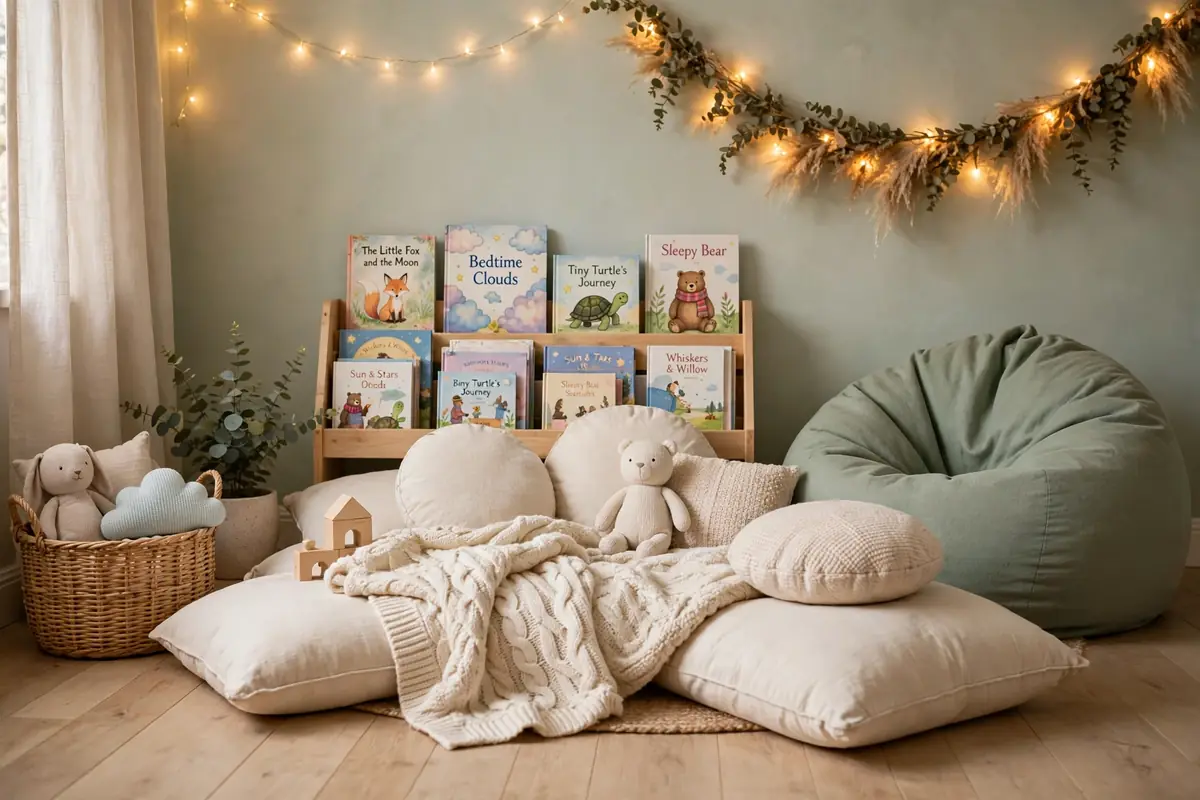
Create a little reading retreat where your child can slow down and enjoy a favorite story. A comfortable floor cushion, a soft rug, and a small selection of books can turn an unused bedroom corner into a lovely reading spot.
- Choose two washable floor cushions in complementary colors.
- Add a low bookshelf with front-facing book storage.
- Place a small basket nearby for favorite stories.
- Include a soft throw for supervised reading time.
- Keep the area away from heaters and window hazards.
You do not need a large armchair or custom-built furniture to make this corner feel special. A few coordinated accessories can create a welcoming space that changes easily as your child grows. Keep cushions and loose textiles out of infant sleep areas.
Homework Desk Task Lamp
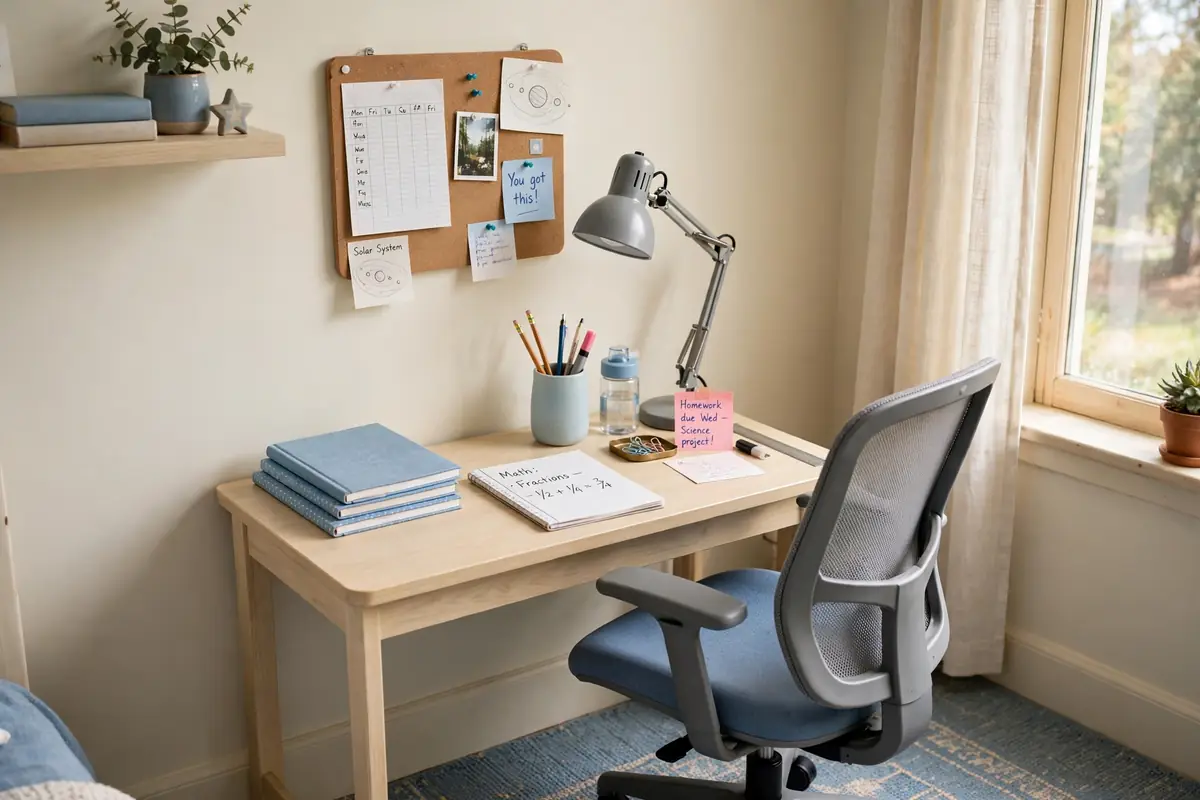
A proper homework corner can make school routines feel more manageable. Good lighting is especially important because children need to read, write, draw, and use learning materials comfortably.
DO
- Position the desk near natural daylight when practical.
- Choose an adjustable task lamp with a stable base.
- Keep pencils and frequently used supplies within reach.
- Provide a comfortable chair suited to your child’s height.
DON’T
- Rely only on a ceiling light for detailed work.
- Place the lamp where it creates distracting glare.
- Overfill the desk with unnecessary decorations.
- Let charging cables trail across the floor.
Choose a warm, comfortable lighting scheme and consider a task lamp with adjustable brightness. A desk with a few drawers or wall shelves helps control clutter. As children approach their teenage years, allow enough room for a laptop, books, notebooks, and other school essentials.
Shared Room Bunk Layout
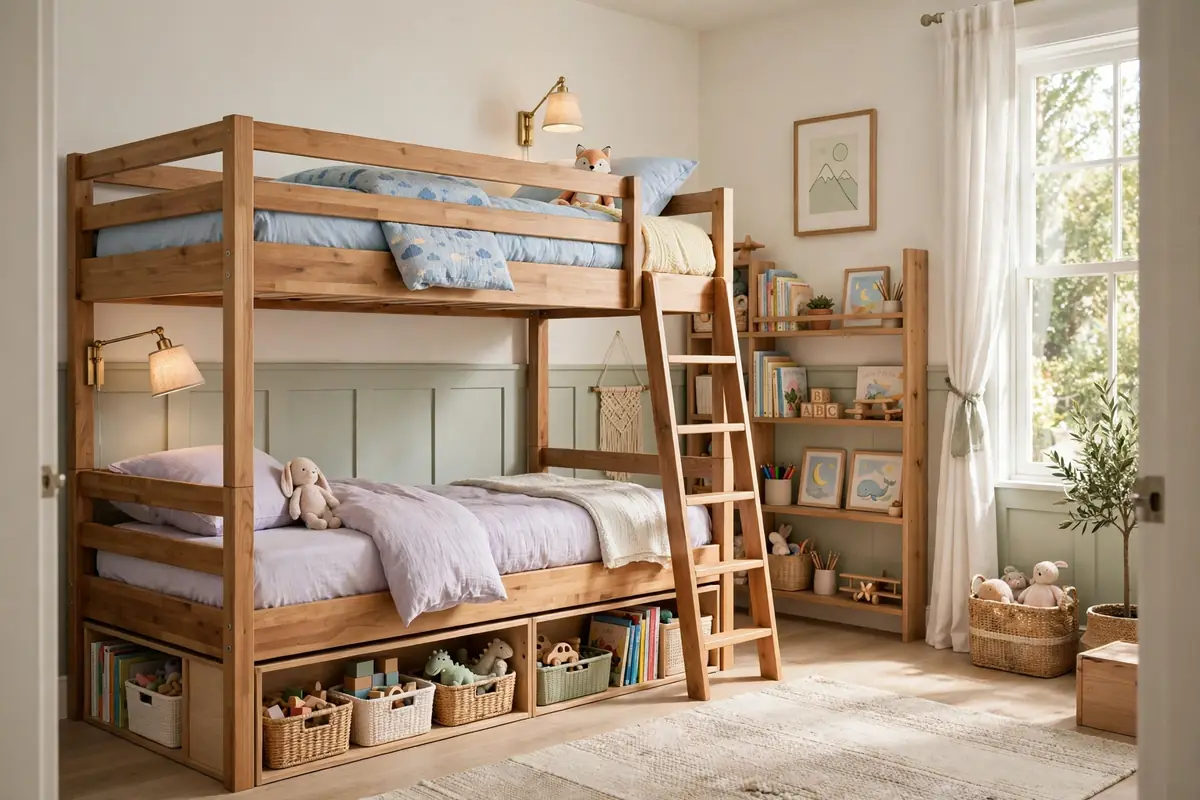
Bunk beds can make a shared bedroom feel more spacious by freeing up floor area for play, storage, or individual activity corners. They are particularly helpful when siblings share a smaller room.
Option One: Traditional Bunk Beds
A standard stacked arrangement uses vertical space efficiently and creates a simple, compact sleeping zone. It works well when the room has enough ceiling clearance and the bed meets all safety requirements.
Option Two: L-Shaped Bunk Layout
An L-shaped arrangement places the beds at an angle, often leaving useful space for drawers or a small shared desk. It generally requires more floor area but can create a less crowded feeling.
Choose a bunk bed with sturdy guardrails, secure ladders, and manufacturer-approved mattress dimensions. The upper bunk is for children aged six and older. Give each sibling an individual shelf, reading light, and bedding choice so the room feels shared without losing its personal character.
Sibling Zone Divider
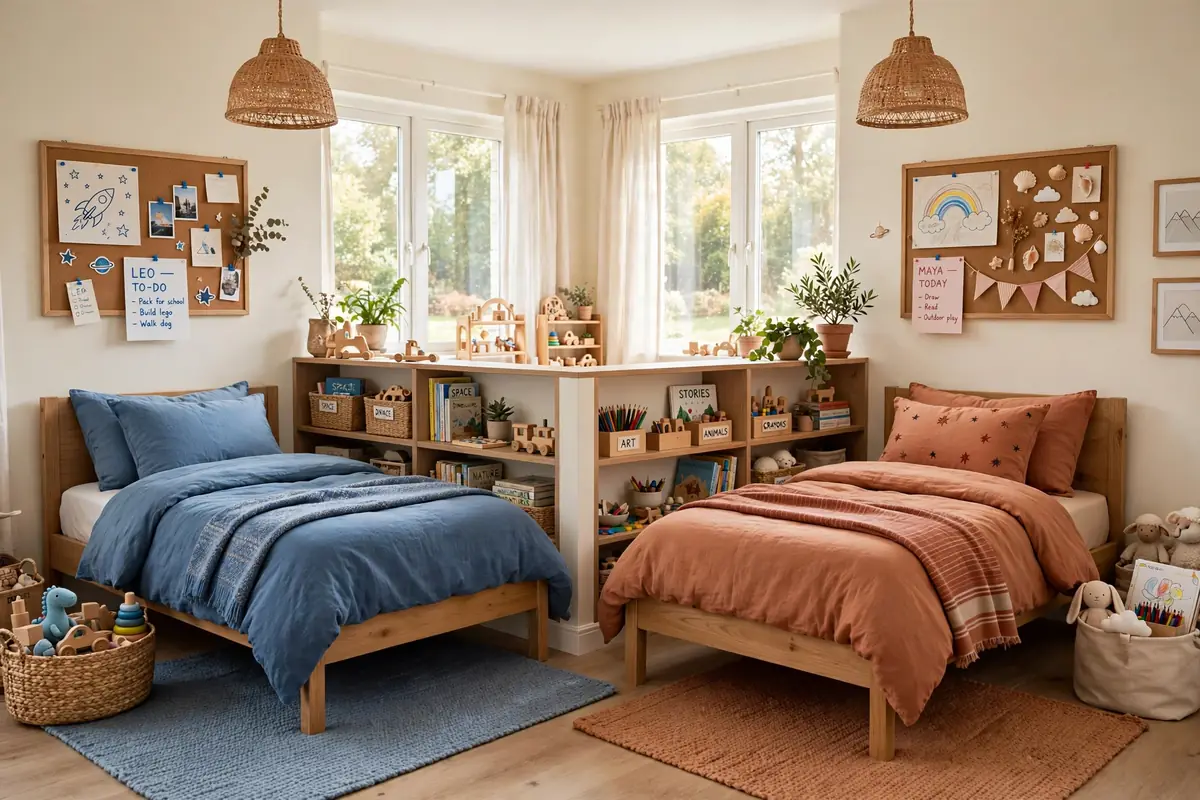
Quick Tip: Give each child one clearly defined personal area, even if the bedroom is small. A different bedding color or individual display shelf can make a big difference.
Use a low, securely anchored shelving unit to create a subtle visual divider without blocking daylight or making the room feel closed in. Alternatively, place the beds on opposite walls and give each child their own storage basket and bedside surface.
This setup helps children understand which belongings are shared and which are personal. Avoid placing tall furniture where it could obstruct movement or create climbing hazards. If using curtains or room dividers, keep them securely installed and away from heaters, windows, and other potential hazards.
Teen Accent Wall Choice
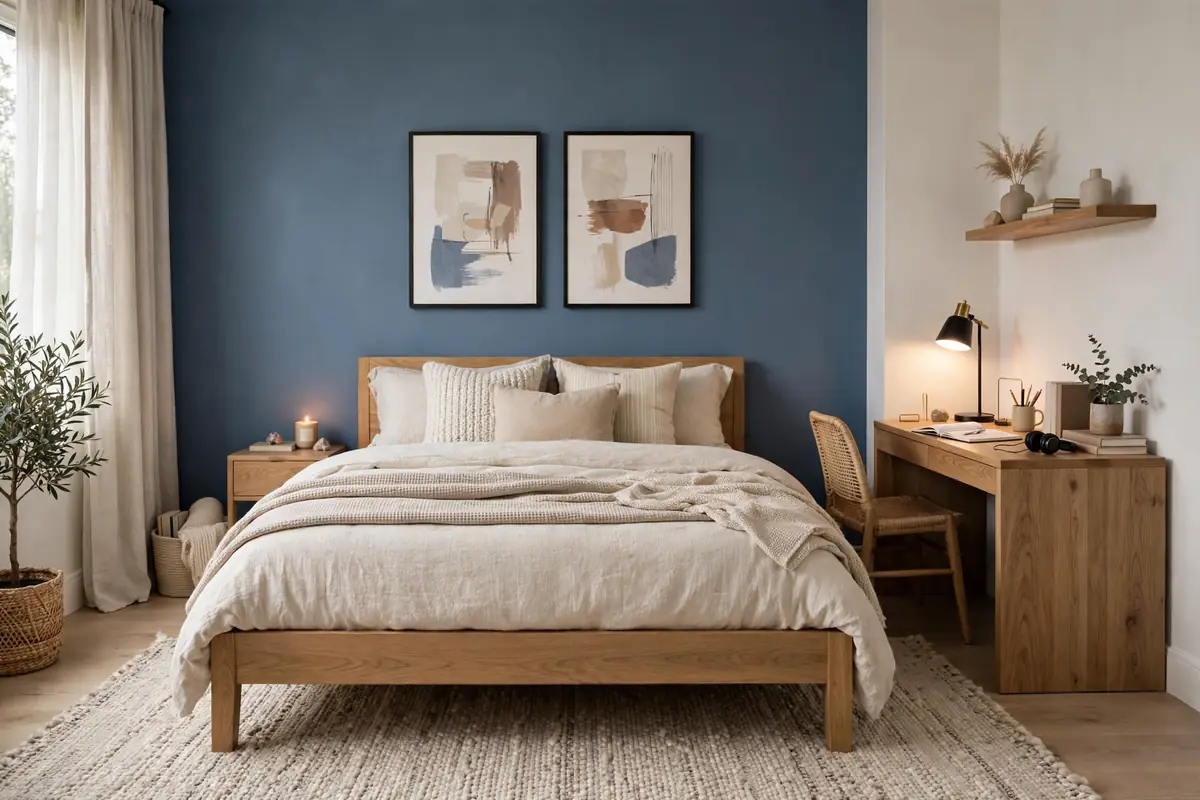
Teenagers often want their bedrooms to reflect a stronger sense of personal style. An accent wall is a relatively affordable way to introduce their favorite color without changing every surface in the room.
BEFORE: A bedroom with plain walls, basic bedding, and mismatched accessories may feel too young for a teenager who wants more independence. The furniture might still be perfectly useful, though.
AFTER: A single wall in their chosen shade gives the room a more mature appearance. Coordinated bedding, artwork, and a few personal accessories bring the new look together.
Explore these bedroom wall decor ideas for inspiration on arranging artwork and creating an attractive focal point. Let your teenager participate in choosing the color and decorations. If painting is not practical, removable wallpaper or framed prints can offer a similar sense of ownership.
Full-Length Mirror Teen Corner
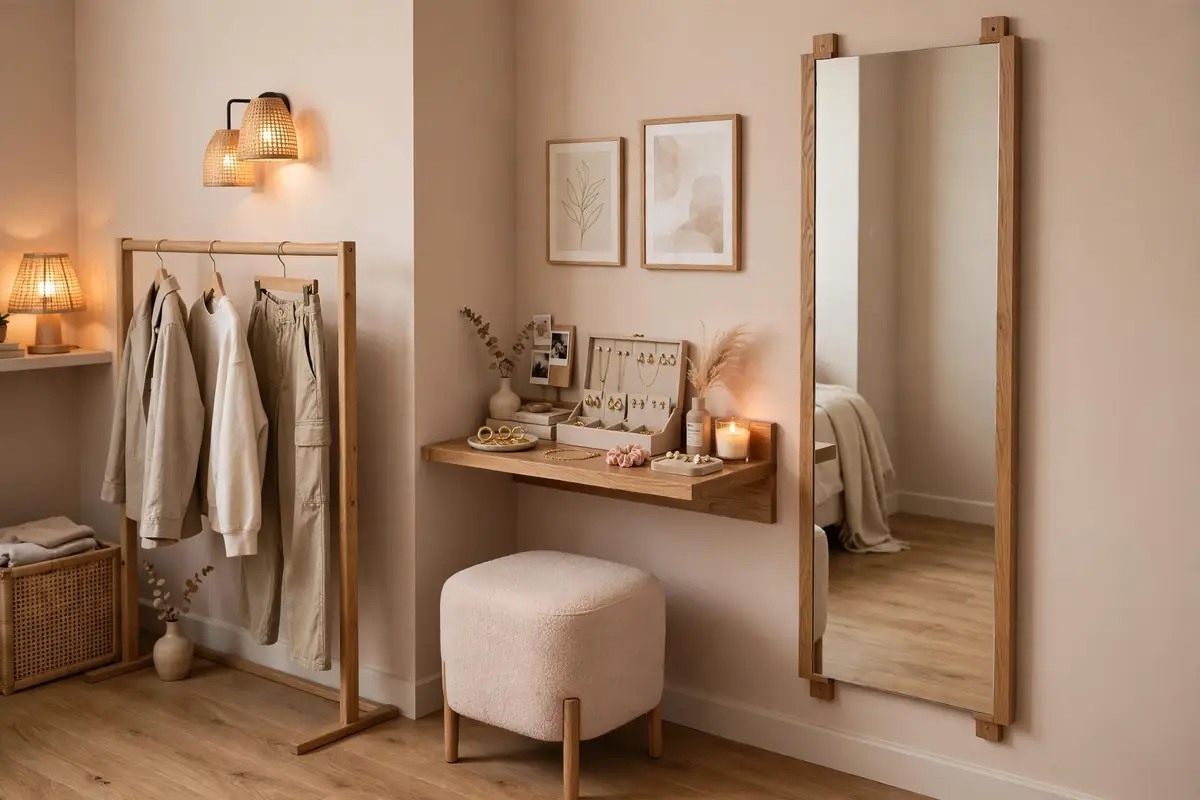
A full-length mirror can make a teenage bedroom feel more personal and practical. It gives them a dedicated place to check outfits, prepare for school, and organize accessories without taking over the entire room.
- Choose a shatter-resistant mirror where possible.
- Securely mount it according to the manufacturer’s instructions.
- Position it away from doors and busy walkways.
- Add a small shelf for everyday accessories.
- Include a basket for bags and other personal items.
A slim mirror can fit beside a wardrobe or behind a suitable door, while a larger model works well in an open dressing corner. Avoid relying on an unsecured leaning mirror in a child’s room. Combine it with simple storage and comfortable lighting to create a useful daily routine station.
Washable Rug Play Floor
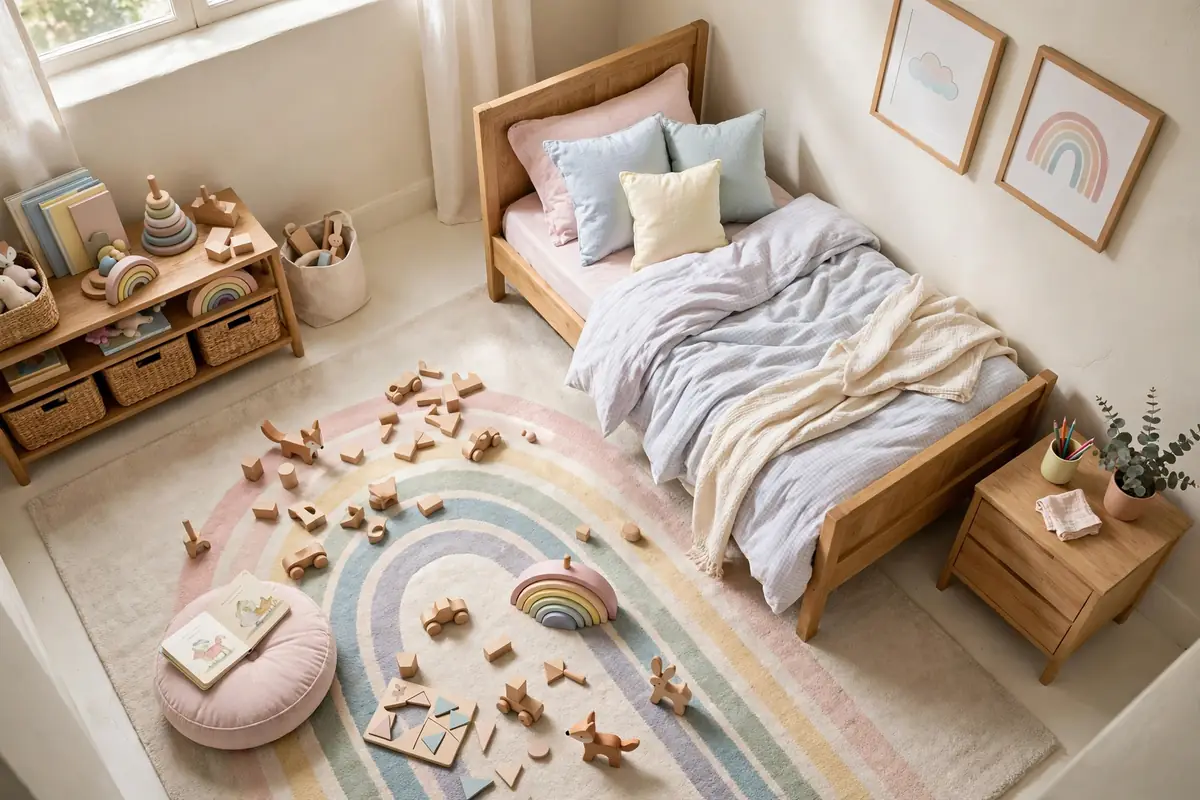
A washable rug makes the bedroom more comfortable while giving children a softer surface for everyday play. It is especially useful during the toddler and preschool years, when spills, snack crumbs, and craft materials are part of normal family life.
Low-Pile Rug
A low-pile rug has a flatter surface that makes it easier to vacuum, move toys across, and clean regularly. It is a practical choice for play areas and spaces with rolling storage.
Flatweave Rug
A flatweave design offers a lightweight surface with a neat appearance. It is often easier to lift and shake outdoors, although the exact cleaning requirements depend on the material.
Choose a rug with washable fibers and clear care instructions. Luxury vinyl plank and laminate flooring are also practical choices because they are generally easier to wipe clean after spills. Always dry damp areas properly and avoid leaving wet rugs on the floor.
Rug Pad Grip Layer
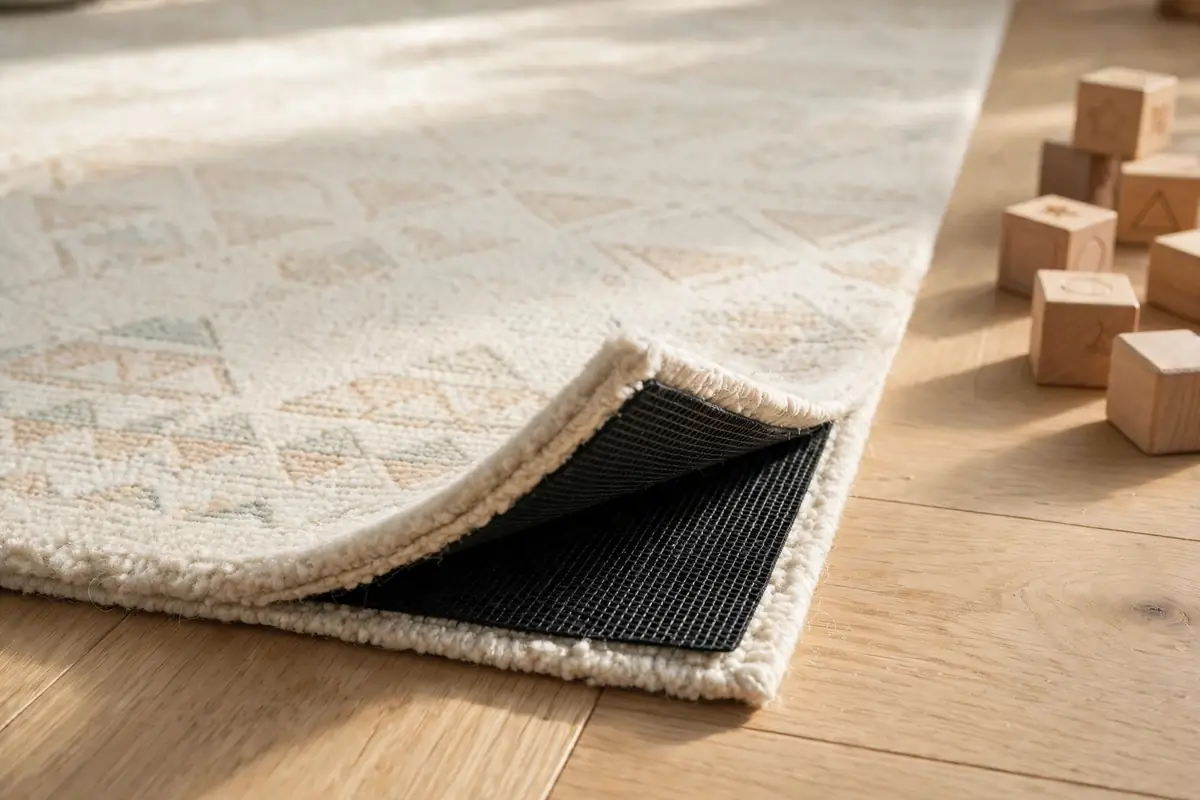
A rug can look beautiful in a child’s bedroom, but it should stay securely in place during everyday movement. A suitable rug pad helps reduce sliding and keeps the edges from shifting during play.
DO
- Select a pad designed for your flooring type.
- Choose one that provides reliable grip.
- Cut the pad to approximately one inch smaller than the rug on every side.
- Check that the rug lies flat after installation.
DON’T
- Use a pad that damages or discolors the floor.
- Allow loose corners to remain curled.
- Place a thick, uneven pad beneath a low-clearance door.
- Ignore manufacturer cleaning and maintenance instructions.
A properly fitted pad creates a more comfortable foundation without being visible around the edges. Check it periodically, especially after washing the rug or moving furniture. For younger children, prioritize a flat, low-pile surface that allows easy movement and reduces tripping risks.
Night Light Pathway
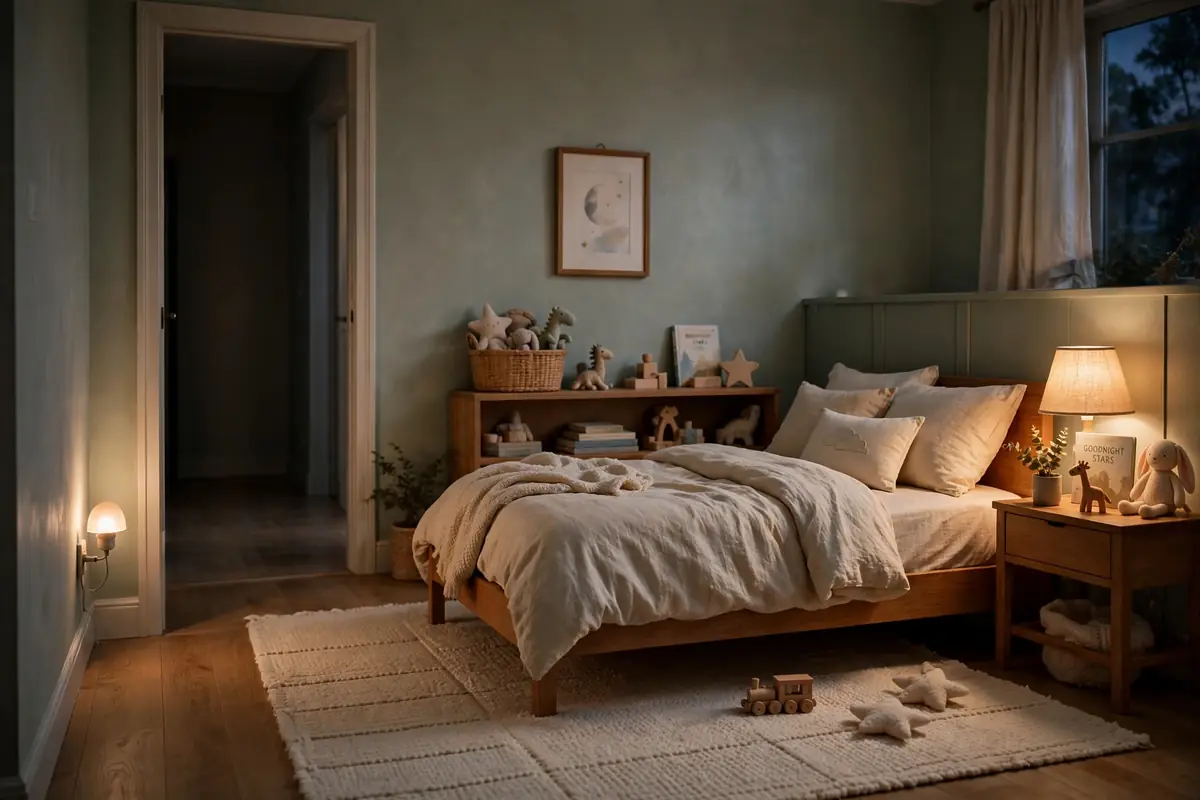
A gentle night light can help children feel more comfortable moving around their bedroom after dark. It is particularly useful for toddlers who are learning nighttime routines and older children who prefer a little background light.
Cost: Budget-friendly options are available for just a few dollars.
Time: A basic plug-in light takes only minutes to set up.
Best For: Children who feel unsettled in complete darkness or need gentle nighttime guidance.
Lighting Color: Warm white around 2700 to 3000K creates a softer nighttime atmosphere.
Create three layers of bedroom lighting: a central ceiling light for general visibility, a task light for reading or homework, and a gentle night light for evening comfort. Choose a properly certified light with safe placement, avoid accessible cords, and keep the pathway free from toys, shoes, and loose bedding.
One-In-One-Out Rotation
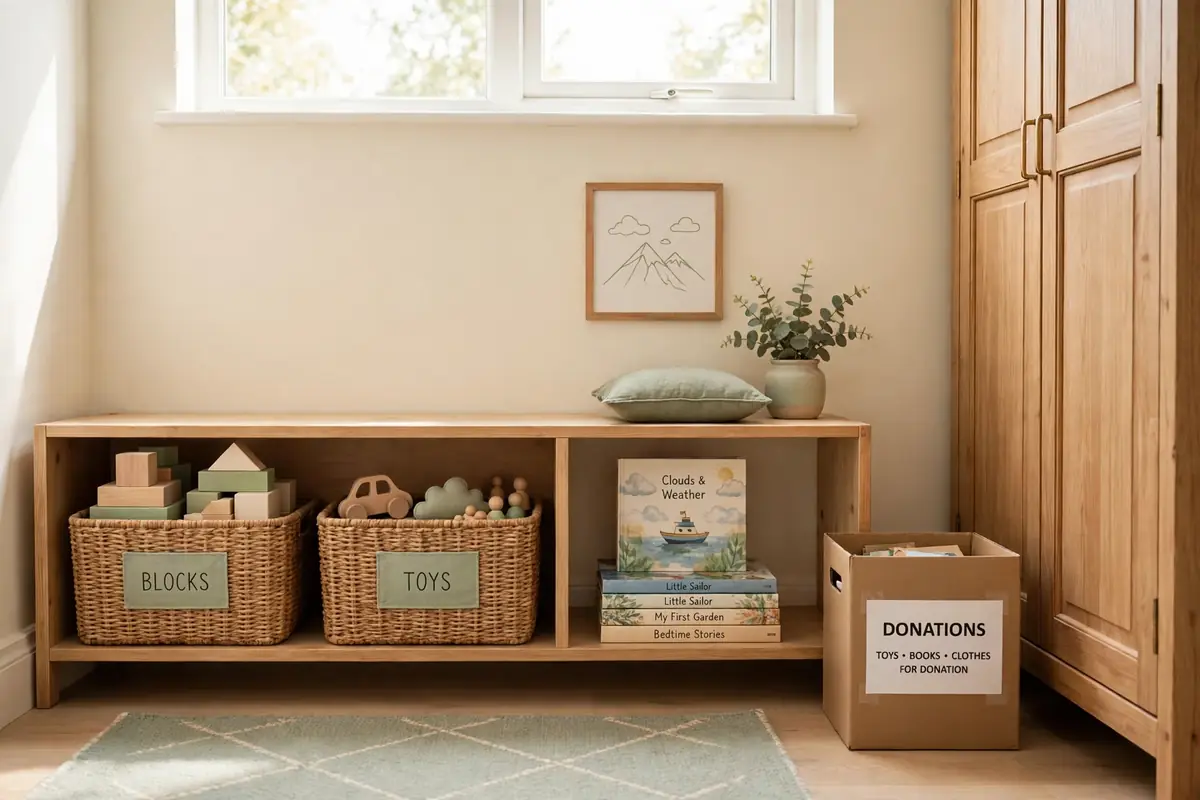
Too many toys can make even a beautifully decorated bedroom feel overwhelming. A simple one-in, one-out rotation helps keep the room manageable while making space for new interests and activities.
- Choose one storage area to organize first.
- Remove toys that are broken, incomplete, or no longer used.
- Select items to donate when they are still in good condition.
- Make room for new toys before bringing them into the bedroom.
- Repeat the process during seasonal changes or birthdays.
This approach does not mean children must give away a favorite toy every time they receive something new. Focus on reducing unused clutter and keeping the belongings they genuinely enjoy. Store a small selection of seasonal toys elsewhere and rotate them when interest changes.
Neutral Bones Bold Layers
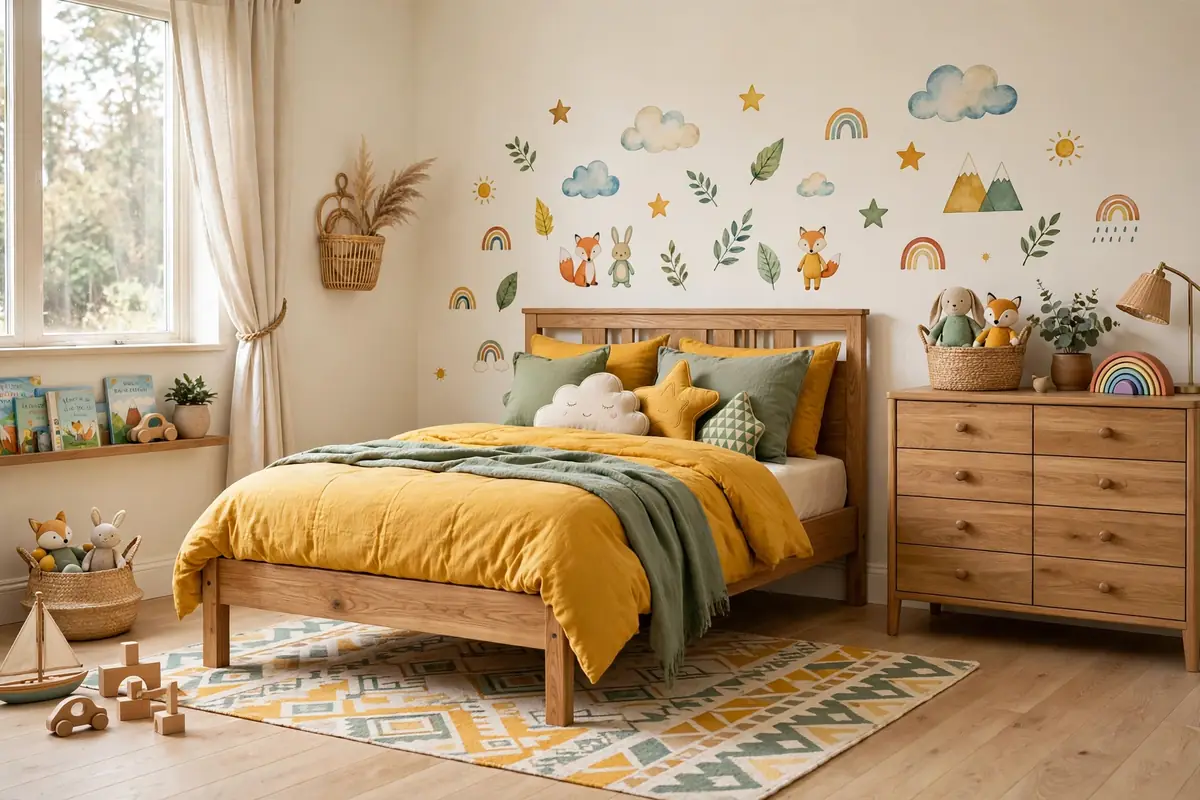
The smartest long-term bedroom design starts with neutral furniture and gives personality to the details that are easy to replace. Children grow quickly, and their interests can change from colorful animals to sports, music, books, or more mature styles.
DO
- Choose durable neutral furniture and flooring.
- Use eggshell or satin paint for easier cleaning.
- Add personality through bedding, art, and removable decals.
- Choose washable rugs and practical storage.
- Let your child help select decorative colors.
DON’T
- Spend heavily on short-lived character furniture.
- Choose delicate materials for everyday play areas.
- Fill every wall with permanent decorations.
- Replace perfectly good furniture just to refresh the theme.
A layer-only refresh might cost a few hundred dollars, while a full makeover involving furniture can reach the low-to-mid thousands. A teen refresh on good-quality existing furniture may also stay within a few hundred dollars. Many families find they update their children’s rooms several times before graduation, so flexible design choices can save money over the years.
Conclusion
The best kids bedroom ideas bring together imagination, comfort, safety, and practical storage. Start with durable furniture and create a flexible foundation that can grow alongside your child. Add personality through colorful bedding, removable wall decorations, cozy reading corners, and thoughtful lighting. Most importantly, involve your child in decisions that help the room feel like their own. You do not need to complete every change at once. Choose one idea that solves an everyday problem or adds a little excitement, then build from there. Save your favorite ideas on Pinterest and try one simple update this week.