Dressing Room Ideas: 21 Boutique-Worthy Spaces to Copy

A well-planned dressing room does more than store clothes. The best dressing room ideas start with the way you move, get dressed, store shoes, and manage everyday laundry. Whether you have a dedicated walk-in closet, a spare room, or one small bedroom corner, the right layout can make it feel like a boutique. The secret is to plan the walking space before buying shelves, rails, or drawers. From clever hanging systems to warm lighting and practical shoe storage, these 21 ideas will help you create an organized, attractive dressing space without wasting valuable floor area.
Painter Tape Walking Lane
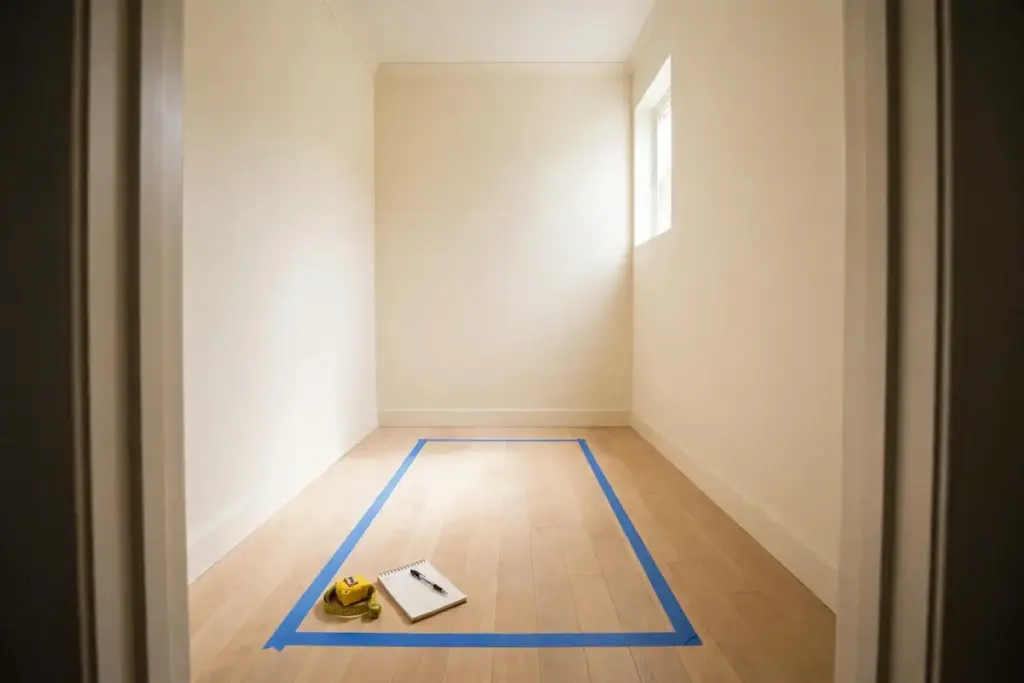
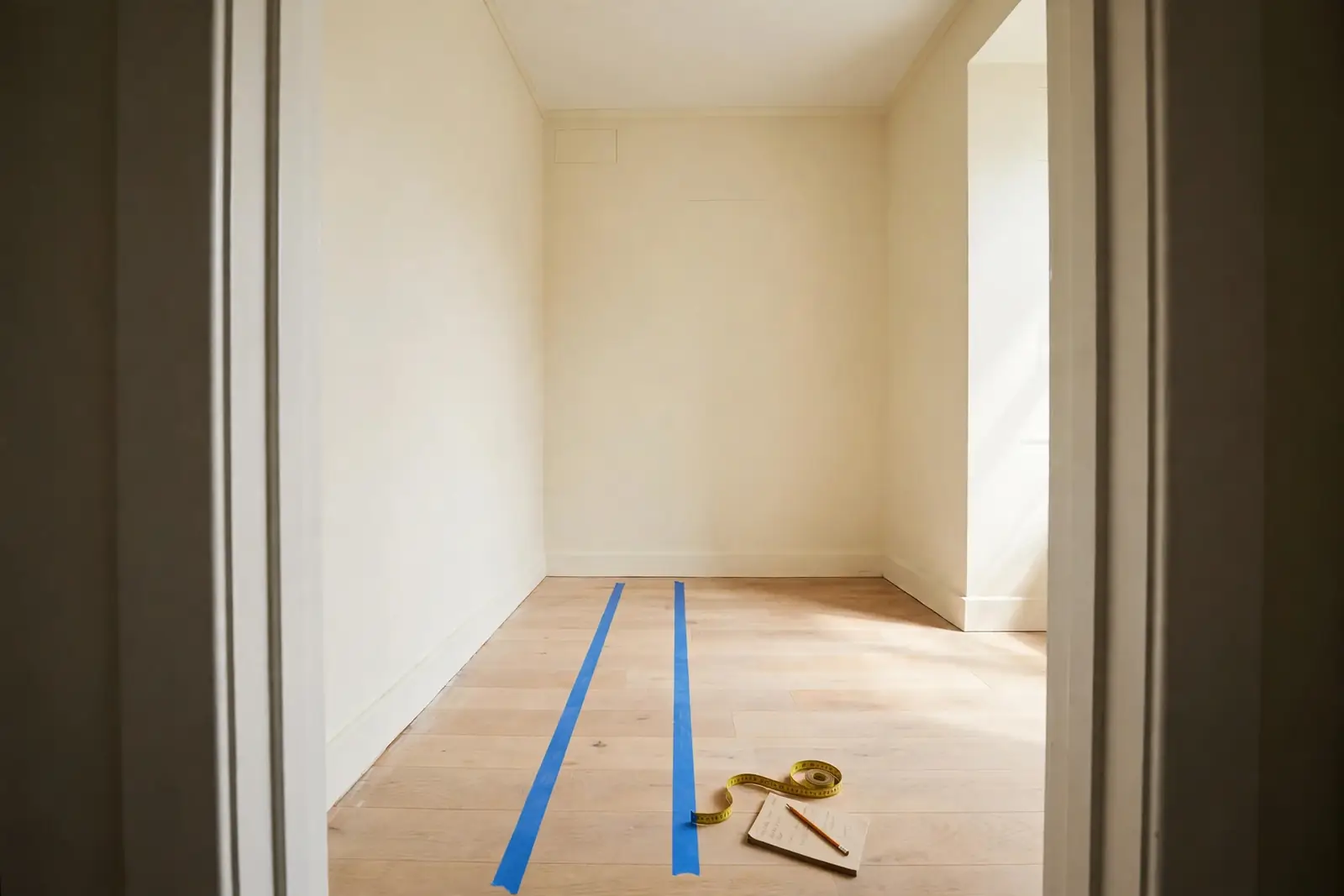
A comfortable dressing room begins with the floor plan, not the furniture. Use painter’s tape to mark where your storage will sit and where you need to walk before ordering anything. This simple exercise helps reveal whether drawers can open fully and whether two people can move through the room comfortably.
Start by reserving approximately 24 inches of clear passage wherever possible. A walk-in space around 6 x 8 feet offers comfortable planning options, but even a 4 x 4-foot footprint can work with carefully chosen storage. Keep the center open and avoid filling every available corner with furniture.
Single Wall Storage Run
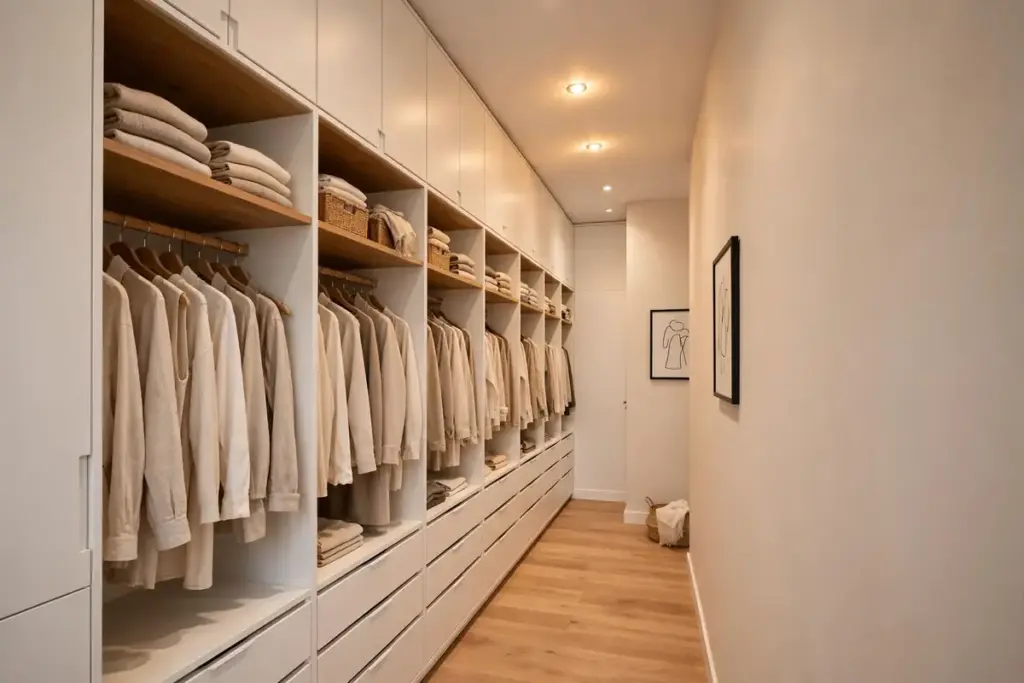
One well-organized wall can provide surprisingly generous storage without making a narrow room feel crowded.
- Install a continuous hanging rail for everyday clothing.
- Add upper shelves for seasonal boxes and spare bedding.
- Place drawers underneath shorter hanging sections.
- Use adjustable shelves for handbags and folded knitwear.
- Keep the opposite wall free to protect walking space.
This layout is particularly useful in small rooms and converted bedrooms. Choose matching storage finishes for a built-in appearance, even if you are using separate modular units. Measure your longest garments before fixing the rail height.
L-Shaped Double Wall
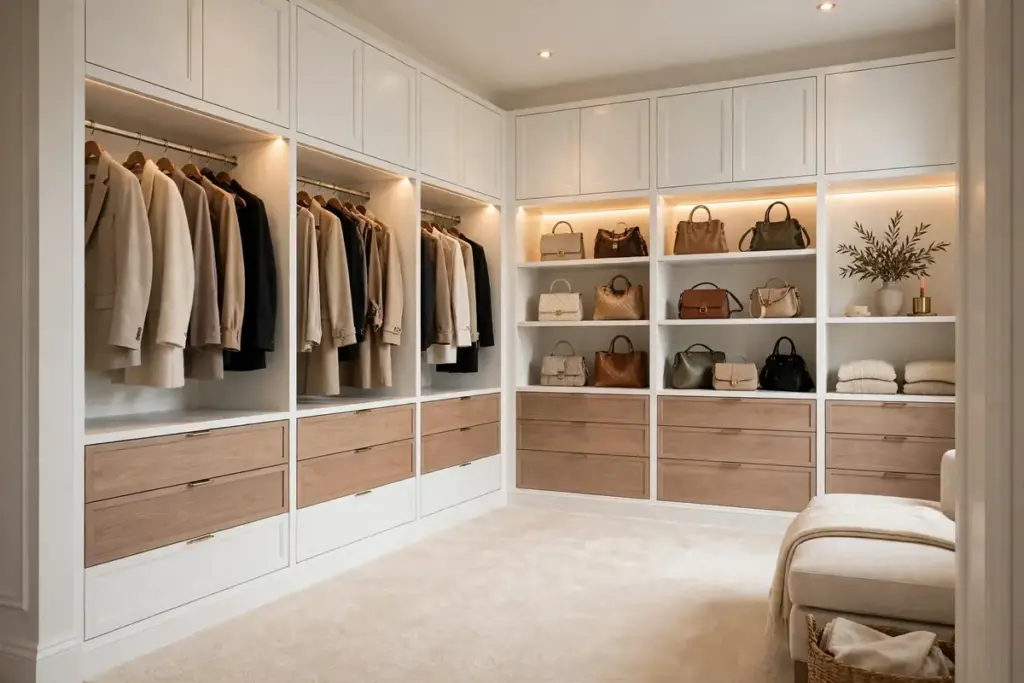
Two adjoining storage walls create a useful balance between hanging space and shelving. Quick Tip: Put frequently worn clothes along the longer wall and reserve the shorter return for shoes, folded garments, and accessories. This keeps daily dressing simple.
An L-shaped arrangement works especially well in square or rectangular rooms where a single storage wall would leave unused corners. Use corner shelving carefully, since deep shelves can become difficult to reach. Keep the central floor area open and make sure cabinet doors and drawers do not interfere with each other.
U-Shaped Storage Wrap
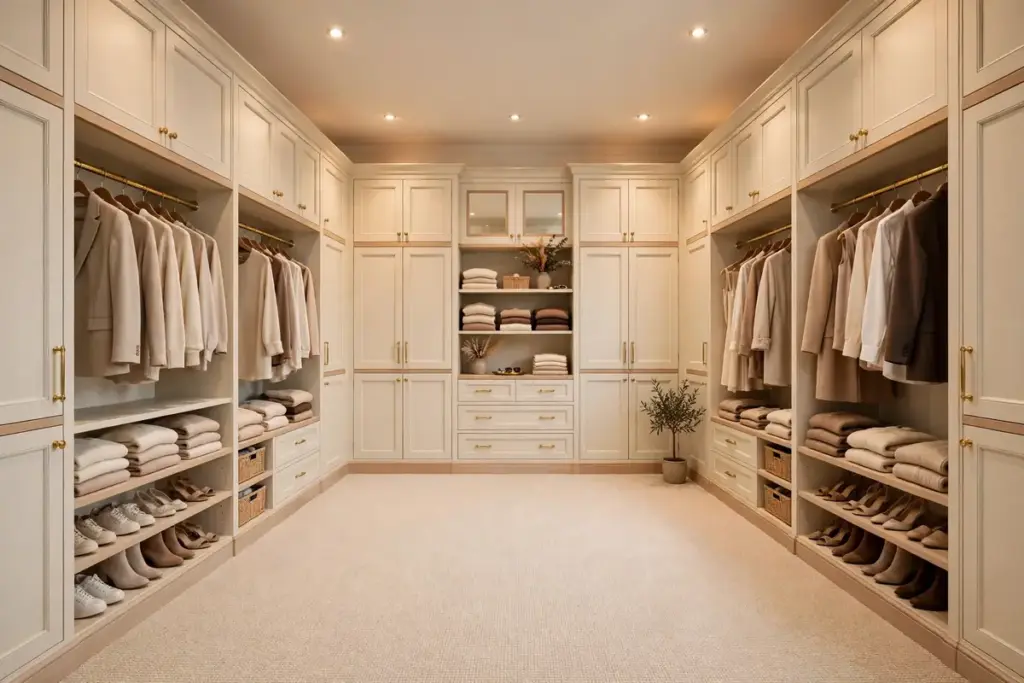
BEFORE
Three walls of clothing storage can quickly make a small room feel cramped. Deep cabinets, awkward corners, and bulky drawers leave little space to move.
AFTER
Use shallow storage along the side walls and concentrate deeper drawers on the back wall. Keep the entrance clear and maintain approximately 24 inches of unobstructed passage wherever the footprint allows.
A U-shaped arrangement is best suited to a larger walk-in area, ideally around 6 x 8 feet. Assign each wall a purpose instead of mixing everything together. One wall can hold everyday clothing, another can store shoes, and the back wall can accommodate drawers and folded items.
Five By Six Strong Wall
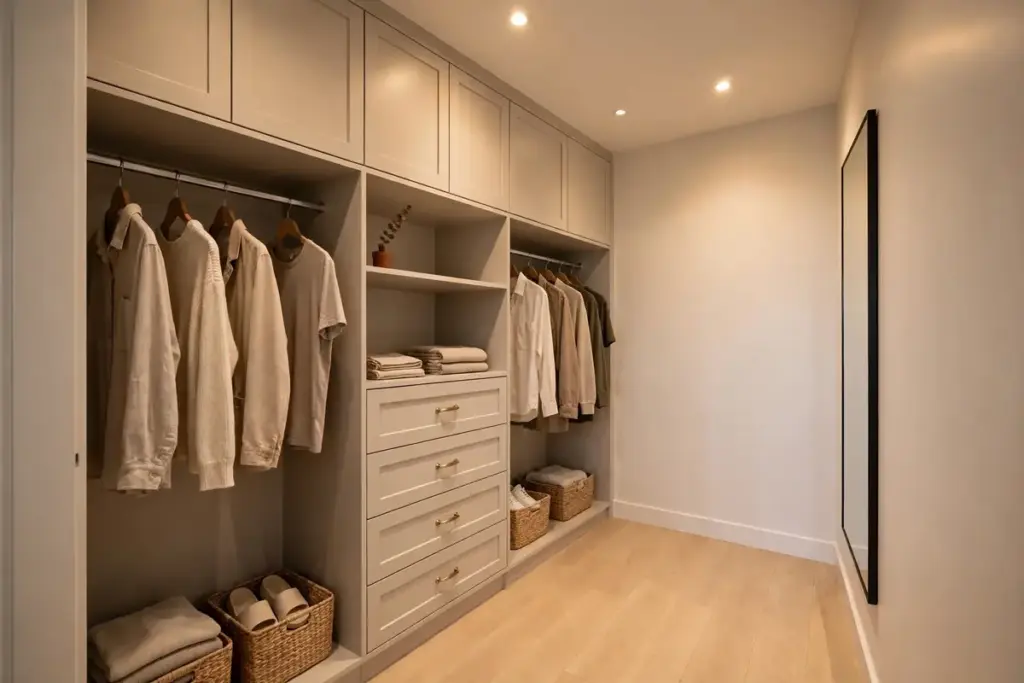
A 5 x 6-foot room can feel organized when one wall does most of the storage work.
- Measure the entire room, including door swings.
- Choose one strong wall for wardrobes and drawers.
- Install double hanging rails for shorter garments.
- Add upper cabinets for seasonal storage.
- Keep the opposite side visually and physically lean.
For this compact footprint, avoid bulky islands and deep furniture opposite the main storage. A slim mirror or narrow hook rail can add function without taking away useful floor space. Prioritize accessible storage over decorative extras.
Double-Hang Rod Ladder
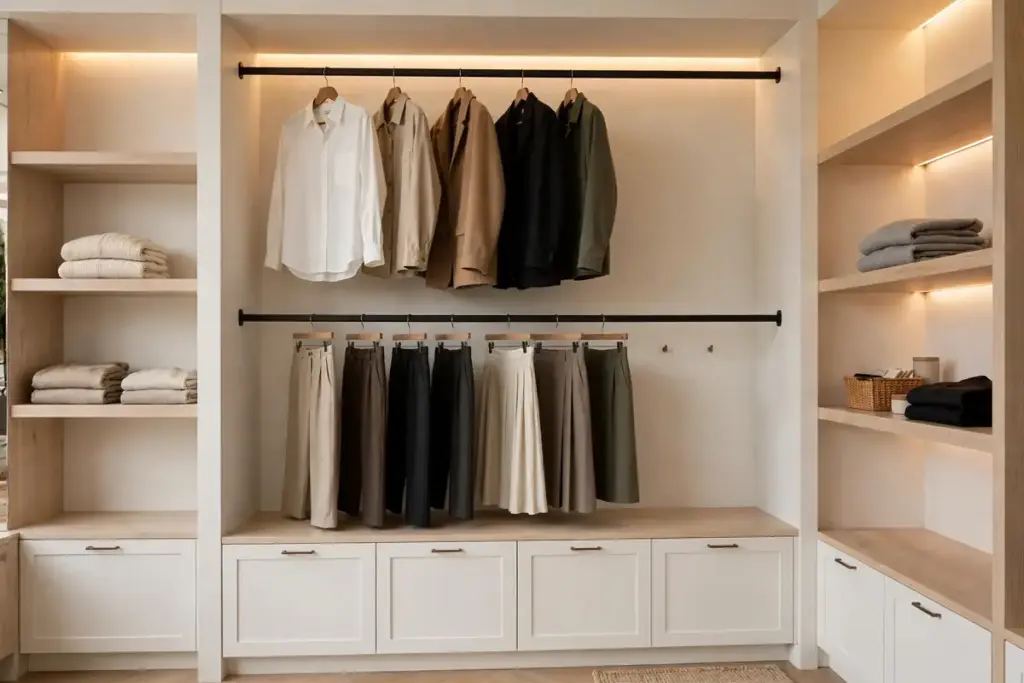
The right hanging heights can almost double your usable clothing space. Compare a single long rail with a double-hang arrangement before deciding how much wardrobe width you need.
A single rail is better for dresses, coats, jumpsuits, and other longer garments. Two shorter rails work beautifully for shirts, folded-over trousers, skirts, and jackets. A useful starting arrangement places the lower rod around 42 inches from the floor and the upper rod around 84 inches. Adjust these measurements to suit your clothing and available ceiling height.
For more practical storage inspiration, explore these wardrobe design bedroom ideas for different room sizes and layouts. Plan your hanging sections around your actual wardrobe rather than buying rails first and hoping everything fits.
Tall Long Garment Bay
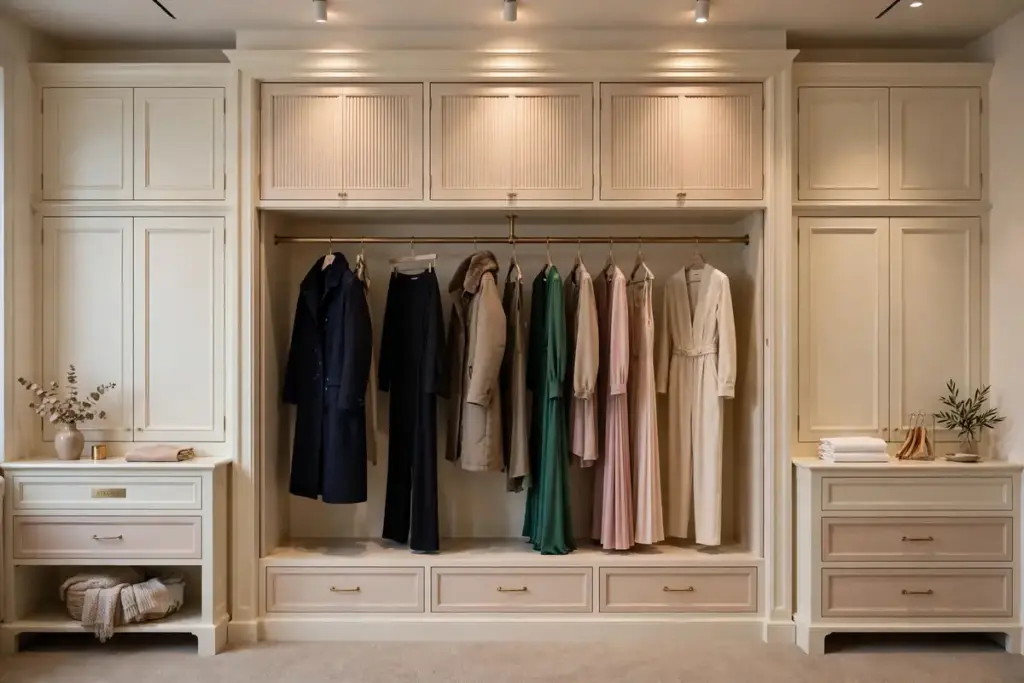
Long garments deserve their own properly measured section.
DO
- Measure your longest dress and coat before installation.
- Keep the hanging area free from lower shelves.
- Add an upper compartment for rarely used accessories.
- Leave enough space between garments for easy browsing.
DON’T
- Force long dresses into double-hang sections.
- Place shoes directly underneath delicate clothing.
- Overcrowd the rail with bulky winter coats.
- Use decorative boxes that block garment access.
A dedicated long-hang bay prevents clothes from dragging against drawers or folding awkwardly. It also makes the wardrobe easier to maintain. Keep this section close to your everyday clothing so getting dressed does not require moving between multiple storage areas.
Fourteen-Inch Shelf Depth
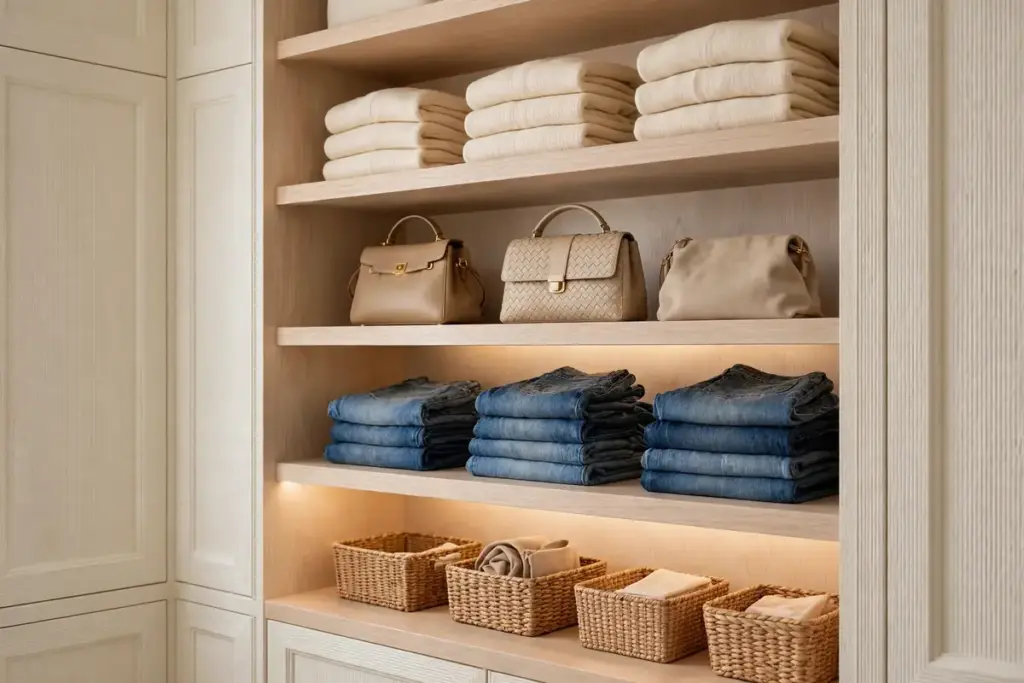
Cost: Depends on shelf material and installation.
Depth: Approximately 14 inches.
Best For: Folded clothes, handbags, and most everyday shoes.
Finish: Pale oak, white laminate, or warm neutral wood.
A 14-inch shelf depth is a practical starting point for a compact dressing room. It provides useful space without pushing too far into the walking lane. Use shelf dividers to separate sweaters and jeans, and place smaller accessories in labeled containers. Keep heavier items on lower shelves for easier access and safer handling.
Shoe Shelf Low Row
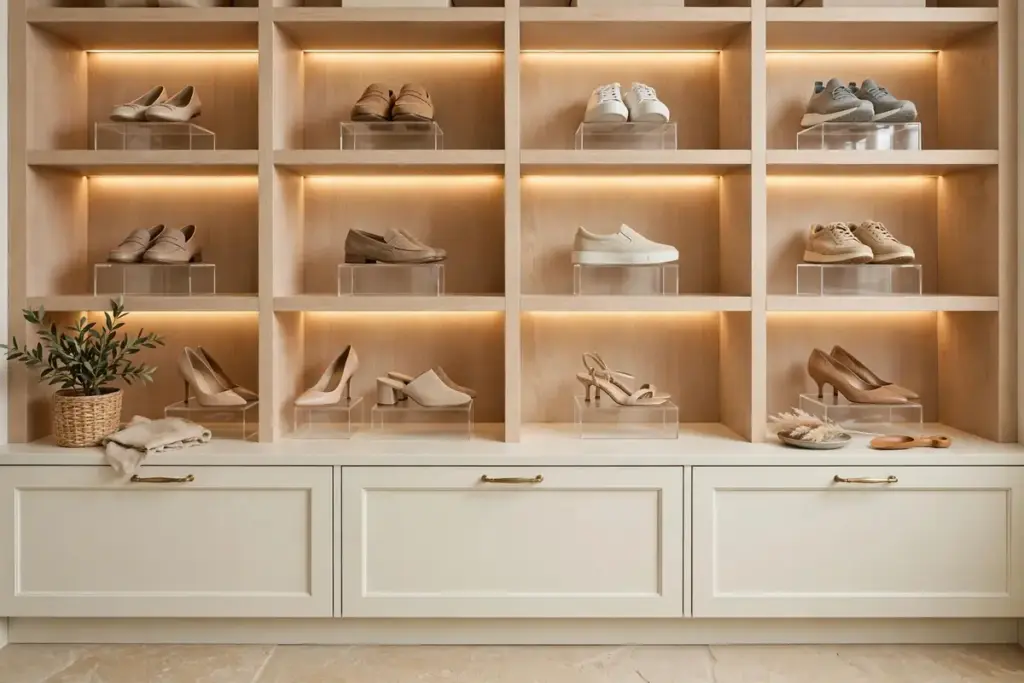
Give your shoes a proper home instead of letting them collect beneath hanging clothes. A low shelf row keeps everyday pairs visible, accessible, and easier to organize.
Place frequently worn footwear on the bottom shelves, where you can reach it without bending around hanging garments. Tilted shoe shelves can improve visibility and make use of narrow storage spaces. Clear risers are particularly helpful for flats and sandals because they create extra display levels without hiding the pairs underneath.
For a cleaner appearance, group shoes by type or color. Leave enough space between pairs so footwear can be removed without knocking over neighboring shoes.
Boot Tall Cubby Row
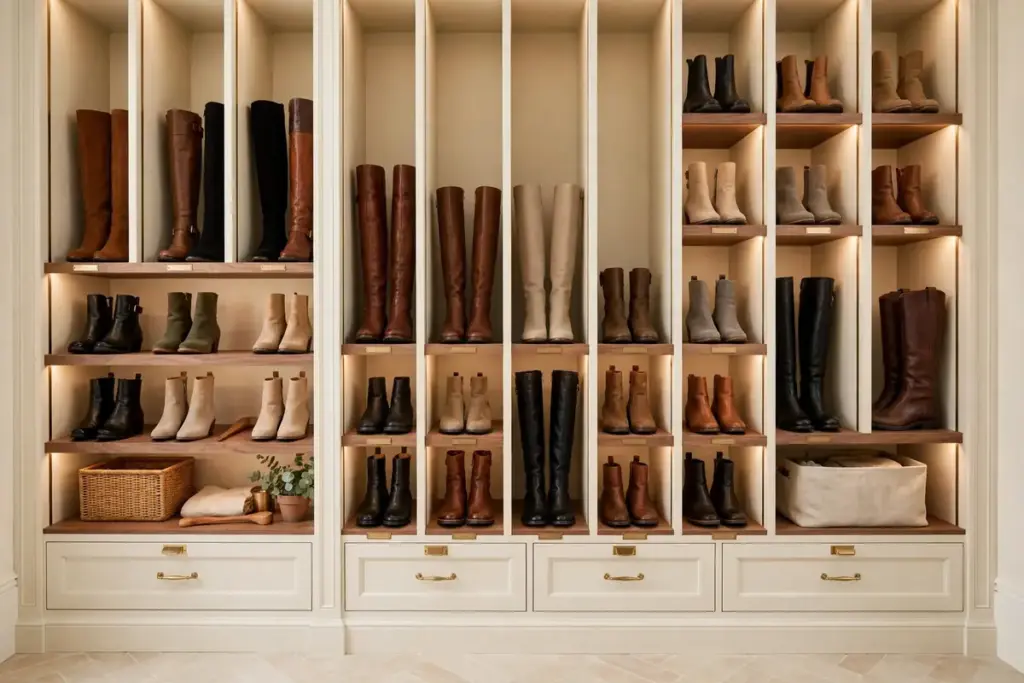
Keep tall boots upright with storage designed specifically for their height.
- Measure your tallest boots before setting cubby dimensions.
- Reserve vertical compartments for knee-high and riding boots.
- Add boot supports to prevent shafts from folding.
- Place ankle boots and shorter footwear in neighboring shelves.
- Keep heavier pairs on the bottom level.
A dedicated boot section prevents creases and keeps tall footwear from being squeezed beneath regular shelves. If you have limited space, combine two or three taller cubbies with adjustable shelves. This gives your collection room to grow without dedicating an entire wall to boots.
Island Only With Clearance
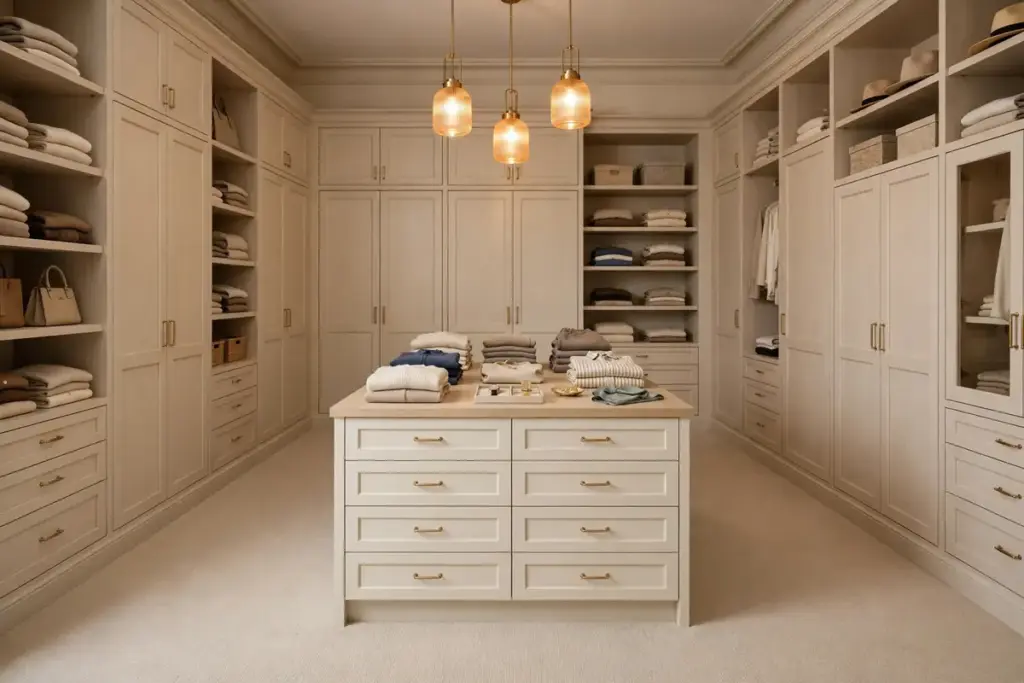
A central island looks beautiful, but it should never make the room difficult to use. Quick Tip: Measure the space around the island with every drawer fully open, not just when everything is closed. Keep approximately 24 inches of clear passage as a practical minimum target.
Typical US planning ranges from one cost guide place a dressing room island around $800 to $3,000, depending on size, materials, and construction. Consider a narrow peninsula instead if your room cannot accommodate a freestanding island. Storage should make the room more functional, not turn its main walking route into an obstacle.
Three-Height Light Stack
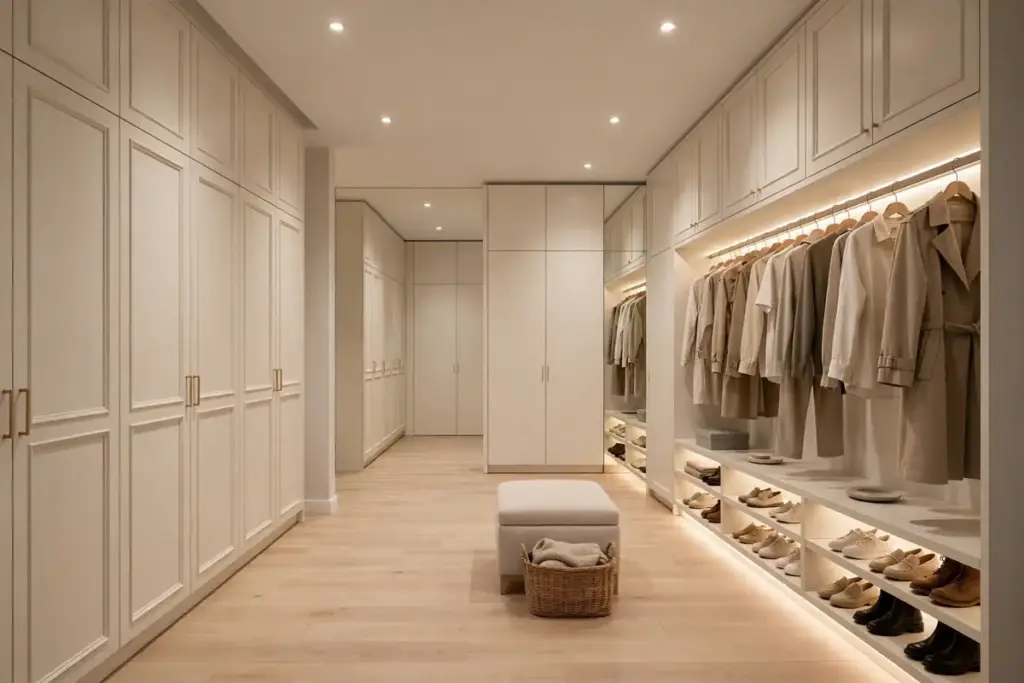
BEFORE
A single ceiling light can leave lower shelves dark and create shadows across clothing. Dark navy trousers and black garments become particularly difficult to distinguish.
AFTER
Combine overhead lighting, mid-level garment lighting, and low-level shoe lighting. This layered arrangement distributes brightness throughout the storage area and makes individual items easier to identify.
Choose a consistent warm-white or neutral-white color temperature to keep the room visually comfortable. Add lighting controls near the entrance so you can switch on the entire space without searching for individual switches. Good lighting should serve the storage system first and the decorative atmosphere second.
LED Rod Rail Lighting
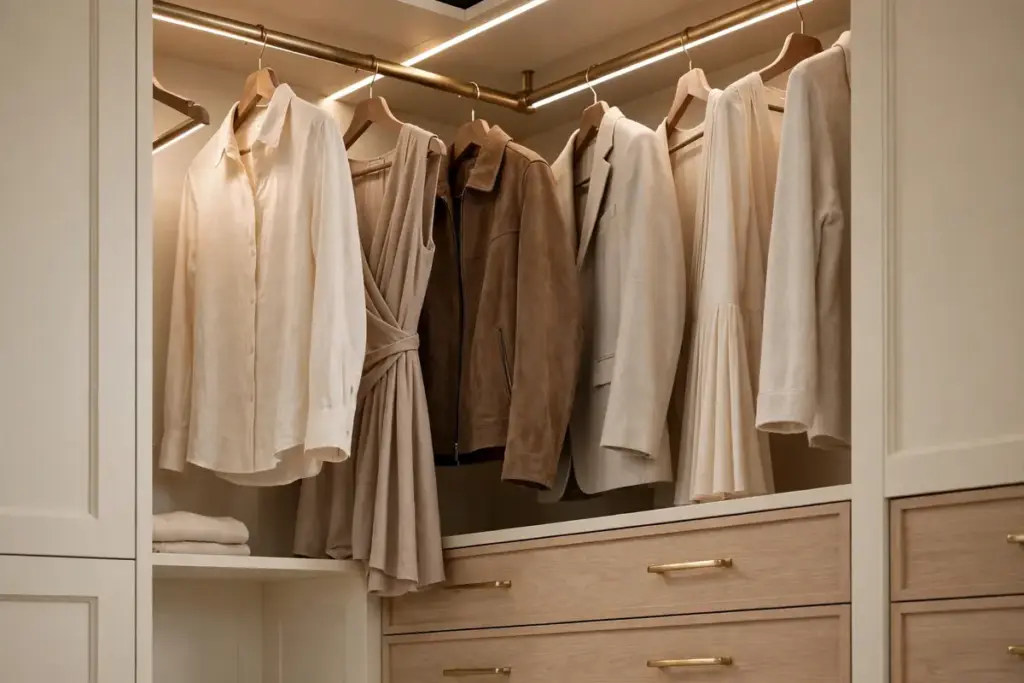
Lighting beneath your hanging rails makes clothes easier to see and select.
- Measure each hanging section before purchasing LED strips.
- Choose a suitable low-voltage lighting system.
- Position the light source beneath or inside the rail.
- Hide wiring behind wardrobe panels where possible.
- Test the brightness before permanently fixing everything.
Typical LED rod lighting can cost around $30 to $150, depending on the system and installation requirements. Motion sensors are useful for frequently accessed sections. Look for consistent light output and avoid overly cool lighting that makes clothing colors look different from their appearance in daylight.
Framed Full-Length Mirror
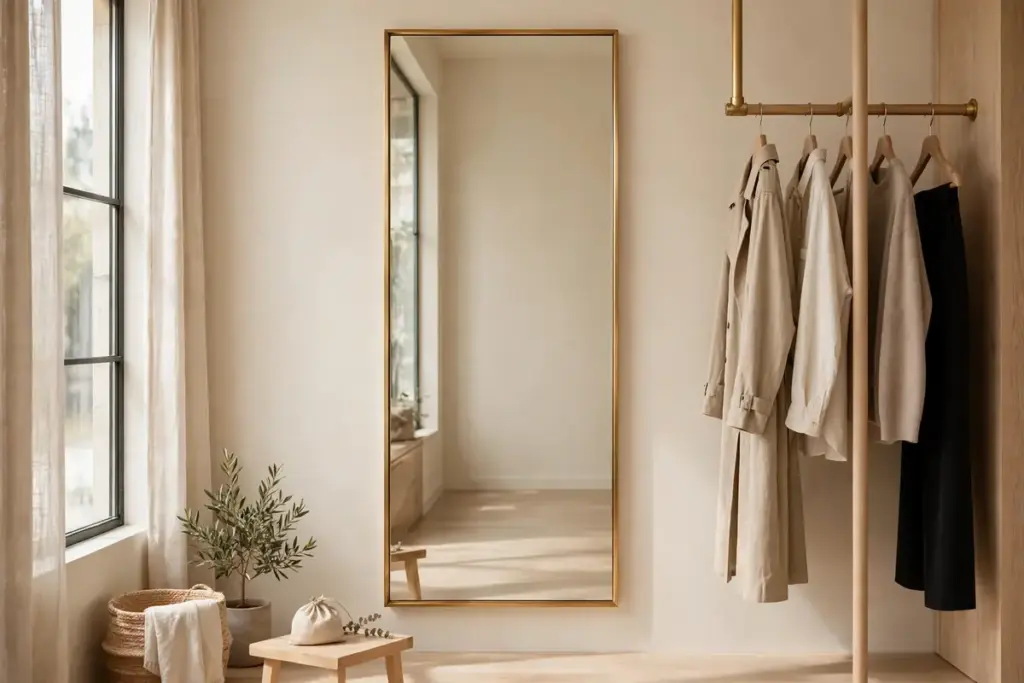
A full-length mirror gives your dressing room a useful finishing touch without taking up much floor space.
A wall-mounted mirror is ideal for narrow rooms because it keeps the walking lane clear. A freestanding framed mirror offers more flexibility if you prefer to rearrange the layout or cannot drill into the walls. Choose a position with enough distance to see your complete outfit comfortably.
Keep the mirror away from crowded storage corners where open doors or hanging garments can block the view. A slim frame in brass, oak, or matte black can connect it visually to the rest of the room.
Painted Back Accent Wall
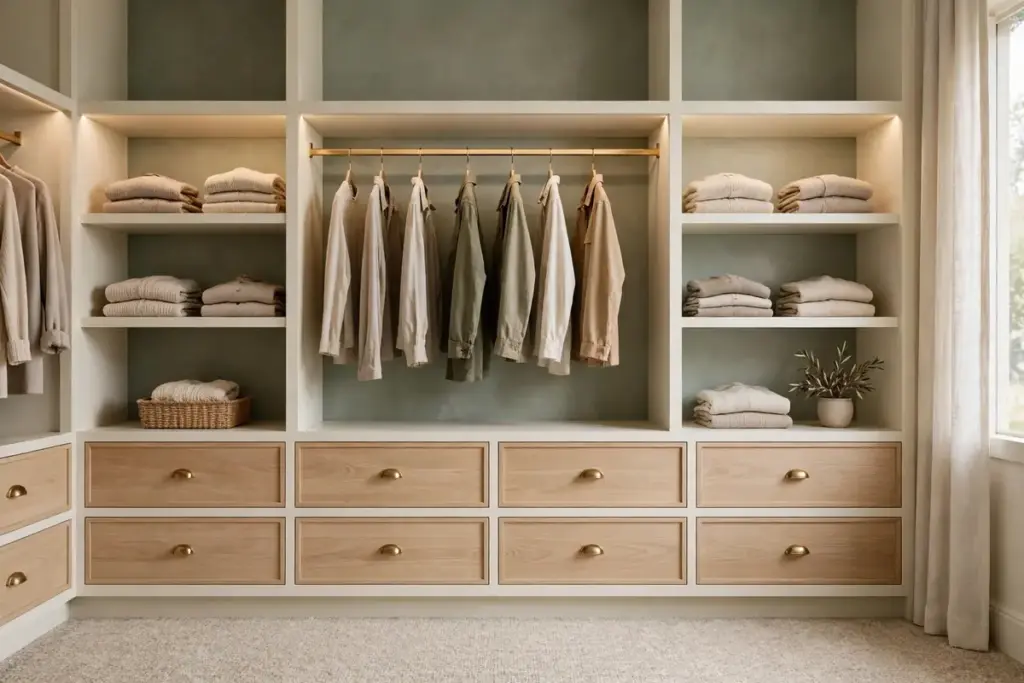
DO
- Paint the back wall behind open shelving.
- Choose muted sage, warm taupe, or soft clay.
- Test paint samples under your actual lighting.
- Keep surrounding cabinetry lighter for contrast.
DON’T
- Paint every wall a dark color in a small room.
- Choose a shade that hides dark clothing.
- Ignore how artificial lighting changes paint tones.
- Mix too many competing finishes.
A painted back panel adds depth without making the entire dressing room feel enclosed. This is particularly useful in a small closet with white or cream shelving. Keep navy, black, and charcoal garments visible against a lighter background, especially where natural light is limited.
Door Wall Hook Rail
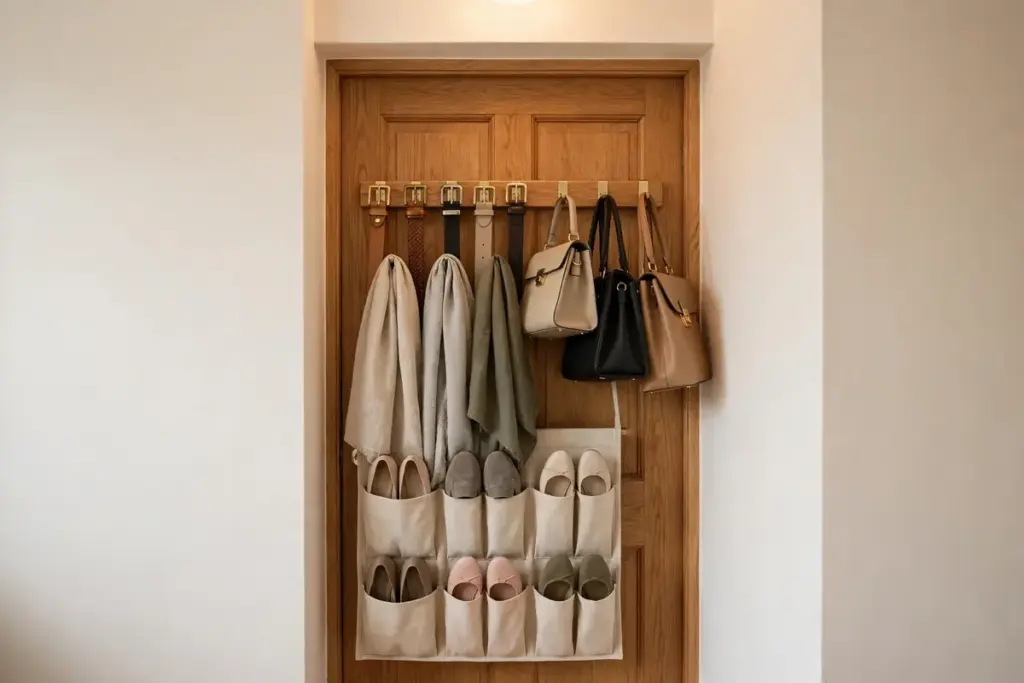
Your door can provide valuable storage without taking up another inch of floor space.
Cost: Low to moderate, depending on hardware.
Time: Usually a short installation project.
Best For: Belts, scarves, handbags, and flat shoes.
Space Saving: Uses an existing vertical surface.
Install a sturdy hook rail on the inside of a suitable door for accessories you reach for regularly. Add flat shoe pockets below the hooks if the door has enough clearance. Keep heavier handbags on secure hooks and lighter scarves on smaller pegs. Check door movement before installing anything, especially if the room has a narrow entrance.
Closed Open Display Balance
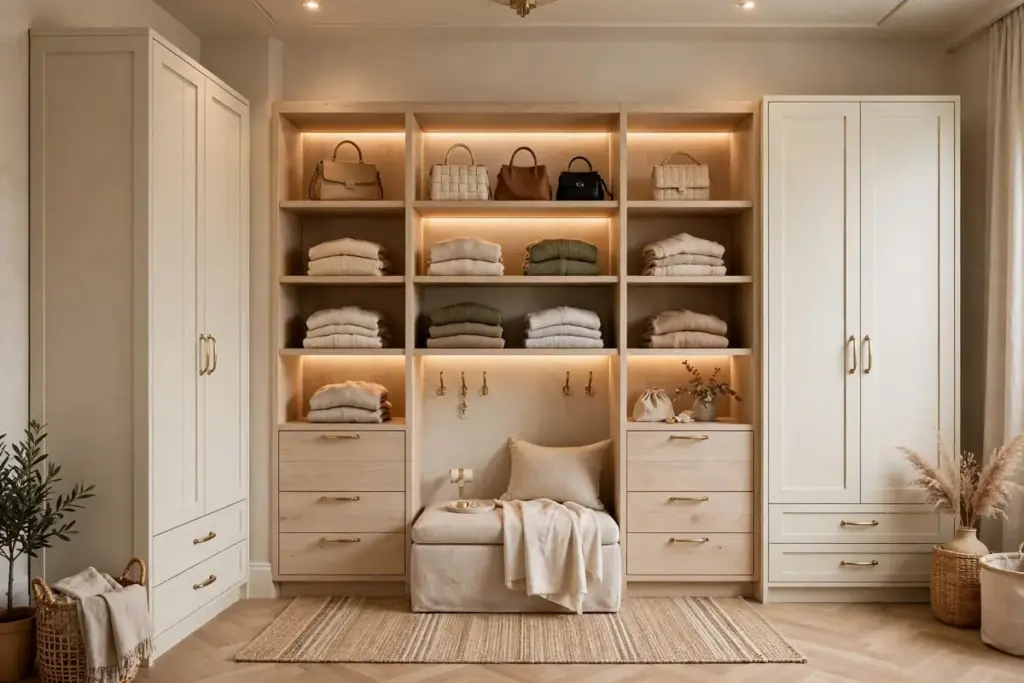
The most attractive dressing rooms combine hidden storage with a few carefully arranged open displays. One continuous row of open shelves can look messy if every item is visible, while entirely closed cabinets can make everyday clothing harder to access.
Use closed drawers for underwear, socks, and smaller personal items. They offer better separation and keep delicate pieces protected from dust. Reserve open shelving for folded sweaters, handbags, and frequently used accessories. A simple balance of concealed and visible storage creates a room that feels organized without requiring constant styling.
Laundry Hamper Hideaway
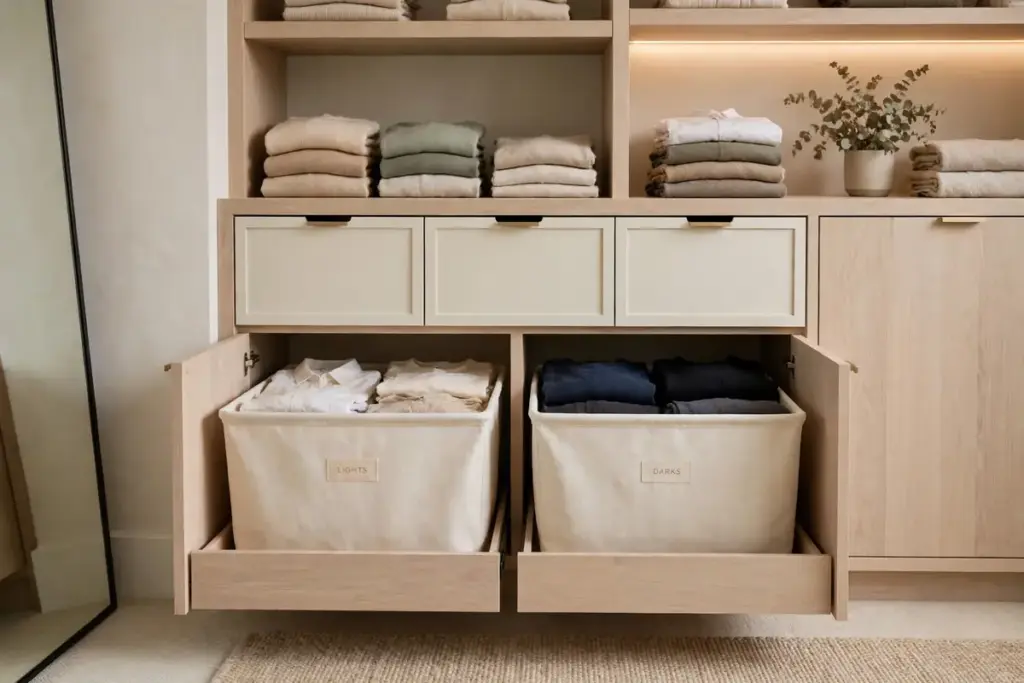
Laundry becomes easier to manage when it has a designated place inside the storage system.
- Install two slim pull-out canvas hampers.
- Label one for light-colored clothing.
- Use the second for dark garments.
- Choose washable, breathable fabric containers.
- Add a cabinet front or lid to conceal laundry.
Place the hamper cabinet near the entrance or close to the area where you change clothes. Make sure the pull-out mechanism operates smoothly and has enough room to open. Separating laundry immediately reduces sorting time later and prevents clothes from collecting in baskets across the room.
Renter-Friendly Dressing Layers
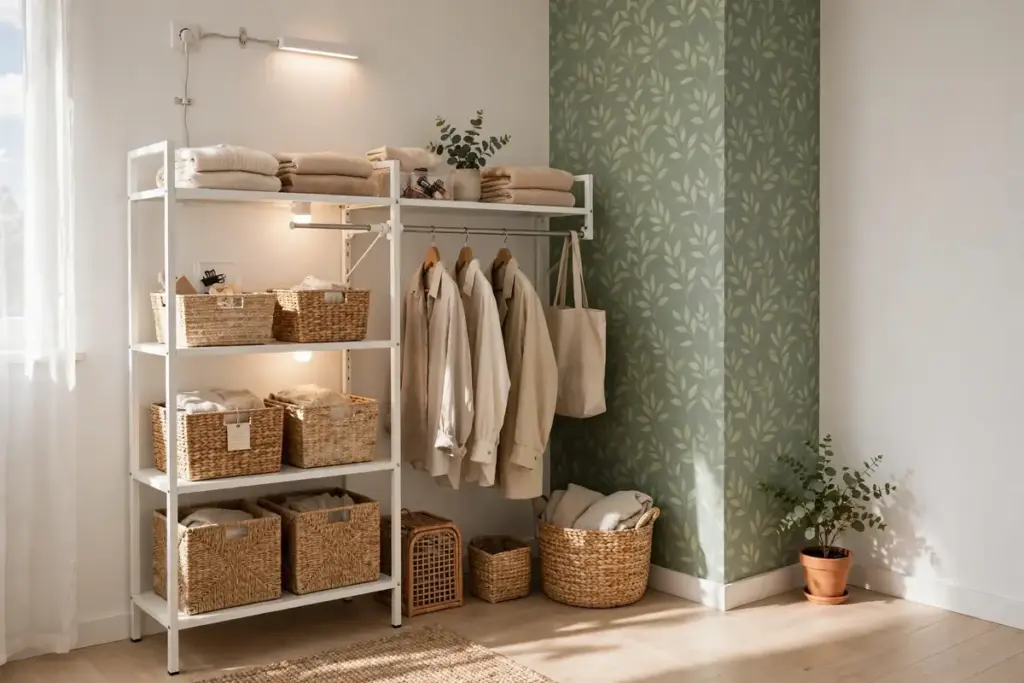
A rented home can still have a beautifully organized dressing area without permanent construction. Quick Tip: Build around removable and freestanding pieces so you can take the entire setup with you when you move.
Use tension rods for temporary hanging sections, freestanding shelves for folded clothes, and plug-in lights for darker corners. Apply removable wallpaper to one accent area only rather than covering every wall. Adhesive puck lights inside shelves can brighten smaller compartments without complicated electrical work. For more small-space inspiration, explore these apartment bedroom decor ideas. Always check your lease before making changes.
Seated Boot Bench
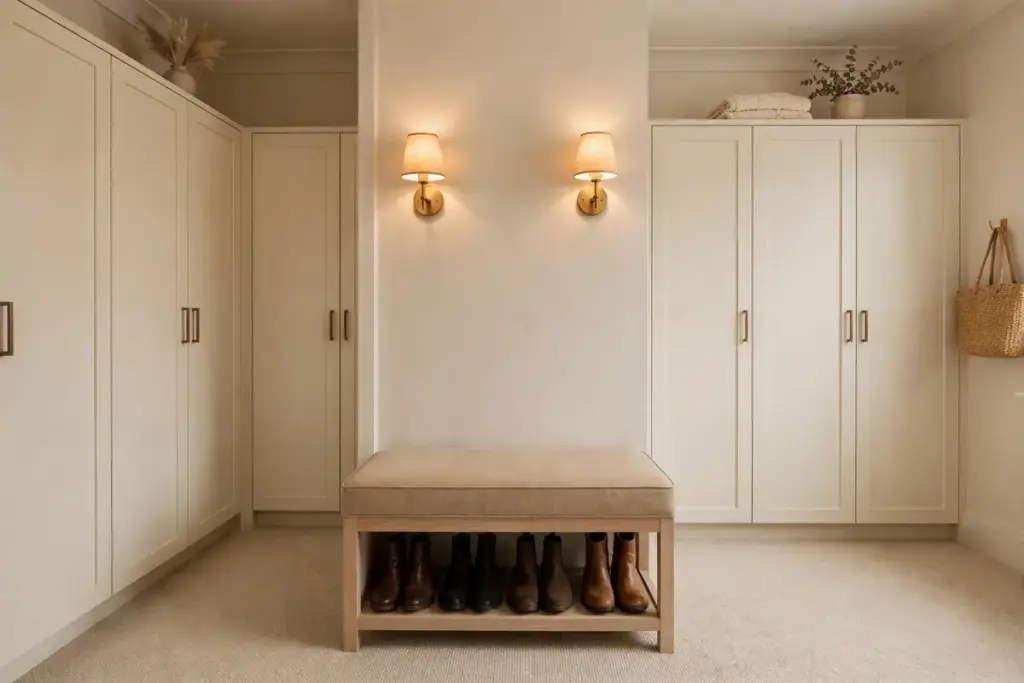
A small seat can make a dressing room more comfortable, provided it earns its floor space.
BEFORE
A decorative chair can become an obstacle in a narrow walkway. It may look attractive but offer little practical storage or dressing support.
AFTER
Choose a slim bench with a lift-up lid or open shoe storage underneath. Position it against a free wall where it does not block drawers or wardrobe doors.
Measure the bench depth before buying, and consider a narrow upholstered design that is comfortable without being bulky. A bench is particularly useful for putting on boots and shoes. If your room cannot accommodate seating, skip it rather than sacrificing valuable circulation space.
Two-Wood Tone Rule
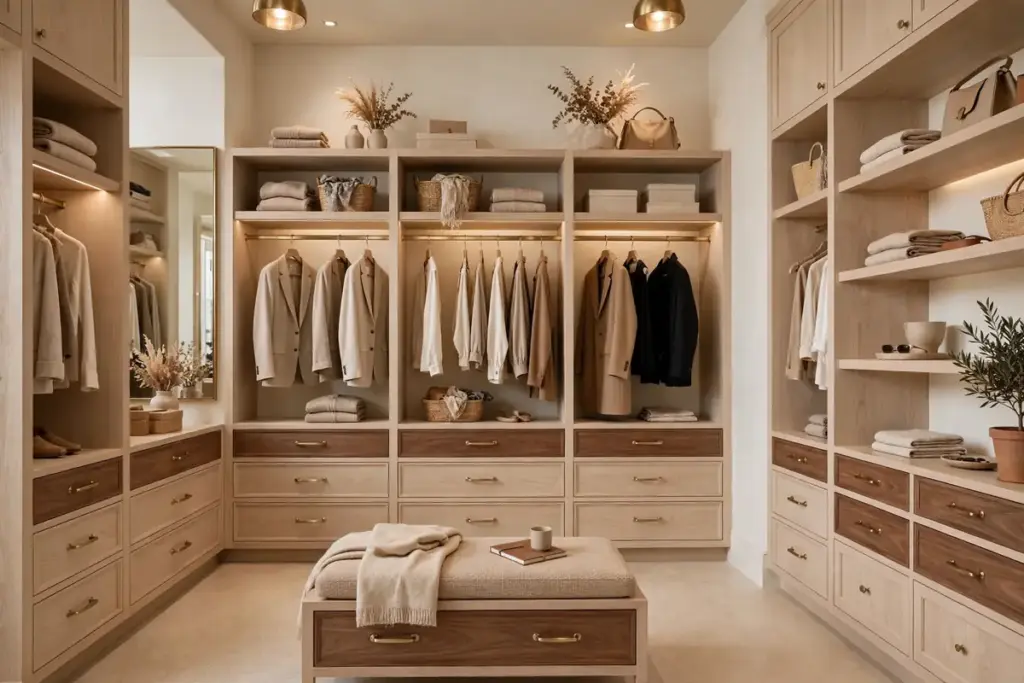
A consistent wood palette makes even a collection of separate storage units feel intentional.
- Choose your main wood tone for wardrobes and large shelves.
- Select one complementary wood tone for smaller accents.
- Repeat both finishes across the room.
- Keep additional surfaces neutral to avoid visual clutter.
- Match hardware finishes for a more connected appearance.
For example, pale oak cabinetry paired with walnut drawer fronts creates warmth without introducing too many competing finishes. You can also reverse the combination with darker wardrobes and lighter shelves. Keep the total number of wood tones to two, maximum, and let lighting and fabric textures provide additional character.
Conclusion
The best dressing room ideas are built around everyday routines, available floor space, and the clothing you actually own. Start by measuring your walking lane, then choose the right hanging arrangement, shoe storage, lighting, and laundry solutions. You do not need a huge room or expensive custom cabinetry to create a boutique-inspired result. Even a small corner can become organized and attractive with thoughtful planning. Save this collection on Pinterest so you can revisit your favorite layouts, and try one practical idea first. A well-planned storage system will make your dressing room easier to enjoy every day.