
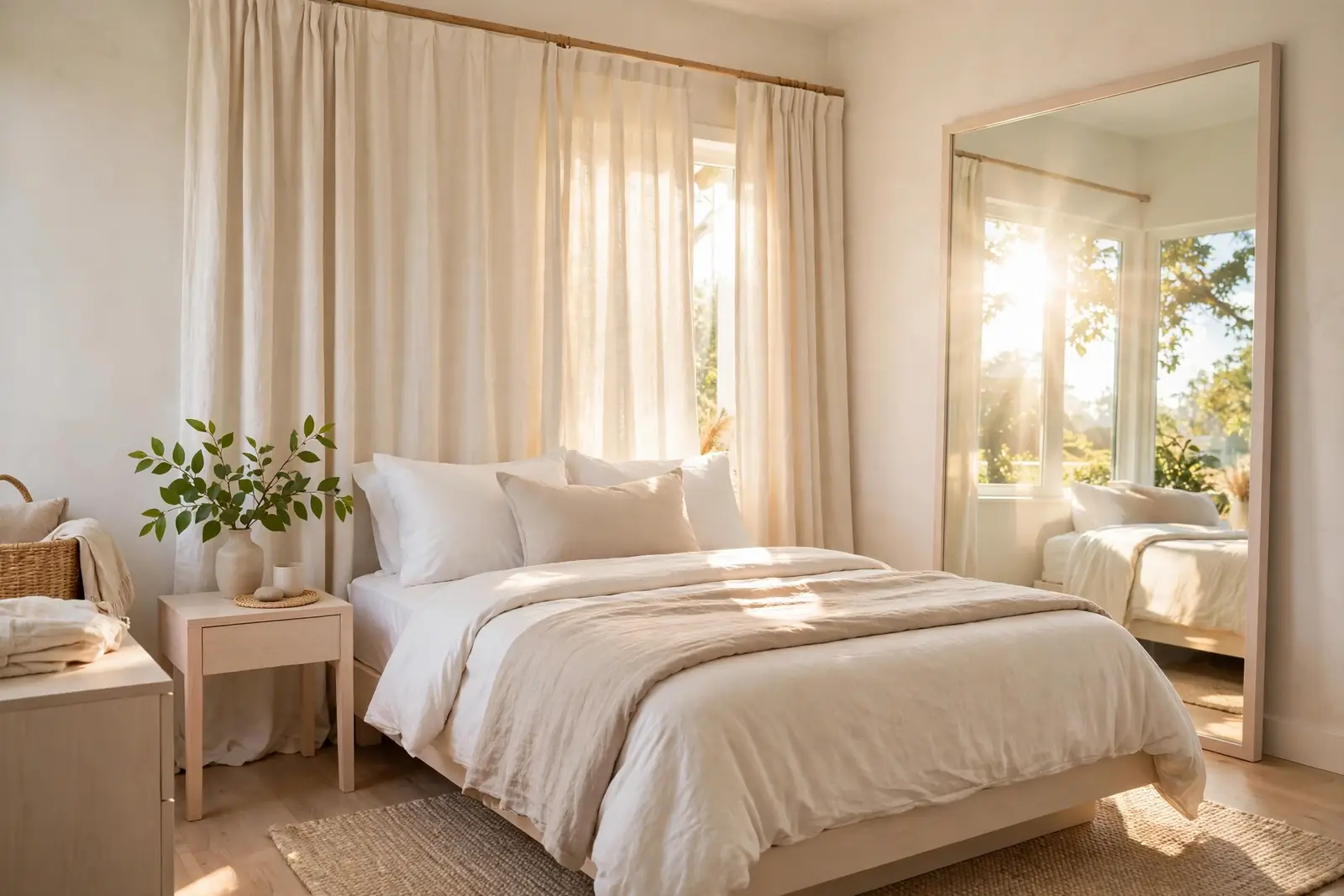
Small Bedroom Decor That Makes the Space Feel Bigger

If your tiny bedroom feels crowded the moment you walk in, small bedroom decor can help you change that without knocking down a wall. You do not need a bigger room or a big budget to make it feel calm and open. You need a clear plan, furniture that fits, and light that works for you.
In my experience, most small rooms feel tight because the bed, the storage, and the light are fighting for the same space. This guide puts them in order, step by step, so you can start with what you already own.
By the end, you will know how to measure, choose colours, pick furniture, and add storage that hides in plain sight. Your room can feel bigger, calmer, and easier to live in every day.
Measure First and Plan the Layout Around the Bed
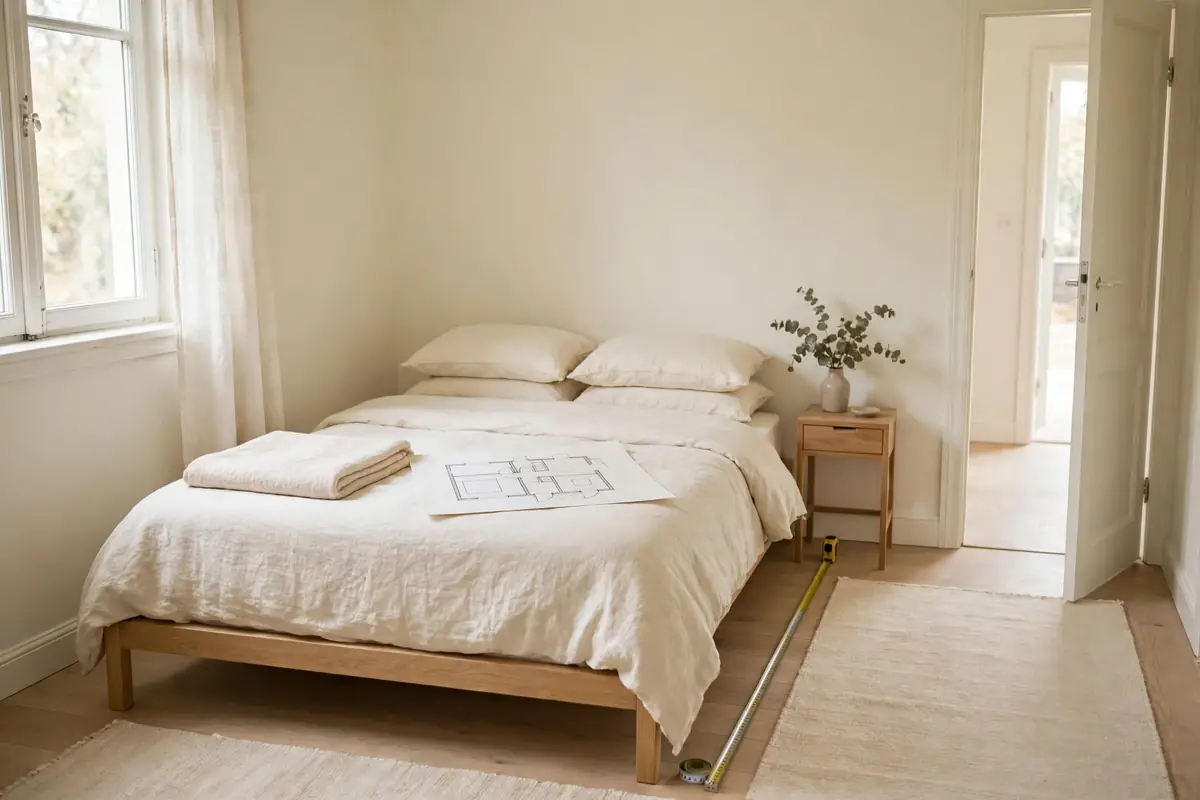
Start with a tape measure, not a shopping list. Measure the room, the bed, the door swing, and the space around the windows. Draw a simple plan and place the bed first, against the longest clear wall or the short wall in a narrow room.
Leave about 60 cm of walking space on one side of the bed when you can. Test the path from the door to the window before you add a dresser. This kind of small bedroom decor works best when the layout comes first, because every piece then has a clear place.
Choose Light, Warm Colours That Open the Room Up
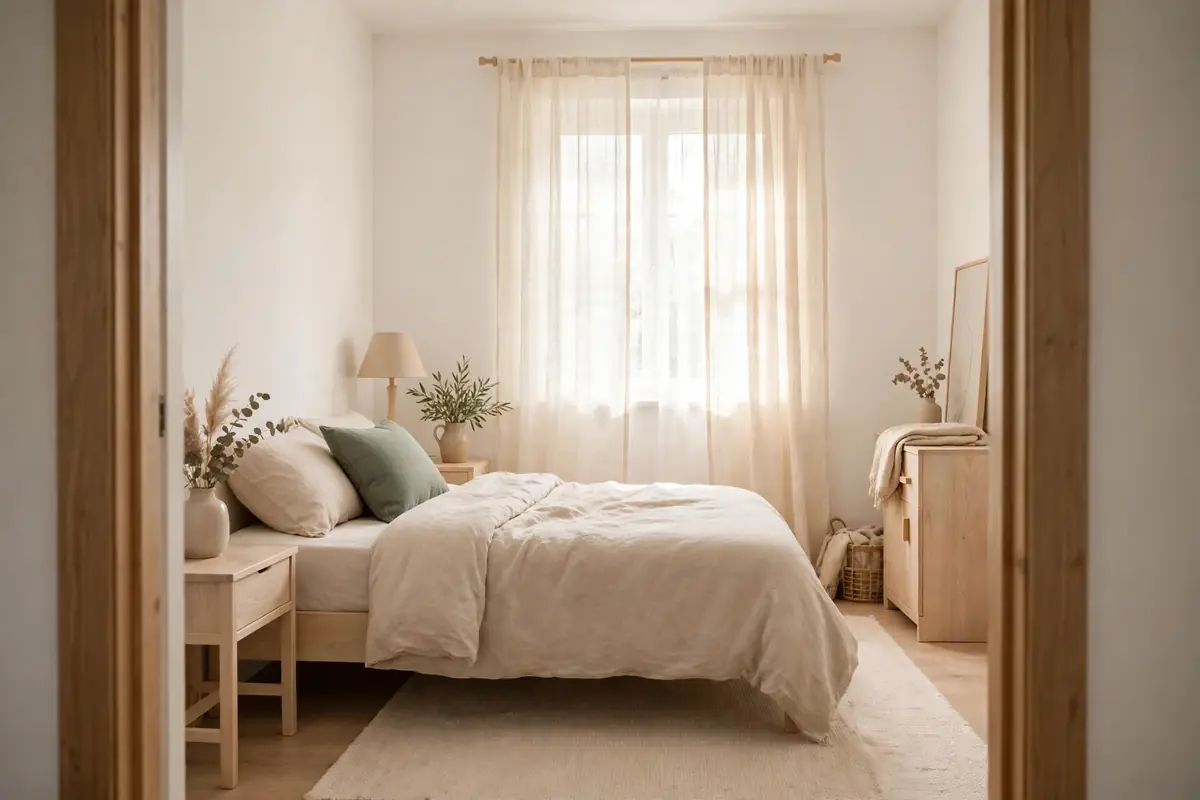
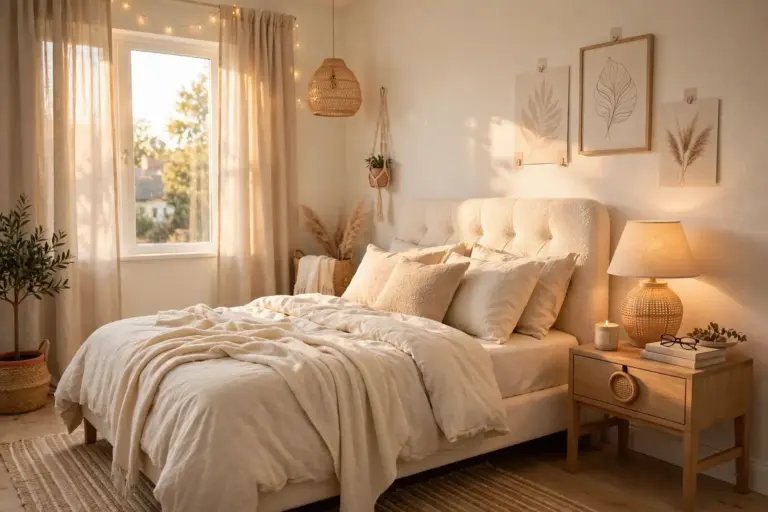
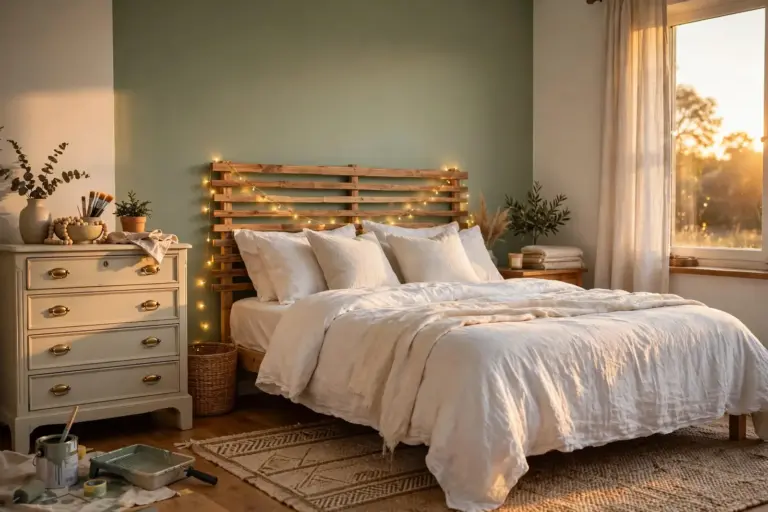
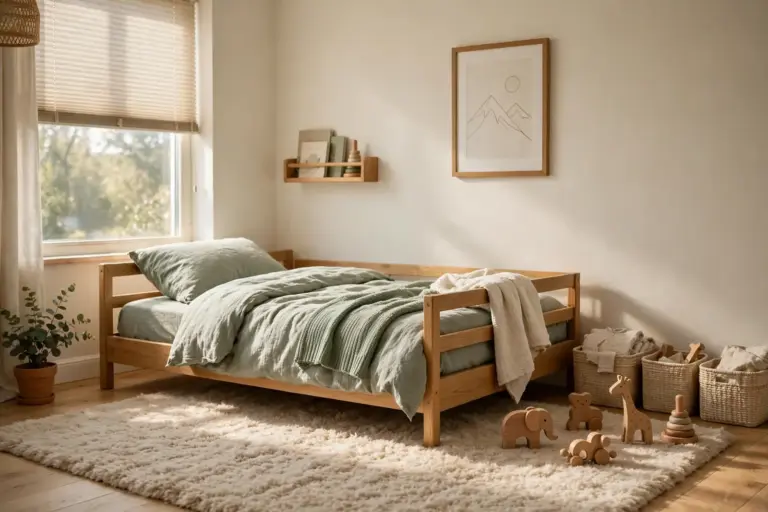
Light colours reflect daylight and make the walls feel further apart, but cold white can feel stark. Warm whites, cream, soft beige, and pale sage keep the room bright and cosy at the same time. Choose one main neutral and one soft accent, then repeat them across the room.
- Paint the walls and ceiling in the same warm white to lift the ceiling and blur the edges.
- Add a soft accent in bedding and one cushion, such as sage, dusty blue, or soft terracotta.
- Keep wood tones close together so light oak and pale walnut do not fight each other.
- Test paint and fabric together in daylight before you paint a full wall.
Pick Low and Slim Furniture That Fits the Walls
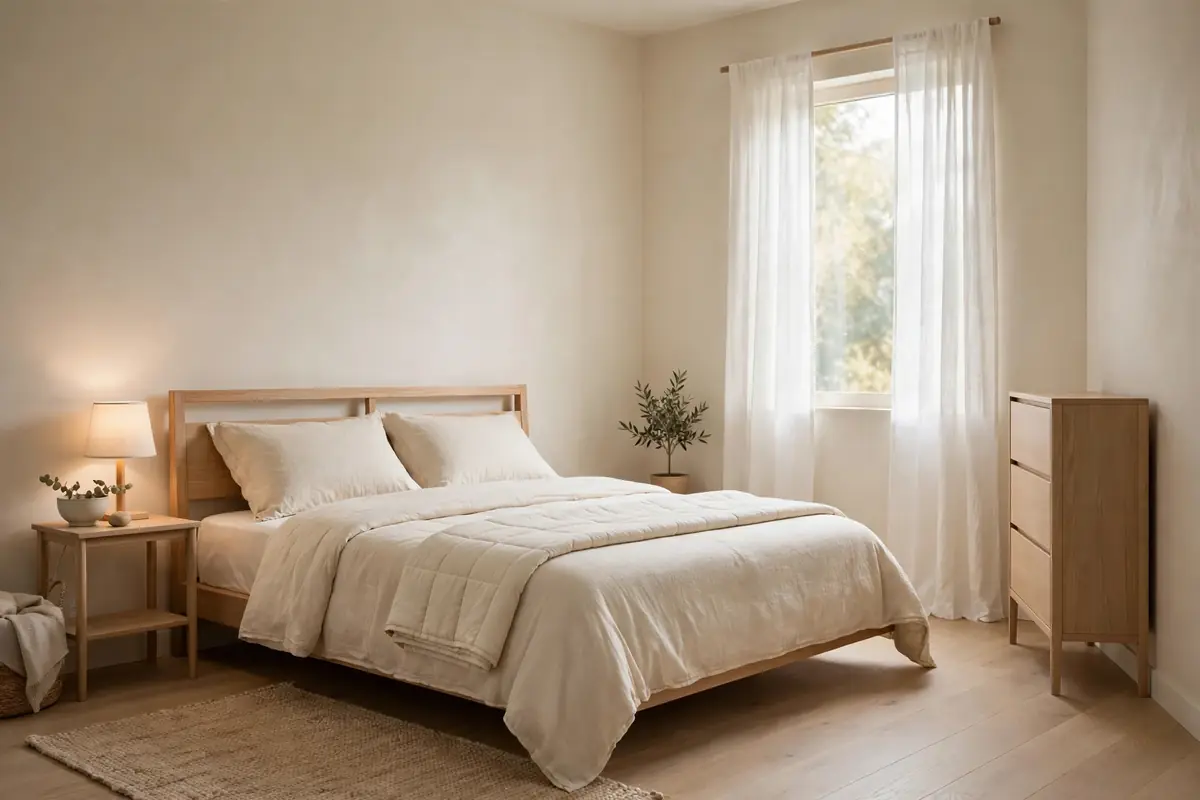
Quick Tip: Choose a low bed frame or skip the box spring to add space above the bed. A low bed makes the ceiling feel higher and the room feel less crowded, even when the floor size stays the same.
Measure each piece against the wall before you buy it. A slim nightstand, a narrow dresser, and a bed with clean lines leave more floor visible, which helps the room feel larger. Furniture with raised legs also helps, because you can see more floor under it.
Use Mirrors and Light to Add Depth
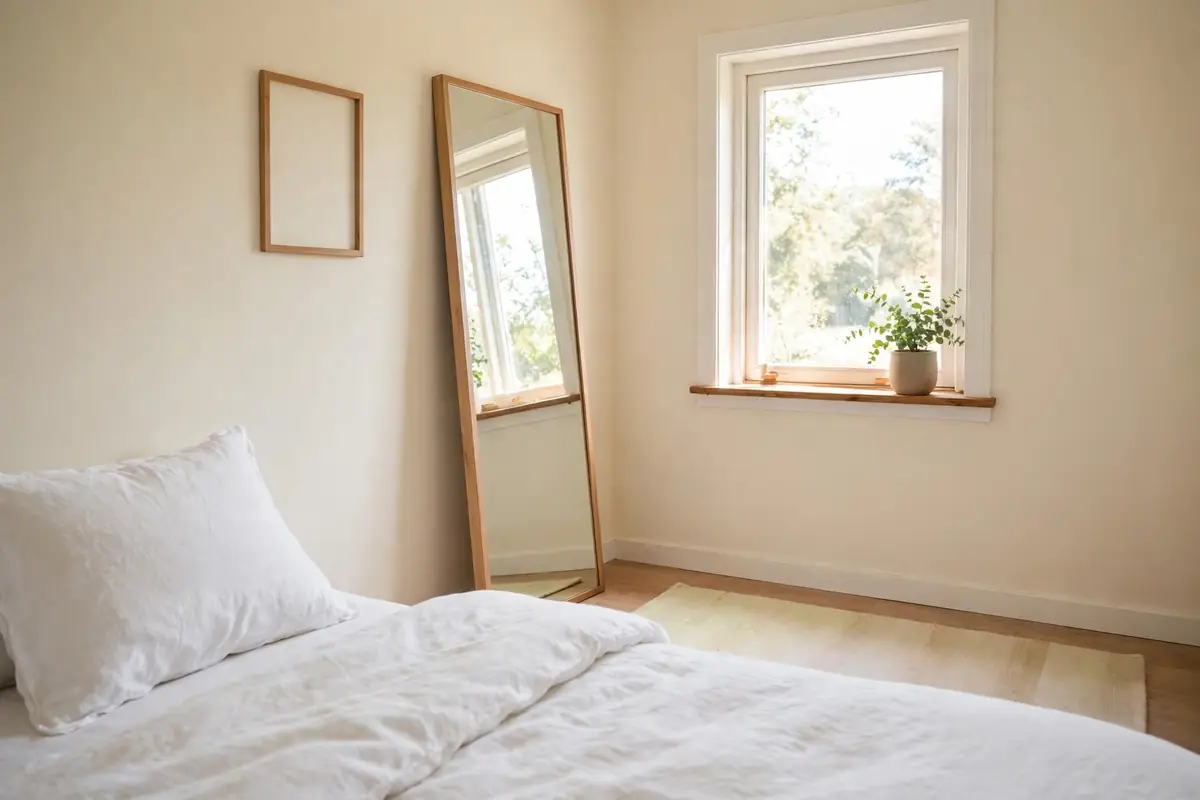
Common Mistake: Most people hang a small mirror too high or tuck it behind a door where it reflects a blank wall. The room gains no light, and the mirror becomes just another object on the wall.
The Fix: Place a full length mirror opposite a window or beside the wardrobe, at a height where it reflects daylight and part of the room. A simple frame keeps it calm, and the reflected light makes the space feel wider.
Add light at more than one height as well. Use a small bedside lamp for reading and a soft ceiling light for the whole room, with warm white bulbs. When mirrors and lamps work together, dark corners fade and the room feels open after sunset.
Go Vertical With Storage and Shelves
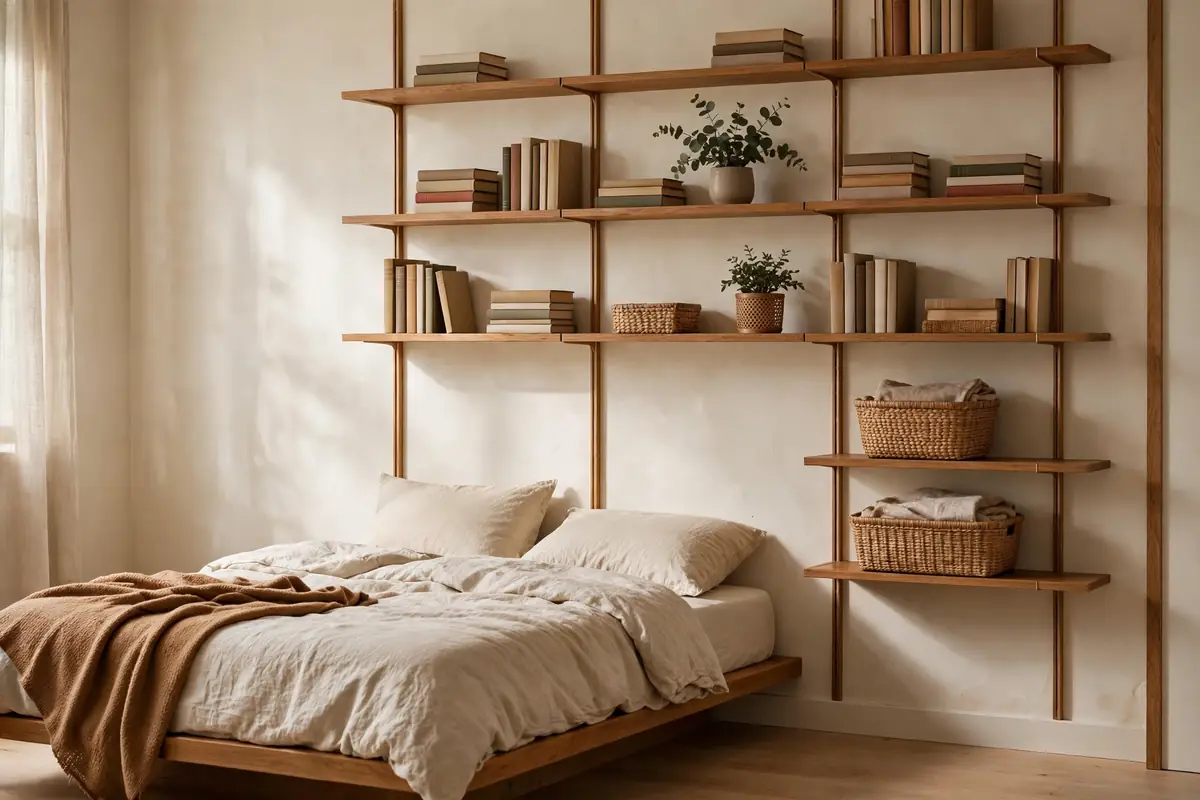
What You Need:
- Floating shelves: They use wall space instead of floor space for books, plants, and small baskets.
- Tall narrow shelving: It fits beside the bed or wardrobe and holds folded clothes and accessories.
- Wall hooks: They keep bags, hats, and robes off chairs and the floor.
- Over door organiser: It adds storage inside the door without drilling or new furniture.
- High storage boxes: They hold out of season clothes on top of the wardrobe, out of sight.
Start high and keep the lower wall clear. Place daily items at eye level and less used items up high, so the room stays easy to use. Keep shelves styled lightly with a few pieces, because a crowded shelf makes the wall feel busy again. If your room also holds a vanity, these dressing table ideas keep makeup neat in a small corner.
Hide Storage Under the Bed and Inside Furniture
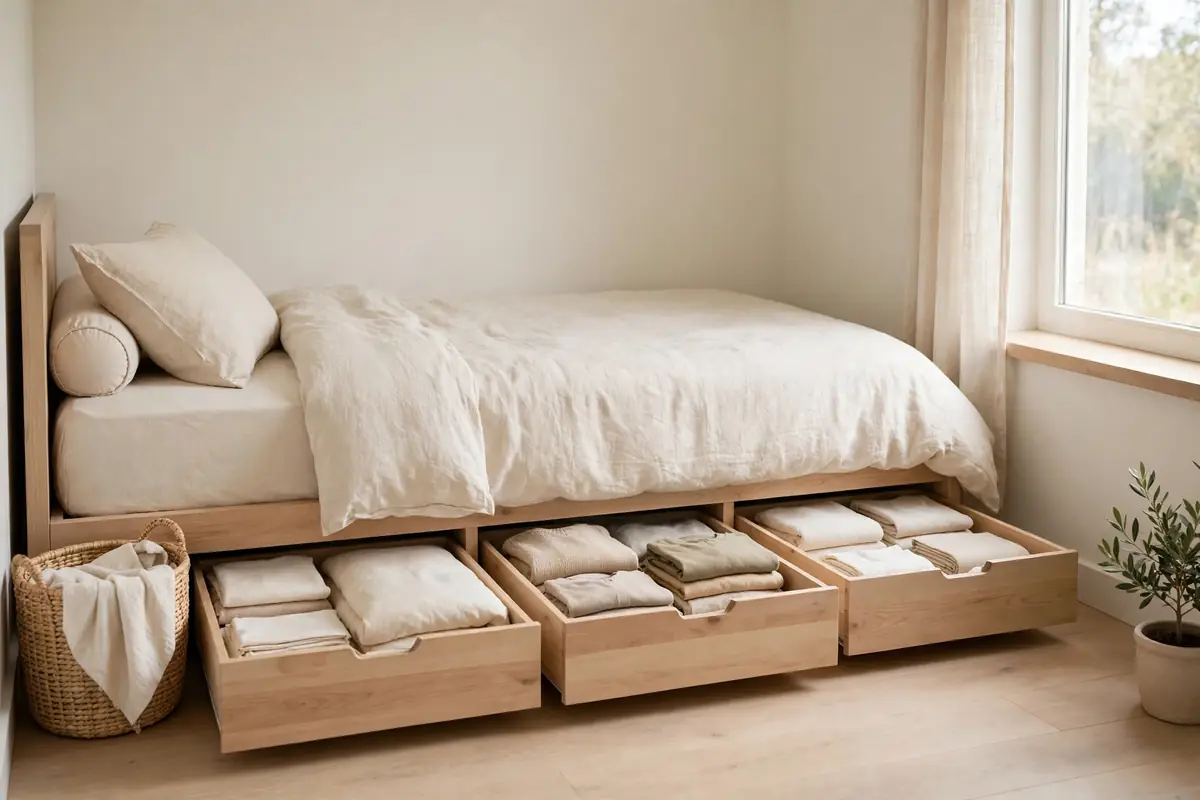
Before: Clothes, spare bedding, and shoes often end up on a chair or in piles on the floor. The room looks messy even after a quick tidy, because there is nowhere for everyday items to go.
After: A storage bed, under bed boxes, and an ottoman with a lid give each item a home. The floor stays clear, the bed looks neat, and the room feels calm when you walk in.
Choose boxes with lids to keep dust out, and label each one so you can find things fast. Use under bed space for out of season clothes and spare bedding, and keep daily items in a drawer you can reach. Hidden storage works best when it is easy to open and put back.
Free the Floor and Keep Walking Space Clear
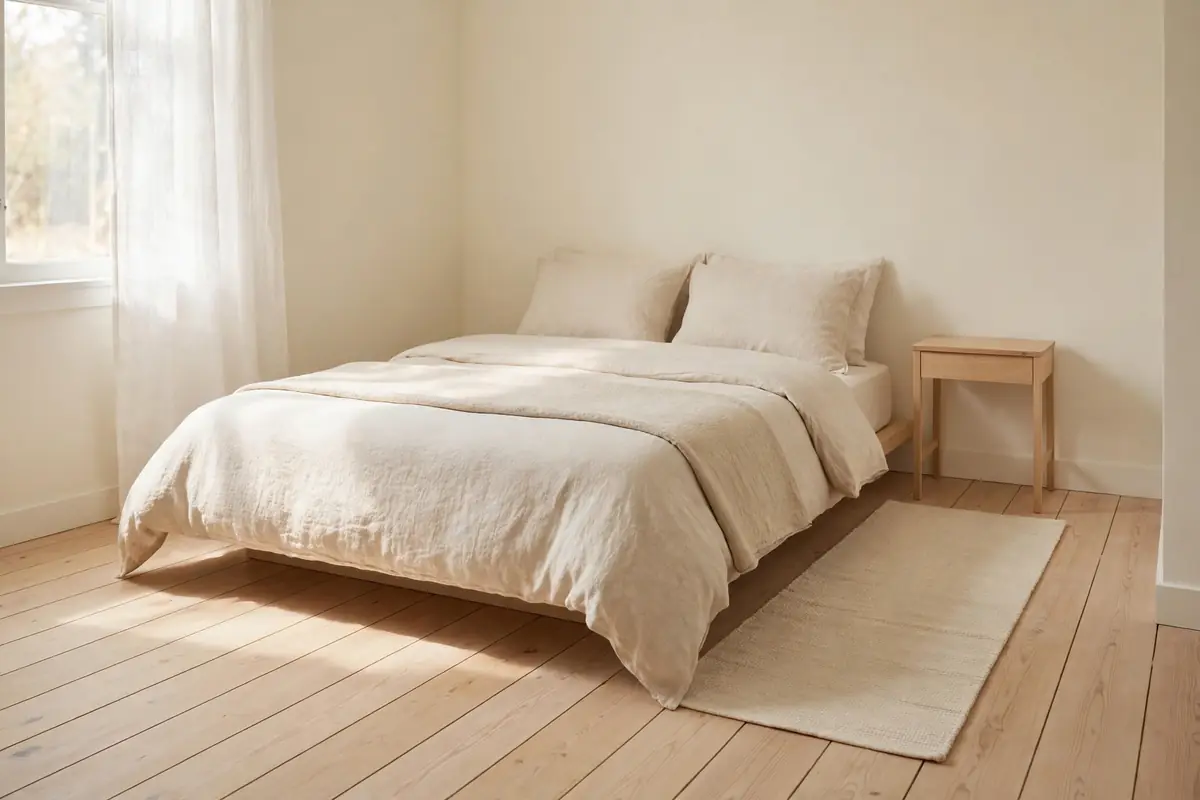
Do This:
- Keep the floor visible on at least one side of the bed.
- Use wall mounted storage and under bed boxes instead of floor baskets.
- Choose one rug that fits the bed area, not several small mats.
Avoid This:
- Do not fill every corner with baskets, boxes, or small chairs.
- Do not place furniture where it blocks the door or the window.
- Do not keep a chair that only holds clothes.
I have noticed that most small rooms feel bigger once the floor is clear, even before any new decor goes in. Walk the room slowly and move anything that forces you to step around it. When the path is open, the bed, the light, and the colours can do their work.
Layer Bedding and Texture Without Adding Bulk
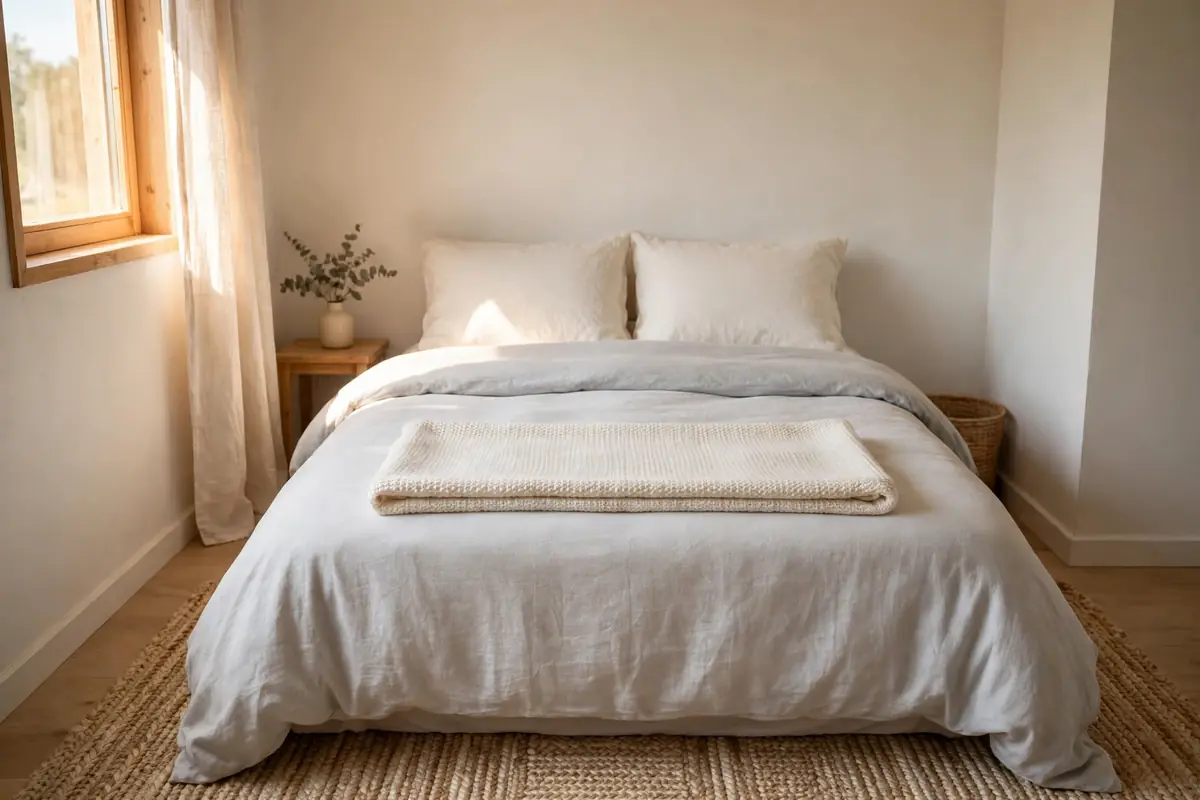
Time Needed: 20 minutes to remake the bed | Difficulty: Easy | Cost: Low
Best For: Small rooms that need warmth without bulk
Pro Tip: Use one throw and two pillows, then stop
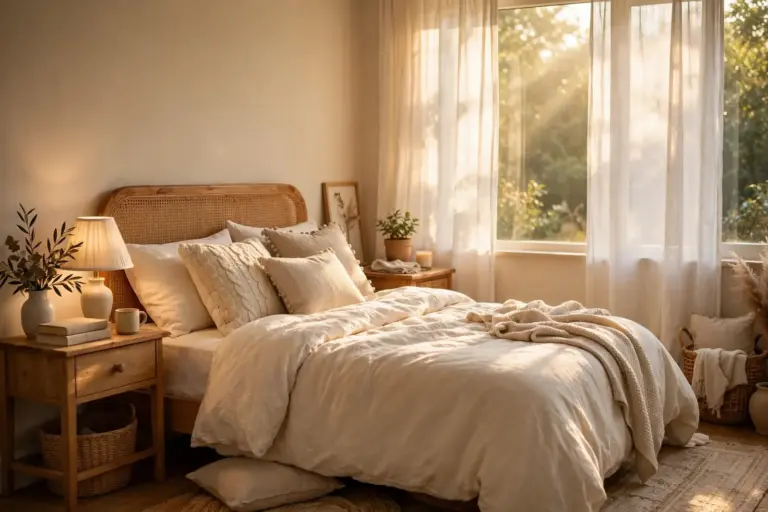
Keep bedding simple and add warmth through texture, not volume. Mix smooth cotton with linen and soft wool, and keep the colours close so the bed looks rich, not busy. If the bed feels heavy, remove one layer and let the light fabric do the work.
Hang Curtains High and Use the Walls With Purpose
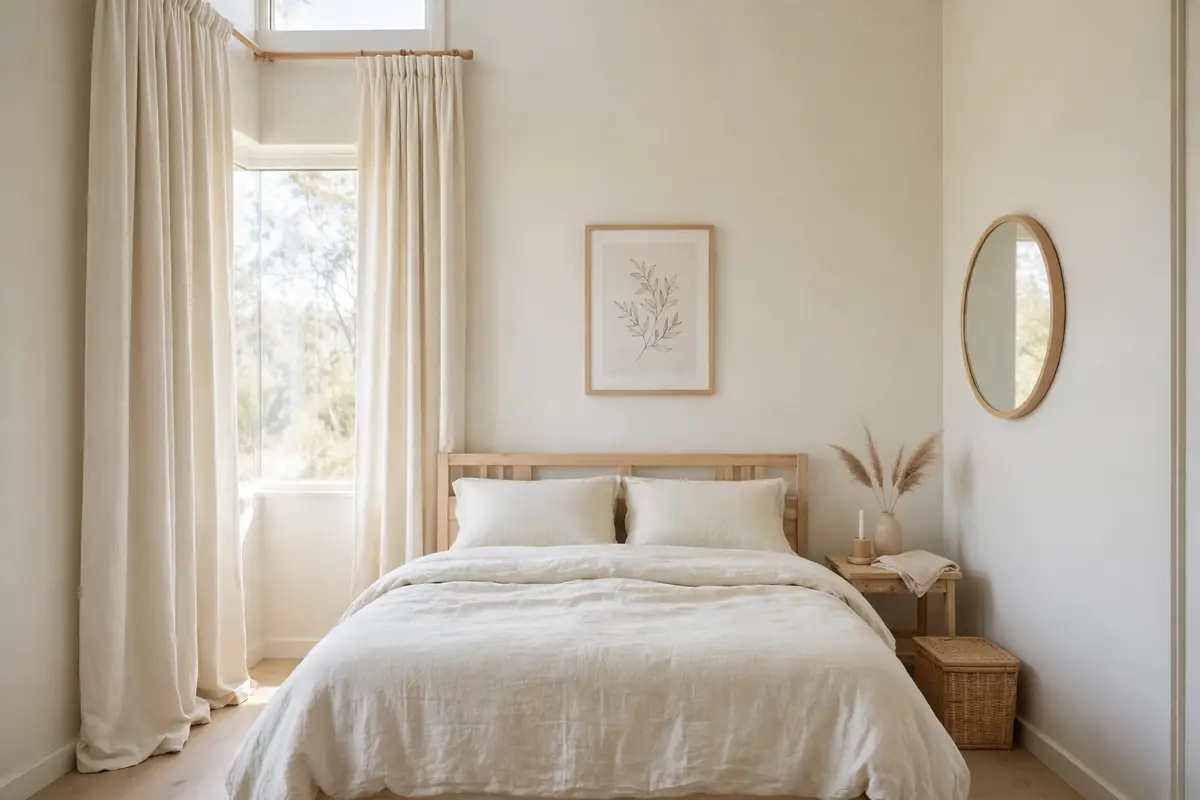
Hang the curtain rod close to the ceiling and let the curtains reach the floor, even if the window is short. The long line draws the eye up and makes the ceiling feel higher. Choose light fabric that softens daylight without blocking it.
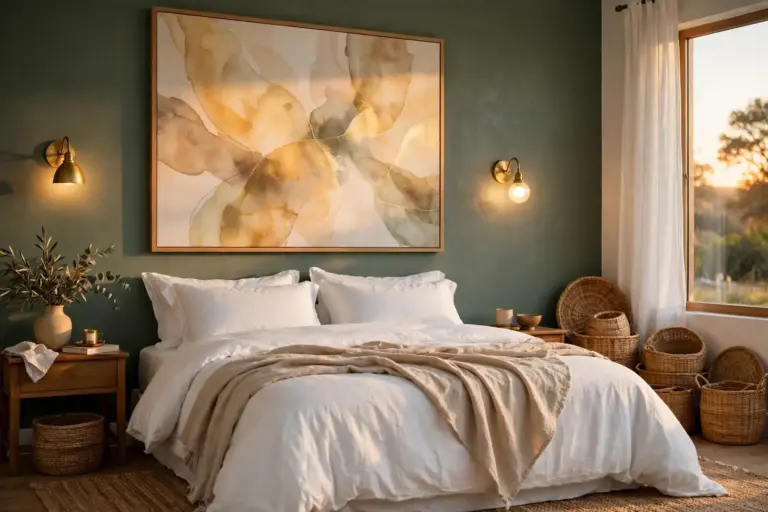
Use the walls for one clear focal point above the bed, such as a single print or a small gallery of two frames. Leave one wall mostly plain so the room can breathe. A mirror opposite the window will bounce light around and help the room feel brighter.
Fix the Mistakes That Make a Small Room Feel Smaller
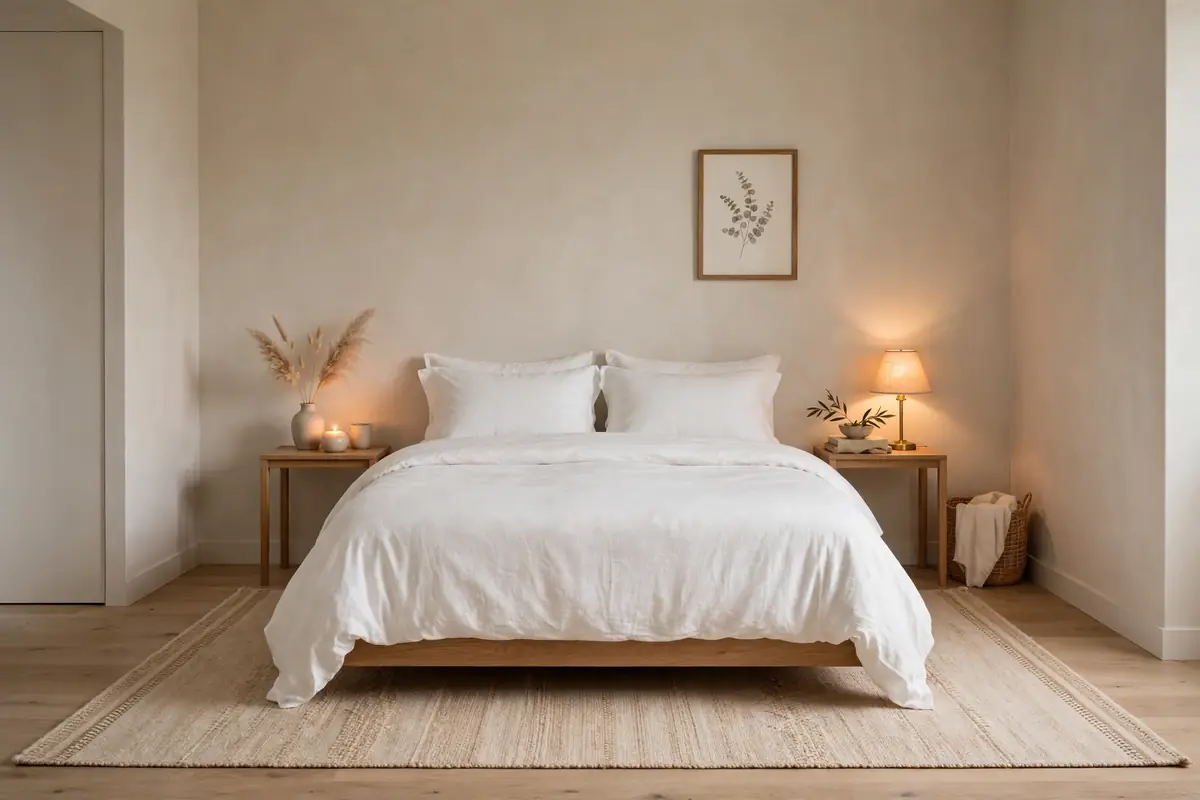
Most small room mistakes come from size and clutter, not from taste. A bed that is too large, a rug that is too small, and surfaces covered in items can make even a bright room feel tight. Fix the size first, then clear one surface at a time.
- Measure before you buy and leave walking space around the bed.
- Choose a rug that extends past the bed, or use a runner on one side.
- Keep one surface clear and add light at bed height.
- Remove one bulky piece before you add anything new.
Conclusion
You do not need a bigger room to love the one you have. Start by measuring, choose light warm colours, and pick furniture that fits the walls. Add mirrors, vertical storage, and soft layers one step at a time, and keep the floor clear so the room can breathe.
Save this guide on Pinterest so you can return to it for the next step. Try one change this week, notice how the room feels at night, and share it with someone who wants a calmer room. I have seen how making this one change can completely shift the result, and your small bedroom decor can feel bigger.
One Comment
Comments are closed.