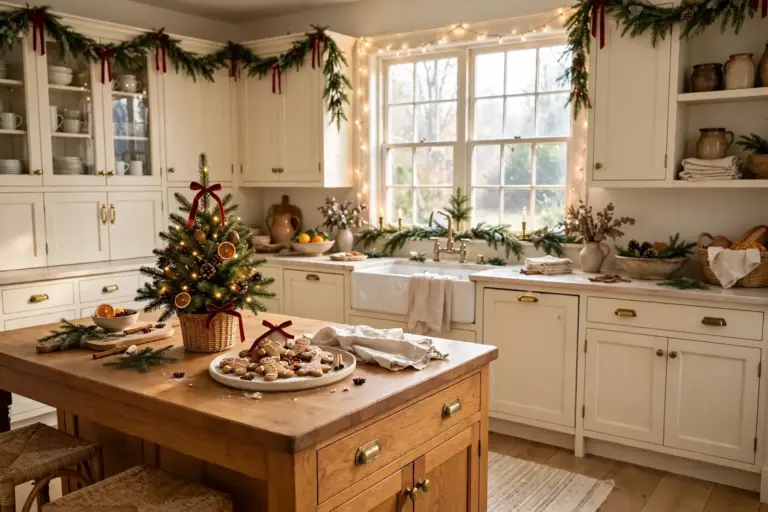
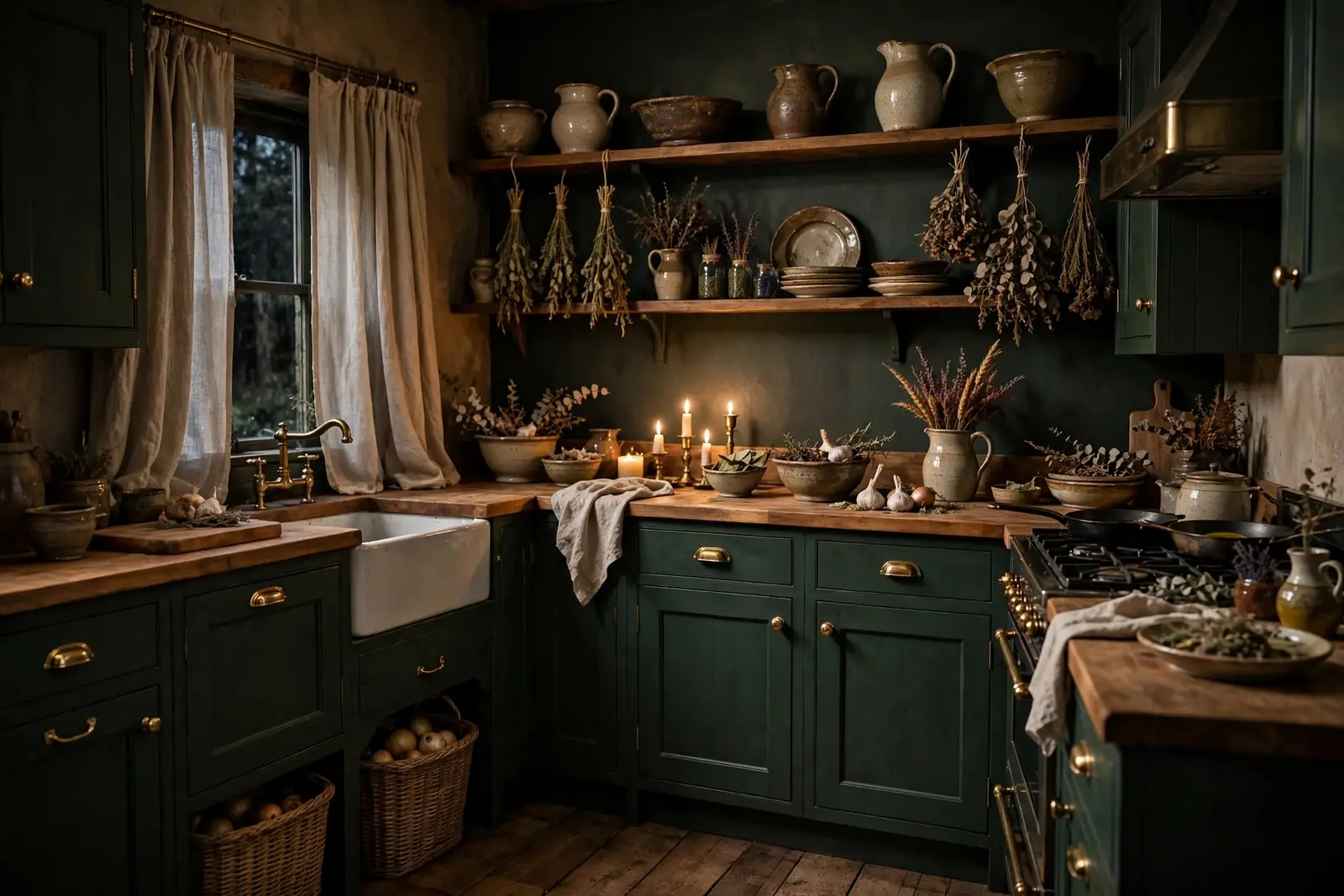
25 Dark Cottagecore Kitchen Ideas for a Cozy, Moody Home

A dark cottagecore kitchen brings together the warmth of countryside living and the beauty of deeper, earthy colors. Think forest green cabinets, vintage brass, rustic wood, delicate florals, and soft lighting that makes everyday cooking feel more inviting. The challenge is creating that cozy, moody atmosphere without spending thousands on new cabinets or renovating your entire kitchen. Fortunately, small details can make a noticeable difference. These 25 ideas focus on renter-friendly updates, affordable materials, thrifted finds, and clever lighting solutions. Whether you have a compact apartment kitchen or a spacious country-inspired home, you can create a welcoming space with plenty of character.
1. Peel-and-Stick Floral Wall

Dark floral wallpaper brings countryside charm into a kitchen without requiring permanent changes. Look for removable designs featuring delicate botanical illustrations, climbing vines, or small wildflowers against warm charcoal, deep olive, or aubergine backgrounds. Smaller patterns generally work better in compact kitchens because they add detail without making the walls feel crowded.
Apply the wallpaper to one small wall, breakfast nook, or the space behind open shelving. A single feature area is usually enough to create the desired mood, especially when paired with warm wood, cream dishes, and brass details. Check that the adhesive is suitable for kitchen walls and test a small corner before covering a larger area.
2. Removable Checkerboard Floor Tiles

- Choose warm colors: Cream and forest green feel softer than stark white and black.
- Measure carefully: Calculate your floor area before ordering to avoid unnecessary waste.
- Test adhesion: Check compatibility with your existing flooring before installation.
- Keep patterns consistent: Align the squares carefully to create a balanced checkerboard.
- Protect high-traffic areas: Follow the manufacturer’s instructions for cleaning and maintenance.
A small kitchen may need only a few packs, with an estimated cost of $25 to $70 for a modest area. Measure the floor twice, keep a few spare tiles for replacements, and avoid placing tiles where standing water collects.
3. Brass Hardware Swap Only
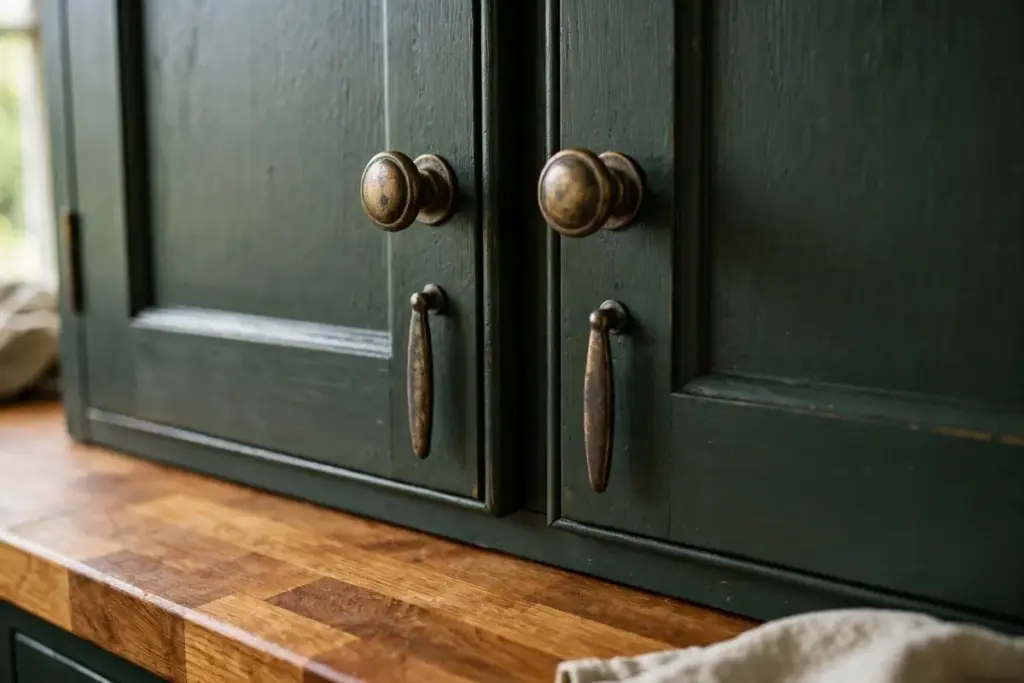
Quick Tip: Keep your original cabinet knobs and handles in a labeled bag before making any changes. Choose unlacquered brass for a naturally aged appearance, and avoid polishing it if you want the patina to develop over time.
Brass looks particularly beautiful against forest green, warm charcoal, and ink blue cabinetry. Its warm tone softens darker finishes and adds a traditional cottage feel without repainting a single door. Measure the existing screw spacing before ordering replacements, and keep the original hardware safe for future use.
4. Tension Rod Herb Rail
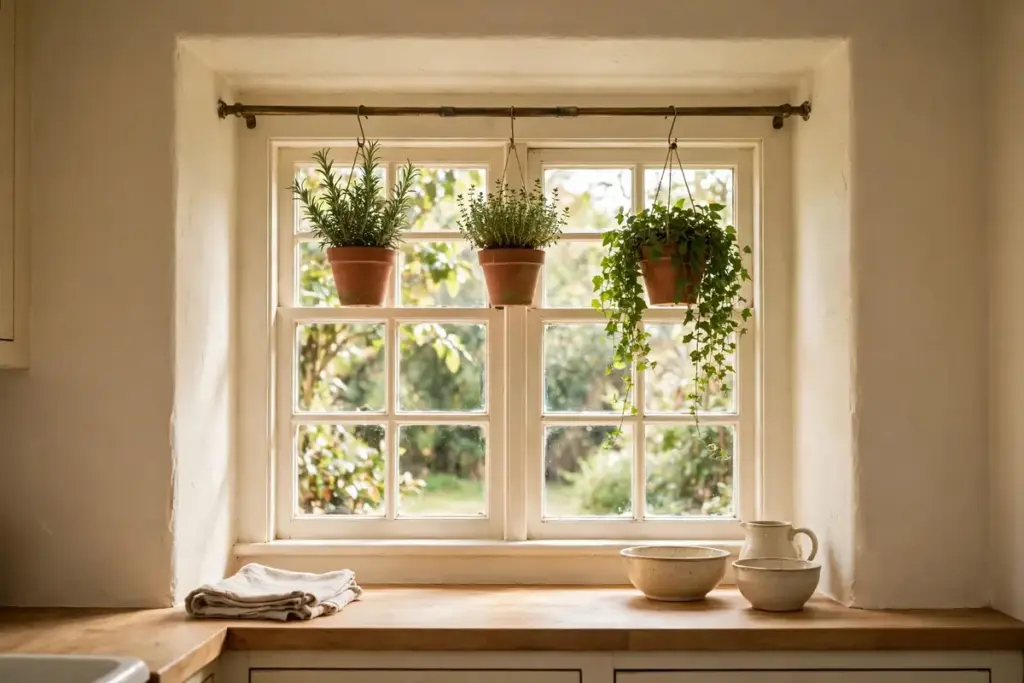
BEFORE: A small kitchen window has an empty frame, while herb pots take up valuable counter space. The surrounding area feels unfinished, and the plants receive uneven light throughout the day.
AFTER: A brass tension rod holds lightweight hanging herb containers, leaving the counters clearer. Fresh greenery fills the window area, and the plants receive more consistent natural light.
Choose lightweight pots and check the rod’s weight limit before hanging anything. A $12 to $25 setup is often enough for a small rail, and you can move it easily when cleaning the window or changing the arrangement.
5. Freestanding Pantry Dresser
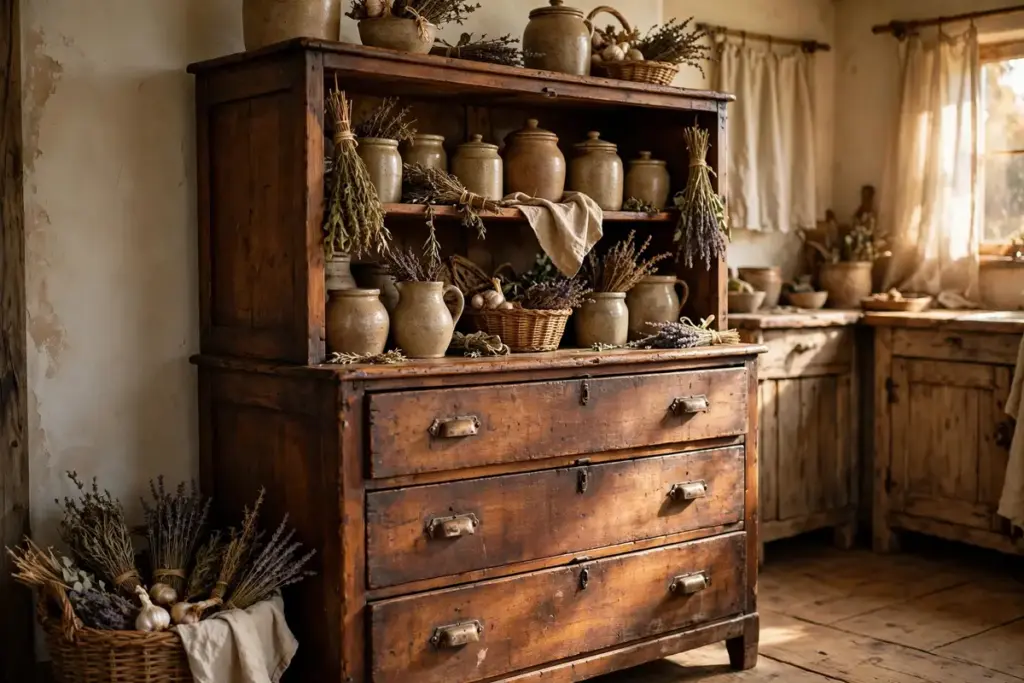
A freestanding dresser offers extra storage without replacing your existing cabinets. Look for secondhand pieces with sturdy drawers, solid wood construction, and a size that fits your available wall space.
- Find the furniture: Search thrift stores, estate sales, and local marketplace listings for compact dressers.
- Check the condition: Inspect drawer runners, corners, and the back panel for damage.
- Refresh the finish: Clean the wood thoroughly and apply a suitable furniture wax or stain if needed.
- Organize the drawers: Store dry goods, baking accessories, linens, and less frequently used kitchen items.
A secondhand dresser may cost $40 to $120, depending on its condition. Before placing it in your kitchen, measure doorways and walkways to ensure it fits comfortably without blocking movement.
6. Dark Lowers, Cream Uppers
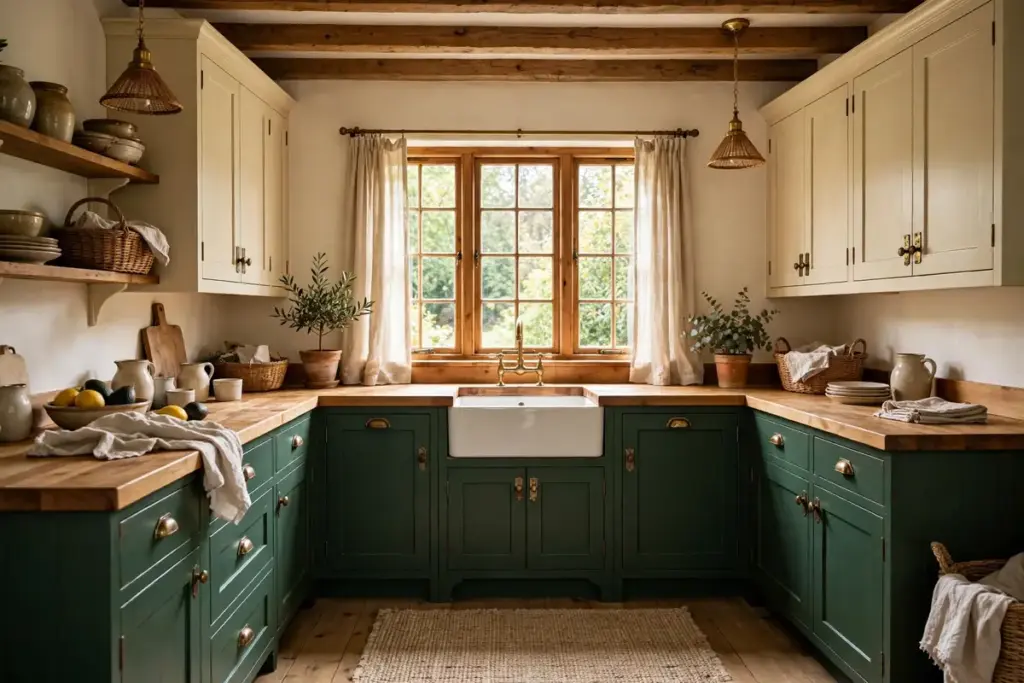
Dark cabinetry does not need to cover every surface. Combining deep lower cabinets with cream upper cabinets creates a balanced three-tier look, with dark tones at the base, warm midtones in the middle, and lighter colors above. This approach keeps the kitchen grounded without making it feel closed in.
Forest green is particularly forgiving because it pairs beautifully with oak, linen, brass, and terracotta. Warm charcoal offers a slightly more dramatic effect, while ink blue works well with copper and cream stoneware. Aubergine is best used as an accent rather than a main cabinet color.
For a smaller kitchen, keep the upper walls and cabinets light to prevent the room from feeling visually heavy. A contrasting backsplash or open shelving can also break up large areas of dark cabinetry.
If painting is an option, choose a suitable matte or eggshell cabinet finish. Glossy surfaces and cool gray tones can make a cottage kitchen feel less warm, while matte finishes show dust and flour more easily, so plan for regular wiping.
7. Glass-Front Upper Doors

DO:
- Display matching cream plates and a few handmade ceramic pieces.
- Use clear glass to introduce reflection and visual depth.
- Leave some breathing room between displayed objects.
- Position frequently used items within comfortable reach.
DON’T:
- Fill every shelf with unrelated decorative objects.
- Mix too many competing colors and patterns.
- Display cluttered packaging or mismatched plastic containers.
- Ignore the cleaning needed around glass panels.
Glass-front cabinets bring a lighter appearance to darker kitchens while keeping everyday dishes accessible. Limit the display to a small collection of coordinating pieces, and keep the remaining storage behind solid doors for less attractive essentials.
8. Peel-and-Stick Beadboard Strip
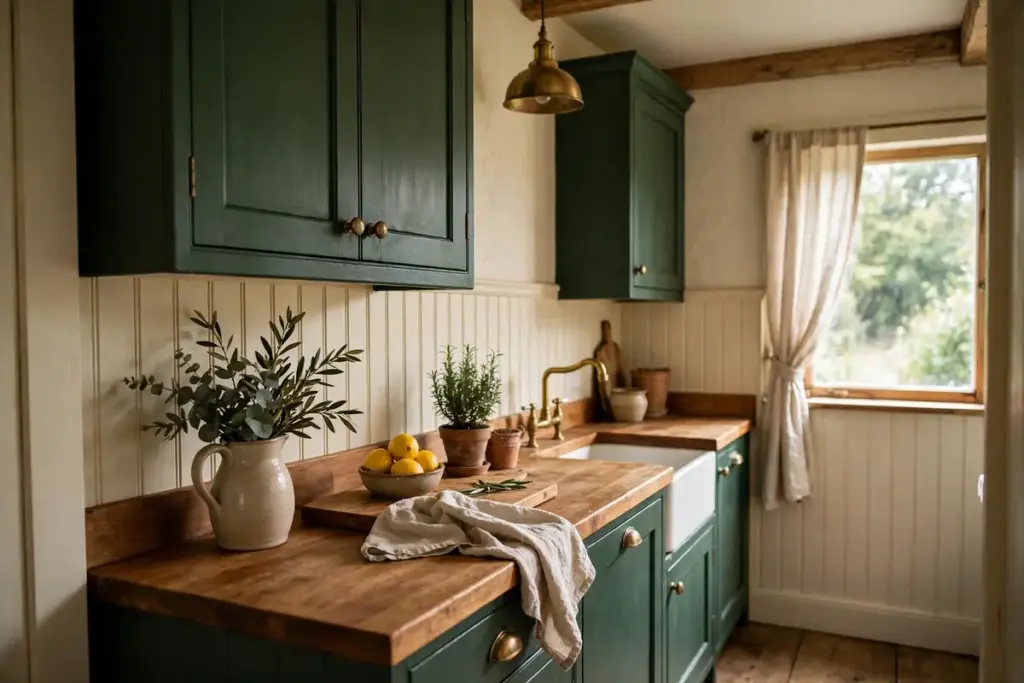
Cost: Approximately $15 to $40 for a small accent area.
Time: Around 1 to 2 hours, depending on preparation and panel size.
Skill Level: Beginner-friendly with careful measuring.
Best For: Renters, small kitchens, and narrow backsplash areas.
A removable beadboard strip introduces traditional cottage detailing without installing permanent woodwork. Measure the backsplash carefully, cut panels to fit around outlets, and press them firmly into place. Remove the strip slowly at the end of your lease to avoid damaging the wall beneath.
9. One-Wall Open Shelving
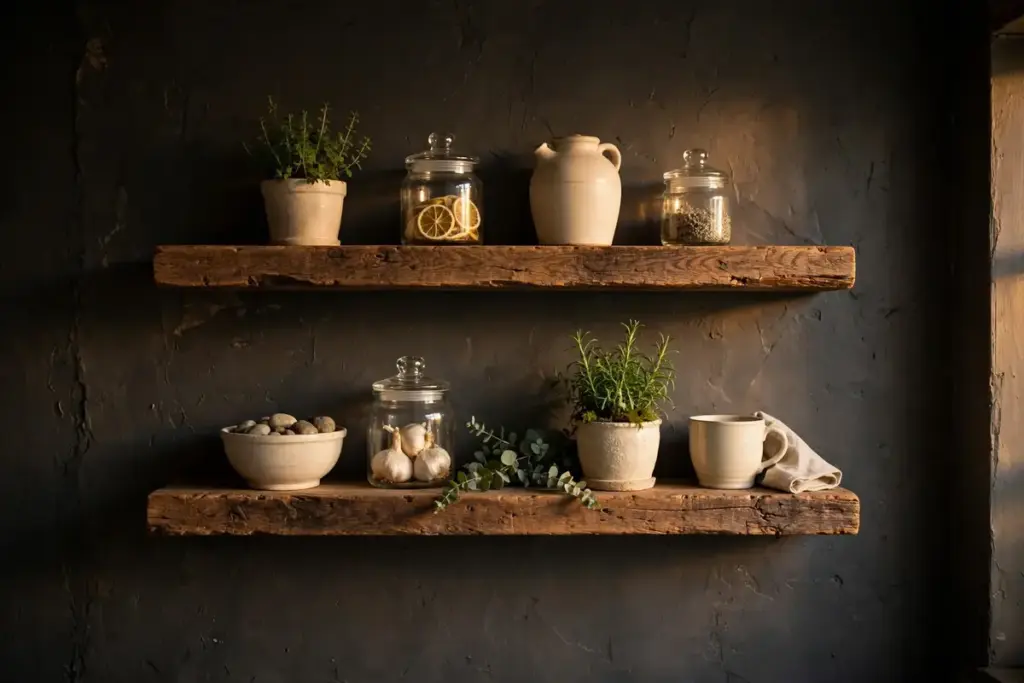
Open shelving can make a compact kitchen feel less enclosed, particularly when it replaces a bulky cabinet on one wall. Choose reclaimed oak or warm walnut shelves to introduce natural texture, and keep the display limited to items you use regularly. A single wall of shelving creates a focal point without overwhelming the entire kitchen.
Keep the arrangement functional rather than filling every inch with decorative pieces. Place frequently used plates, bowls, and mugs within comfortable reach, and reserve higher shelves for lighter items. One practical detail matters: open shelves collect cooking grease and dust, especially near the stove, so choose washable materials and wipe them regularly.
10. Galley Runner Rug Layer
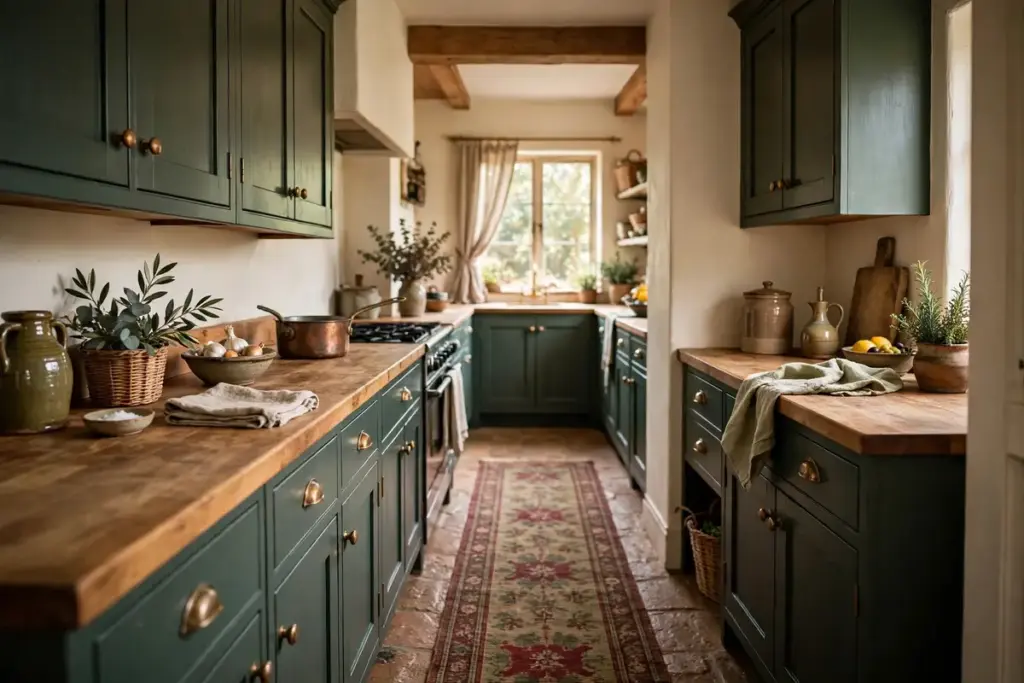
A long runner introduces softness and color to a narrow kitchen without changing the cabinets or walls. Choose a vintage-inspired pattern in muted burgundy, olive, or warm brown to complement dark cabinetry and natural wood tones.
- Measure the walkway: Leave enough exposed flooring around the rug to avoid a cramped appearance.
- Choose a washable material: Kitchen spills and crumbs are part of everyday life.
- Add a nonslip backing: Prevent movement during cooking and cleaning.
- Balance the pattern: Keep nearby countertops relatively simple when choosing a detailed runner.
- Consider thickness: A low-profile design is less likely to catch beneath doors or appliances.
Budget approximately $20 to $65 for an affordable runner. Check that the rug is suitable for kitchen use, and clean it regularly to prevent crumbs and grease from settling into the fibers.
11. Warm Bulb Swap First
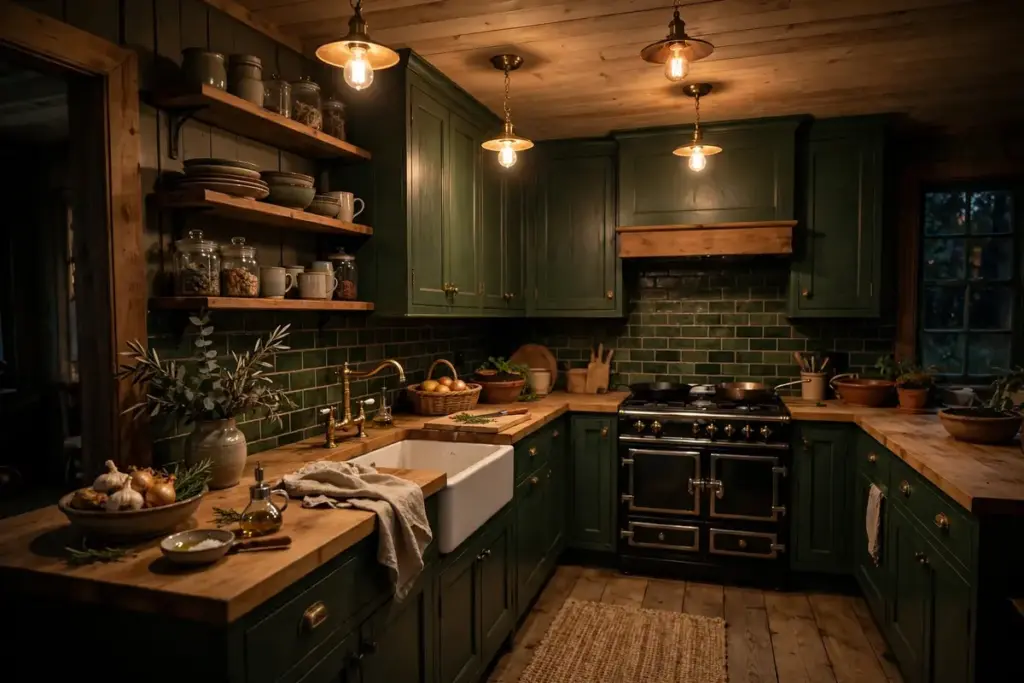
Quick Tip: Before purchasing decorative fixtures, replace overly cool bulbs with warm white options around 2700K. Test the new bulbs in the evening, when the room’s colors and textures are most affected by artificial light.
Lighting temperature changes how kitchen colors appear. Warm bulbs bring out the richness of forest green, charcoal, and wood tones, while cool bulbs can make those finishes look flat or gray. A simple bulb swap costs only a few dollars per bulb and requires no electrical work.
12. Plug-In Brass Sconce Pair
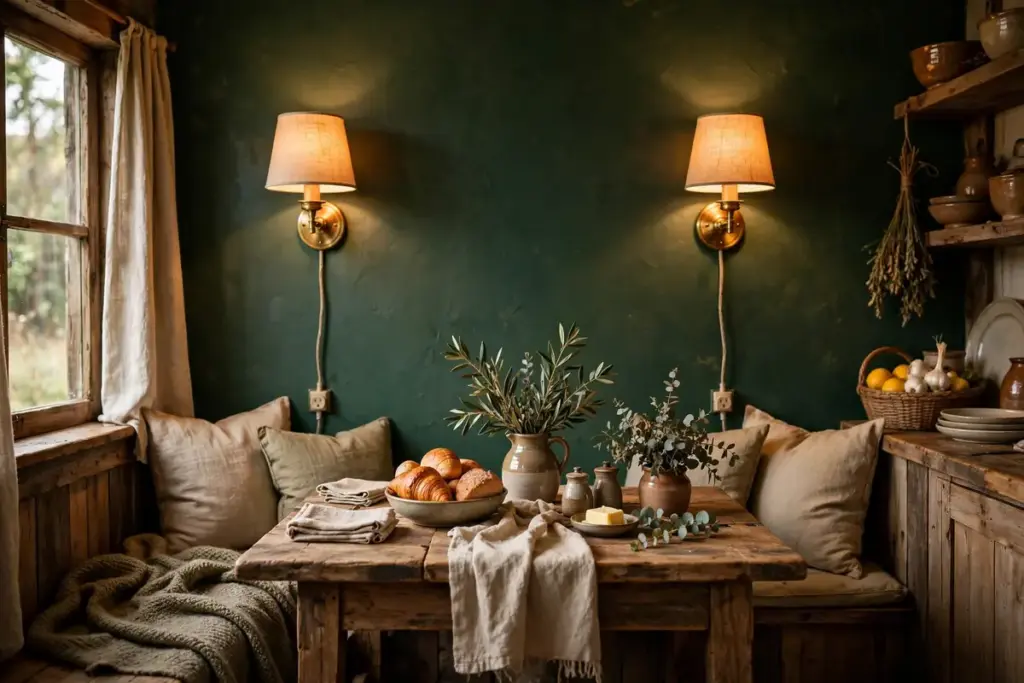
BEFORE: The kitchen relies on one overhead fixture that casts strong shadows across the breakfast table. The seating area feels dim in the evening, even when the rest of the room is bright.
AFTER: Two plug-in brass sconces introduce warm, localized lighting beside the seating area. Their linen shades soften the light, and the brass finish complements the surrounding cottage details.
Look for matching sconces priced around $25 to $70 per pair. Position them where they illuminate the table without blocking movement, and use cord covers to keep the wiring neat and safe.
13. Stick-On LED Task Strips
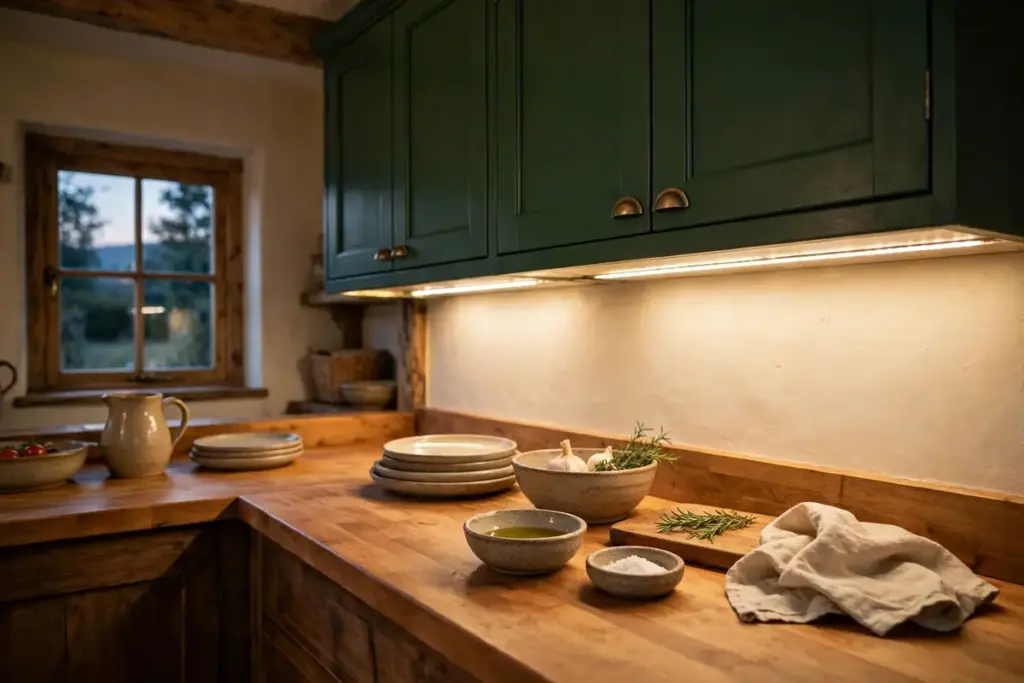
Under-cabinet lighting makes a noticeable difference in kitchens where overhead fixtures leave the counters in shadow. Warm LED strips provide focused task light for chopping, reading recipes, and preparing meals, especially early in the morning.
- Measure the cabinet underside: Determine the required strip length before purchasing.
- Choose the right color temperature: Warm white around 2700K to 3000K works well with earthy finishes.
- Clean the mounting surface: Remove grease and dust to improve adhesive contact.
- Position the lights: Aim the strips toward the main preparation area rather than the backsplash alone.
- Manage the cables: Keep wires away from heat, moisture, and moving appliance parts.
A basic rechargeable or plug-in kit typically costs $15 to $35. Look for adjustable brightness and a warm color temperature, and test the lights at 7 a.m. to ensure the workspace feels bright enough for safe food preparation.
14. Countertop Table Lamp Glow
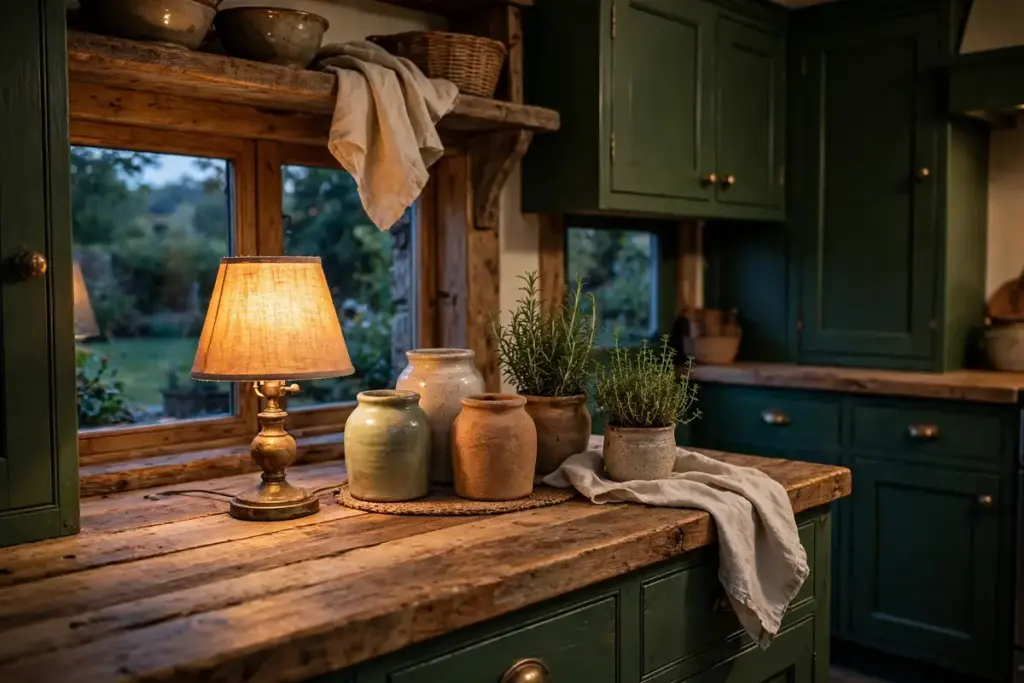
A small countertop lamp creates a softer atmosphere than relying entirely on ceiling lights. Look for a compact lamp with a warm linen shade, a sturdy base, and a bulb around 2700K for a gentle glow.
A traditional table lamp feels decorative and substantial, while a small rechargeable lamp offers greater flexibility for moving between the counter, table, and windowsill. Both options work well in a cottage kitchen, provided the lamp stays away from water and direct heat.
Secondhand lamps can cost $15 to $35, while new rechargeable options may be more expensive. Keep the lamp on a stable surface, avoid trailing cords near the sink, and choose a shade that complements your existing brass or copper details.
15. Thrifted Ironstone Shelf Stack
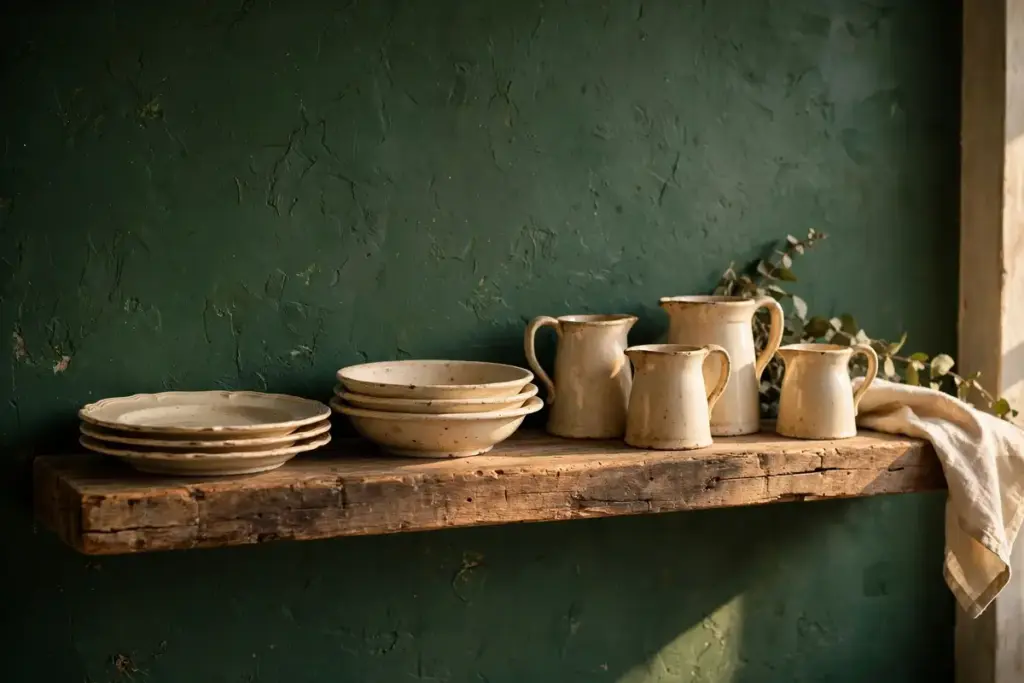
DO:
- Look for cream, ivory, and warm white ironstone pieces.
- Stack plates in small groups with similar shapes.
- Mix dinner plates with shallow bowls for subtle variation.
- Check thrifted dishes for chips, cracks, and damaged glazing.
DON’T:
- Purchase an entire mismatched collection without considering storage.
- Stack unstable pieces near the edge of a shelf.
- Display dirty or heavily damaged dishes as decorative accessories.
- Assume every vintage dish is suitable for food use.
Thrift shops and estate sales are excellent places to search for vintage-looking tableware. A small stack of ironstone plates may cost $10 to $30, depending on condition and quantity, and the warm white tones balance darker cabinetry beautifully.
16. Estate Sale Plate Wall
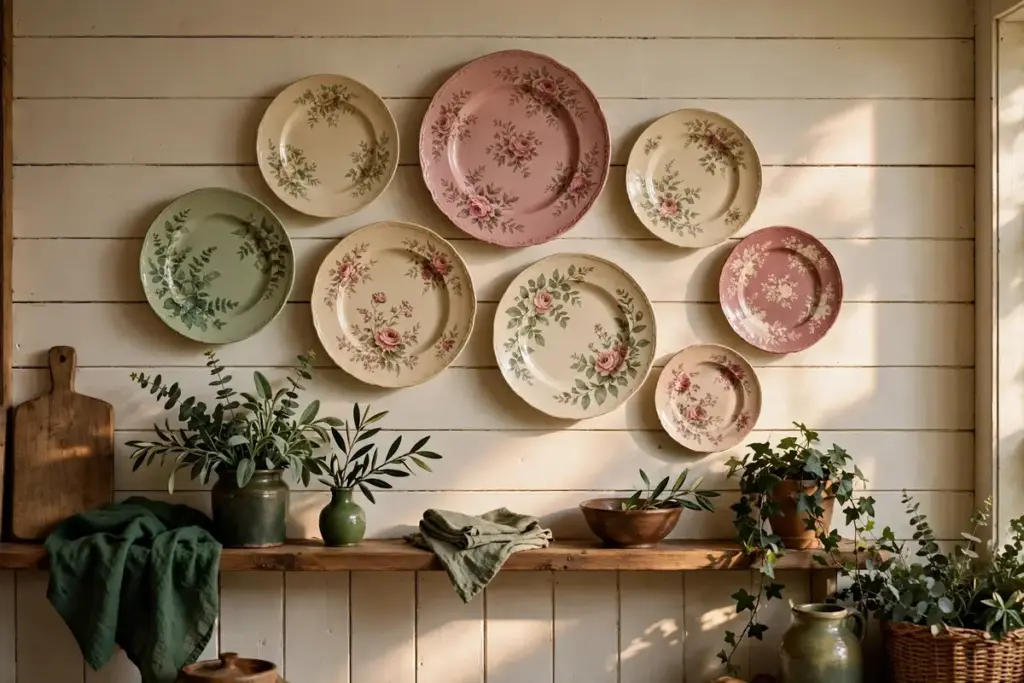
Cost: Approximately $20 to $65 for thrifted plates and suitable hanging hardware.
Time: Around 1 to 2 hours for arranging and installation.
Best Materials: Vintage ceramic plates, secure plate hangers, and suitable wall anchors.
Best Placement: Above a sideboard, breakfast nook, or a small dining area away from direct cooking splashes.
An estate sale plate collection can make an ordinary wall feel personal and collected over time. Combine floral patterns with plain cream plates for balance, and arrange the display on the floor first to test the layout before hanging anything.
17. Under-Ten-Dollar Herb Bundles
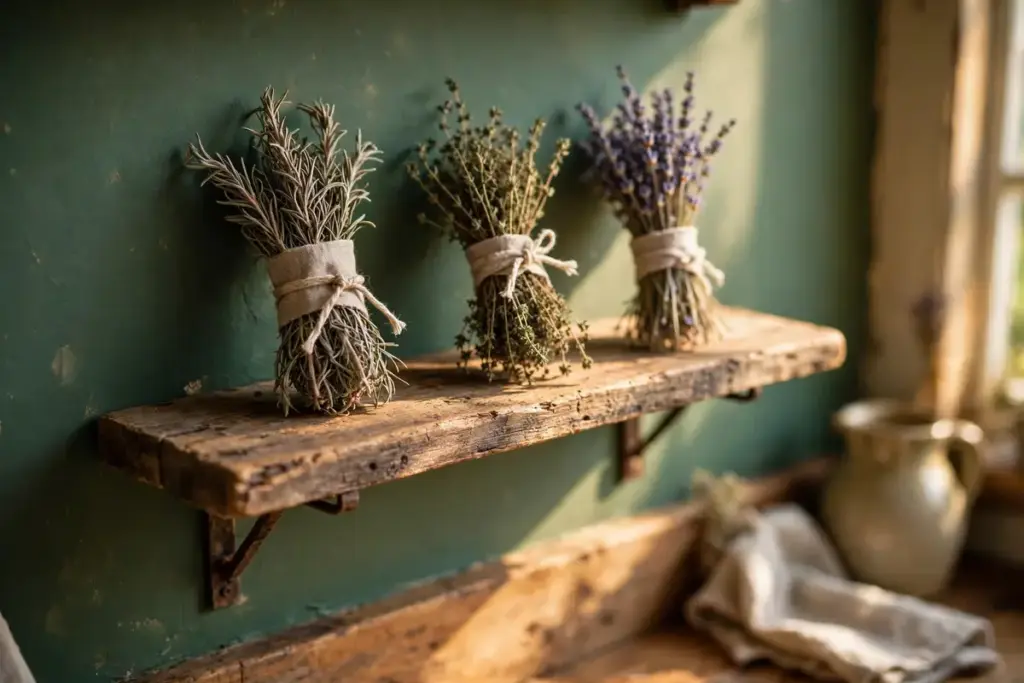
Fresh greenery and dried botanicals introduce the natural character that makes cottage kitchens feel welcoming. Small herb bundles add color, texture, and fragrance without requiring new furniture or permanent changes.
Collect rosemary, thyme, or lavender from your garden or buy inexpensive dried bunches from a local market. Tie each bundle with linen string, hang it from a hook or rail, and replace it when the scent fades.
A modest setup can stay under $10, especially when you reuse materials already at home. Keep dried bundles away from stove steam and direct heat, and avoid placing them where they could fall into food preparation areas.
18. Thrifted Brass Scale Display
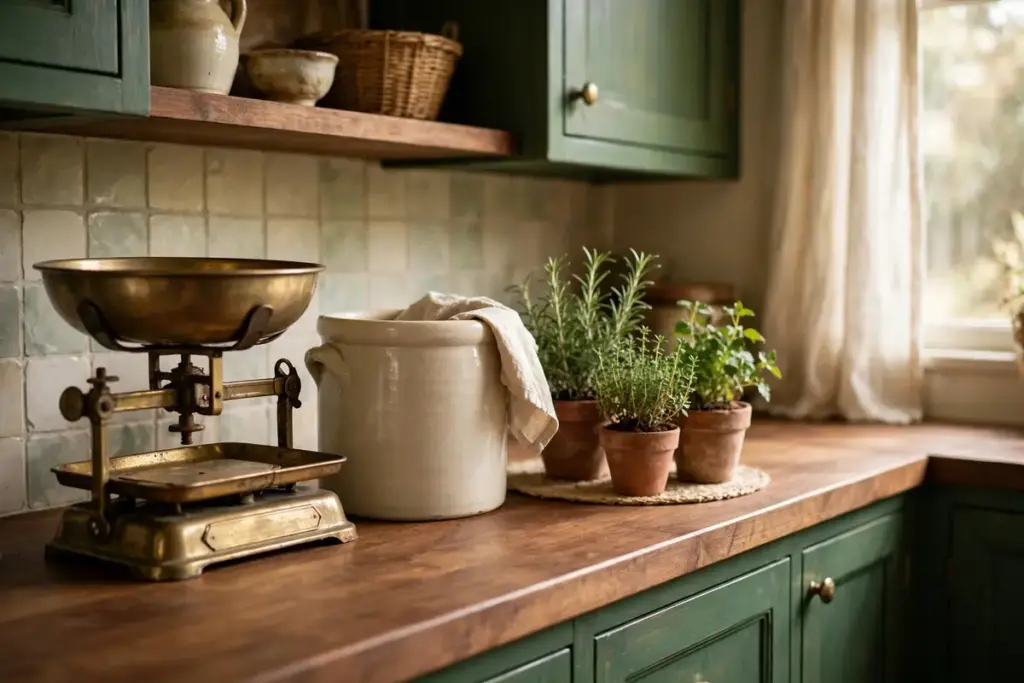
A vintage brass scale introduces an interesting focal point without requiring new furniture or decorative collections. Look for older models with an aged brass finish, a sturdy base, and a dial or weights that show gentle signs of use.
- Search secondhand first: Estate sales, flea markets, and charity shops often have older kitchen scales.
- Check the finish: Choose aged brass rather than overly shiny gold-colored metal.
- Look for character: Slight patina and minor surface wear can add charm.
- Keep the display simple: Pair the scale with one ceramic bowl or a small botanical accessory.
- Check stability: Make sure the scale sits securely on a flat counter.
Expect to spend approximately $15 to $45 for a decorative vintage-style scale. It can sit beside a crock of wooden spoons or a small herb pot, adding warmth without crowding the workspace.
19. Candlelit Table Setting
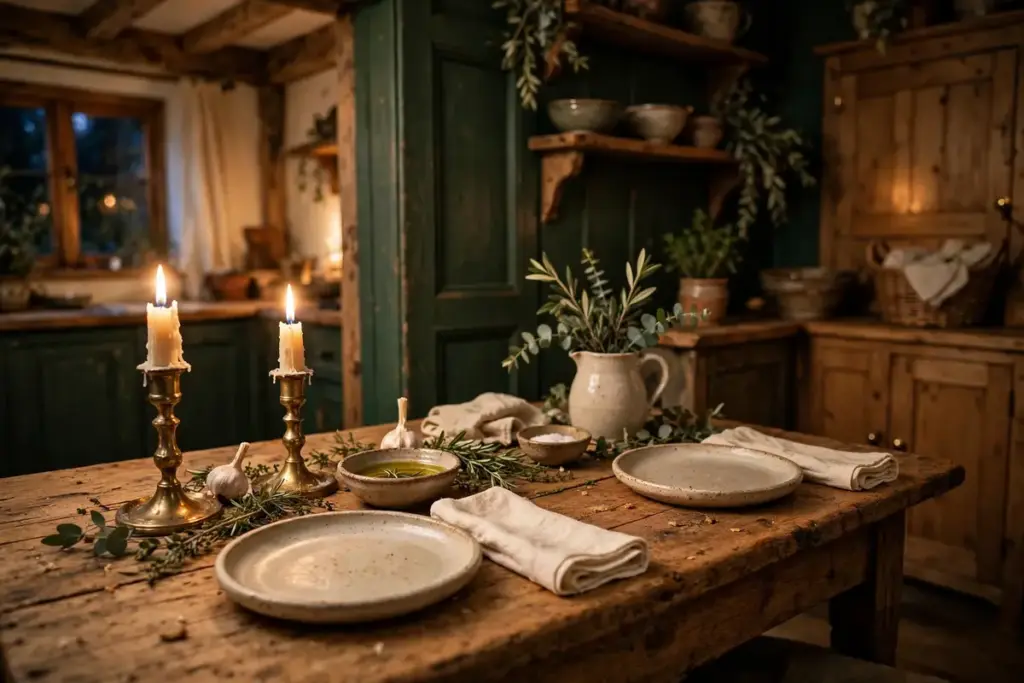
Quick Tip: Use a pair of brass candlesticks, simple cream plates, and naturally textured linen to create a warm, inviting table. Keep the centerpiece low and the lighting soft, so the setting feels cozy rather than formal.
A dark wood table looks particularly inviting when layered with soft neutral textiles and handmade-looking ceramics. Add a small vase of fresh greenery, a linen runner, and warm candlelight to complete the mood. For another seasonal styling reference, explore christmas table decor for additional table arrangement inspiration. For everyday use, keep the centerpiece low enough for comfortable conversation across the table.
20. Skirted Sink Linen Curtain
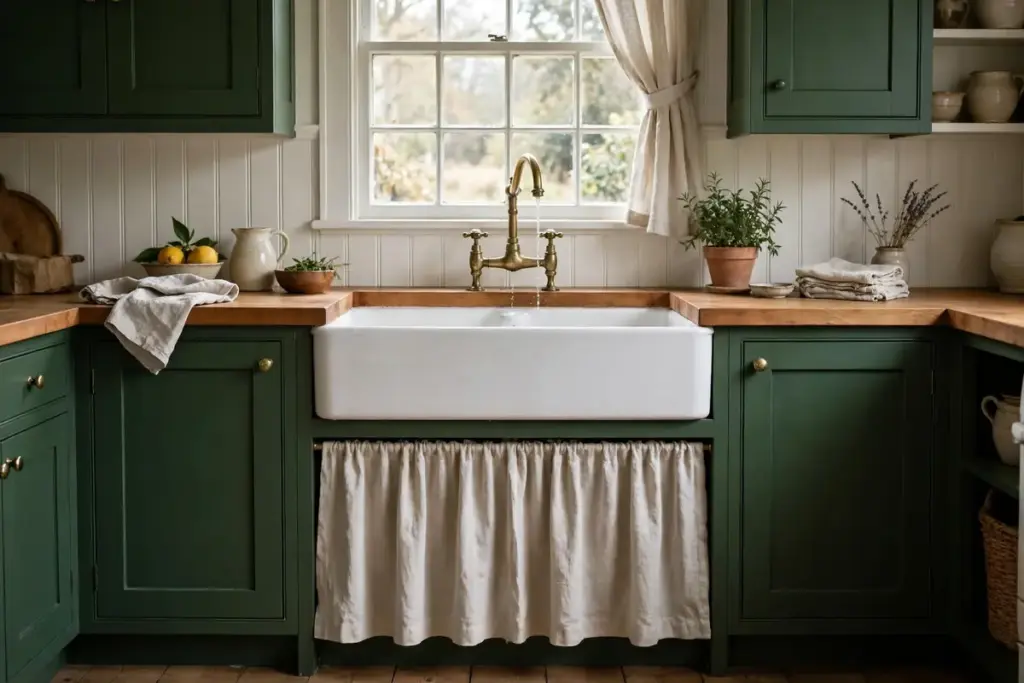
BEFORE: An exposed sink cabinet contains cleaning supplies and mismatched storage containers. The lower section looks cluttered, even when the counters above are tidy.
AFTER: A tailored oatmeal linen curtain hides the contents while introducing a soft fabric texture. A simple tension rod supports the curtain, and the space beneath the sink feels calmer and more intentional.
Use a tension rod or suitable removable mounting solution to support the curtain, provided the cabinet structure allows it. Choose washable linen or linen-look fabric in oatmeal, cream, or muted sage, and hem the lower edge so it hangs just above the floor.
21. Cafe Curtain Tension Rod
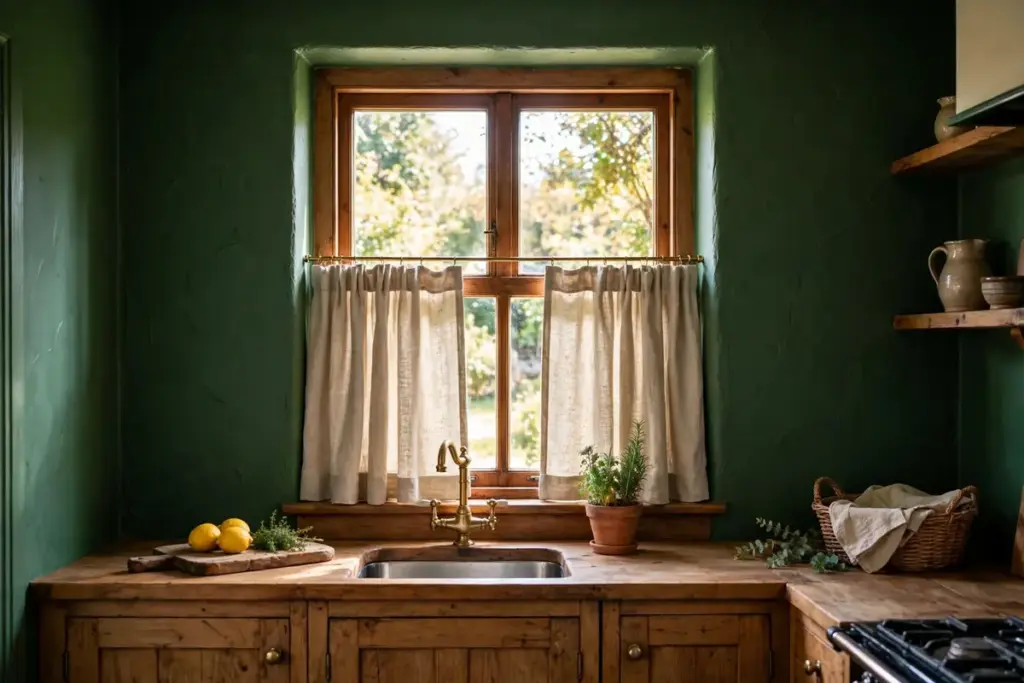
Cafe curtains provide privacy while allowing natural light to reach the upper part of a kitchen window. Their half-length design suits cottage kitchens particularly well, especially when paired with linen textures and warm wood details.
- Measure the window: Choose a rod that fits securely within the frame.
- Select lightweight fabric: Linen-look cotton or washable linen works well for everyday kitchen use.
- Choose the curtain length: Position the lower edge around the middle of the window.
- Install the tension rod: Follow the product instructions and check that it remains stable.
- Adjust the gathers: Space the fabric evenly to create a relaxed, traditional appearance.
A basic rod and inexpensive curtain panel may cost $15 to $35. Choose cream, oatmeal, or muted botanical prints, and keep the fabric away from stove heat and excessive moisture.
22. Amber Glass Spice Jars
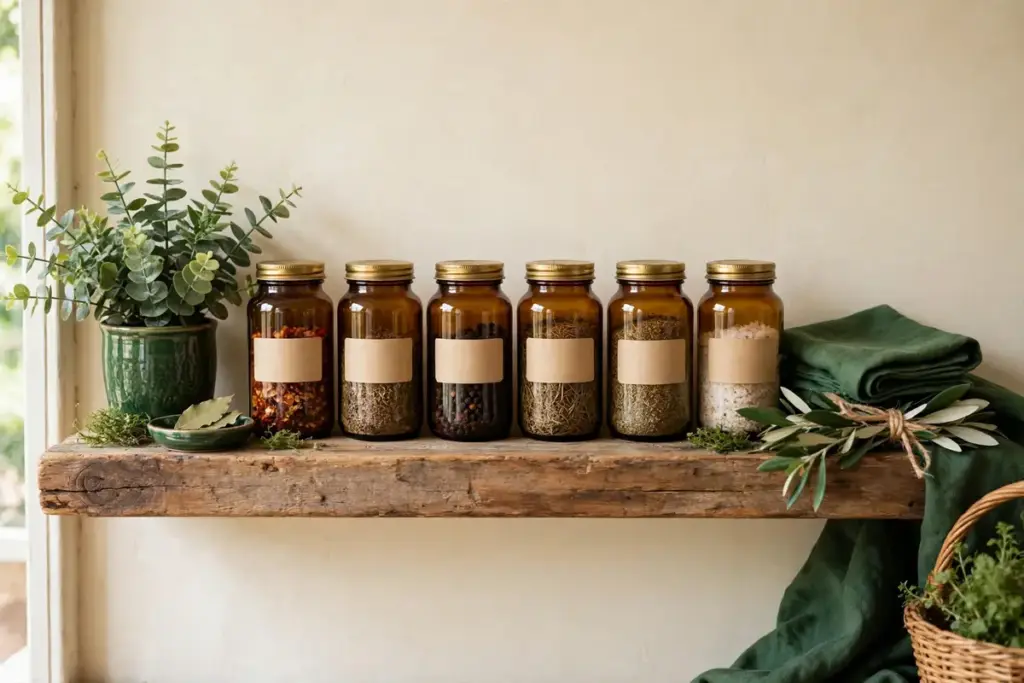
Amber glass offers a warm alternative to brightly colored commercial spice packaging. Its brown-gold tone complements forest green cabinets, reclaimed wood, and brass details, while keeping the contents protected from direct light.
Clear glass makes it easier to identify spices at a glance, while amber containers create a more consistent and calming display. Label each jar clearly, especially for spices that look similar, such as paprika and chili powder.
A small matching set may cost $12 to $30, depending on size and quantity. Reusing suitable glass containers can reduce the cost further, provided the lids seal properly and the jars are thoroughly cleaned before use.
23. Windowsill Terracotta Herbs
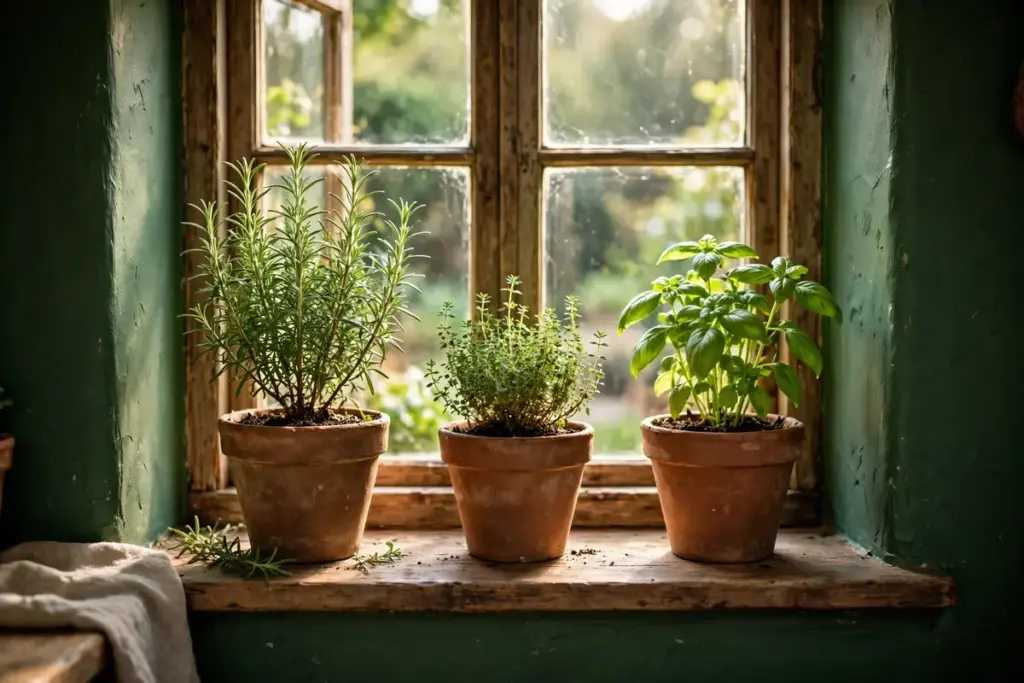
DO:
- Choose herbs suited to the available natural light.
- Use terracotta pots with drainage holes and suitable saucers.
- Select compact varieties for narrow windowsills.
- Rotate containers when necessary for balanced growth.
DON’T:
- Place delicate herbs directly beside excessive stove heat.
- Allow pots to sit in standing water.
- Overcrowd the windowsill with containers.
- Assume every herb needs the same watering schedule.
Terracotta introduces a beautiful earthy texture while giving your kitchen a practical source of fresh flavor. Keep the pots near a bright window, water according to each plant’s needs, and trim regularly to encourage healthy growth.
24. Stoneware Crock Utensil Jar
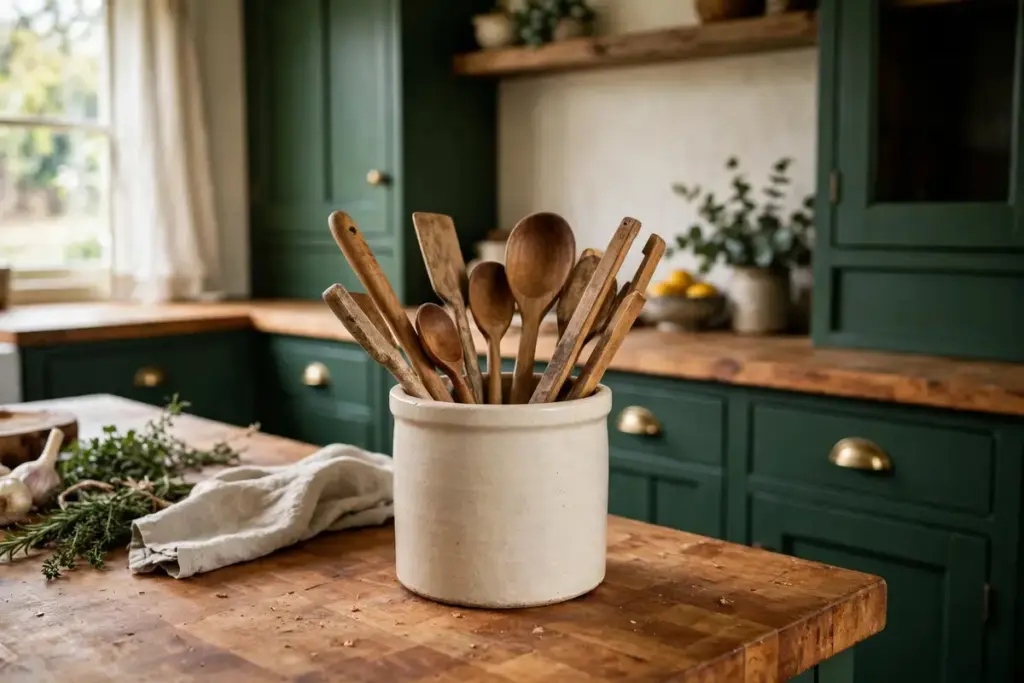
Cost: Approximately $12 to $35 for a secondhand or new decorative crock.
Time: Around 10 minutes for cleaning and arranging.
Skill Level: No installation required.
Best For: Keeping frequently used wooden spoons and spatulas organized beside the cooking area.
A stoneware crock adds handmade character while keeping everyday cooking tools together. Choose cream, oatmeal, or warm speckled finishes to balance darker cabinetry, and place the crock within comfortable reach of the stove. See christmas kitchen decor for more kitchen decorating ideas. Keep the crock clean, dry wooden utensils thoroughly before storing them, and avoid overfilling the container.
25. Mushroom Painted Cabinet Detail
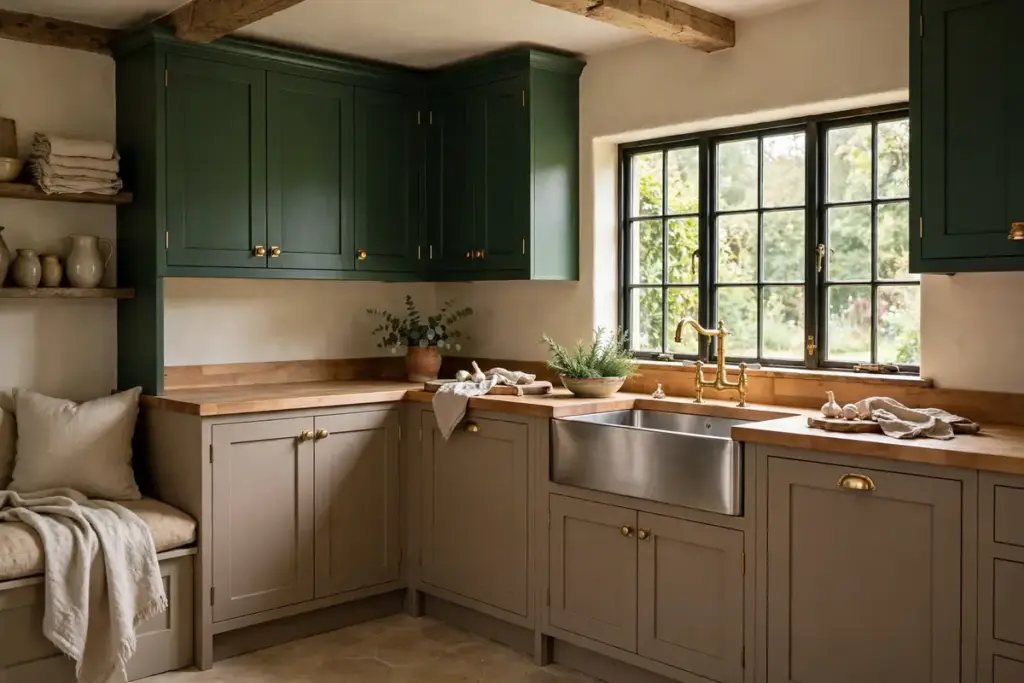
A mushroom-colored cabinet detail offers a softer alternative to an entirely dark kitchen. Its warm taupe tone works beautifully with forest green, warm charcoal, and cream finishes, creating a balanced three-tier palette.
Choose a suitable matte or eggshell finish designed for the furniture or cabinetry material. Avoid gloss, which can feel too modern for a cottage kitchen, and test the color in different lighting before committing.
A small cabinet project may cost $25 to $60 in paint and basic supplies. Test a sample in different lighting conditions, and allow sufficient drying time between coats for a smooth, durable finish.
Conclusion
Creating a dark cottagecore kitchen does not require expensive cabinetry, permanent renovations, or a complete redesign. Small, thoughtful changes, such as warm lighting, thrifted ceramics, removable wallpaper, and natural textures, can build a cozy, moody atmosphere over time. Choose one idea that suits your space and budget, test it for a week, and add another layer when you feel ready. Save this guide on Pinterest, and return to it whenever your kitchen needs a little more warmth and character.