

Bedroom Decor Ideas for a Calm, Hotel-Style Retreat

If your bedroom feels busy instead of restful, these bedroom decor ideas can help you change that without a full renovation. You do not need expensive furniture or a perfect style to make the room feel calm. You need a clear feeling to aim for, a few soft layers, and light that suits the evening.
In my experience, most bedrooms feel unfinished because the bed, the light, and the walls are working in different directions. This guide brings them together in small, practical steps, so you can start with what you already have.
By the end, you will know how to choose colours, layer bedding, soften the light, and finish the room with touches that feel personal. Your bedroom can feel like a quiet hotel retreat every night.
Start With How You Want Your Bedroom to Feel

Before you buy anything, decide how you want the room to feel in the morning and at night. Do you want it soft and quiet, bright and fresh, or warm and cosy? Your answer will guide every choice after this, from paint to pillows.
Write down three words that describe your ideal bedroom, then check each new item against them. If a piece does not fit those words, leave it out for now. These bedroom decor ideas work best when the feeling comes first at home, not the shopping list.
Choose a Calm Colour Palette That Works Together
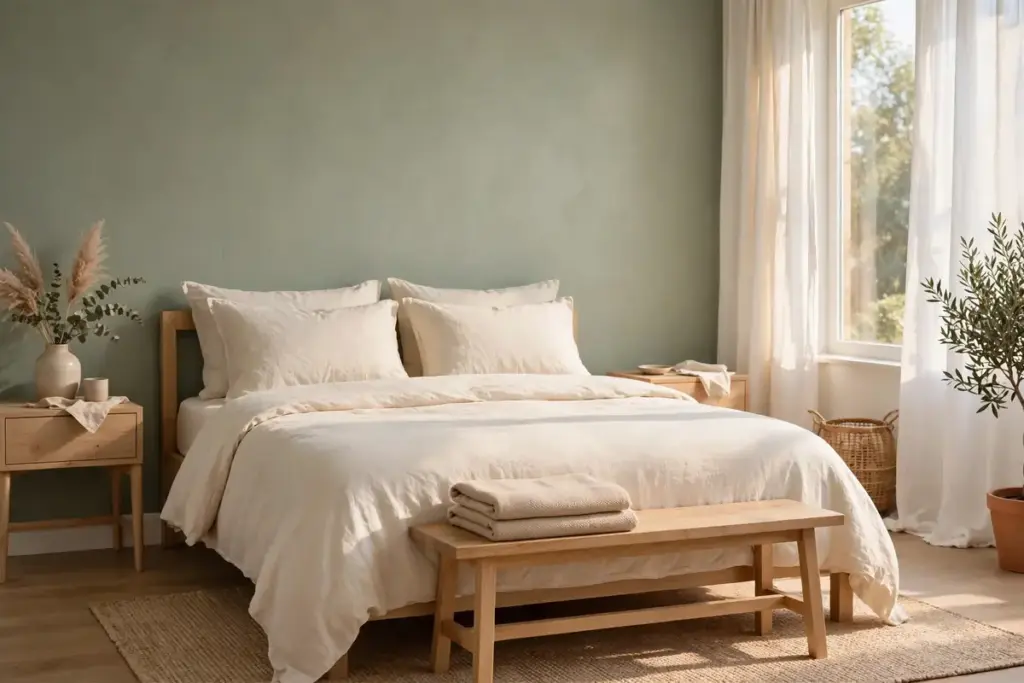
Colour sets the mood before anything else, so keep the palette small and calm. Choose one main neutral, one soft accent, and one warm wood tone, then repeat them across bedding, curtains, and art. A limited palette makes the room feel settled, not plain.
- Pick a warm white or soft beige for the walls and the largest bedding pieces.
- Add sage, dusty blue, or soft terracotta as your accent in pillows and a throw.
- Keep wood tones close together, so light oak and walnut do not fight each other.
- Test paint and fabric together in daylight before you commit to a full wall.
Pick the Right Bedding for a Hotel-Style Look

Quick Tip: Start with white or cream sheets, then add colour only in the top layers. Hotels use this trick because it keeps the bed bright and makes it easy to change the look with one throw or two pillow covers.
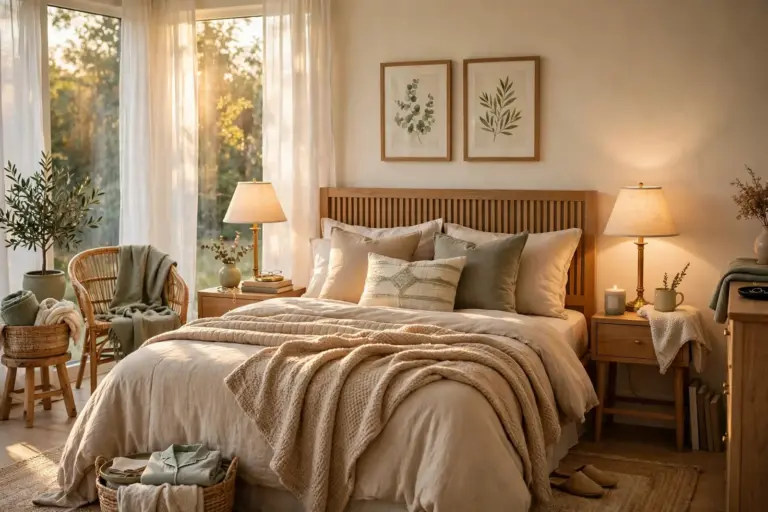
Layer the bed like this: fitted sheet, duvet, a quilt folded across the middle, and a throw at the foot. Use two pillows for sleeping and two smaller ones in front, with different textures so the bed looks soft, not stiff, and smooth the top layer each morning.
Layer Lighting for Soft Evenings and Bright Mornings
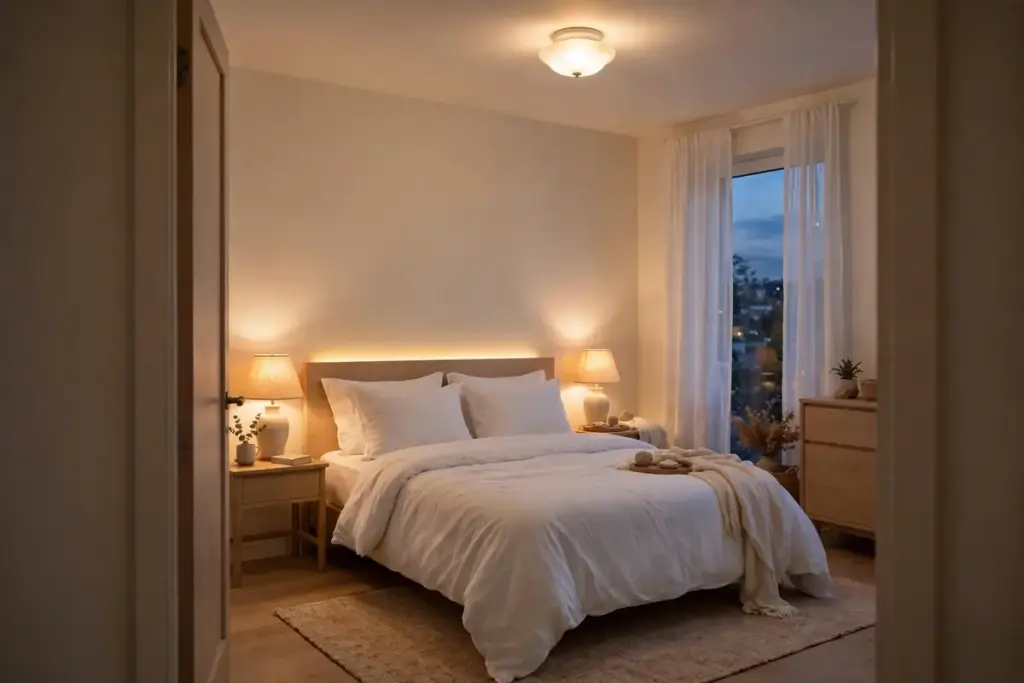
Common Mistake: Most people rely on one bright ceiling light for everything. It creates harsh shadows, makes the room feel flat, and turns a calm bedroom into a bright workroom at night.
The Fix: Use three gentle sources instead: a soft ceiling light, bedside lamps for reading, and one low glow near the bed. Choose warm white bulbs around 2700K to 3000K, and switch off the ceiling light in the evening.
Place lamps at bed height so the light falls where you read and rest, not in your eyes. Add a dimmer if you can, or use a small lamp with a warm shade for the last hour before sleep. In the morning, open the curtains fully and let daylight do the work.
Add Texture Without Adding Clutter

What You Need:
- A knit or woven throw: It adds warmth and softness without a new piece of furniture.
- Linen pillow covers: They bring a relaxed texture that suits both plain and patterned bedding.
- A cotton quilt: It gives the bed a light extra layer you can fold back in warm weather.
- A soft rug: It warms the floor and ties the bed area together.
- A woven basket: It stores extra throws neatly and adds a natural touch.
Texture works best when you mix two or three materials, not ten. Pair smooth cotton with rough linen and soft wool with plain wood, and keep the colours close so the room feels rich, not busy. If a surface looks flat, add one textured piece there first.
Use Your Walls With Purpose
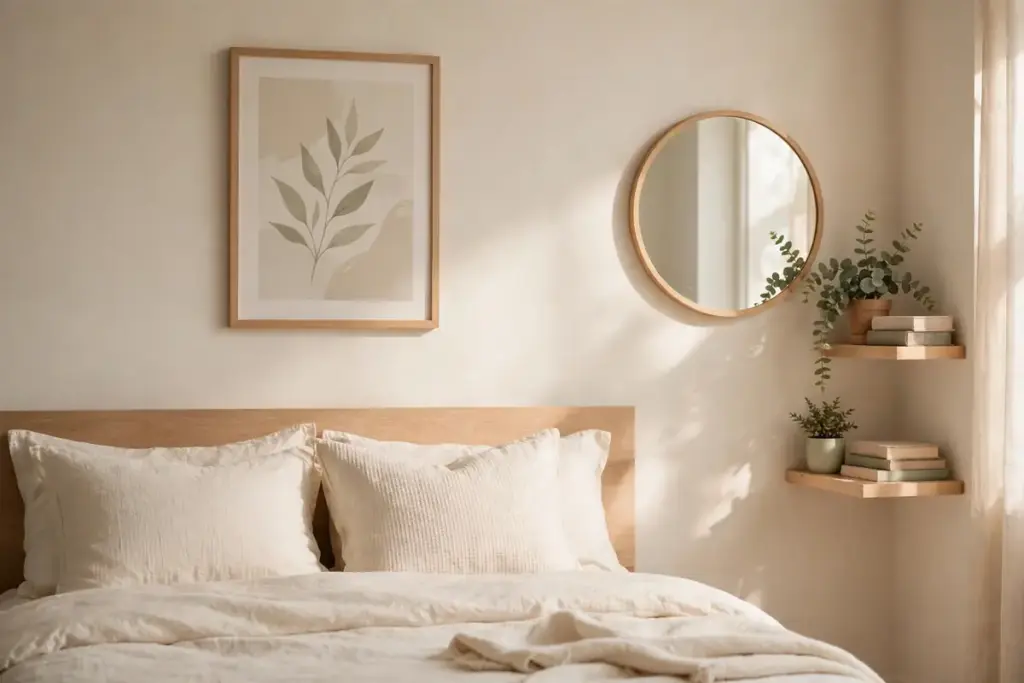
Before: Bare walls can make a good bedroom feel cold and unfinished, even when the bed looks lovely. Small random frames scattered across every wall can also make the room feel busy and hard to rest in.
After: One clear focal point above the bed, with a mirror or a few shelves on a side wall, gives the room a calm structure. The walls feel complete, the bed feels anchored, and the room keeps enough empty space to breathe.
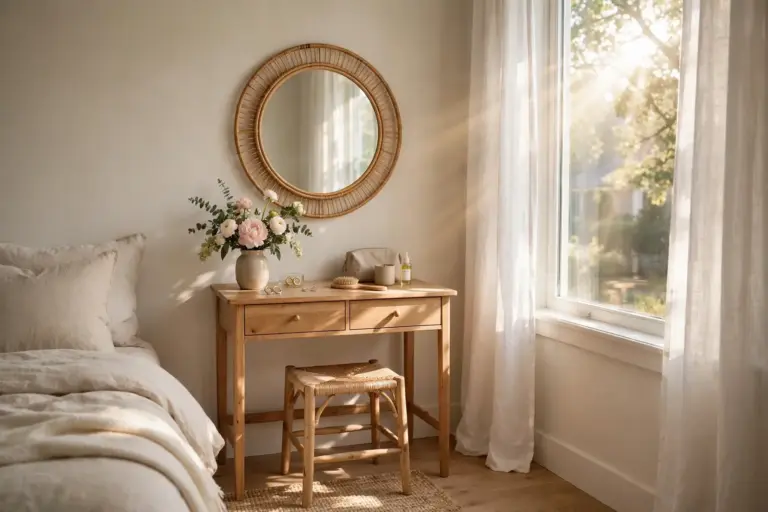
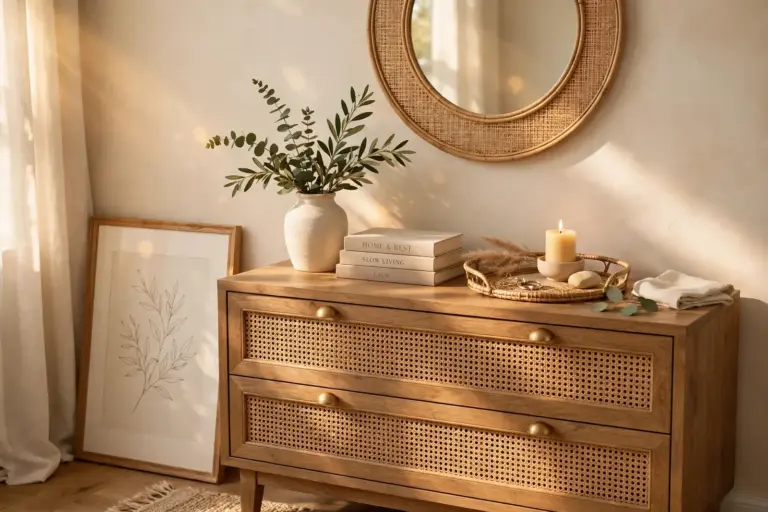
Hang art at eye level when you stand, not too high above the bed. Keep frames in a similar tone so a group looks collected, and leave one wall mostly plain for rest. A mirror opposite a window will bounce daylight around the room, which helps a small bedroom feel brighter without new lights.
Create a Small Reading or Rest Corner
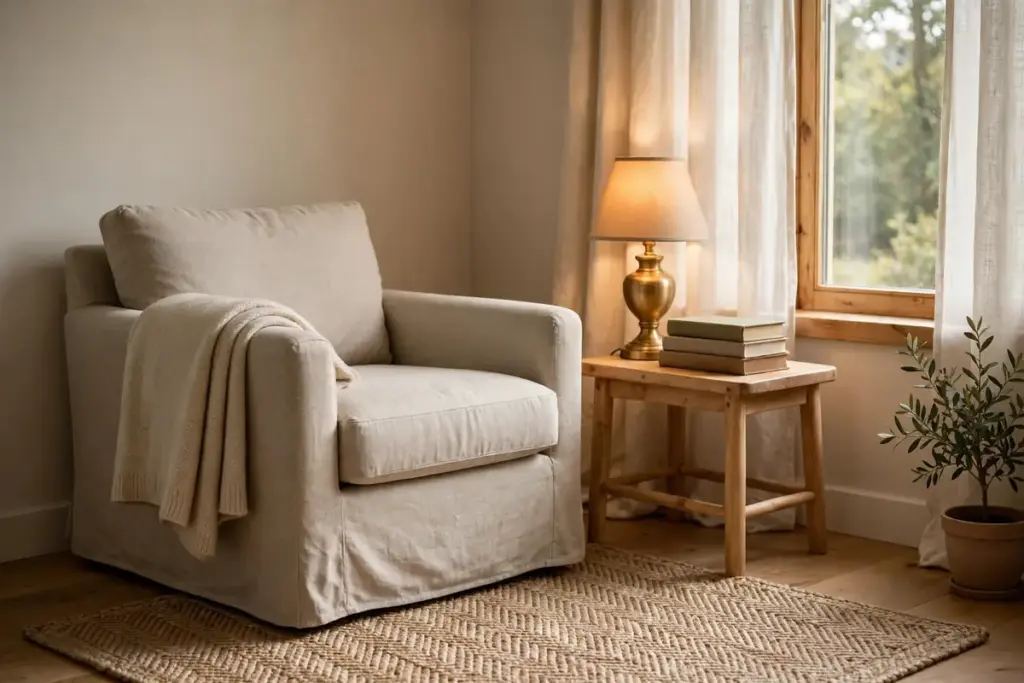
Do This:
- Place one comfortable chair in a corner with good daylight.
- Add a small table for a book and a cup of tea.
- Put a warm lamp beside the chair for evening reading.
- Keep a soft throw within reach for cool nights.
Avoid This:
- Do not fill the corner with extra furniture you rarely use.
- Do not place the chair where it blocks the path to the bed.
- Do not use a bright white bulb that makes the corner feel harsh.
- Do not stack books and clothes there until it becomes storage.
A rest corner works when it has one clear job, so use it for reading, quiet time, or a slow morning coffee. Keep the chair facing the room, not the wall, so the corner feels open. If the corner stays tidy and easy to sit in, you will use it every day.
Keep Storage Simple and Hidden

Time Needed: 30 minutes to sort one drawer | Difficulty: Easy | Cost: Low | Best For: Small bedrooms
Give every item a home, and the room will stay calm with less effort. Use under-bed boxes for out-of-season clothes, a basket for throws, and one drawer for nightstand clutter. When surfaces stay mostly clear, the bed and the light can do the work, and the bedroom feels like a retreat, not a storage room.
Common Mistakes to Avoid
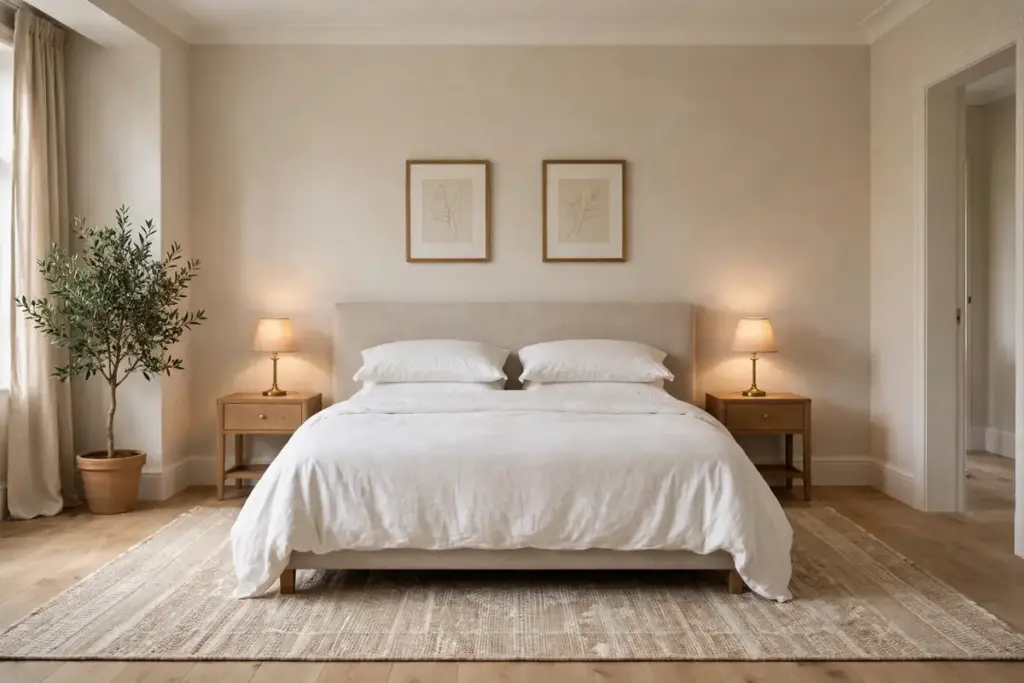
I have noticed that most bedroom mistakes come from size and light, not from taste. A bed that is too large leaves no room to walk, a rug that is too small makes the bed look lost, and a single ceiling light leaves the corners dark and cold.
Measure the room before you buy, and leave about 60 cm of walking space around the bed when you can. Choose furniture that fits the wall, keep one surface clear, and add light at bed height. Small fixes like these make the whole room feel planned and calm.
Small Finishing Touches That Make It Feel Complete
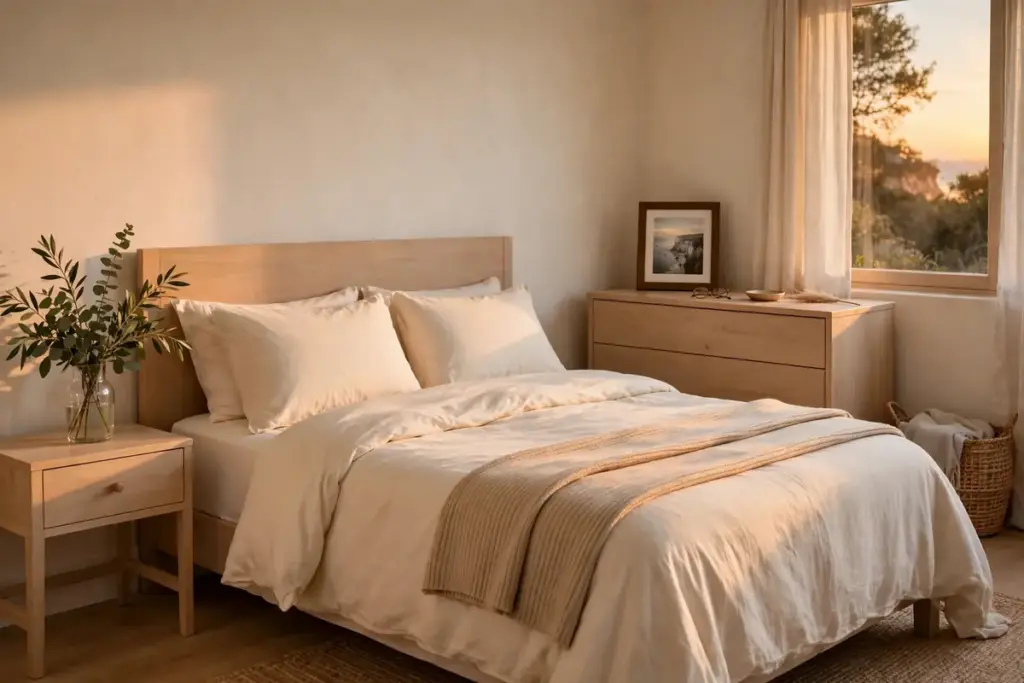
Finishing touches are small, but they make the room feel yours instead of a showroom. Choose two or three personal items, place them where you see them daily, and leave the rest of the surfaces clear. The goal is warmth, not clutter.
- Add one plant or a small vase with fresh leaves on the bedside table.
- Place a framed photo or a piece of art you love on the dresser.
- Fold a throw neatly at the foot of the bed for colour and warmth.
- Put a small carafe of water and a book on the nightstand, then stop there.
Conclusion
You do not need to change everything at once to love your bedroom again. Start with the bed, soften the light, and clear one surface, then add colour and texture slowly until the room feels calm. These bedroom decor ideas work best one step at a time.
Save this guide on Pinterest so you can return to it for the next step. Try one change this week, notice how the room feels at night, and share it with someone who wants a calmer bedroom too. I’ve seen how making this one change can completely shift the result, and your quiet retreat is closer than you think.

3 Comments
Comments are closed.